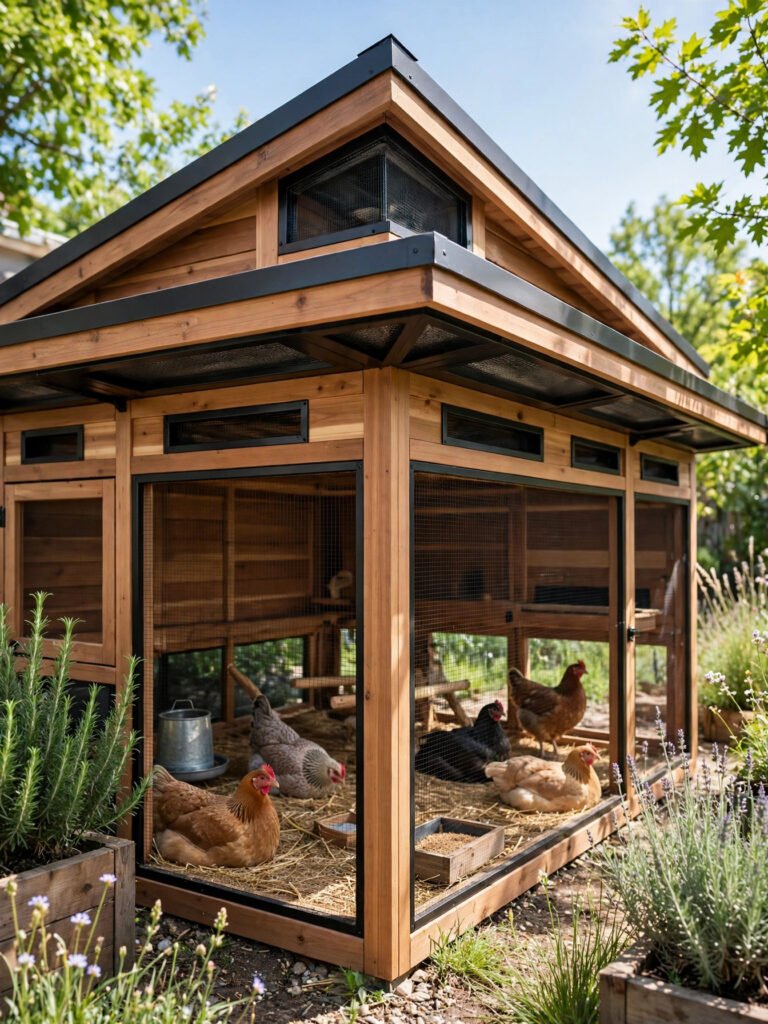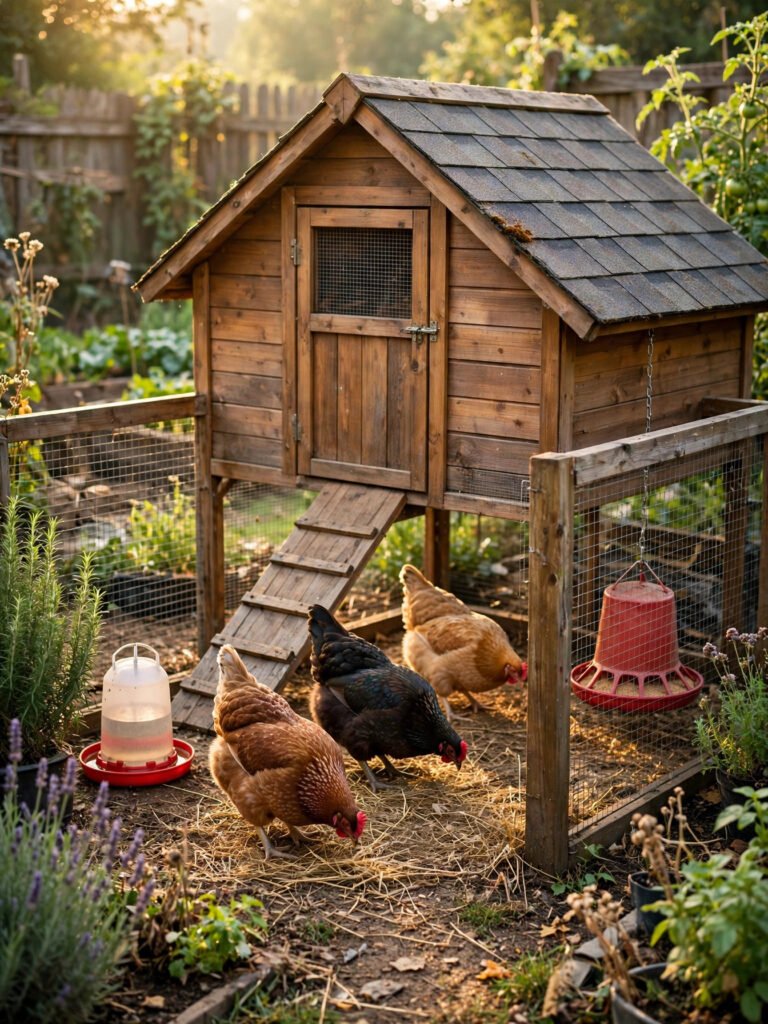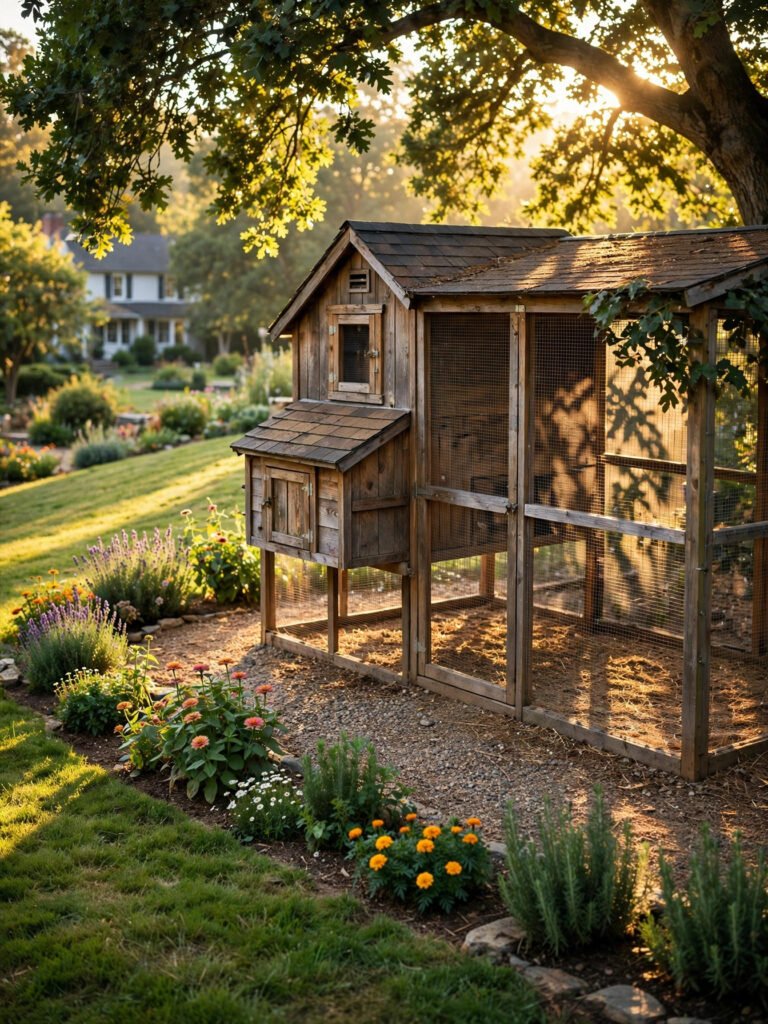
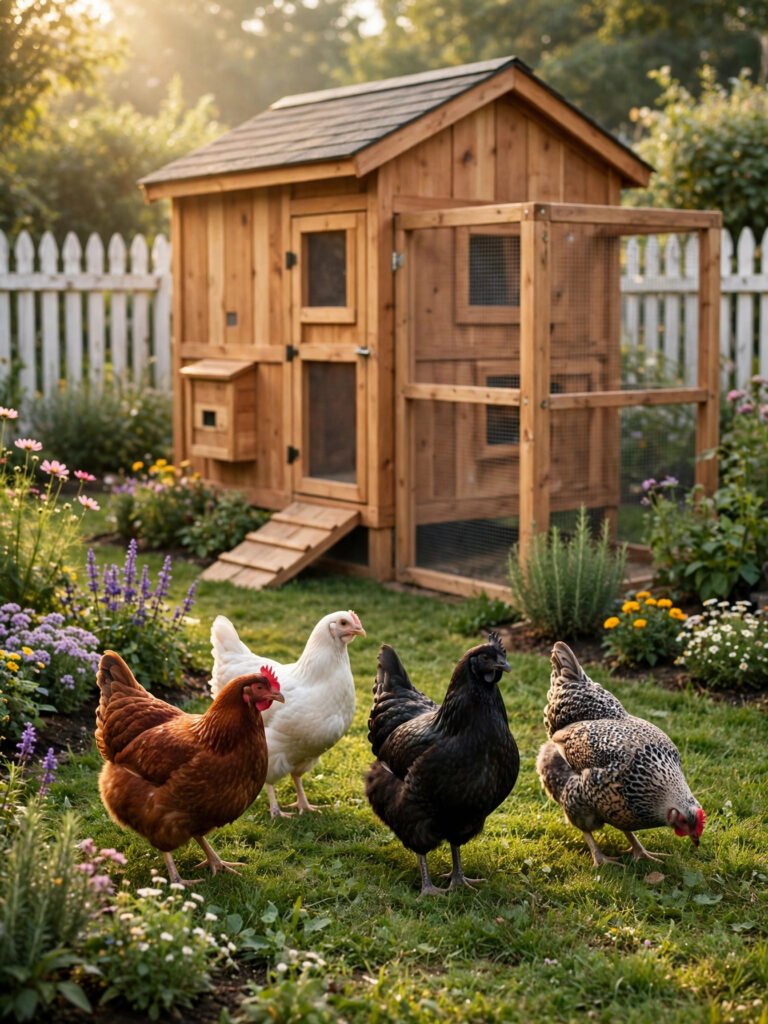

Here is the short version of everything in this guide: start with 4 to 6 hens, give them 4 square feet each in the coop and 10 in the run, protect them like every raccoon in the county already knows your address, and keep the feeder and waterer full. Do those four things and chickens are honestly one of the easiest animals you will ever keep. This guide walks through each part slowly, in the order you will actually need it.
One honest note before we start: nobody at HenHavenGuide is a vet, and this guide will not pretend to be one. What follows is the practical system that experienced keepers and university extension guides agree on — the same numbers we use across this whole site — written for someone setting up their very first flock.
Is Keeping Chickens Right for You?
Chickens ask for about 10 to 15 minutes a day: let them out, check feed and water, collect eggs, close them in at night. Once a week you will spend a bit longer topping up bedding and giving the coop a quick clean. In return you get eggs with yolks so orange they look edited, a garden waste disposal team, and more entertainment than most streaming services.
Three checks before you fall in love with the idea. First, your local rules: many towns allow hens but ban roosters, and some limit flock size, so read your ordinance before you buy anything. Second, your neighbors: a hen-only flock is quieter than a dog, but a gift of fresh eggs now and then keeps everybody friendly. Third, your holidays: chickens cannot be left for a week. You need one neighbor or friend who can be bribed with eggs to cover trips.
How Many Chickens Should a Beginner Start With?
Four to six hens is the sweet spot. Fewer than three and the flock dynamics get odd — chickens are social animals and a lone hen is a stressed hen. More than six in your first year and every job, from coop cleaning to winter care, is bigger than it needs to be while you are still learning.
Work backwards from your kitchen. A healthy laying hen gives you roughly 5 eggs a week in her first two years, so 5 hens is about two dozen eggs a week. Our full guide to how many chickens you should get walks through the math household by household if you want to be precise about it.
What Do Chickens Need? The 5 Basics
- Shelter — a dry, draft-free coop with ventilation up high, where moisture and ammonia escape without blowing cold air across the roosts
- Space — 4 square feet per hen inside and 10 outside, the numbers our whole site is built on
- Food — a proper layer feed as the main diet once hens are laying, not just scratch and scraps
- Water — clean water available at all times; a laying hen drinks about a cup a day, twice that in heat
- Safety — a run and coop built on the assumption that predators are patient, clever and already watching
That is genuinely the whole list. Everything else in chicken keeping — the treats, the toys, the dust bath recipes — is garnish. Get the five basics right and the birds will handle the rest themselves.
Setting Up the Coop: Space, Roosts and Nesting Boxes
The coop is where beginners overspend and under-measure. What matters is floor space, and the honest numbers are in our pillar guide: how much space do chickens need. The short version: 4 square feet per hen of open floor, 10 inches of roost bar each, and one nesting box per 4 hens. Run your own flock size through the Coop Size Calculator and you will have exact dimensions in seconds.
Build it yourself and you control every inch — our 8×12 Walk-In Chicken Run Plans exist because the big lesson of a first coop is that you will spend more time inside it than you expect, and a walk-in run makes every chore easier. Buy ready-made instead and judge it by floor measurements, not the hen count on the box; the OverEZ Classic Large is one of the better built prefab options, and even it deserves a tape measure before it deserves your money.
Inside the coop, two details matter more than the rest. Roosts should be wide and flat — a 2×4 with the broad side up — and placed higher than the nesting boxes, or your hens will sleep in the boxes and you will collect dirty eggs. The full setup is in our guides to roost space per chicken and how many nesting boxes you need.
Choosing Your First Chickens
For a first flock, pick calm, hardy, dual-purpose breeds that lay well and forgive beginner mistakes. The classic shortlist: Buff Orpingtons (gentle, fluffy, the Labradors of the chicken world), Plymouth Rocks (steady layers, hardy in cold), Australorps (quiet, excellent layers) and Sussex (curious and friendly). Bantams are charming but lay small eggs; fancy breeds are beautiful but often broody or flighty. Save them for year two.
Buy all your first hens at the same time and roughly the same age, and the pecking order sorts itself out in days instead of weeks. Our breed-by-breed chart of the best egg laying chicken breeds for beginners compares eggs per year, temperament and climate fit when you are ready to choose.
Chicks or Started Pullets: Which Is Better for Beginners?
Day-old chicks are cheap and irresistibly cute, but they need six weeks of indoor brooding with careful heat before they can live outside — and about half of any straight-run batch will turn out to be roosters. Started pullets, young hens of 16 to 20 weeks sold just before laying, cost more per bird and skip all of that. For a first flock, most beginners are happier with pullets: you are collecting eggs within weeks, not months.
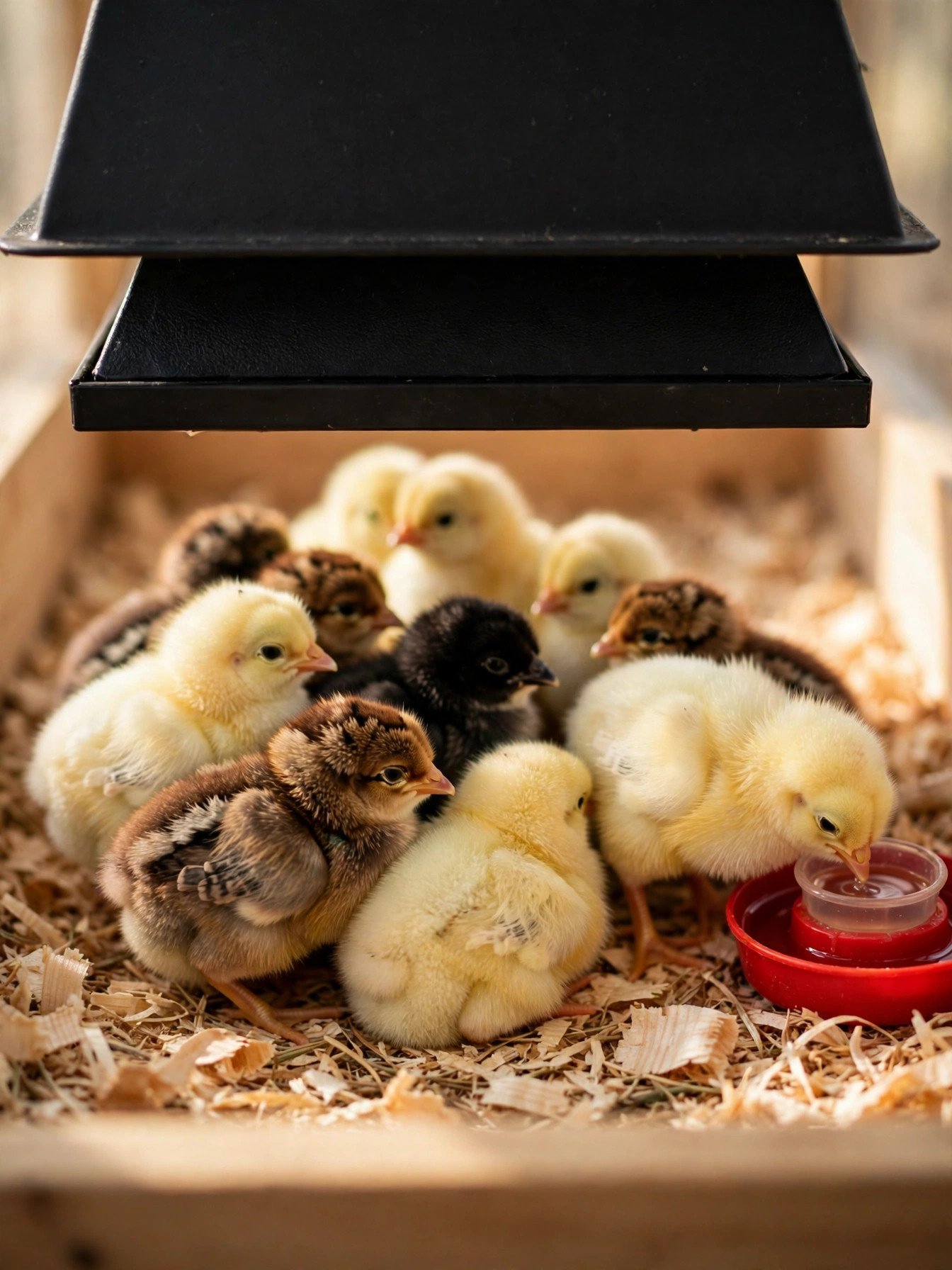
If chicks win your heart anyway, heat is the one thing to get exactly right: 95°F in the first week, dropping 5 degrees a week until they are fully feathered. Our Brooder Temperature Chart has the week-by-week numbers and the chick behavior that tells you if they are too hot or too cold.
What Do Chickens Eat and Drink?
Keep it boring and your hens will thrive. From about 18 weeks, a quality layer feed with 16% protein is the whole diet — it already contains the calcium laying hens need. Kitchen scraps and scratch grains are treats, and treats should stay under about 10% of what they eat, or egg production quietly slides. Add a small dish of oyster shell on the side for strong shells, and grit if your birds do not range on natural ground.
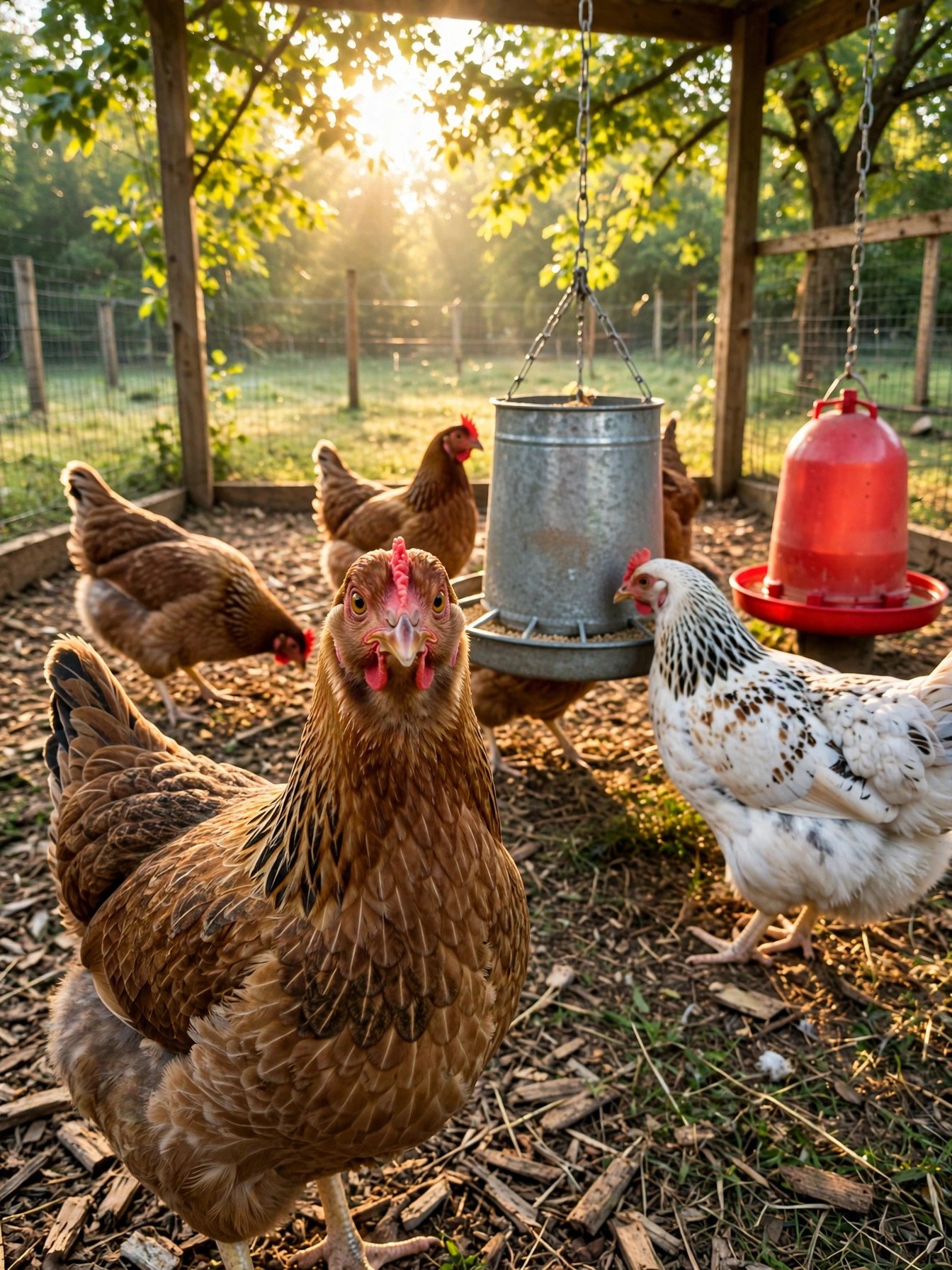
Expect each laying hen to eat about a quarter pound of feed a day. Our guide to how much chickens eat a day and the Chicken Feed Calculator turn that into bags per month for your exact flock, so feed never runs out on a Sunday morning.
How Much Does It Cost to Keep Chickens?
Real talk: backyard eggs are not cheaper than shop eggs in year one. The coop and setup are the big cost — anywhere from a few hundred dollars for a sensible DIY build to well over a thousand for a large prefab — and after that, a small flock runs on a bag of feed, some bedding and very little else each month. Where chickens win is egg quality, the garden help, and the fact that your breakfast comes from animals with names.
Run your own numbers with the Chicken Cost Calculator, and read the full breakdown in how much it costs to raise backyard chickens before you set a budget.
Your Daily, Weekly and Monthly Routine
| When | Jobs |
|---|---|
| Every morning | Open the coop, check water, glance at every bird as they come out — a hen who stays behind is telling you something |
| Every evening | Collect eggs, top up feed, count heads on the roost, close and latch the coop |
| Every week | Stir or top up bedding, scrub the waterer, check the run fence and latches |
| Every month | Deeper coop clean, check for wear, holes and chewed wire, review feed and bedding stock |
The Beginner Supplies Checklist
- Coop and run, sized with the calculator, not the box label
- Layer feed plus a feeder that keeps it dry and off the floor
- A waterer — 2 gallons suits a small flock
- Pine shavings or hemp bedding (never cedar)
- Oyster shell and grit in separate small dishes
- A basic first aid kit: gloves, antiseptic spray, and the number of a vet who sees poultry
If you buy one thing ready-made, make it the feeding station — it is used twice a day, every day, and a good one saves more feed than it costs.

- One matched set sized for a beginner flock: a 10 lb no-waste feeder and a 2 gallon waterer
- Waterer gives hens both auto-fill cups and nipples, so birds drink clean water instead of whatever landed in an open dish
- Both pieces hang on the coop wall or run wire with the included hardware, keeping your floor space for the hens
5 Beginner Mistakes That Cause Most Problems
- Buying the coop first and measuring later. Almost every regret in chicken keeping starts here. Space first, shopping second.
- Using chicken wire to keep predators out. Chicken wire keeps chickens in. Raccoons reach through it and tear it. Half-inch hardware cloth is the real barrier — see how to predator proof a chicken coop.
- Getting chicks before the coop exists. Chicks grow at a speed that will genuinely surprise you. Build first.
- Feeding mostly scraps and scratch. Treats are not a diet, and soft-shelled eggs are usually the first symptom.
- Forgetting that winter water freezes. Your hens need liquid water every single day of the year. Plan for it in autumn, not during the first freeze.
Frequently Asked Questions
How many chickens should a beginner start with?
Four to six hens. That flock is big enough for healthy social dynamics and about two dozen eggs a week at peak lay, but small enough that every chore stays easy while you learn.
Do I need a rooster for hens to lay eggs?
No. Hens lay eggs with no rooster anywhere near them — a rooster is only needed if you want those eggs fertilized for hatching. Most beginners, and most town ordinances, are better off without one.
How long before hens start laying?
Most breeds start at 18 to 22 weeks old. Production breeds can begin a little earlier, heavy heritage breeds a little later, and almost everyone slows down in the short days of winter.
Are backyard chickens noisy?
Hens are quiet most of the day — soft clucks and the occasional proud announcement after laying an egg. They are noticeably quieter than a barking dog, and there is no 5am crowing without a rooster.
How much time do chickens take each day?
About 10 to 15 minutes: open up, check feed and water, collect eggs, close in at night. Add half an hour a week for bedding and a quick clean, and that is the whole commitment.
The Bottom Line
Start small, build roomy, protect properly, and feed boring. Four to six hens, a coop sized by the calculator instead of the box label, hardware cloth instead of chicken wire, and layer feed in a feeder that stays dry. That is the entire beginner system, and everything else on HenHavenGuide exists to help you with one piece of it at a time. Your first egg is closer than you think.