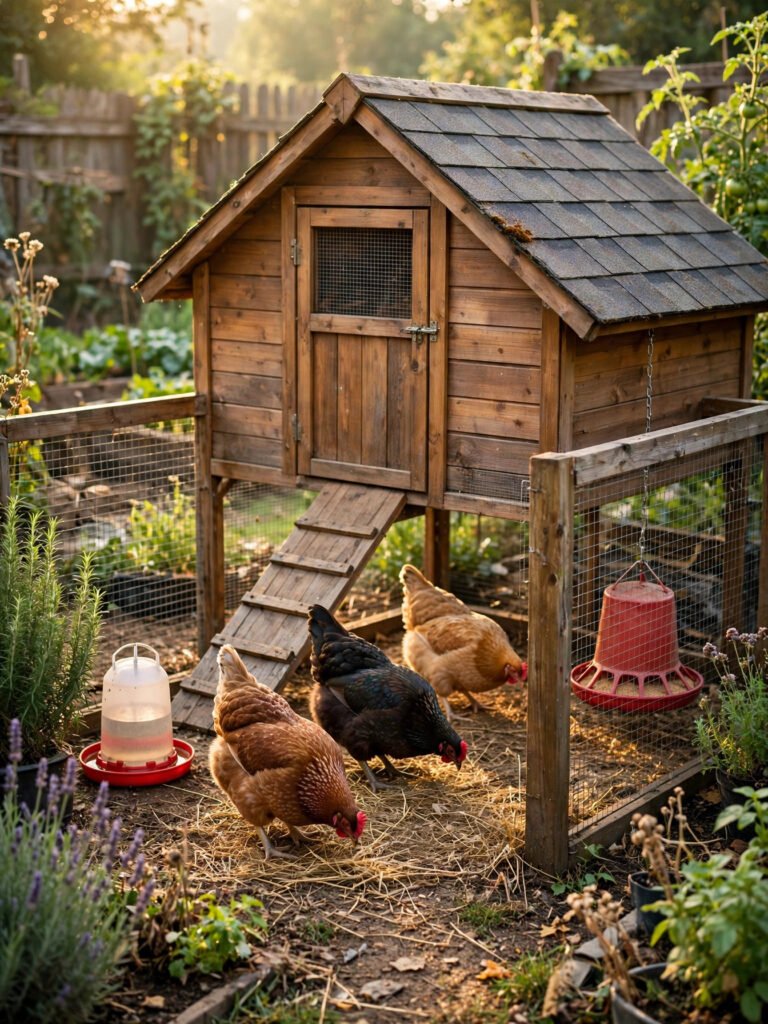
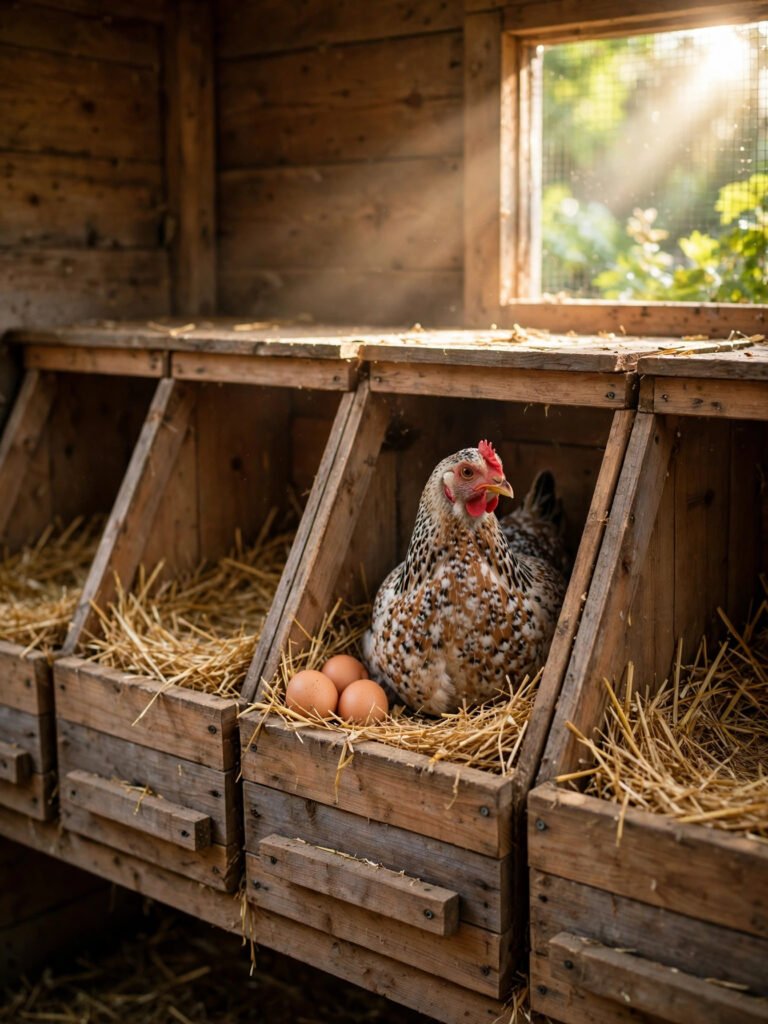

Short answer first: plan on one nesting box for every 4 hens, and always round up to a minimum of 2 boxes, even for the smallest flock. Two boxes for 4, 6 or 8 hens. Three for 10 or 12. Five will carry 20. That is genuinely all the math there is. The rest of this page is about box size, placement, and the one thing almost every new keeper gets wrong: assuming the hens will use those boxes evenly. They will not.
Here is what actually happens. You build four identical boxes, line them with fresh straw, and stand back feeling pleased with yourself. Your hens inspect all four, hold a short meeting about it, and choose one. Every egg, every day, goes in that one box — sometimes with two hens in it at the same time — while the other three sit empty. That is not a problem with your boxes. It is just chickens being chickens, and the counts below make sure the morning queue stays short enough that nobody gives up and lays in a corner of the run instead.
Nesting Boxes Needed by Flock Size
| Hens | Nesting boxes |
|---|---|
| 4 | 2 |
| 6 | 2 |
| 8 | 2 |
| 10 | 3 |
| 12 | 3 |
| 16 | 4 |
| 20 | 5 |
The rule behind the chart is 1 box per 4 hens, with a hard minimum of 2 no matter how small the flock. And honestly, the minimum matters more than the ratio. With a single box, one broody hen or one slow, deliberate layer can hold up the entire flock — and a hen who cannot get in will lay wherever she happens to be standing, which is usually the dirtiest corner she can find. The reason the ratio can stay this low is timing. Hens mostly lay in the morning, spread out over a few hours, and a box is only occupied for about half an hour at a time. Your nesting boxes are timeshares, not bedrooms.
How Big Should Each Nesting Box Be?
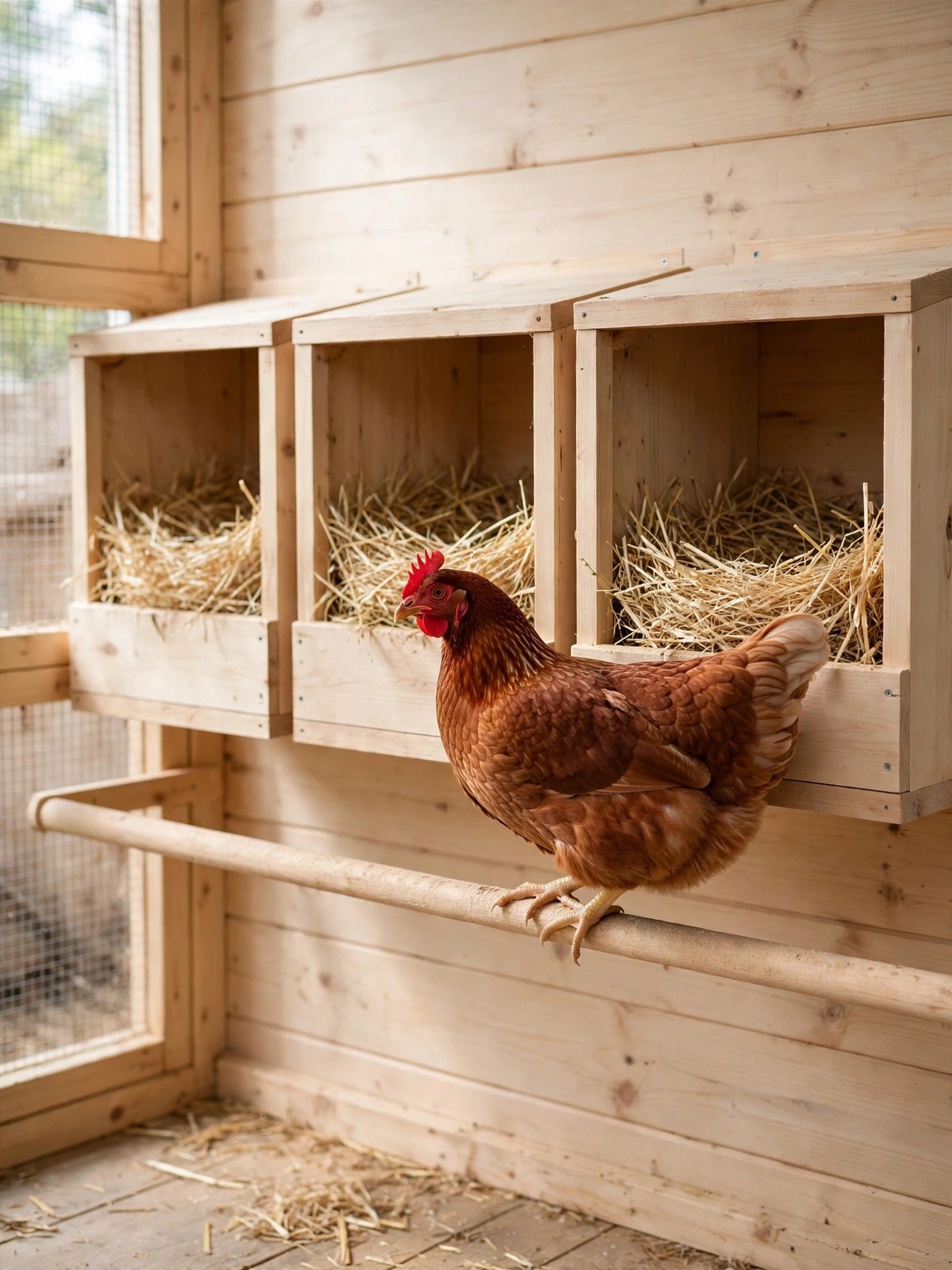
For a standard laying hen, build or buy boxes around 12 × 12 × 12 inches — a foot wide, a foot deep, a foot tall. That gives a hen room to turn around, settle in, and arrange the straw to her exacting standards, without leaving space for a friend. And a friend will try to join. Boxes much bigger than 14 inches invite double occupancy, and two hens sharing one box means scuffles and cracked eggs.
Keeping big breeds like Orpingtons or Brahmas? Go up to roughly 14 × 14 inches, so they are not wedged in like corks. Bantams are happy in something a touch smaller, around 10 to 11 inches, although they will use a standard box without a word of complaint. One detail worth copying from the well-designed commercial boxes: a front lip about 3 to 4 inches high. It stops the bedding — and the occasional egg — from being kicked out by all the turning and scratching that goes on in there.
Where Should You Put the Nesting Boxes?
Three rules cover almost everything. First, height: set the boxes 18 to 24 inches off the floor. That is high enough for the boxes to feel separate from the scratching and traffic down below, and low enough that even a heavy hen can hop up without needing a runway. A short perch or step in front makes the jump easy, and gives the next hen in the queue somewhere polite to wait.
Second, and this is the one people get backwards: the boxes must sit lower than the roosts. Hens sleep at the highest point they can reach. If your nesting boxes are the tallest cozy spot in the coop, that is where the flock will spend the night — and a box that gets slept in all night is a box full of droppings by morning, with your eggs laid right in the middle of it. Roosts high, boxes low. Never the other way round.
Third, pick the darkest, quietest corner you have. A hen who is about to lay is looking for somewhere that feels hidden and safe, not a front-row seat next to the pop door. If eggs keep turning up in odd places — under the roosts, behind the feeder — the flock is telling you the boxes feel too bright or too busy. A simple curtain of burlap or an old feed sack hung across the front of the boxes fixes more laying problems than almost anything else you can do.
Buying Instead of Building?
Plenty of keepers build boxes from scrap wood, buckets or old crates, and hens honestly do not care what a box is made of. But when you are ready to buy once and be done with it, a rollout design is the style I would look at first, because the egg rolls out of reach the moment it is laid — which ends dirty eggs and egg eating in a single move. Our comparison of the best nesting boxes for chickens walks through the main types side by side. The unit below is the rollout style done in metal.

- Heavy-duty galvanized steel body — no wood to rot, nowhere for mites to hide, and it hoses clean in minutes
- Laid eggs roll forward into a covered collection tray, so they stay clean and out of reach of hens that peck at them or eat them
- Wall-mountable, with a swing perch across the front — and by the 1 box per 4 hens rule on this page, its 4 holes cover a flock of up to 16 hens
Why Do All My Hens Queue for One Box?
Nobody knows for certain, and anyone who tells you they do is guessing with a lot of confidence. The best explanation keepers have is that an egg — or better yet, another hen — already in a box works as a safety certificate. Hens descend from jungle fowl that laid in hidden ground nests, and a spot where another bird has already laid and walked away unharmed looks proven. An empty row of boxes, to a hen, is a row of untested risks.
So they queue. Sometimes noisily, pacing and complaining at the hen inside like she is holding up a checkout line. Sometimes a second hen just climbs in on top of the first, and the two of them sit there looking deeply unbothered. Let them. A shared box costs you nothing, the eggs come out fine, and adding more boxes will not change the behavior — you will simply own more empty boxes. The only fix worth having is that minimum of 2 from the chart: one favorite, and one overflow for the hen who simply cannot wait.
What Should You Put Inside the Boxes?
A few inches of something soft, dry and easy to replace. Straw is the classic choice, and hens clearly enjoy rearranging it into a proper bowl shape before they settle. Pine shavings work just as well and are easier to spot-clean. Some keepers swear by nesting pads — washable or disposable liners that keep eggs cleaner and turn the weekly clean-out into a two-minute job. Whichever you pick, fill each box a good 3 to 4 inches deep so eggs land on a cushion, and swap out anything that gets damp or soiled. A filthy box is the fastest way to teach a hen to lay somewhere else.
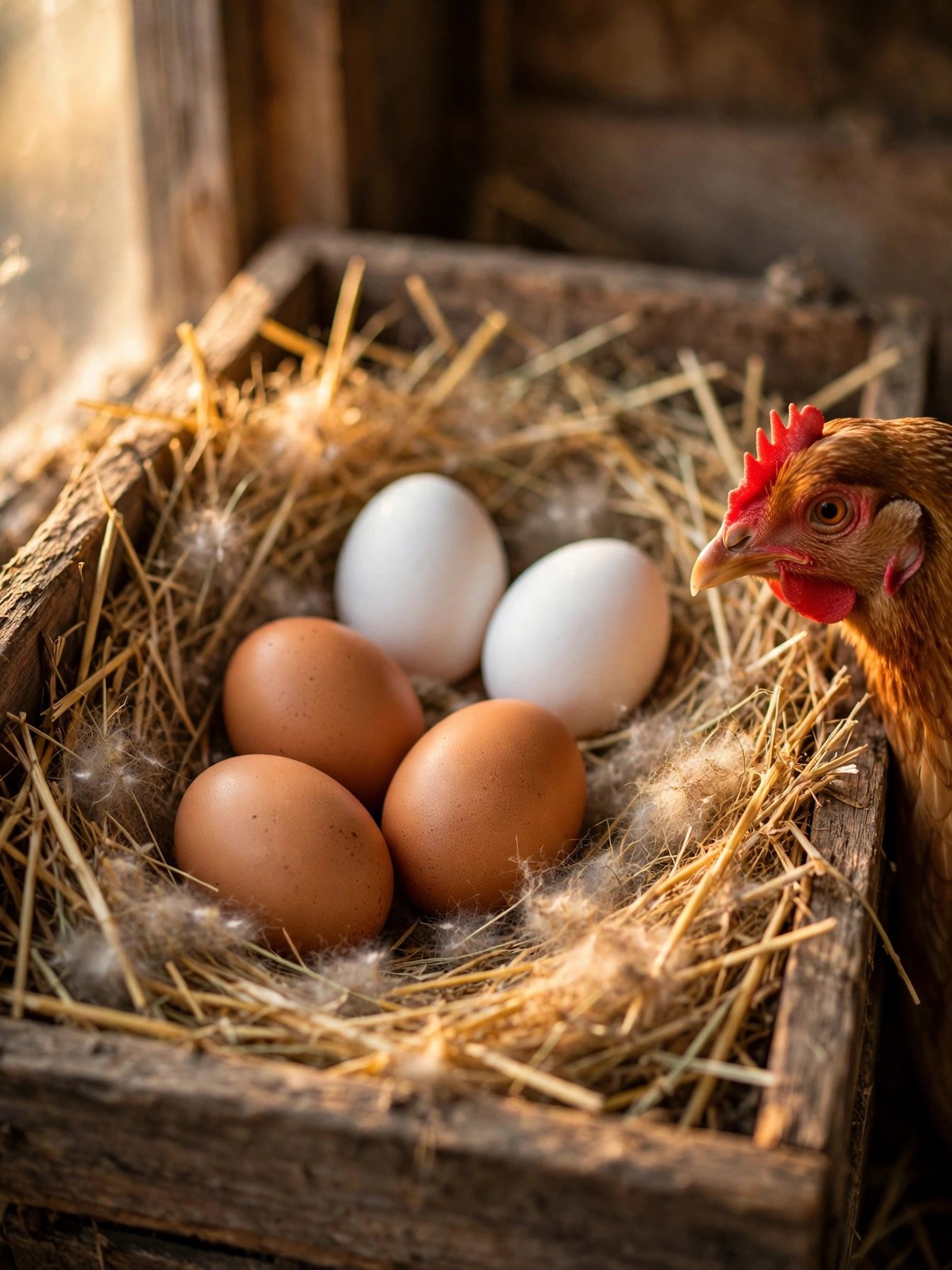
While the boxes are new, add one fake egg to each. A golf ball will do the job. A ceramic nest egg does it better, because it has the weight and feel of the real thing — the Cackle Hatchery Ceramic Nest Eggs are the ones most keepers end up with, convincing enough that you will occasionally gather one by mistake. To a young pullet, an egg already sitting in a box reads as a sign: this is the place. It is the cheapest laying training there is, and it genuinely works.
Common Nesting Box Mistakes
Almost every nesting box problem traces back to one of these four:
- Boxes higher than the roosts — the flock sleeps in them, and you spend every morning cleaning droppings out of the laying boxes
- One box stretched across a big flock — it works on paper until a broody hen moves in and takes that box out of service for three weeks straight
- A bright, busy spot — boxes beside the pop door or the feeder get passed over for a dark corner of the run, and you end up egg hunting every day
- Setting up too late — boxes should be open, filled and ready a couple of weeks before pullets start laying, around 16 to 18 weeks old, not the morning you find the first egg on the floor
Frequently Asked Questions
How many nesting boxes do I need for 6 hens?
Two. The 1 per 4 hens rule gives you one and a half, and the minimum of 2 rounds it up. Two boxes mean a hen always has a choice, and one slow layer never blocks the whole flock.
Can two hens share one nesting box?
Yes — and they will, whether you plan for it or not. Hens strongly prefer a box that already has an egg or another hen in it. As long as sharing stays calm and the eggs come out unbroken, it is nothing to fix.
Why are my hens laying eggs on the coop floor?
Usually because the boxes feel wrong: too high, too bright, too exposed, or they were not ready before laying started. Drop them lower than the roosts, darken the spot, put a fake egg in each box, and collect any floor eggs quickly so the habit never sets in.
Should nesting boxes be inside or outside the coop?
Either works, as long as the boxes stay dry, dark and secure from predators. External boxes you collect from outside are a real back-saver and free up floor space inside the coop, but they need a weatherproof, lockable lid to do the job properly.
The Bottom Line
One box for every 4 hens, never fewer than 2, each one about a foot square, set low in the quiet corner and always lower than the roosts. Get those basics right and the daily egg hunt becomes a one-stop trip — even if every single egg is in the same box. Still planning the rest of the setup? Our guide to backyard chickens for beginners walks through the whole thing in order.