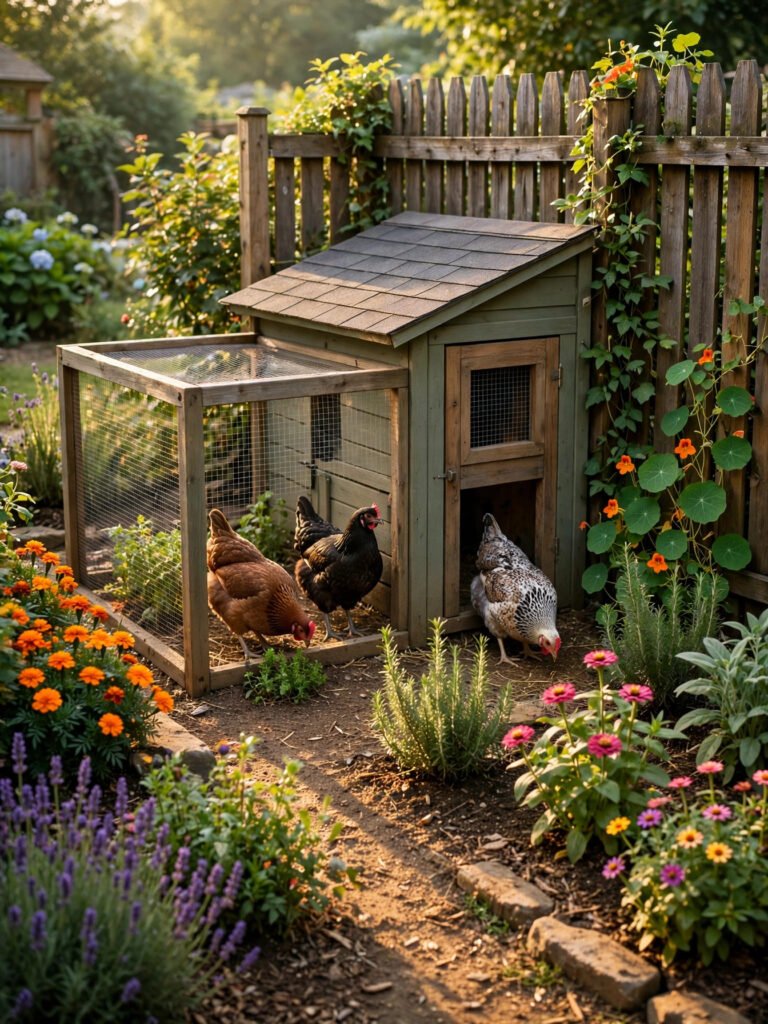
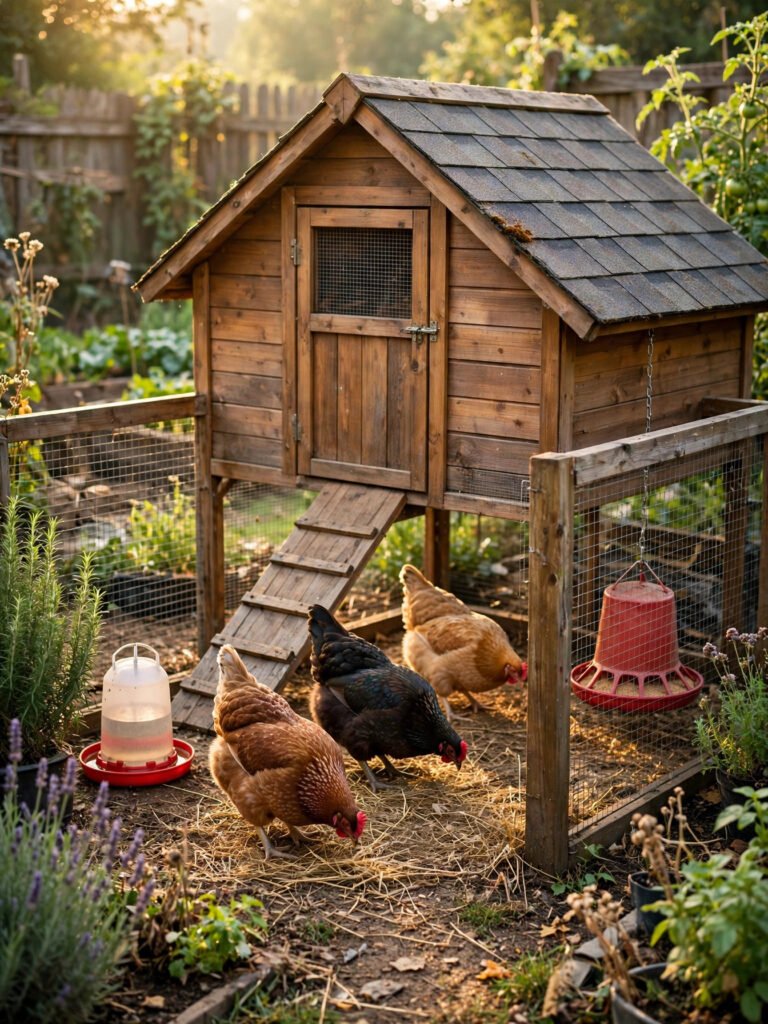

Short answer first: raising backyard chickens costs roughly $800 to $1,200 in the first year for a typical flock of 6 hens set up sensibly, and then about $30 to $45 a month after that. In the worked example our cost calculator uses — a mid-range coop, day-old chicks, nothing fancy — the first year lands at $818, the monthly running cost settles at $35, and the eggs work out to about $3.21 a dozen once the flock is laying steadily. One decision swings those numbers more than everything else combined: the coop.
A word on where these numbers come from, because cost pages are where chicken sites get creative. The figures below are typical US ranges for feed, bedding and gear, cross-checked against the prices keepers report paying in their own monthly breakdowns — and every range is wide on purpose, because feed prices in rural Texas and suburban New Jersey are not the same thing. Your exact numbers will land somewhere inside them. To find out where, plug your local prices into the calculator linked above once you have read the breakdown. Nobody honest can give you a single exact figure, and you should be suspicious of any page that tries.
The Startup Costs: What the First Year Really Starts With
Startup is everything you buy before the first egg: the housing, the fencing, the birds themselves and their first supplies. Here is the honest itemized version for a flock of 6, with a budget path and a buy-it-once path side by side:
| Startup item | Budget path | Buy-it-once path |
|---|---|---|
| Coop for 6 hens | $150 to $300 (basic kit, expect upgrades) | $600 to $1,200 (solid prefab or built) |
| Run and fencing (hardware cloth, posts) | $80 to $150 | $200 to $350 |
| Feeder and waterer | $25 to $45 | $60 to $100 |
| 6 chicks (or started pullets) | $20 to $40 (day-old chicks) | $120 to $210 (point-of-lay pullets) |
| Brooder setup (if starting with chicks) | $40 to $80 | $80 to $130 |
| First bag of feed, bedding, grit and oyster shell | $35 to $55 | $50 to $70 |
| Typical startup total | About $400 | About $1,100 to $2,000 |
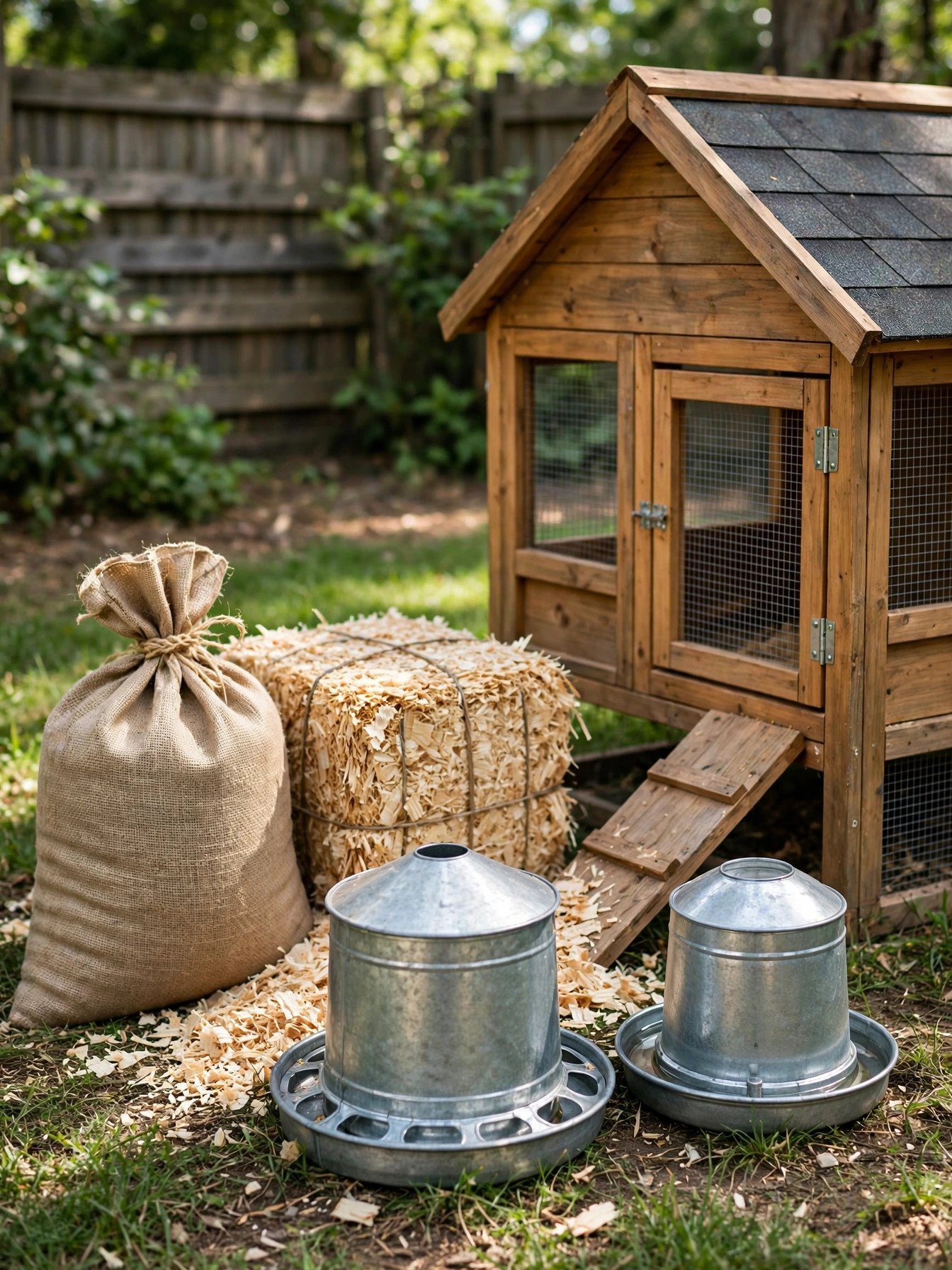
Most keepers land between those two columns, and that is exactly how the calculator’s $818 first-year figure is built: roughly $400 of sensible startup — a mid-range coop or a home-built one, a properly fenced run, basic gear, day-old chicks — plus a year of running costs that start small, because chicks eat very little and do not need layer feed until they are close to laying. If your startup column adds up to more than that, it is almost certainly the coop line doing it.
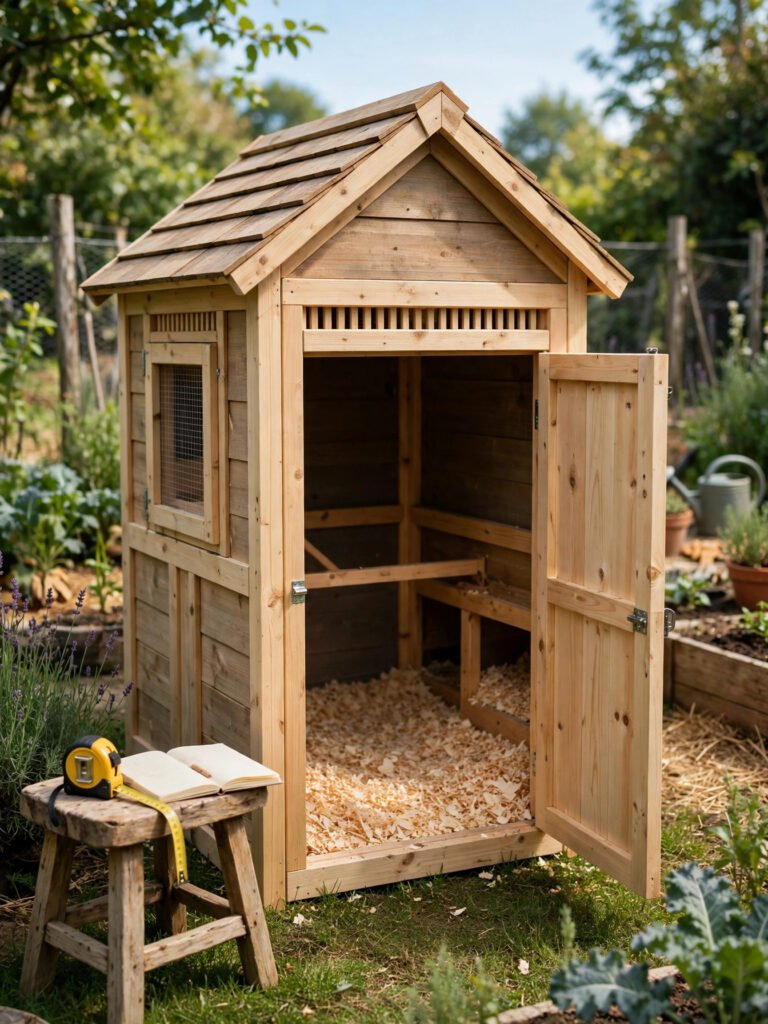
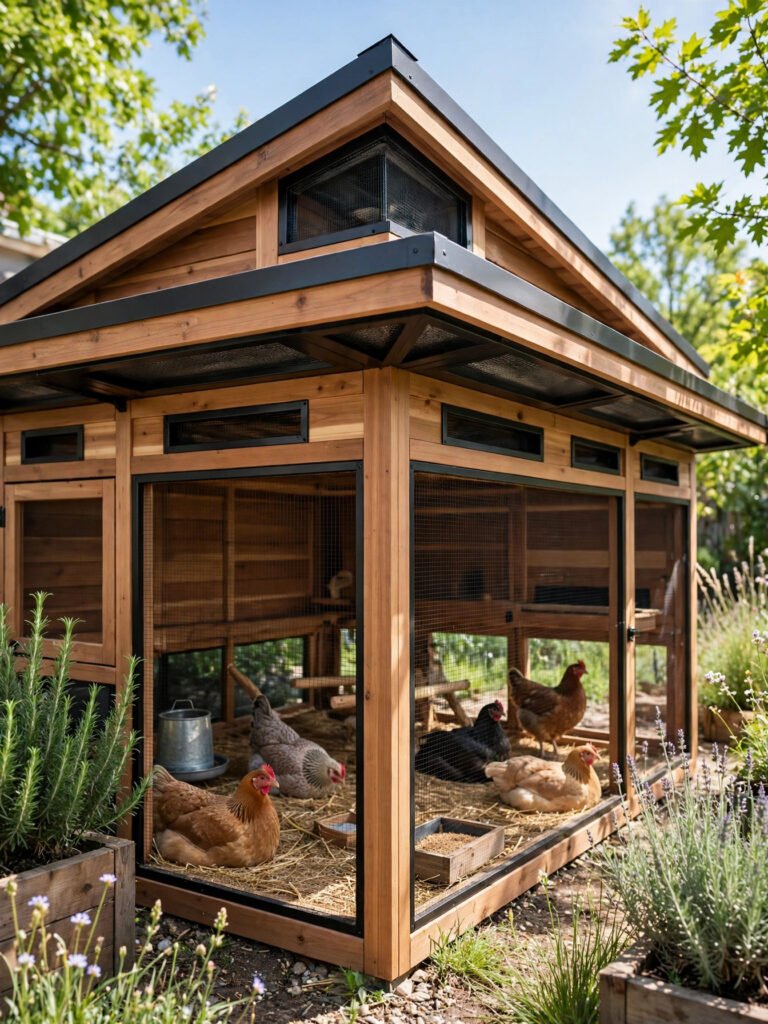
The coop decision deserves its own honest paragraph, because it is the whole ballgame. A cheap kit at $150 looks like a saving until it needs replacement latches, a hardware cloth overlay and a new roof felt inside two winters — at which point you have spent mid-range money on a coop you still do not like. At the other end, a premium prefab like the one below costs more than the rest of the setup combined, and keepers buy it anyway because it is the last coop they intend to purchase. Neither path is wrong. What is wrong is not knowing which one you are on. Our full comparison of prefab vs DIY coop costs runs both routes line by line, including the tools you may need to buy if you build.

- Solid wood construction, made in the USA by Amish-trained craftsmen — the buy-it-once end of the startup table
- A genuinely big footprint at 74 × 60 inches, with lockable doors and built-in nesting boxes
- The honest framing: a premium coop like this can cost more than every other startup line put together. Keepers who buy it are paying to never buy a coop again
One startup line beginners always under-budget: the birds. Day-old chicks at a few dollars each look like the bargain of the century next to started pullets at $20 to $35 a bird — until you add the brooder, five months of feed before the first egg, and the near-certainty that one or two “pullets” from the bargain bin turn out to be roosters. Chicks are cheaper in cash. Pullets are cheaper in time. Both are legitimate; just count the one you actually care about.
The Monthly Running Costs: About $35 for Six Hens
Once the setup exists, keeping chickens is genuinely cheap — this is the part of the hobby nobody oversells. A laying hen eats about a quarter pound of feed a day, so six hens work through roughly 45 pounds a month: one standard 50 lb bag, near enough. Everything else is small change, but let us count it anyway:
| Monthly cost (6 hens) | Typical range |
|---|---|
| Layer feed (one 50 lb bag) | $18 to $28 |
| Bedding (pine shavings or straw) | $4 to $8 |
| Oyster shell and grit | $2 to $3 |
| Treats and scratch | $3 to $5 |
| Sundries and a small replacement fund | $3 to $5 |
| Typical monthly total | About $35 |
Notice where the money goes: feed is two thirds of the running cost, which is why feed waste matters more than any other small economy. A feeder that lets hens bill feed out onto the floor can waste a quarter of every bag — real money, every month, forever. What your own flock eats, to the pound, is worth checking with our Chicken Feed Calculator, especially if your flock is bigger than six or you keep heavy breeds that eat like it.
Two honest caveats on that $35. First, winter costs more: hens eat extra to stay warm, laying slows, and if you run a heated waterer the electricity is real, if small. Second, that figure assumes your hens stay healthy and your setup stays finished — which brings us to the section most cost guides politely skip.
It is also worth knowing how the number scales, because six is rarely where a flock stays. Each extra hen adds roughly $4 to $5 a month in feed and bedding, and each hen fewer saves about the same — a trio of hens runs closer to $20 a month, and a dozen birds closer to $60. The startup does not scale as kindly: twice the hens need a genuinely bigger coop and run, not just a second bag of feed.
The Costs Nobody Warns You About
Every keeper I know has a version of this list. None of it is a reason not to keep chickens. All of it belongs in the budget before it surprises you:
- The predator upgrade round — $50 to $200, usually in year one. Almost everyone starts with the fencing the kit came with, meets their local raccoons, and then does the job properly: hardware cloth over chicken wire, real locks, an apron around the run base. Budget for it from the start and it is a planned expense; skip it and it is an emergency one
- Chicken math — the second setup. Six hens become ten, ten need a bigger run, and the “temporary” grow-out pen becomes permanent. The single most common unplanned cost in this hobby is the expansion you swore you would not need
- Vet basics — $0 most years, $50 to $150 in a bad one. Most backyard keepers handle the everyday stuff themselves with a small first-aid shelf (wound spray, electrolytes, a spare dog crate as a hospital pen). An actual vet visit for a chicken costs what a vet visit costs — and many vets do not see poultry at all, which is worth knowing before you need one
- Replacing hens as layers age out — every 2 to 3 years. A hen lays her best in her first two years and slows from the third. Keeping egg production steady means adding a few young birds every couple of years and deciding what retirement looks like for the old girls. Each new batch is a mini version of the startup cost: birds, plus grower feed for months before they lay
- The winter dip. Short days mean fewer eggs while the feed bill stays the same. Your per-dozen cost in January is nothing like your per-dozen cost in May, and any honest yearly figure — including ours — is the average of the two
What Your Eggs Actually Cost
Now the question underneath the question. Run the calculator’s example honestly: six good layers in their prime produce roughly 1,300 to 1,500 eggs in a full laying year — call it about 110 to 125 dozen. Against steady-state running costs of about $420 a year ($35 a month, with the cheap chick months behind you), that puts home eggs at roughly $3.21 to $3.80 a dozen, and the calculator’s default lands at $3.21 a dozen for a productive flock fed at typical prices.
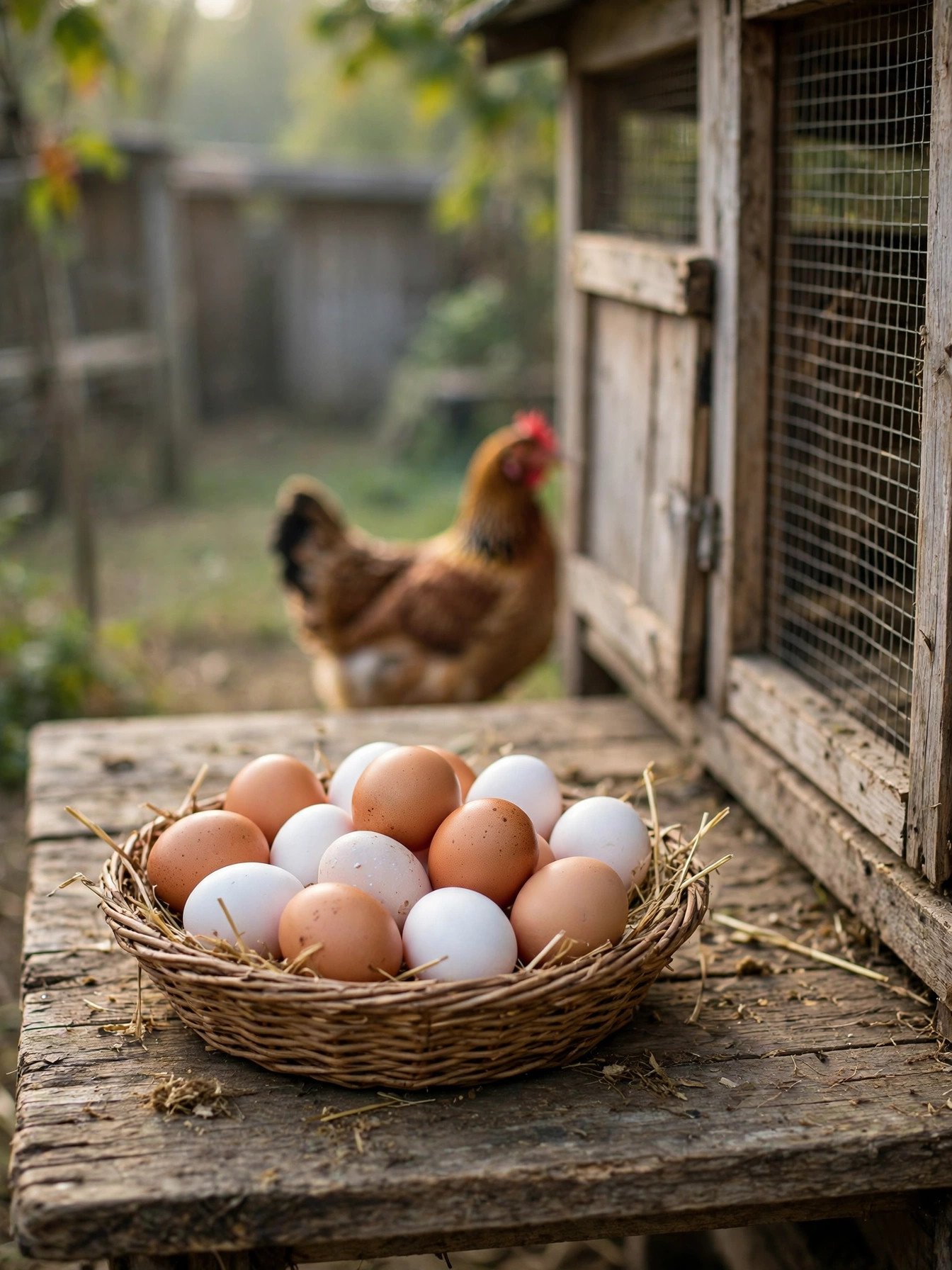
Here is the part where we level with you, because most cost guides do not. In year one, you lose. You spent $800 or more before the eggs reached full flow, and no arithmetic makes those first dozens cheap — divide the startup by year one’s eggs and you are looking at eggs that cost more per dozen than anything in the grocery store, including the fancy carton with a farm name on it. The calculator puts the break-even point — where the setup has paid for itself against buying comparable eggs — at about 47 months on its default numbers. That is the truth of it: roughly four years.
From year two onward, the steady state is kinder: at $3.21 to $3.80 a dozen, your eggs roughly match the price of decent store eggs and sit well below genuinely comparable free-range ones — while being fresher than either, collected from your own yard that morning. So no, backyard eggs were never really a way to save money, and anyone who got into chickens purely for cheap eggs did the math wrong. What the money actually buys is freshness you cannot purchase, hens you know by name, and a grocery line item replaced by a morning routine most keepers would not trade. Priced as a food source, chickens about break even. Priced honestly — food plus everything else they are — they are a bargain. Run your own flock size and local feed price through the Chicken Cost Calculator to see where your break-even lands.
Where to Save Money — and Where Never to Skimp
There is real money to be saved in this hobby, but it is not saved everywhere equally. Save hard in the places where used and homemade work just as well:
- Materials. Reclaimed lumber, a converted shed, a playhouse built for children who outgrew it — hens cannot tell the difference between new timber and sound used timber, and neither can the eggs
- The run. Fence it yourself with posts and hardware cloth instead of buying a panel kit. Your labor is the discount, and the result is usually straighter
- Feeders and waterers. A no-waste port feeder built from a food-grade bucket does the same job as gear costing several times more
- Feed, bought sensibly. Full 50 lb bags over small boutique sacks, stored dry in a sealed can so none of it feeds the mice instead
And then there are the two places where saving money is how people lose flocks. Never skimp on hardware cloth — half-inch galvanized mesh is the difference between a fence and a suggestion, and chicken wire, despite the name, keeps chickens in but does not keep predators out. Never skimp on latches — a raccoon opens a simple slide bolt the way you open a fridge, so every door needs a lock that takes two motions or a carabiner through it. These two upgrades together cost less than replacing six hens once. Our step-by-step guide to how to predator proof a chicken coop shows exactly where that money goes and why every dollar of it earns its place.
Frequently Asked Questions
How much does it cost to keep 6 chickens for a year?
About $800 to $1,200 in the first year including setup — the calculator’s worked example lands at $818 — and then roughly $420 a year (about $35 a month) once the coop and run exist. The coop you choose is what moves you within that range.
Are backyard chickens cheaper than buying eggs?
Not in year one, and roughly break-even after that. Once a flock is established, home eggs cost about $3.21 to $3.80 a dozen against typical feed prices — comparable to decent store eggs and cheaper than premium free-range ones, with a break-even on the whole setup at around four years. The real return is freshness and the keeping itself, not savings.
What is the biggest cost of raising chickens?
The coop, by a distance. It is commonly a third to a half of everything you will spend in year one, and the difference between the cheapest kit and a premium prefab can be several hundred dollars. After startup, feed takes over as the biggest cost at about two thirds of the monthly bill.
How much does chicken feed cost per month?
For six laying hens, about $18 to $28 a month — roughly one 50 lb bag of layer feed, since each hen eats about a quarter pound a day. Organic and specialty feeds sit at the top of that range and beyond, which is the main reason one keeper’s monthly total differs from another’s.
The Bottom Line
Raising backyard chickens costs real money up front — about $818 in the first year for a sensibly set up flock of six, on the numbers our Chicken Cost Calculator uses — and genuinely little after that: about $35 a month, eggs at around $3.21 a dozen, and a setup that has paid for itself in roughly four years. Spend the startup money once and spend it in the right order: a coop that truly fits your flock, hardware cloth and locks that truly stop a raccoon, and the cheapest feed storage that keeps feed dry. Save on everything else without a moment’s guilt. Then go and enjoy the part no spreadsheet captures. If you are still at the planning stage, our complete guide to backyard chickens for beginners walks the whole first year in the order you will actually live it.