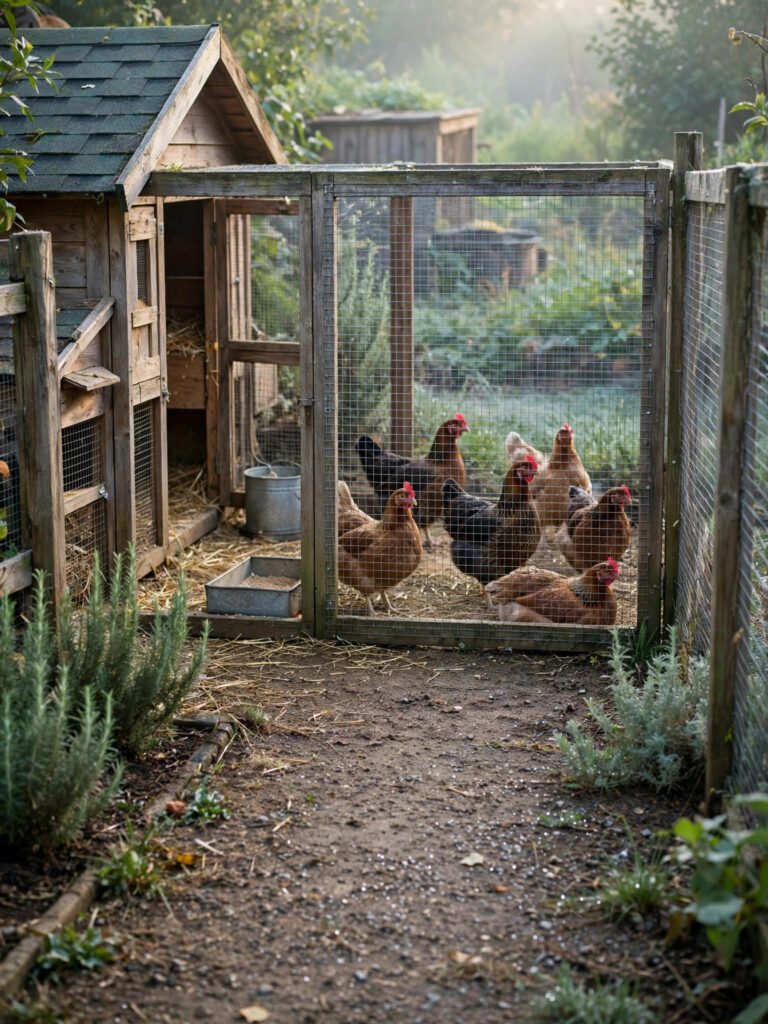
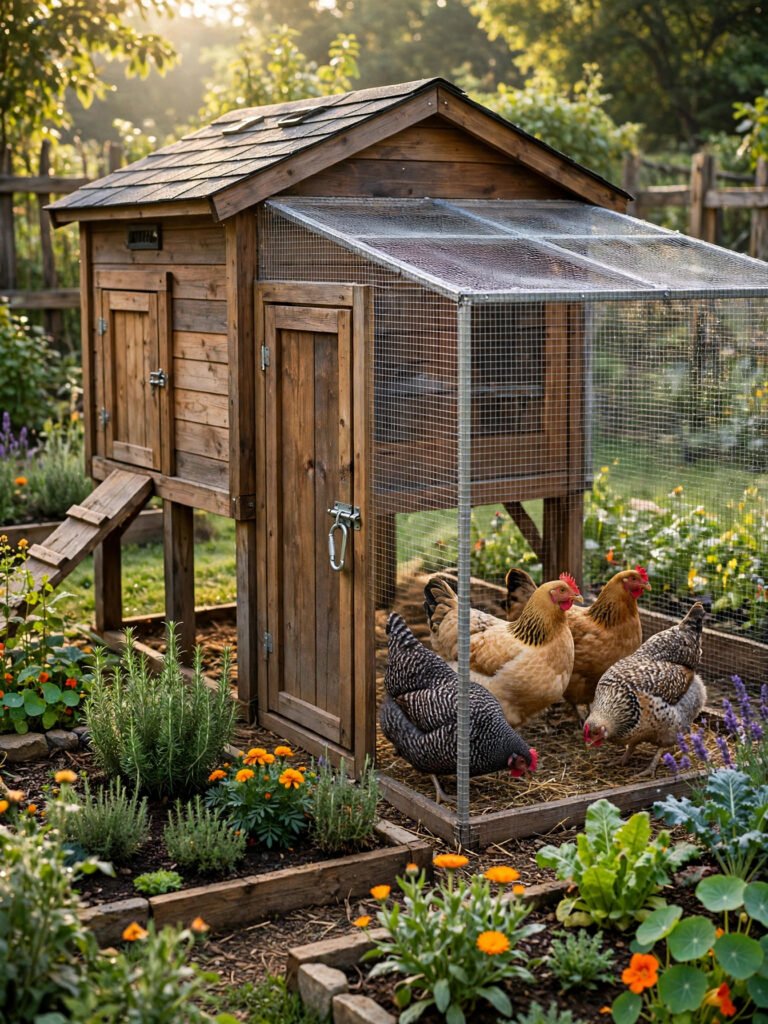

Short answer first: a coop is predator proof when five things are all true at the same time. Half-inch hardware cloth covers every opening instead of chicken wire, a buried apron of that same mesh runs around the base so nothing can dig in, every door has a two-step latch a raccoon cannot work, the run has a solid cover over the top, and there is no gap anywhere bigger than half an inch. Miss one of the five and a predator will eventually find the one you missed. Below is how each attacker actually gets in, and the specific fix that stops it.
Here is the part nobody believes until it happens to them: most flocks are not lost to some dramatic midnight attack. They are lost on an ordinary Tuesday, through a vent covered in the wrong wire, or a latch a raccoon figured out on its third nightly visit. Predators are patient. They test your coop the way water tests a roof, quietly and over and over, and they only need to win once. Your job is to make sure there is nothing to win.
Why Chicken Wire Does Not Stop Predators
Chicken wire has the most misleading name in the whole chicken world. It was never designed to keep predators out. It was designed to keep chickens in, and that is all it does. The wire is thin, twisted rather than welded, and the hexagonal holes are one to two inches wide, which is plenty of room for a raccoon to reach a paw through and grab a hen sleeping against the fence. Raccoons also simply tear it. A determined one pulls the twists apart with its hands, and a dog can go through it in seconds. It rusts quickly too, so the wire that felt sturdy in spring can be brittle by the following year.
If your coop or run came with chicken wire on it, and most prefab coops do, replacing it is not an upgrade. It is the job. Everything else on this page builds on that one swap.
Raccoons: The Ones With Hands
Raccoons are the predator I would design for first, because they are strong, they climb, and their front paws work almost like hands. They unlatch simple hook-and-eye latches. They slide basic bolts. They reach through wide mesh and kill birds they cannot even pull out, and they will come back night after night once they know hens are there. A raccoon does not need a big opening either. If it can get its head somewhere, it will worry at that spot until the opening grows.
The fixes are unglamorous and they work. Hardware cloth on every window, vent and run wall, fastened with screws and washers rather than flimsy staples. Latches that need two separate motions to open, which we will get to in the locks section below. And a coop door that actually closes flush, with no warped gap along the edge for little fingers to work into. Do those three things and raccoons mostly move on to easier yards.
Hawks and Owls: The Attack From Above
An uncovered run is an invitation written in the sky. Hawks hunt in daylight and will drop straight into an open run, sometimes while you are standing in the yard. Owls do the same work at dusk and through the night, which is one more reason hens need to be shut inside a solid coop after dark rather than left sleeping in the run. A hawk only needs a few seconds and a clear line down.
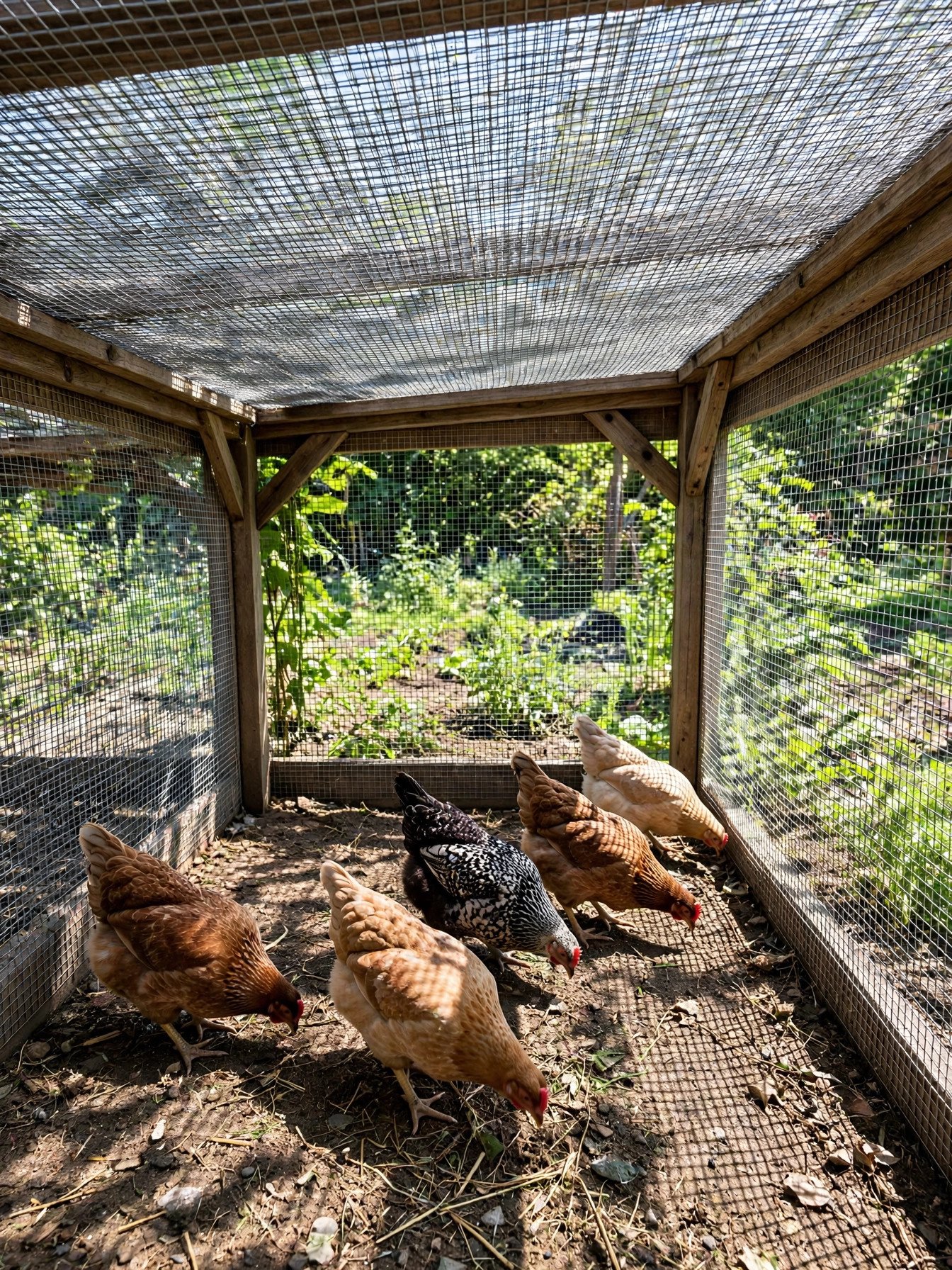
The fix is a roof. Hardware cloth over the top of the run is the strongest option and doubles as protection against climbing raccoons. A solid roof panel is even better where weather allows, since it adds shade and keeps the run drier. Loose bird netting is the weakest choice, better than nothing, but hawks occasionally tangle through it or push past loose edges, and it sags and tears within a season or two. Whatever you use, fasten the edges down tight. A cover that flaps loose at one corner is barely a cover at all. And since the run is doing this much work, size it generously too — the run space in our guide to how much space chickens need assumes the birds actually get to use it safely all day.
Foxes and Coyotes: Diggers and Jumpers
Foxes and coyotes hunt differently. They are too big to squeeze through mesh, so they go under it or over it. A fox will dig at the base of a fence with real commitment, and it will find the one soft corner. Coyotes do the same and can clear a low fence without touching it. Both are strongest at dawn and dusk, and a fox that takes one hen will usually return for the rest, sometimes the very next evening.
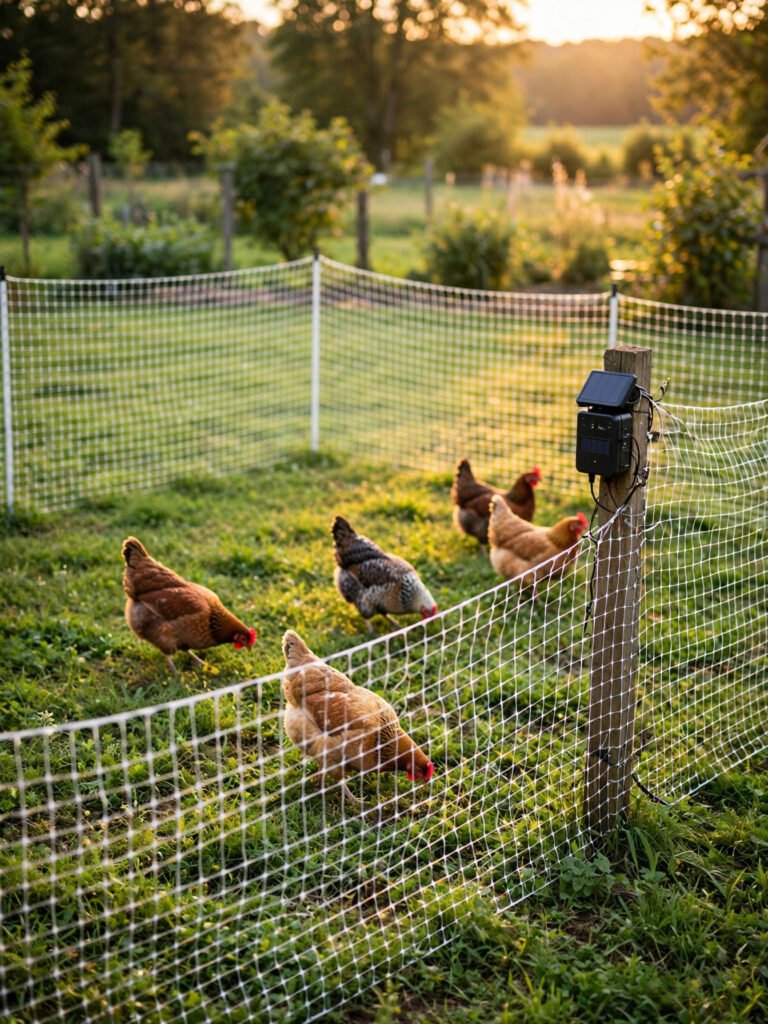
The apron, covered in its own section below, is what stops the digging, and a covered run or a fence at least six feet high answers the jumping. For flocks that range on open ground beyond a fixed run, portable electric poultry netting like the Premier 1 PoultryNet is the tool most keepers rely on. It is a psychological barrier rather than a physical one, so it only works when it is properly energized, and the energizer is sold separately, but foxes and coyotes that touch it once tend to give the whole yard a wide berth afterward.
Rats and Snakes: The Ones That Use Small Doors
Rats and snakes do not break in. They wander in, through holes you would not bother pointing at. A rat can squeeze through a gap of about half an inch and will chew wood and soft wire to make a small gap bigger. Rats mostly come for the feed, but they also take eggs and chicks, and once a colony decides your coop is a pantry, getting rid of it is a long, miserable project. Snakes come for the same menu. Most are after eggs and rodents rather than adult hens, but a snake in the nest box is still a snake in the nest box.
This is where the half-inch rule earns its keep. Half-inch hardware cloth over every vent, window and gap keeps both out, and for brooders and chick areas, quarter-inch cloth is worth using since tiny chicks and smaller snakes play by different numbers. Store feed in a metal bin with a tight lid, never in the bag in a corner of the coop, and collect eggs daily so there is less on the menu. You are not just blocking holes here. You are making your coop boring.
Neighborhood Dogs: The Daytime Problem
Ask keepers what has actually killed their birds and dogs come up more than any wild animal. A loose dog is strong, fast and often just playing, which does not matter much to the hens. Dogs dig, they chew at wire, they body-slam flimsy run doors, and a chicken wire run is barely an obstacle. This is also the one predator that arrives in broad daylight while everyone is home.
The answer is a run built like it means it: a real frame, hardware cloth instead of chicken wire, an apron at the base, and a gate latch a nose cannot lift. If your own dog shares the yard, train and supervise, but build as if you had not. Given one unsupervised minute and a fluttering hen on the other side of weak wire, most dogs are just dogs.
Hardware Cloth: The One Material That Matters
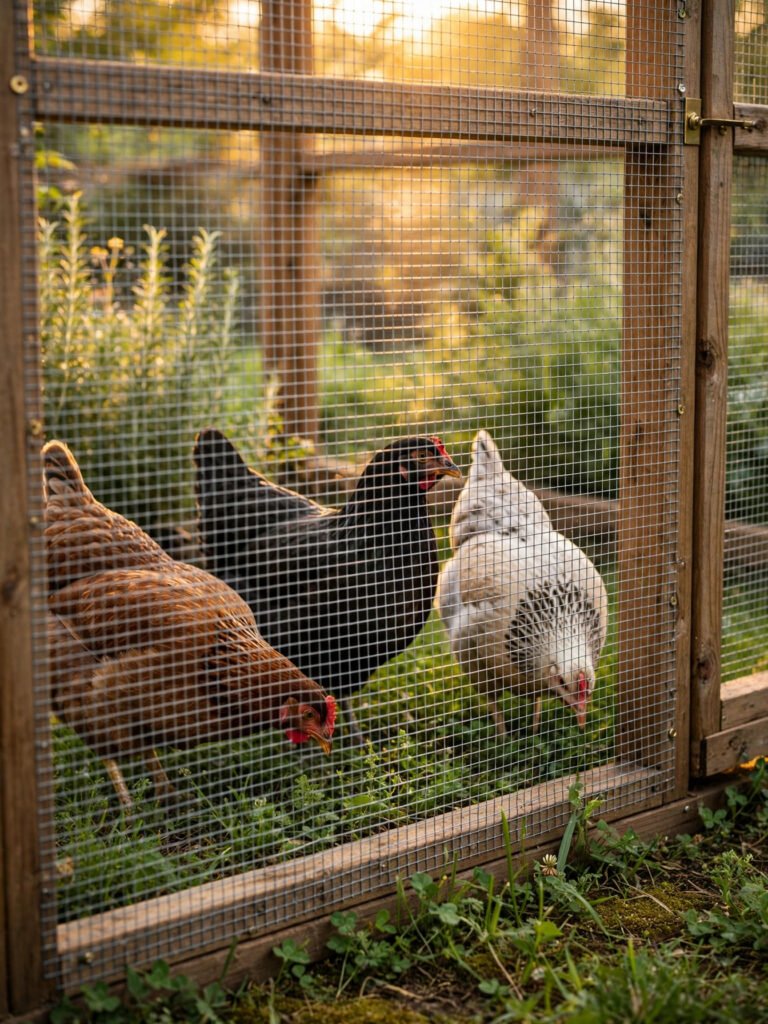
Everything above comes back to this roll of wire. Hardware cloth is a welded steel grid, and the spec you want is 1/2 inch mesh in 19 gauge for general coop and run work. The mesh size is what stops paws, heads and small bodies. The gauge is the thickness of the wire itself — a lower number means thicker wire — and 19 gauge is the point where the cloth stops being tearable by raccoon hands. Galvanized after welding is the finish to look for, because the zinc coats the weld points too, and those are where cheap cloth rusts out first.
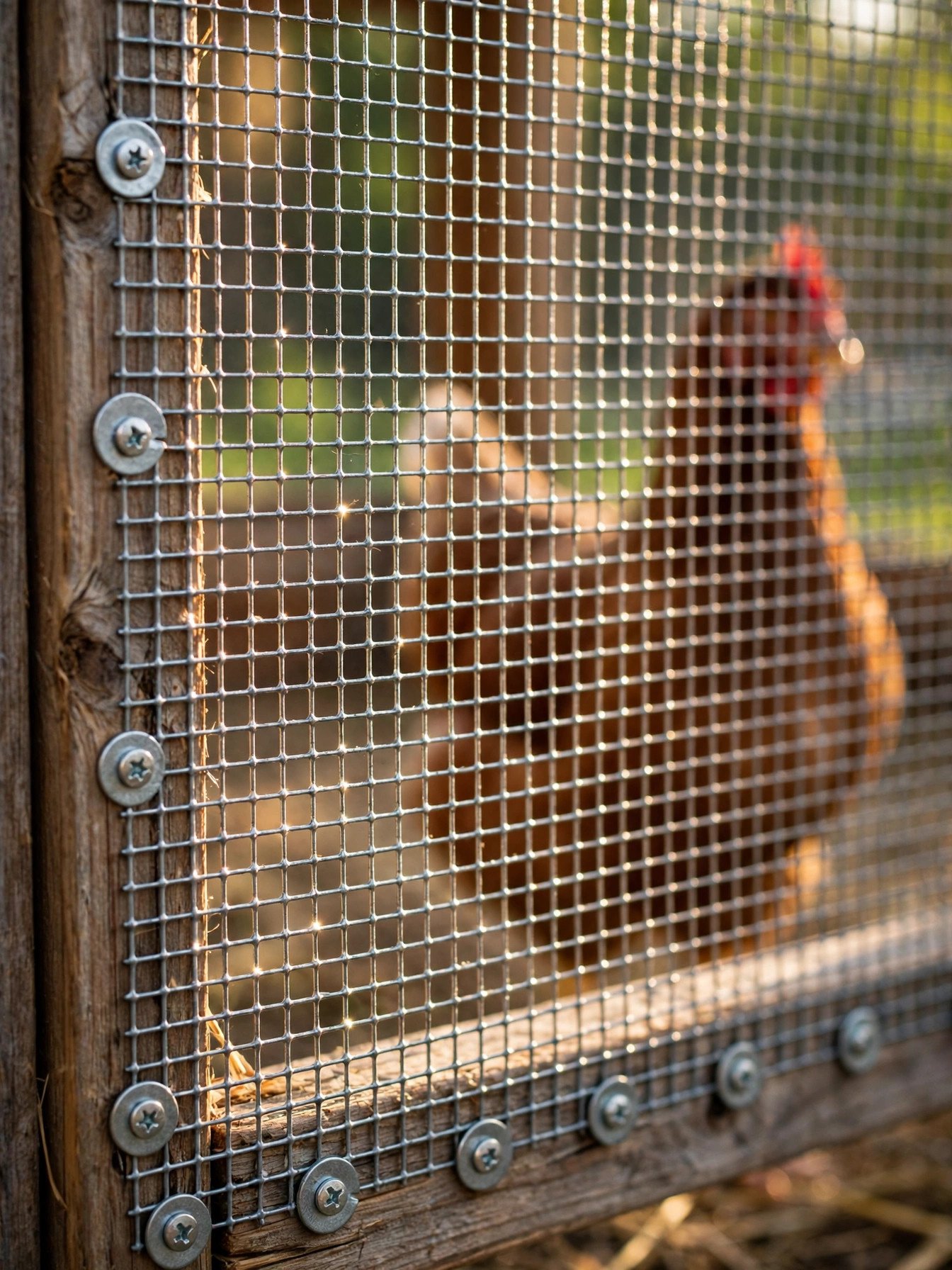
Where does it go? Everywhere there is an opening. Run walls and run roof. Windows and vents, screwed on from the inside or outside with the edges covered. The apron around the base. The gap under the door and the space where the roof meets the walls, two spots people forget constantly. And here is the detail that decides whether it works in year three: attach it with screws and fender washers, or trap the edges under a board, rather than relying on poultry staples alone. Staples pull out a little more every season. Screws and washers hold the cloth like they mean it.
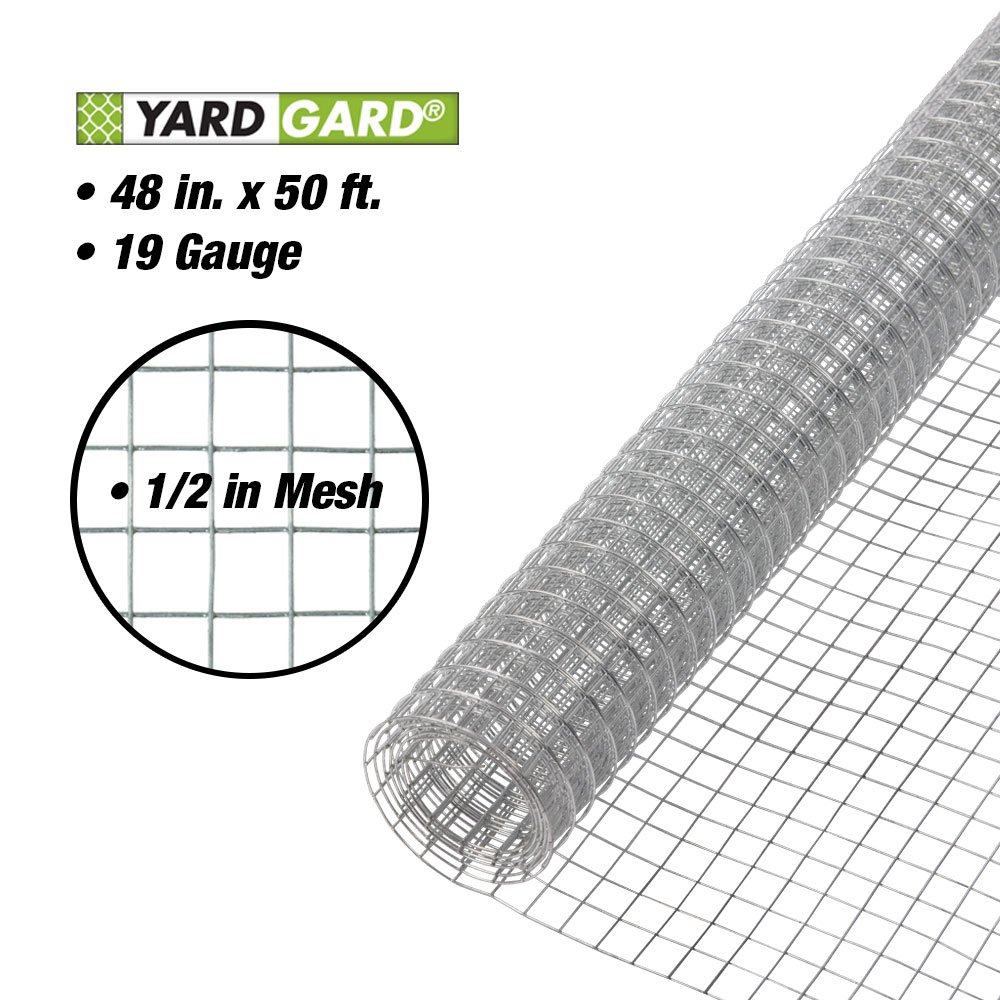
- Half-inch openings are too small for raccoon paws to reach through and too small for rats to squeeze past
- 19 gauge galvanized steel, welded at every joint, so it stands up to tearing, chewing and years of weather
- The 48 in × 50 ft roll is the practical size for a backyard build — enough for a typical run, the vent and window covers, and the apron around the base
The Apron: Stop Diggers Without Digging a Trench
You will read advice about burying hardware cloth a foot or more straight down around your run. It works, and it is also a miserable weekend with a shovel. The apron does the same job the easy way. Lay a strip of hardware cloth 12 to 18 inches wide flat on the ground all the way around the outside of the run, attach the inner edge firmly to the base of the run wall, and pin the outer edge down with landscape staples. Then walk away. The grass grows up through it and it all but disappears.
It works because of how animals dig. A fox or dog starts digging right at the fence line, hits mesh under its paws, and gives up — almost nothing backs up two feet and starts again further out, which is what the apron would require. Corner coverage matters most, so overlap the corners instead of leaving neat little gaps at exactly the spots diggers prefer. If you are still at the planning stage, get the run dimensions sorted first with our coop size calculator, because the apron, the cover and the cloth all get cheaper to plan once the footprint is fixed.
Locks and Latches a Raccoon Cannot Open
Here is the rule that settles every latch question: if you can open it with one hand, in the dark, without thinking, a raccoon can open it too. Hook-and-eye latches fail this test. So do simple turn buttons and the cheap slide bolts that ship on most prefab coops. Raccoon paws are nimble, patient and attached to an animal with all night to practice.
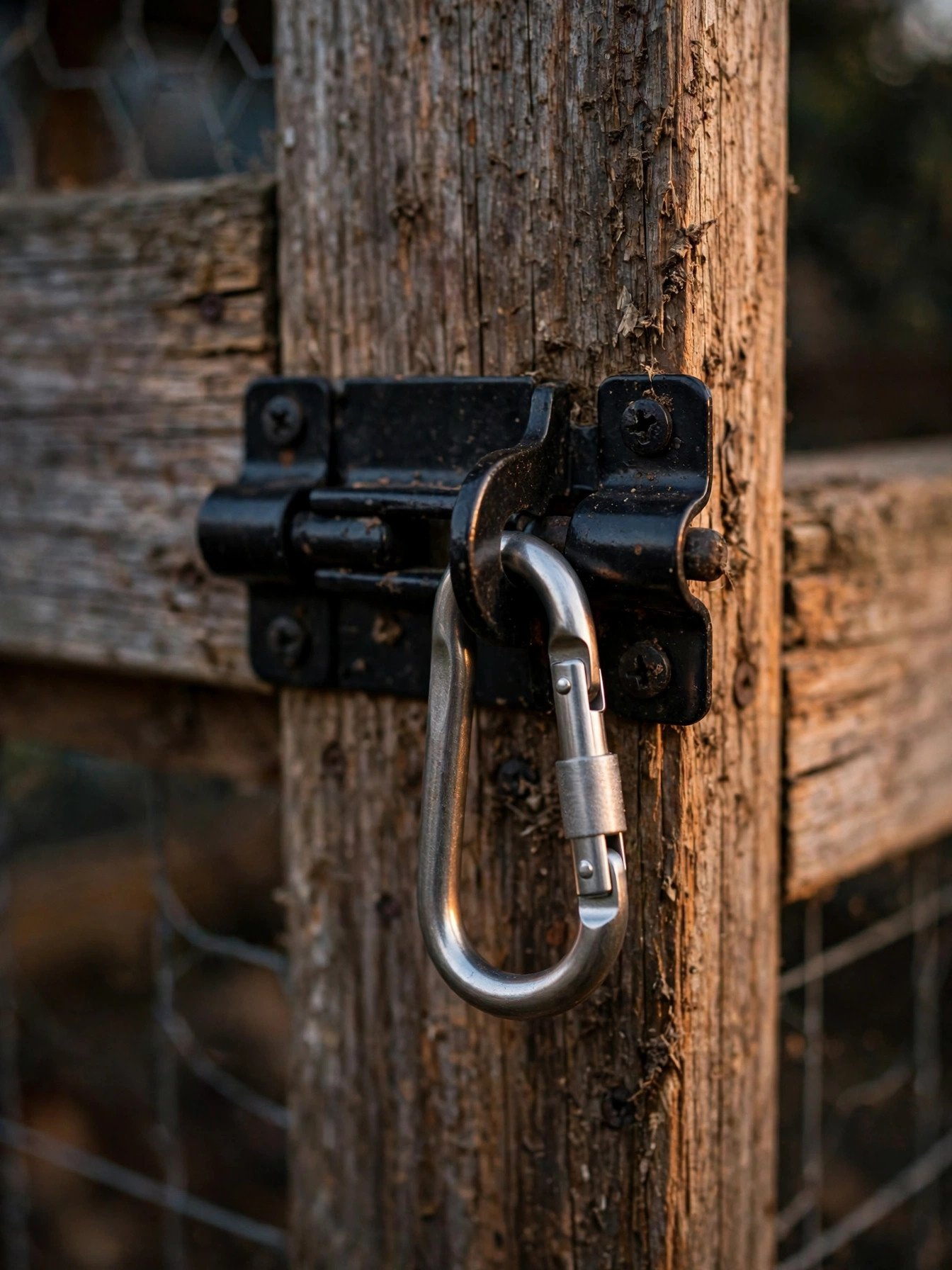
What works is a two-step latch — any fastening that needs two different motions in sequence. The simplest reliable setup is a sturdy barrel bolt with a spring carabiner clipped through the hole in the bolt handle: slide, then pinch-and-clip is a combination raccoon paws cannot manage, while costing you about two extra seconds. A pack of stainless steel carabiner clips like these sprookber ones covers every door on the coop with spares left over, and stainless matters because a rusted clip in February is a clip you stop bothering to use. Fit the same system to the nest box lid and the cleanout door, not just the main door. Predators do not care which door was the cheap one.
The Predator Proofing Checklist
Walk your coop with this list at dusk, when the gaps show up best, and be honest about every row:
| Weak point | What to do |
|---|---|
| Chicken wire anywhere on the coop or run | Replace it with 1/2 inch, 19 gauge hardware cloth |
| Windows and vents | Cover with hardware cloth, screwed in with fender washers |
| Base of the run | Lay a 12 to 18 inch hardware cloth apron flat around the outside |
| Top of the run | Cover it — hardware cloth or a solid roof, edges fastened down |
| Coop door, nest box lid, cleanout door | Two-step latches: barrel bolt plus carabiner, or an equivalent locking latch |
| Gaps at the roofline, floor and door edges | Seal or screen anything wider than 1/2 inch |
| Feed storage | Metal bin with a tight, heavy lid — never the open bag |
| Loose staples and lifted cloth edges | Re-fasten with screws and washers or batten boards |
Frequently Asked Questions
Is chicken wire enough to protect chickens?
No. Chicken wire is made to keep chickens in, not predators out. Raccoons tear through it and reach through its wide holes, dogs rip it, and it rusts weak within a couple of seasons. Hardware cloth in 1/2 inch, 19 gauge is the material that actually protects a flock.
What size hardware cloth is best for a chicken coop?
Half-inch mesh in 19 gauge galvanized steel is the standard for coops and runs. It blocks raccoon paws, rats and most snakes while still letting air move. For brooders and chick pens, go down to 1/4 inch, because chicks and the smallest snakes follow smaller rules.
Do I need to bury hardware cloth, or is an apron enough?
An apron is enough in most yards, and it is far easier to install. Lay 12 to 18 inches of hardware cloth flat on the ground around the outside of the run, attached to the base of the wall and pinned at the outer edge. Diggers start at the fence line, hit mesh, and quit. Burying cloth vertically also works; it is simply a lot more digging for the same result.
Can raccoons really open coop latches?
Yes, and keepers lose birds to this every year. Raccoons open hook-and-eye latches, turn buttons and simple slide bolts. What stops them is a two-step latch — two different motions in sequence, like a barrel bolt with a carabiner clipped through it. If a latch feels effortless to you, treat it as already open.
Will a covered run completely stop hawks?
A run topped with hardware cloth or a solid roof, with the edges fastened down, stops hawks and owls about as completely as anything can. Loose bird netting is a partial answer — it deters, but it sags, tears and occasionally lets a determined hawk through. If hawks are a regular sight over your yard, build the hard cover and be done with it.
The Bottom Line
Predator proofing is not one product or one weekend project. It is five habits of building: real hardware cloth instead of chicken wire, an apron at the base, a cover over the top, two-step latches on every door, and no gap anywhere wider than half an inch. Run down that list honestly and your coop stops being the easiest meal on the street, which is honestly all any of us are aiming for. Predators are lazy in the end. Make your yard the hard option.
Working through the rest of the setup at the same time? Our complete guide to backyard chickens for beginners pulls housing, space, feeding and safety together in one place, so each decision supports the others instead of fighting them.