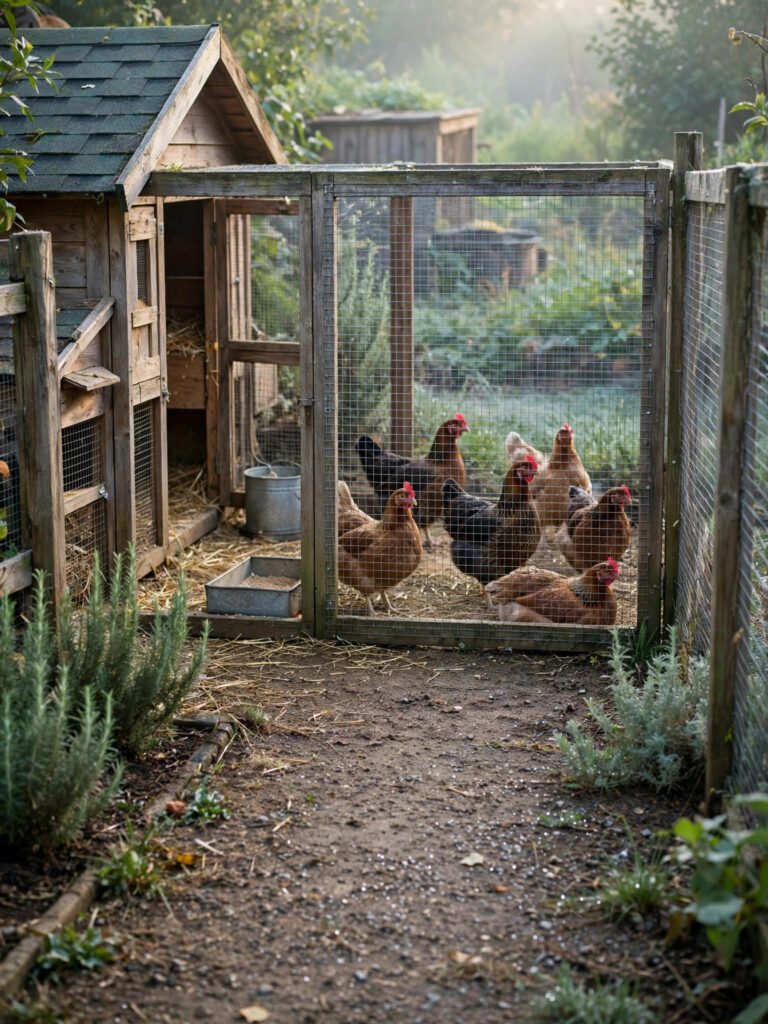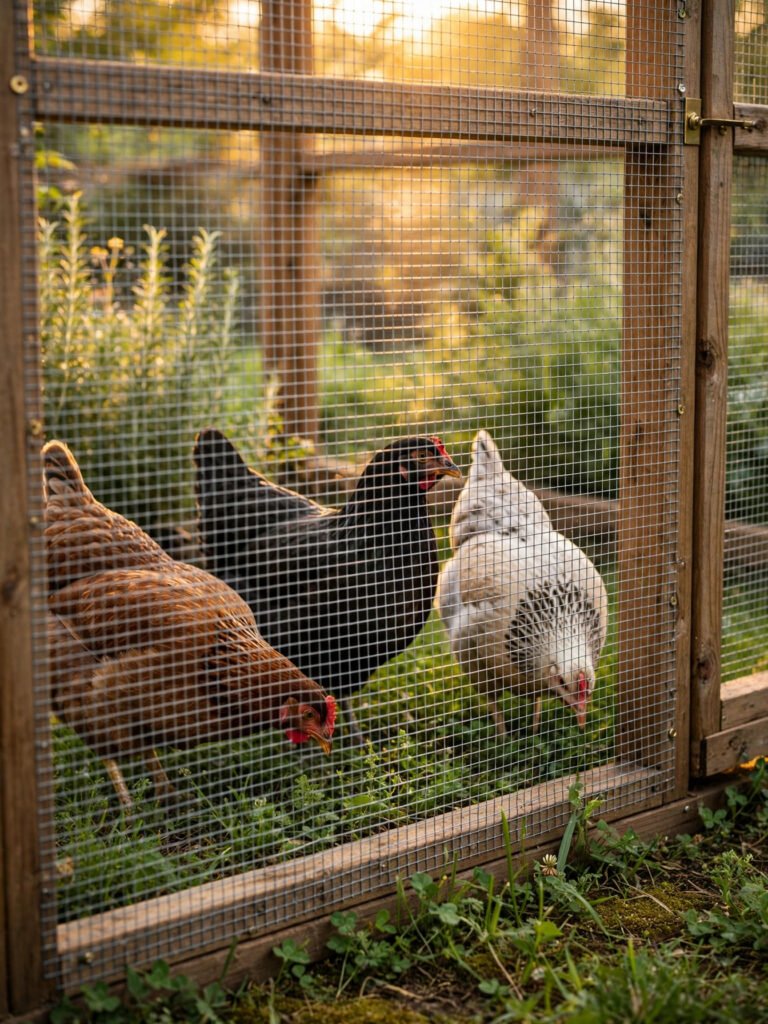
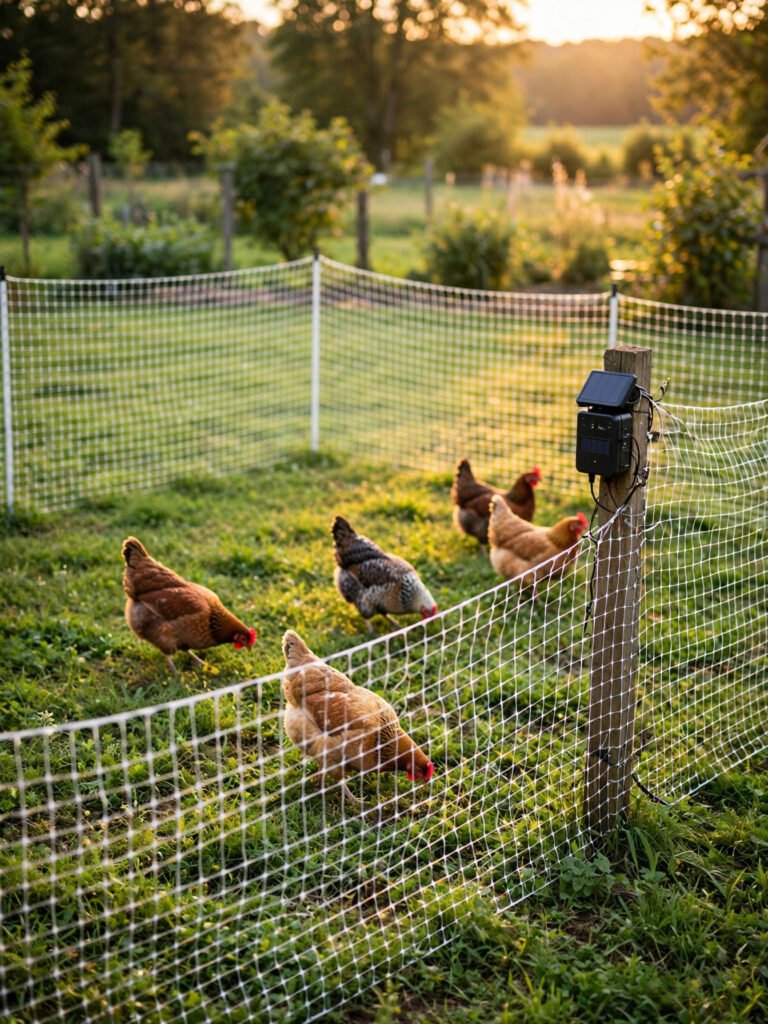

Short answer first: electric poultry netting is the fastest way to give hens real pasture — a fence that rolls out in about fifteen minutes, encloses a big patch of grass, and moves to fresh ground every week or so. Nothing else a backyard keeper can buy does that job. But it comes with one condition that decides everything: the net only works when it is properly energized. Electric netting is a psychological barrier, not a physical one. A fox that touches a hot net remembers it for months. A fox that pushes through a dead net learns there is nothing to fear — and so do your hens, who will start treating it as a climbing frame. A dead net is honestly worse than no net at all, because everyone involved has been taught it does nothing.
So this guide is really two guides in one: the nets themselves, and the system that makes them hot. The picks below come from manufacturer specs and the patterns that repeat in verified owner reviews — we do not claim to have run these nets around our own pasture. What we did instead: checked every spec against the maker’s own numbers, and paid close attention to the recurring complaints, because with netting the complaints are almost never about the net. They are about energizers that were too weak, grass that was never trimmed, and parts the buyer assumed were in the box.
Quick Picks: The Short Version
| Net / Kit | Height & length | Energizer | Best for |
|---|---|---|---|
| Premier 1 PoultryNet | 48 in × 164 ft | Sold separately — plan on about 0.25 joule per roll, more is better | The proven all rounder; buy the net once, choose your own power |
| Premier 1 PoultryNet Plus Starter Kit | 48 in × 100 ft | Included — SolarStop 80 solar energizer, 0.80 joule | First time buyers who want everything in one box |
| RentACoop Poultry Netting | 42 in × 168 ft (48 in also listed) | Sold separately — brand recommends about 0.25 joule per roll | The most net per roll, from a poultry specialist brand |
Before the Picks: The Four Parts of a Working System
Here is the thing the product photos do not tell you: a roll of netting by itself is not a fence. It is one part of a four part system, and the fence fails if any one of the four is missing or undersized.
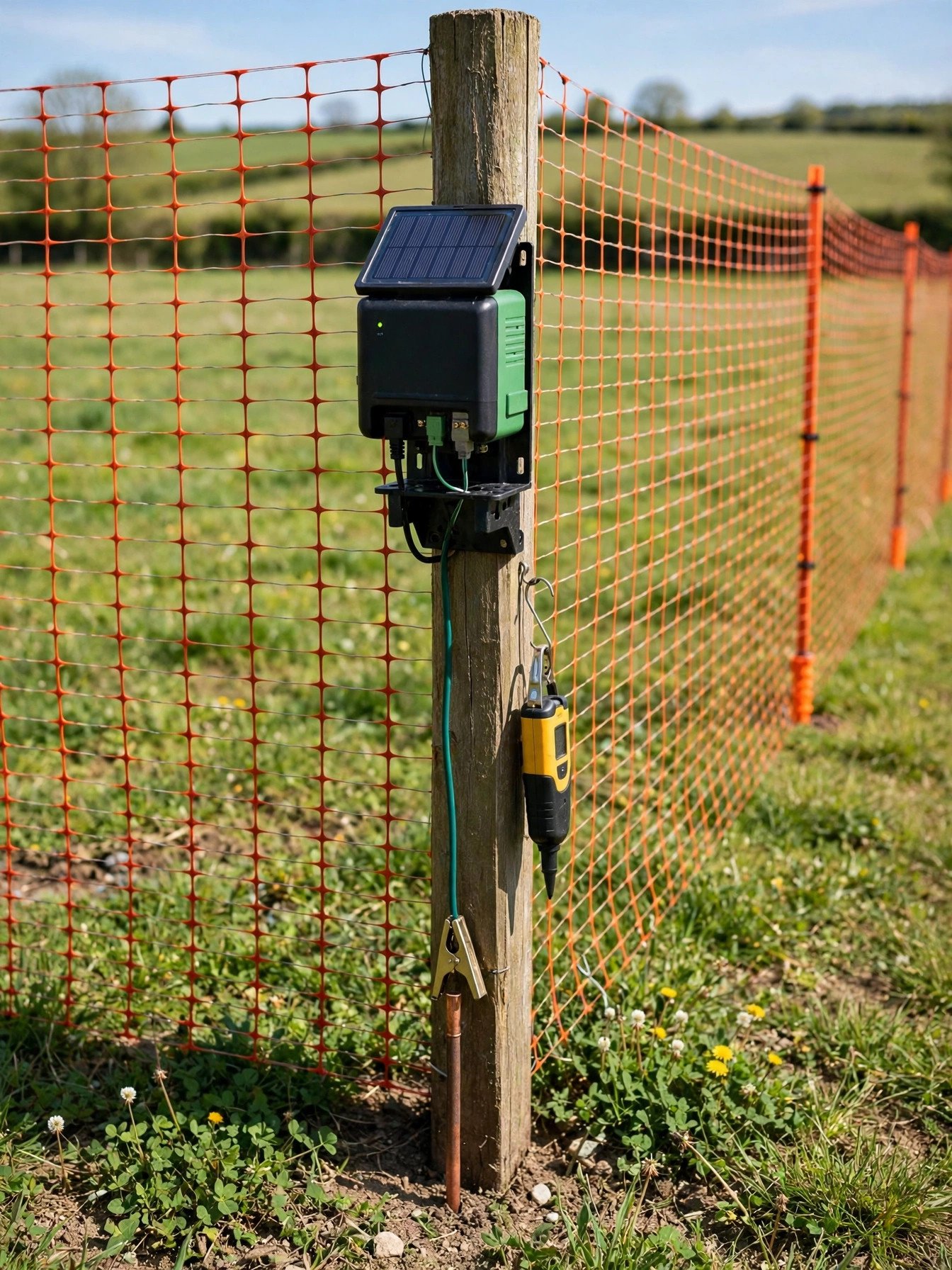
- The net. The visible part. Every net in this guide arrives as a single roll with its line posts already built in, so setup is unroll, unfold, step the posts in.
- The energizer, sized in joules. The heart of the system, and the part beginners underbuy. Netting sits low where grass touches it, and every blade of wet grass bleeds voltage off the line. Chickens also have high electrical resistance — scaly legs and light bodies — so they need a stronger pulse to respect the fence than a cow does. For one roll, look for a pulse style energizer of at least 0.25 joule, and treat 0.5 joule or more as the comfortable zone. Never use a continuous current (weed burner style) energizer on netting — pulse only.
- The ground rod. The pulse travels out along the net, through whatever touches it, and back through the soil to this rod. A short rod in dry, sandy soil is the silent reason many fences test weak. Drive it deep and follow the energizer maker’s grounding instructions exactly.
- The tester. A simple fence tester tells you the voltage actually on the net — you want several thousand volts, checked after every move and after heavy grass growth. Guessing is how dead nets happen.
Keep those four parts in mind as you read the picks, because the real difference between them is how many of the four come in the box.
1. Premier 1 PoultryNet — Best All Round Net
If electric poultry netting has a default recommendation, this is it. Premier 1 has been selling PoultryNet for decades, and the 48 inch, 164 foot roll is the net other nets get compared to. It has 12 horizontal strands, 11 of them conductive, with vertical strings every 3 inches and the horizontal spacing tightest at the bottom, where small predators push. The built in posts are double spiked and spaced every 10 feet, the whole roll weighs about 24 pounds, and the strands use a tinned copper superconductor woven in with the stainless steel, which is why the net holds its voltage unusually well along its full length. We already point readers to this exact net in our guide to how to predator proof a chicken coop, and it earns the anchor spot here for the same reason: it is the known quantity.

- 12 horizontal strands (11 conductive) with vertical strings every 3 inches, spaced closest at the bottom where predators push
- Built in double spike posts every 10 feet — unroll, unfold, step them in, done in about 15 minutes
- Tinned copper superconductor woven into the strands holds voltage along the full 164 feet better than stainless only nets
- Energizer sold separately — Premier recommends roughly 0.25 joule per roll and a pulse style unit of 0.6 joule for up to 3 rolls
What we like:
- The conductivity is genuinely better. That tinned copper strand is not marketing garnish — it is why owners report strong voltage readings at the far end of the roll where cheaper nets fade
- 48 inches is the right height for chickens. The taller net discourages flighty birds from hopping it and presents a more serious face to coyotes and dogs than the 42 inch nets
- Support behind the product is unmatched in this category. Premier publishes real setup guidance, sells repair parts, and answers fencing questions — netting is their whole business, not a sideline
What holds it back:
- The energizer is a separate purchase, so the true cost of a working fence is the net plus an energizer, a ground rod and ideally a tester
- Posts every 10 feet can sag on uneven ground or long straight runs — most keepers add a few support posts at corners and dips
- Like all netting, it will not contain chicks or very young birds small enough to slip through the openings, and Premier says so plainly
Not for: anyone who wants to unbox a complete fence in one purchase — look at the kit below instead. For: keepers who already own an energizer, or who want to choose their own power source and build the system around the best net.
2. Premier 1 PoultryNet Plus Starter Kit — Best Complete Kit
This is the answer to the four parts problem. The starter kit bundles a 100 foot roll of PoultryNet Plus — the Plus version adds extra built in posts, spaced about every 6 feet 8 inches instead of 10 feet, specifically to fight sag — with Premier’s SolarStop 80 solar energizer, FiberTuff support posts, and a fence tester. All four parts of the system, in one box, sized to work together. The energizer is a proper 0.80 joule solar unit with an internal battery and a 10 watt panel, rated to run several rolls of netting, so the kit has headroom if your pasture plans grow.

- Everything in one box: net, SolarStop 80 solar energizer (0.80 joule), FiberTuff support posts and a fence tester
- Plus netting with extra posts every 6 ft 8 in, so the fence stands straighter with less sag than standard netting
- Solar power with an internal battery means the fence can live anywhere on the property — no outlet, no extension leads
- The energizer has output to spare, enough for several rolls if you expand the pasture later
What we like:
- Nothing is forgotten. The classic beginner failure is a net standing dead in the field for a week while an energizer ships. The kit removes that failure mode entirely
- The closer post spacing is a real upgrade. Most owner complaints about netting are sag complaints, and the Plus net is Premier’s direct answer to them
- A tester is included, which means it actually gets used — and a tested fence is a hot fence
What holds it back:
- You get 100 feet of net instead of 164, so the enclosed area is smaller than the full size rolls give you — enough for a solid starter paddock, not a big pasture
- It is the most expensive way to start, because you are buying the whole system at once. The per part value is fair, but the single purchase is a bigger step
- Solar charging needs a reasonably sunny spot for the energizer; a fence tucked under heavy tree cover all winter will test the battery
Not for: keepers who already own a good energizer — you would be paying twice for power. For: first time netting buyers who want one delivery, one setup afternoon, and a fence that is hot the same day.
3. RentACoop Poultry Netting — Best Long Roll From a Poultry Specialist
RentACoop built its name on feeders and waterers designed by people who clearly keep chickens, and their netting follows the same practical pattern. The roll is a generous 168 feet, the posts come pre fastened every 12 feet and are double spiked, and the box includes four guy lines to tension the corners — a thoughtful touch, because corner tension is where most sag starts. It is listed in 42 inch and 48 inch heights, in green and white so it sits less visibly in a yard, and RentACoop is unusually upfront in its own listing that the fence does not work without an energizer, recommending about a quarter joule of pulse energy per roll.

- 168 feet of netting in one roll — the longest single roll in this guide, in 42 in or 48 in heights
- Posts pre fastened every 12 feet and double spiked, with four guy lines included to tension corners and prevent sag
- Sized for birds from 4 weeks old up, with graduated mesh that is tightest near the ground
- Energizer sold separately — the brand recommends about 0.25 joule of pulse energy per 164 ft roll
What we like:
- The guy lines are a small thing that solves a real problem. Corners are where nets droop, and drooping nets are where hens get tangled and predators get ideas
- The honest listing. RentACoop states the energizer requirement and the vegetation trimming requirement right in the product description instead of burying them — that is the advice we would give, printed by the seller
- 168 feet encloses a genuinely useful paddock in a single roll, roughly a 40 by 40 foot square with a little left for the gate opening
What holds it back:
- Posts every 12 feet is the widest spacing in this guide, so on rolling ground you will likely add a few support posts of your own between them
- Still net only — the energizer, ground rod and tester are on you to source, same as the Premier roll
- The 42 inch version is easy to order by accident if you are skimming; for chickens, choose the 48 inch height at checkout
Not for: very uneven ground, where the wider post spacing will fight you. For: keepers who want the biggest single roll enclosure from a brand whose other poultry gear they may already own and like.
What Netting Stops and What It Does Not
This is the section to read twice, because netting has a very specific job description and trouble starts when keepers hand it a different one.
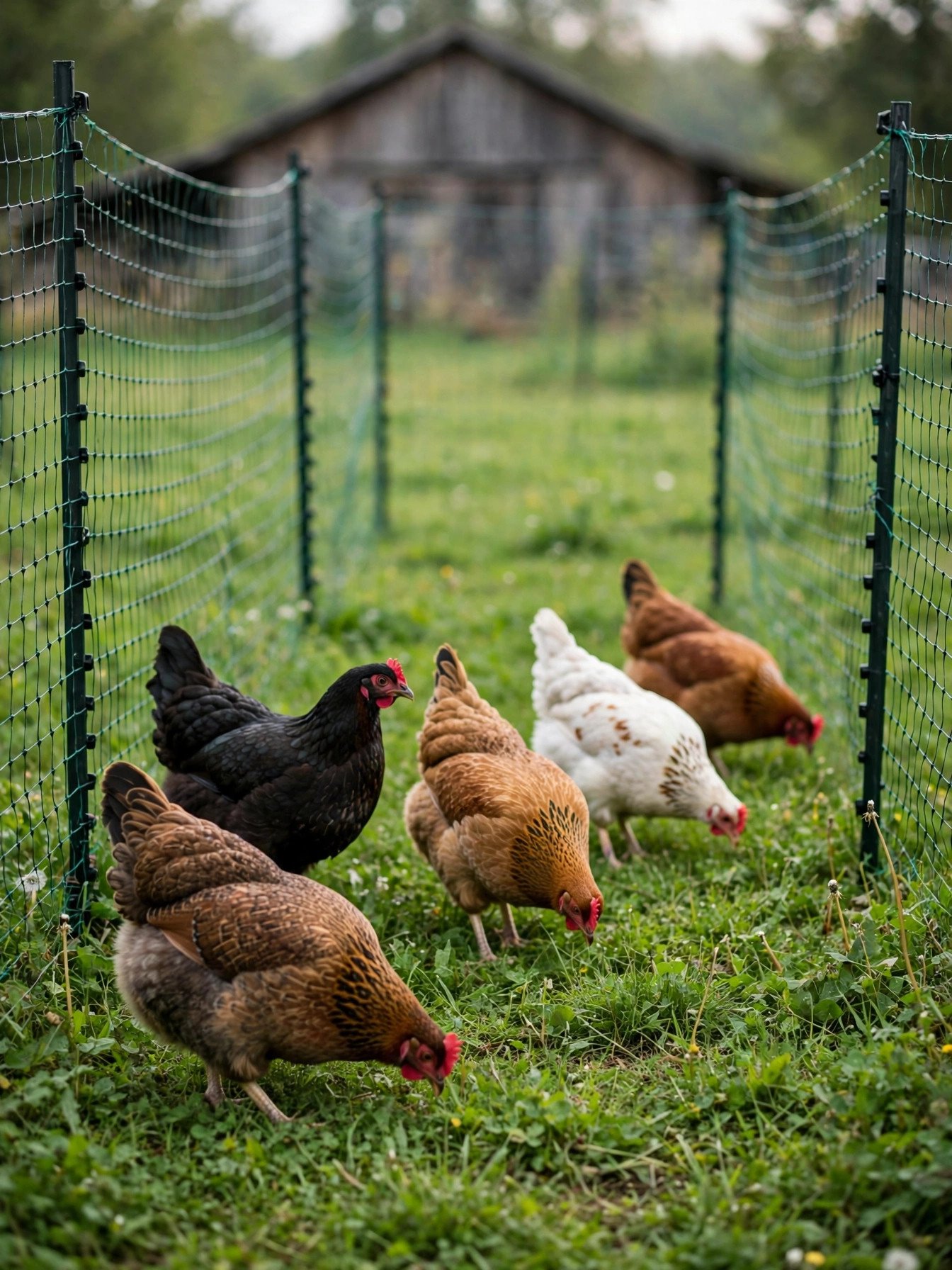
What a hot net stops: ground predators that have to touch it to get in. Foxes, coyotes, raccoons, opossums, skunks and stray dogs all investigate a fence with a wet nose first, and a pulse at several thousand volts teaches a lesson that lasts. Owners in fox and coyote country describe the same pattern: brief interest, one or two touches, then a wide berth. The net also keeps your hens in — once they have felt it, most flocks treat it as a solid wall.
What it does not stop, said plainly: anything that flies. Electric netting does nothing against hawks, owls or eagles. It has no roof. If hawks are your main pressure, netting is only half an answer — you will still need a covered run, overhead lines, or shelters the hens can dash under. It is also no guarantee against a truly determined dog hitting the fence at speed mid chase; most dogs learn instantly, but excitement can carry one through before the lesson registers. And a dead or sagging net is an entanglement hazard: a hen that pushes into slack, unpowered netting can get tangled in it. Keeping the net hot, taut and trimmed underneath is not optional maintenance. It is the whole point.
Height and Spacing, In Plain Numbers
- Height: buy 48 inches for chickens. A 42 inch net is lighter and easier to handle, and fine for heavy, calm breeds, but flightier layers can clear it and it presents less of a barrier to a coyote. The 48 inch standard exists for a reason.
- Post spacing: closer is straighter. Built in posts run from about every 6 feet 8 inches (Plus nets) to every 10 to 12 feet (standard rolls). Whatever net you buy, add support posts at every corner, at gates, and at the bottom of any dip — corners pulled taut are what keep the whole line honest.
- Area math: a 164 to 168 foot roll makes roughly a 40 × 40 foot paddock — about 1,600 square feet. By the run space rule of 10 square feet per hen, that is generous pasture for a typical backyard flock, and most keepers move it before the grass is even half eaten.
- Keep the bottom line clear. The lowest strand sits right at ground level and is not electrified, but the strands just above it are. Grass and weeds touching those strands drain voltage around the clock. Mow or trim the fence line before you set the net, and check it when you test. Ten minutes with a trimmer is the difference between 7,000 volts and 2,000.
- Where the fence goes matters too. A flat, visible paddock near the coop beats a hidden corner at the tree line — the siting logic in our guide to where to put a chicken coop applies to the pasture just as much as the house.
Frequently Asked Questions
Does electric poultry netting hurt chickens?
It stings, briefly, and that is the design. The energizer sends a short pulse, not a continuous current, and hens learn from one or two contacts to simply stay away from the net. Chickens are well insulated by feathers over most of their body, and healthy adult birds are not injured by a properly set up fence. The real danger to birds is not the shock — it is a dead, slack net they can tangle in, which is why the fence must stay powered and taut.
How big an energizer do I need for one roll of netting?
Plan on at least 0.25 joule of stored energy per roll, and treat 0.5 to 0.8 joule as the comfortable range for netting, because netting leaks voltage to grass contact in a way a single strand fence never does. Use a low or wide impedance pulse energizer only — never a continuous current weed burner type. When in doubt, size up: an oversized energizer also leaves room for a second roll later.
Will electric netting keep hawks away from my chickens?
No. Netting is a ground fence with no top, and hawks come from the sky. It will keep foxes, coyotes, raccoons and dogs off your hens while doing nothing at all about aerial predators. If hawks are your problem, pair pasture netting with a covered run, overhead wires or shade shelters inside the paddock that hens can dive under.
How often should I move poultry netting?
Most keepers move it every few days to once a week, depending on flock size and how fast the grass is growing. Move it before the hens have scratched the patch bare and before manure builds up — the whole benefit of the system is fresh ground, rested pasture behind you, and parasite pressure left behind with the old spot. A move takes about 15 to 30 minutes once you have done it twice: power off, pull the posts, roll, carry, unroll, test.
The Bottom Line
Electric poultry netting is the best tool ever made for giving hens real pasture, and the picks above sort themselves by one question: how much of the system do you already own? Nothing yet? The Premier 1 PoultryNet Plus Starter Kit puts all four parts in one box. Already have an energizer you trust? The standalone Premier 1 PoultryNet is the proven net to hang on it. Want the longest roll from a poultry specialist brand? That is the RentACoop netting. Whichever you choose, the rule that decides whether it works is the same one from the first paragraph: keep it hot, keep it taut, keep the grass off it, and test it every week. Do those four things and the fence will do the rest.