
Short answer first: put your chicken coop on high, dry ground that catches the morning sun and gets afternoon shade, close enough to your house that winter chores stay easy, but far enough away that summer smells never reach the patio. Get those five things right and almost everything about keeping chickens gets simpler. Get them wrong and you will fight the same problem every week for years.
A coop is the one part of a chicken setup you cannot easily change your mind about. Feeders move; fences stretch; a levelled, fenced, roofed coop stays put — and I have yet to meet a keeper who was glad they built in the soggy corner. Walk your yard with this checklist before you dig a post hole, and if the footprint is not settled yet, work through how much space chickens need first.
Where Should You Put a Chicken Coop? The Placement Checklist
| Factor | What You Want | Why |
|---|---|---|
| Ground | High, level, dry | Water runs off instead of pooling into mud |
| Sun | Morning sun, afternoon shade | Sun dries the run early; shade protects hens in summer heat |
| Distance | Close for chores, downwind of the patio | You walk there twice a day, in all weather |
| Visibility | Visible from a house window | You spot trouble before it becomes a loss |
| Wind | Sheltered from the winter wind | Less wind chill, fewer drafts at roost level |
| Access | A wheelbarrow-friendly path | Feed, bedding and clean-outs travel that path |
| Rules | Inside your local setback | A coop in the wrong spot can be ordered moved |
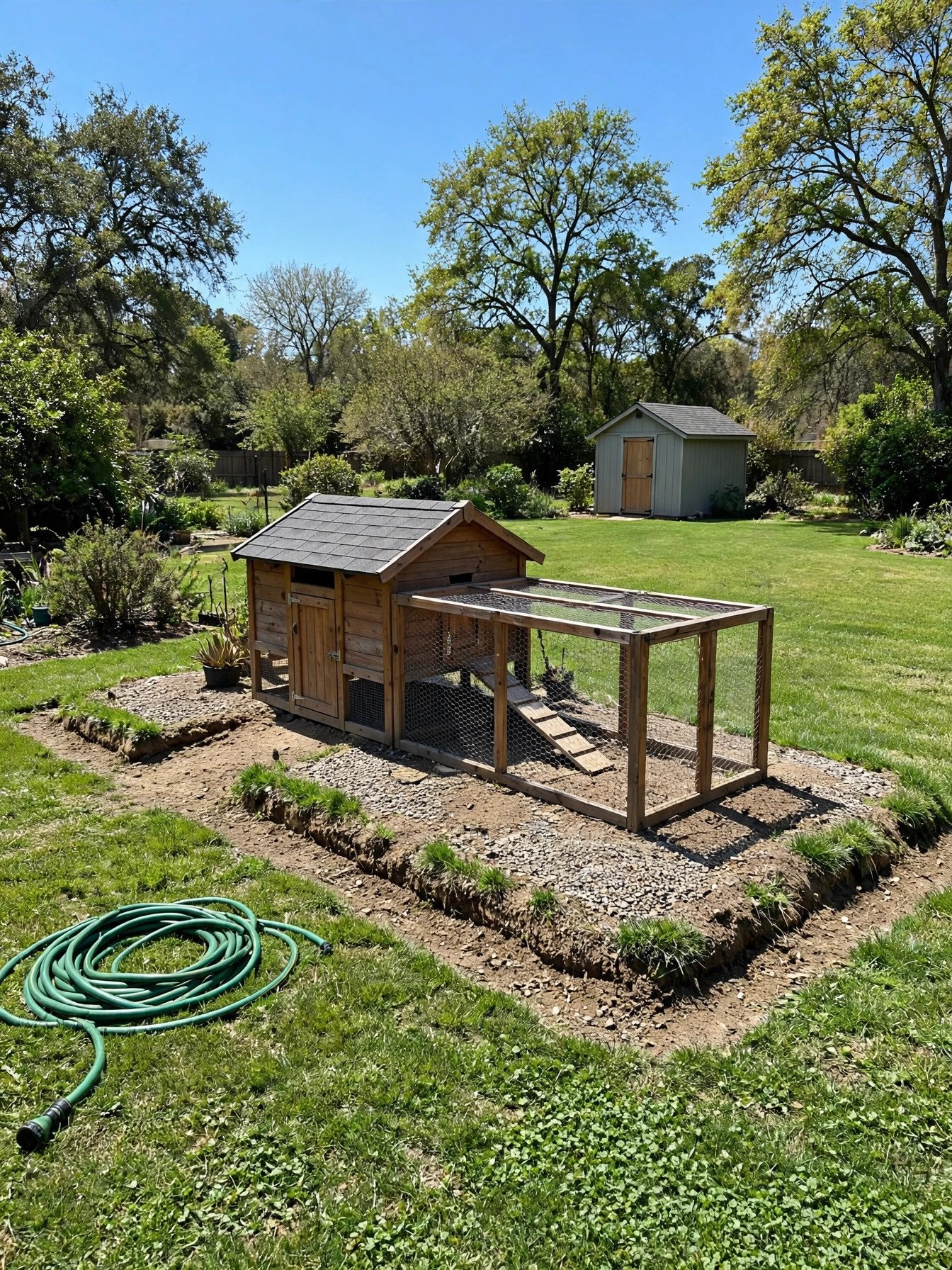
Sun and Shade: Morning Sun, Afternoon Shade
If I could pick only one thing on this list, it would be the sun pattern. Aim the coop and run at the morning sun — east or southeast is the sweet spot in most yards. Early sun dries the overnight damp out of the run, warms the coop after a cold night, and gets hens up and laying earlier. A run that starts the day wet stays wet — and wet ground is where mud, smell and parasites begin.
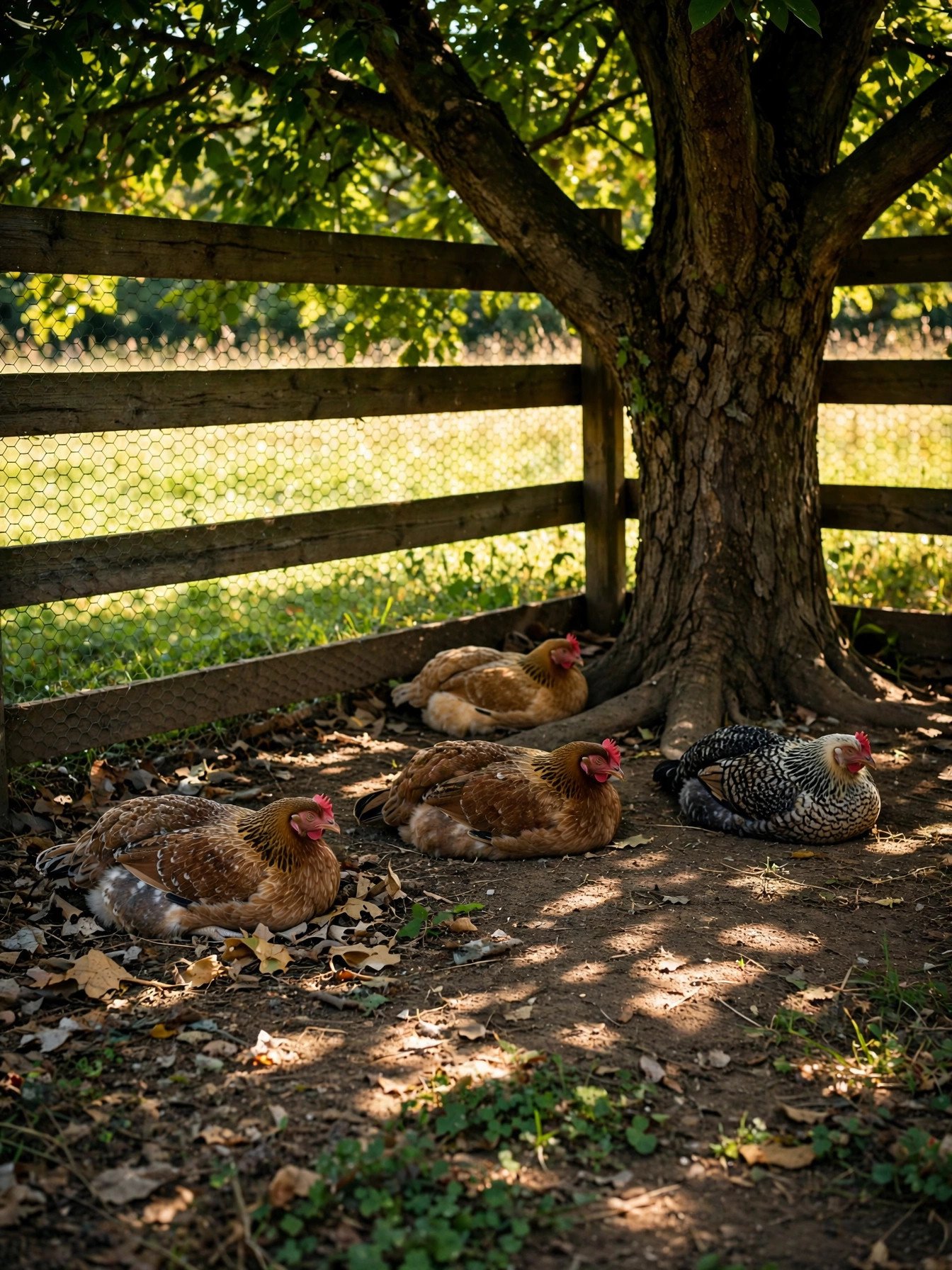
The same spot needs an escape plan for the afternoon. Chickens handle cold far better than heat, and a run baked in full sun from noon to six will stop hens laying and can kill birds in a heat wave. A tree on the west side shading the run is worth more than most coop upgrades; without one, plan a shade cloth over part of the run.
Drainage: Never Build in the Low Spot
Every yard has a low spot, and every low spot looks fine in dry weather. That is the trap. Water collects there, and a run built on collected water becomes a mud wallow within a month — mud on the eggs, mud on your boots, bedding rotting faster than you can replace it, and hens standing in permanent damp.
The test is free: go out during or right after heavy rain. Does water pool in your candidate spot, or run through? Does the ground dry within a day, or stay soft for three? Choosing in a dry spell, read the clues — moss, dark soil, the line where grass grows differently. A slight slope is perfect; dead flat is workable; a dip is not. If the only spot is marginal, raise the coop on a gravel pad — half a day’s work that saves seasons of mud.
How Far Should a Chicken Coop Be From Your House?
Closer than you think, and further than your enthusiasm suggests. You will walk to that coop at least twice a day, plus every storm check and frozen waterer. In February, in the dark, carrying a bucket, a coop at the far end of the yard stops being charming fast. Most keepers end up happiest within a one-minute walk, on a path that does not turn to soup in winter.
But not against the house. A well-kept coop does not smell much, yet “not much” on a still August evening still drifts through open windows if the coop sits upwind of the patio — and flies gather where the manure is. The usual compromise: close for chores, downwind in the summer breeze, out of the dinner table view. Many towns also decide for you: setback rules often require 10 to 50 feet from property lines or neighbouring homes. Check the ordinance before you build — it is a miserable conversation the other way around.
Predators and Visibility: Keep the Coop Where You Can See It
Place the coop where you can see it from a window you actually look out of — the kitchen window is the classic. Visibility is a security system that never needs batteries: you notice the door hanging open, the hen acting strangely, the neighbour’s dog sitting too still by the fence. Most losses happen at coops nobody glances at for days.
Then consider the edges. The strip along a back fence, the brushy corner, the woods edge — that is the highway predators travel, and a coop pushed against it puts your hens at the end of their commute. Pull the coop in from fence lines where you can, keep the grass short around it, and treat the ground as part of the defence: a skirt of hardware cloth laid flat around the run stops digging predators cold, and it is far easier to lay before the run goes up. Our guide to how to predator proof a chicken coop covers the full system — but the skirt belongs to placement day.
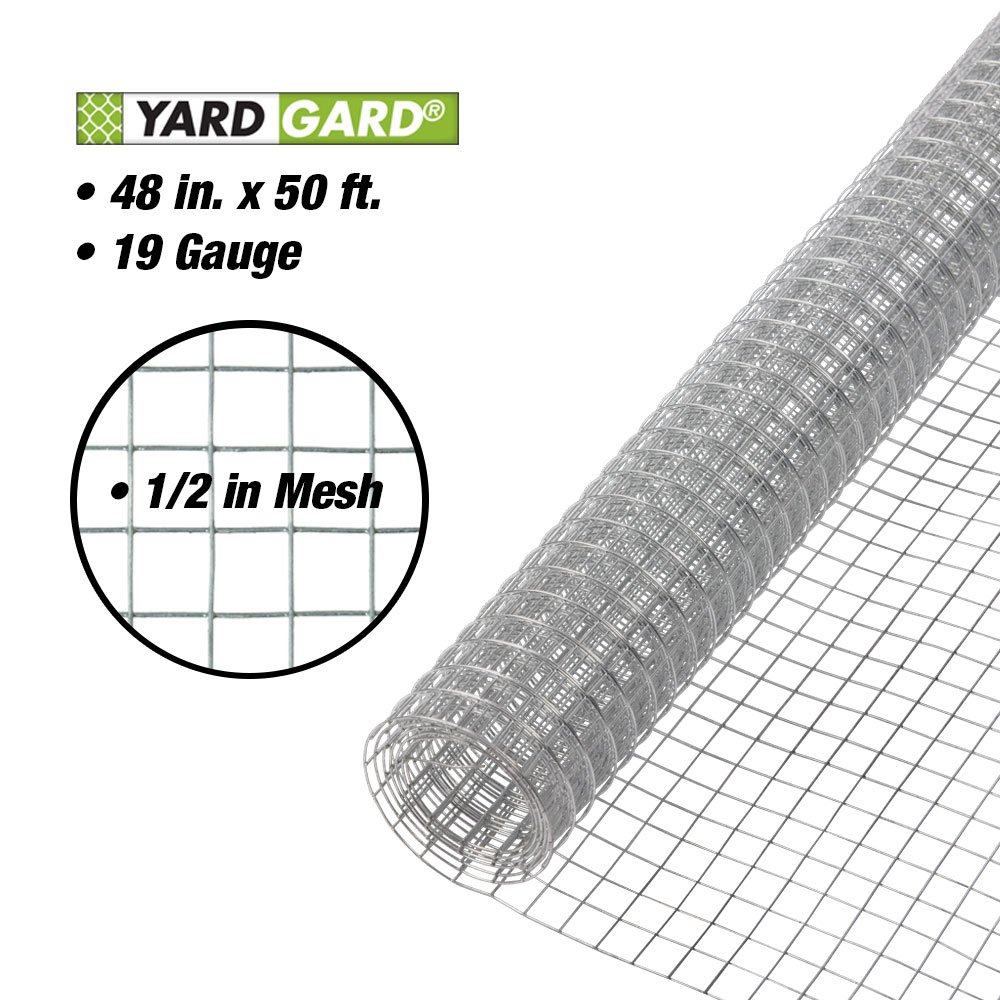
- Half inch mesh in 19 gauge galvanized steel — the size that stops digging and reaching predators, unlike chicken wire, which only keeps chickens in
- The 48 inch width suits the placement job: cut it into a flat apron around the run perimeter before you build
- One 50 ft roll covers the skirt on most backyard runs, with enough left for vents and gaps
Wind and Winter: Shelter From the Worst of It
Stand in your candidate spot on the windiest day you get and you will learn more than a month of measuring teaches. In most of the US the bitter wind comes out of the north and northwest, and a coop facing it head-on leaks cold air through every seam. Tuck the coop where a wall, hedge or fence breaks that wind, and point the door away from it — south or southeast, which happily matches the morning sun advice.
Winter access is the half people forget. Snow does not care about your summer path — ask where you will walk with a foot of it down, and whether bedding can reach the coop in the March thaw. Before you mark the corners, run the footprint through our Coop Size Calculator. Moving four stakes is easier than moving four walls.
What About Neighbours and Local Rules?
Two things, both handled best before the build. The rules first: many cities and HOAs regulate coop placement — distance from property lines and other homes, sometimes a permit, sometimes just a “no roosters” condition. They vary street by street, and “the shop said it was fine” is not a defence. One search of your town’s ordinance settles it.
The neighbours are the unofficial version of the same thing. A coop hard against a shared fence puts your earliest noise and summer smells in someone else’s garden, and complaints to the town usually start across that fence. A few extra feet in, a clean run, and — the oldest trick in the book — eggs brought over now and then keep the peace better than any permit. Brand new to this? Our guide to backyard chickens for beginners covers the legal and neighbour groundwork in one place.
Spots That Look Good but Fail
Some locations photograph beautifully and fail by October. Watch for these three:
- Under the drip edge of a roof. That sheltered strip beside the garage looks protected, but every storm sheets water off the roof straight into the run — the wettest ground in the yard, wearing a disguise.
- On top of the septic system. Flat, open and unused — for a reason. No digging hens or clean-outs over your tank and drain field, and no moving a coop the day the septic needs digging up.
- In the frost pocket. Cold air pools in the same low spots water does, so the bottom corner of a sloping yard runs several degrees colder on still winter nights. Your hens feel every degree, and so do their waterers.
One quieter failure: the far corner chosen because the coop would be “out of sight.” Out of sight becomes out of mind — and that is how a frozen waterer goes unnoticed all day.
Frequently Asked Questions
Which direction should a chicken coop face?
Face the door and windows south or southeast if you can. That catches the morning sun, which dries and warms the coop early, and turns the building’s back to the winter winds. East is a fine second choice. Avoid a door opening straight into the prevailing winter wind.
Can I put a chicken coop in full shade?
You can, and in a hot climate deep shade appeals — but full-time shade usually means damp ground, and damp ground means mud, smell and parasites. The better pattern is morning sun, afternoon shade. If shade is all you have, raise the coop, add a gravel pad, and be generous with dry bedding.
How far should a coop be from my house?
There is no magic number, and local setback rules may decide it — commonly 10 to 50 feet from homes or property lines. Practically, aim for under a minute’s walk, downwind of your living areas in the summer breeze. Close enough that February chores stay easy, far enough that August never drifts through the window.
Is it OK to put a chicken coop on grass?
Yes — most backyard coops start on grass, and the hens will enjoy it, briefly. A fixed flock turns grass to bare earth within weeks, which is why drainage matters so much at placement time. Plan on dirt or wood chips eventually, and keep the ground under the coop dry with a raised floor or gravel base.
The Bottom Line
Walk your yard once with each season in mind. Pick the high, dry ground with morning sun and afternoon shade, visible from the kitchen window, a minute’s walk away, and inside the setback lines. Stake the corners, then live with the stakes a few days — walk it morning and evening, after rain if you can. If the spot still feels right every time, build there. Placement is the decision you make once and live with daily; an hour of honest looking now beats a year of wishing the coop were somewhere else.