
Short answer first: yes, you can keep chickens in a small backyard — if three gates all swing open. Gate one: your local rules allow hens. Gate two: you can honestly give each hen her minimum of 4 square feet inside the coop and 10 square feet in the run. Gate three: the neighbor equation works, meaning noise and smell stay smaller than your neighbors’ patience. Pass all three and a small flock of 3 to 4 hens fits into a corner of the yard you probably walk past every day without seeing it. Below, each gate in turn, with the real numbers.
Notice what the answer is not. It is not “yes, if you buy the smallest coop on the internet and squeeze.” Small yards fail when someone tries to keep a big-yard flock in a small-yard space. Keep the flock small and honest, and a compact setup works beautifully. So let us check the gates — rules first, because no coop purchase survives a rule that says no.
Gate 1: Do the Rules Allow Chickens at All?
Before you measure anything, find out whether hens are legal where you live. Most towns regulate backyard chickens through a local ordinance, and the pattern is remarkably consistent: hens allowed, roosters banned, flock size capped somewhere between 3 and 6, and the coop held to setback distances — commonly 10 to 25 feet from the property lines and a set distance from your house and your neighbors’ houses too. Some towns want a cheap permit. A few ban the whole idea. You will not find the answer on a forum; it is on your town or county website, usually under animal control or zoning, and one phone call settles it for certain.
Two traps catch small-yard keepers more than anyone. The first is the HOA. A homeowners association can ban chickens even when the town happily allows them, and the HOA wins — read your covenants before you build, not after a letter arrives. The second trap is the setback itself. In a big yard a 20 foot setback is a shrug. In a small yard it can quietly erase most of your usable ground, and the one corner left standing is the corner the whole plan has to fit. Measure the legal space, not the total space. Our guide to where to put a chicken coop walks through choosing the exact spot once the rules have drawn your map.
Gate 2: The Honest Space Math for a Small Flock
Now the numbers, because this is where small yards turn out to be more capable than people think. The minimums do not shrink just because your yard did — a hen in a small backyard still needs 4 square feet in the coop and 10 square feet in the run, the same numbers from our pillar guide on how much space chickens need. What changes is the flock size. Run the smallest sensible flock through that math:
- 3 hens: 12 sq ft of coop and 30 sq ft of run
- 4 hens: 16 sq ft of coop and 40 sq ft of run
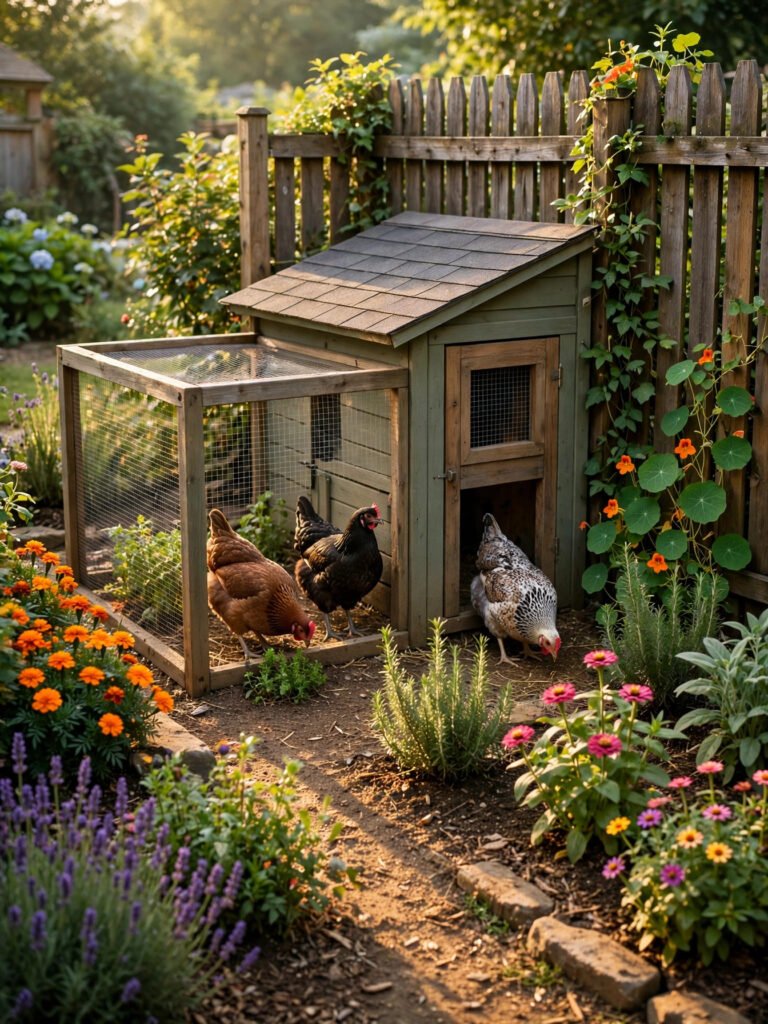
Look at what that means on the ground. A single 4 × 8 foot corner — 32 square feet, roughly the footprint of a garden shed — covers the entire run for 3 hens, with the coop raised above part of it or tucked at one end. Four hens need 40 square feet of run, which is a 5 × 8 strip along a fence line. Most “too small” backyards have one of those corners going spare behind the shed, down the side of the house, or at the end of the garden where nothing much grows anyway. If you want to test other flock sizes against your exact patch, the free Coop Size Calculator does the arithmetic in seconds. And if you are still deciding between 3, 4 or more hens, work through how many chickens you should get before you fall in love with a number your yard cannot feed.
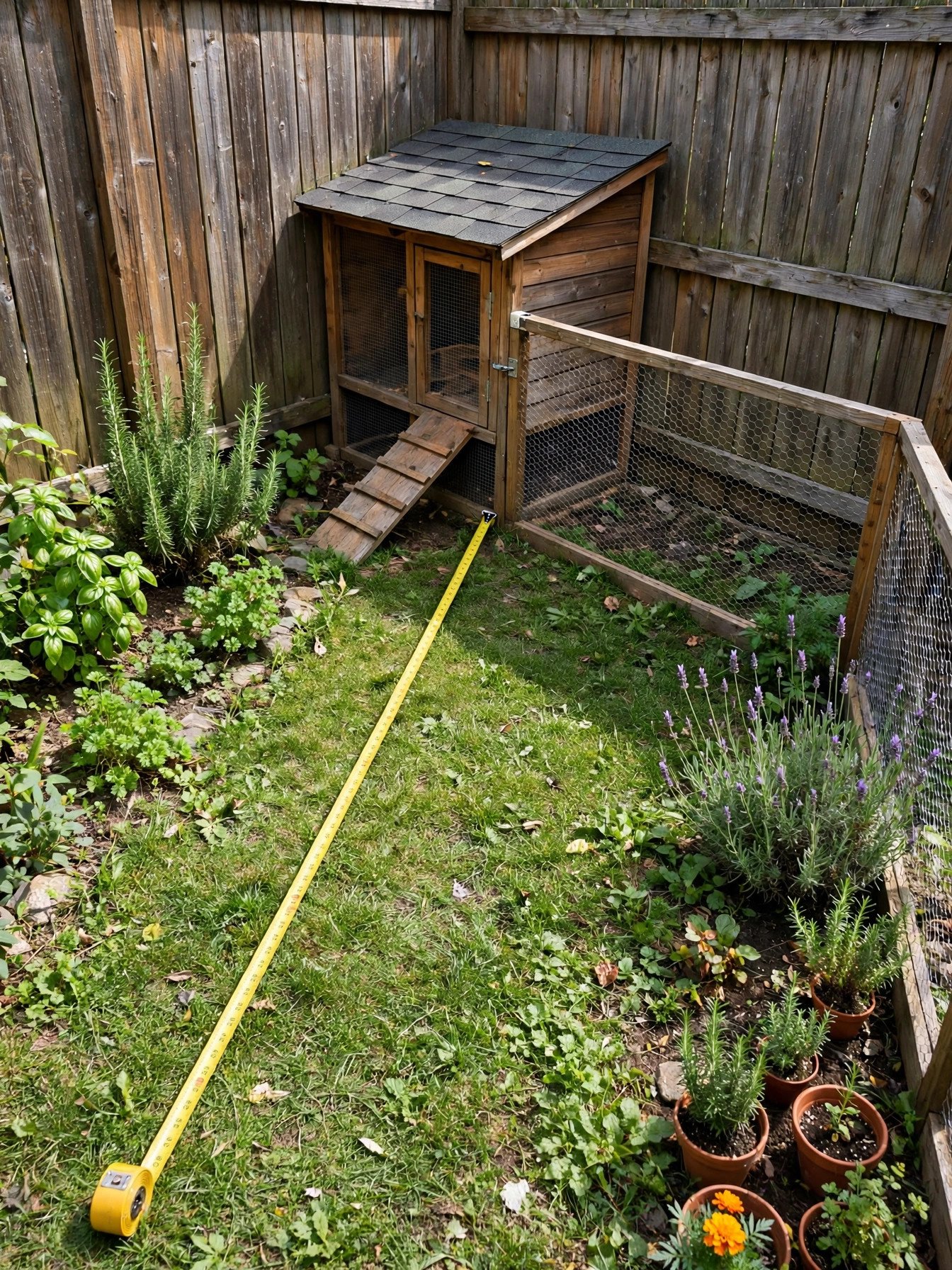
One honest warning belongs here. The minimums are minimums. Three hens at exactly 30 square feet of run will be fine, but they will turn that patch to bare earth in a season, and a wet winter will want managing — deep bedding, a covered section. Space above the minimum is never wasted. It is the difference between a run you maintain and a run you fight.
Gate 3: The Neighbor Equation
In a small yard, your neighbors are close enough to be part of the setup whether you invite them or not. So let us be straight about the two things they will actually notice: noise and smell.
Noise first, because it is the smaller problem. Hens are genuinely quiet birds. The everyday soundtrack is soft clucking at roughly conversation volume, well below a barking dog, a lawn mower or a leaf blower. There is one exception, and you may as well know it now: the egg song. After laying, many hens announce the event to the entire street for a minute or two, proud as anything. It happens in the morning, it is over quickly, and there is no honest way to promise it will never happen — only that it is brief, daytime, and most neighbors find it funny once they know what it is. What you will not have is crowing. That is a rooster sound, and roosters are banned in most towns and have no place in a small yard anyway.
Smell is the real gate, and it is entirely in your hands. A chicken coop does not have to smell. What smells is wet droppings left to build up — and here the small yard has a hidden advantage, because a small dry run cleaned little and often, ten minutes twice a week, stays fresher than a big neglected run that only gets attention when it has to. Keep the run dry (a covered section is worth more than any deodorizer), stir or top up the bedding before it needs it, and scoop the night droppings from under the roost. Do that, and the honest answer to “will it smell?” is that a visitor standing at the fence will mostly smell your garden.
And then there is the oldest trick in chicken keeping, which works because it is sincere: egg diplomacy. A dozen fresh eggs handed over the fence now and then converts most neighbors from wary observers into people who ask how the girls are doing. The flock that supplies the street’s omelets rarely gets complained about. Tell neighbors your plan before the coop appears, too. Surprises start arguments; invitations start conversations.
Small-Space Setups That Actually Work
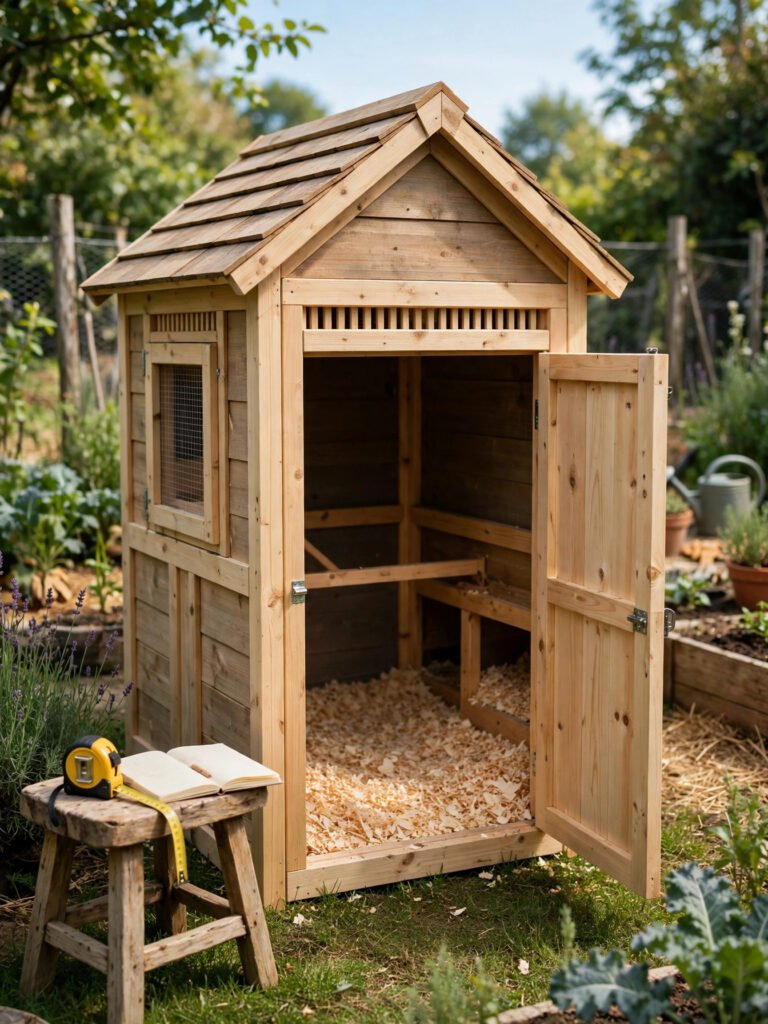
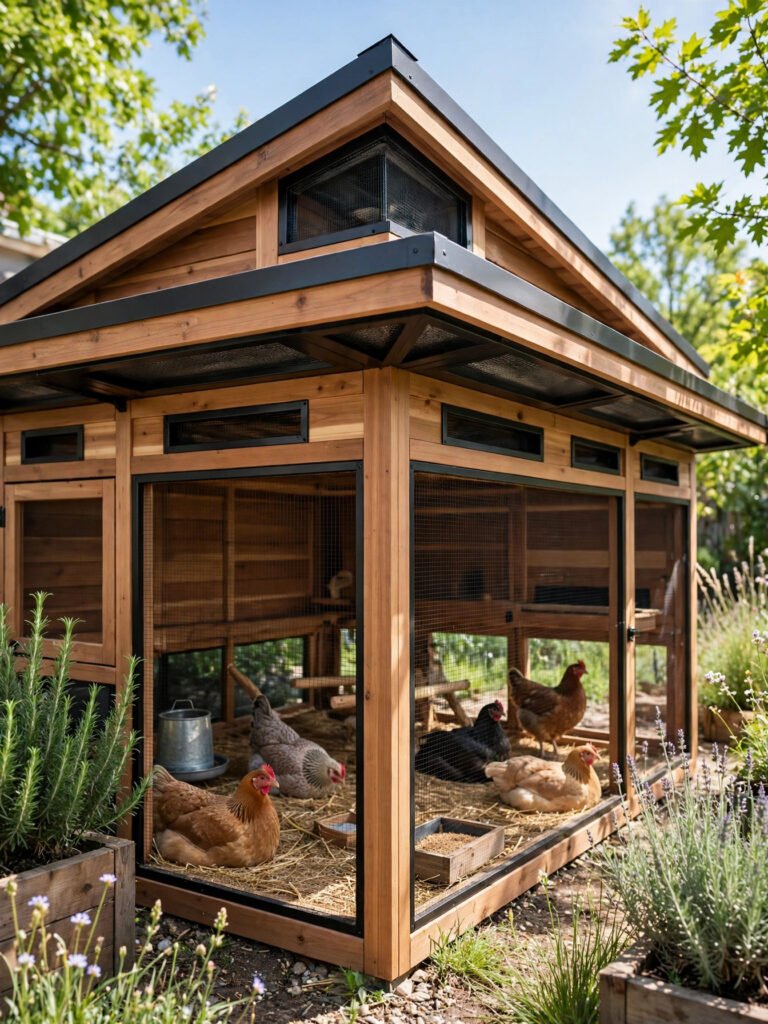
Three layouts cover nearly every small yard I have seen work. The first is the classic: a compact coop with a fixed run, parked permanently in that shed-sized corner from Gate 2. It asks the least daily effort — no moving, no re-siting — and the hens get a dust bath spot, a covered corner and a routine. If you are buying rather than building, judge every compact coop by its floor measurements, never by the hen number on the box, because small coops carry the most optimistic labels in the whole industry. This little RUNSHED is the honest end of that market: a 79 × 27.5 inch footprint, about 15 square feet of house and run combined, sold for 4 to 6 hens and genuinely right for 3.

- Compact 79 × 27.5 inch footprint — about 15 sq ft of house and run, sized for the corners bigger kits cannot use
- Enclosed run, slide-out cleaning tray, nesting boxes and a weather-resistant roof, all in one small unit
- The honest framing: it is sold for 4 to 6 hens, but by the 4 sq ft rule it is a comfortable 3 hen home — buy it for three and it will serve you well
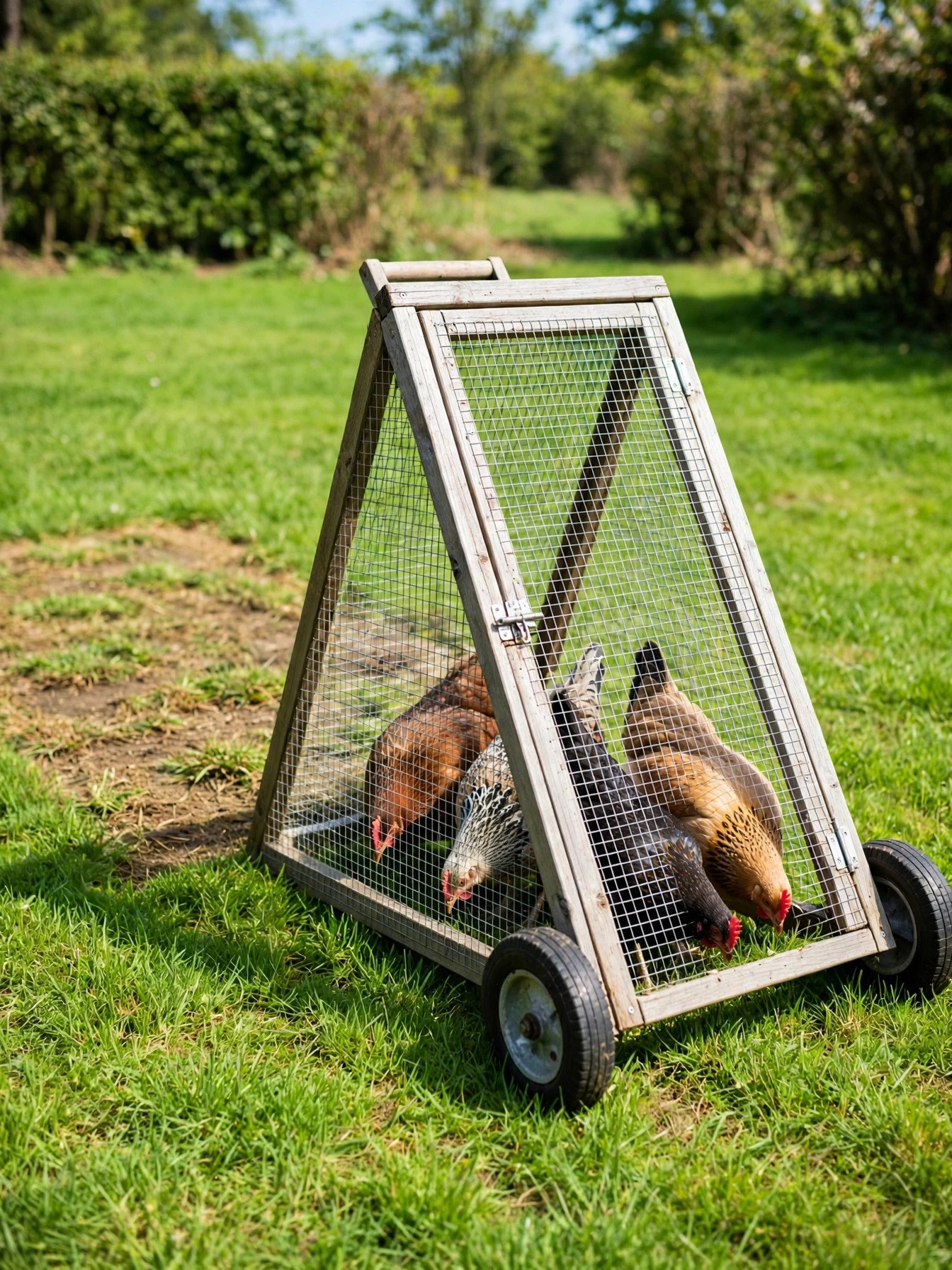
The second layout is the chicken tractor — a bottomless coop and run on wheels or skids, dragged onto fresh ground daily. In a small yard it has one beautiful property: the hens always stand on clean grass, so the mud and smell problems of a fixed run mostly never start, and the lawn gets fertilized in rotation. Now the trade-offs, because there are real ones. You will move it every day, in the rain, in February, forever — skip days and the grass dies in a rectangle. A tractor small enough to move easily is also small inside, so it suits 3 to 4 hens at most. And its security is only as good as its skirt and latches, because a tractor sitting on grass has no buried defenses against a digging fox. Keepers who love tractors, love them. Just go in knowing it is a daily chore wearing a clever disguise.
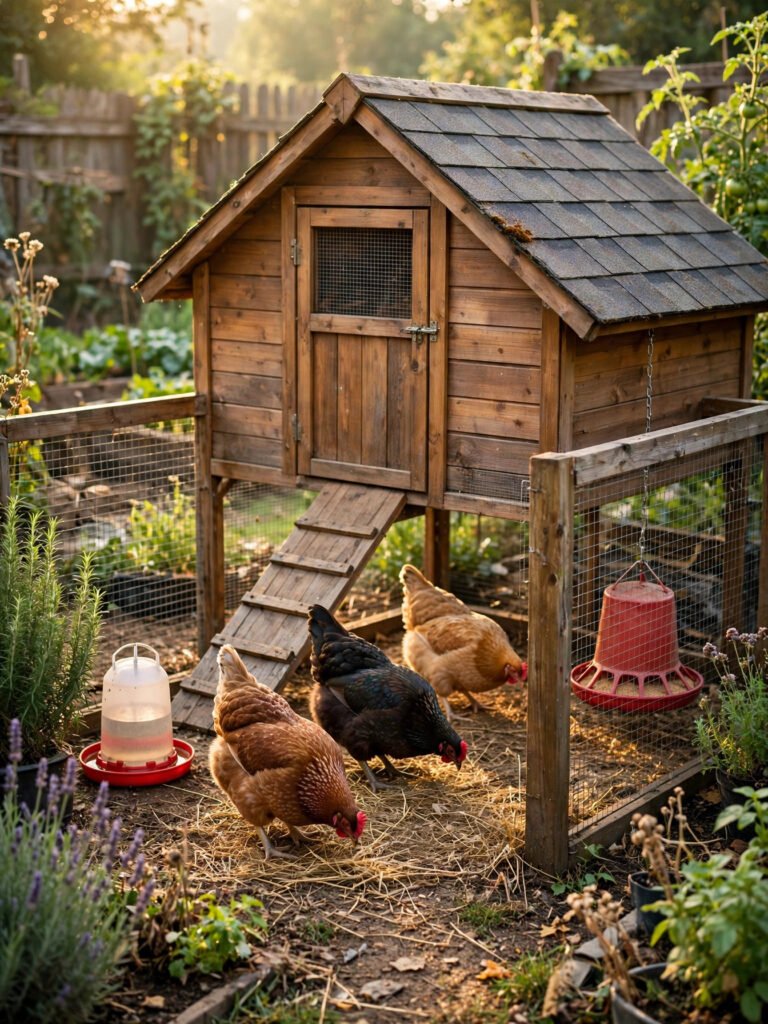
The third layout is not a product at all — it is thinking vertically. In a small footprint, height is free space. Raise the coop on legs and the shaded ground underneath becomes run, dust bath and shelter at once, nearly doubling the useful area of the same patch. Hang the feeder and waterer instead of standing them on the floor. Small yards reward keepers who stack; the hens do not care which level breakfast is on.
What a Small Yard Cannot Fix
Honesty cuts both ways, so here is where I would tell you not to do it. A small yard cannot fix wanting 10 hens. Chicken math is real — the urge to add “just two more” — but in 40 square feet of run, every extra bird is borrowed from the others, and crowded hens repay you with pecking, noise, smell and fewer eggs: every problem this page just solved, back again. It cannot fix mud in a tiny shaded run either. A small patch that never sees sun and never drains will defeat bedding budgets of any size; if your only legal corner is a swamp, that is the yard voting no. And it cannot fix a rooster. One rooster in a small yard undoes the neighbor gate by 5 a.m. on the first morning, and no amount of egg diplomacy covers it. If the three gates genuinely will not open, the kind answer is to wait for a different yard — not to squeeze birds into a situation that will make you and them miserable by spring.
Frequently Asked Questions
How many chickens can I keep in a small backyard?
For most small yards, 3 to 4 hens is the honest answer. Three hens need just 12 sq ft of coop and 30 sq ft of run, and 4 need 16 and 40. More than that and most small yards cannot hold the 4 and 10 sq ft per hen minimums without the whole garden becoming the run.
What is the smallest space 3 chickens can live in?
About 12 square feet of coop floor and 30 square feet of run — a 4 × 8 ft corner handles the run, especially with the coop raised above part of it. Below those numbers you are not keeping chickens so much as storing them, and the behavior problems arrive quickly.
Will my neighbors hear 3 hens?
Barely. Hens cluck at about speaking volume through the day, with one short exception: the egg song, a proud one or two minute announcement after laying, usually in the morning. There is no crowing without a rooster. A barking dog on your street is louder than your flock will ever be.
Do chickens smell in a small yard?
Only if the run stays wet and the droppings build up. A small, dry run cleaned little and often — a few minutes twice a week, bedding topped up, night droppings scooped from under the roost — stays fresher than a big run that gets neglected. Dry and often beats big and rare, every time.
Can I keep chickens if my town bans roosters?
Yes — hens lay eggs perfectly well without a rooster anywhere near them. A rooster is only needed to fertilize eggs for hatching. Most small-yard flocks are hen-only by law and by choice, and they are quieter and simpler for it.
The Bottom Line
A small backyard is not a no. It is a flock-size decision. Check the rules before you spend anything, hold the line at 4 square feet in the coop and 10 in the run per hen, keep the run dry and the neighbors supplied with eggs, and 3 to 4 hens will live well in a corner you were not using anyway. The yards that fail are the ones where somebody wanted ten hens in a four-hen space. Respect the three gates and you will not be that story. New to all of this? Our complete guide to backyard chickens for beginners walks the whole setup from first chick to first egg — small yard or otherwise.