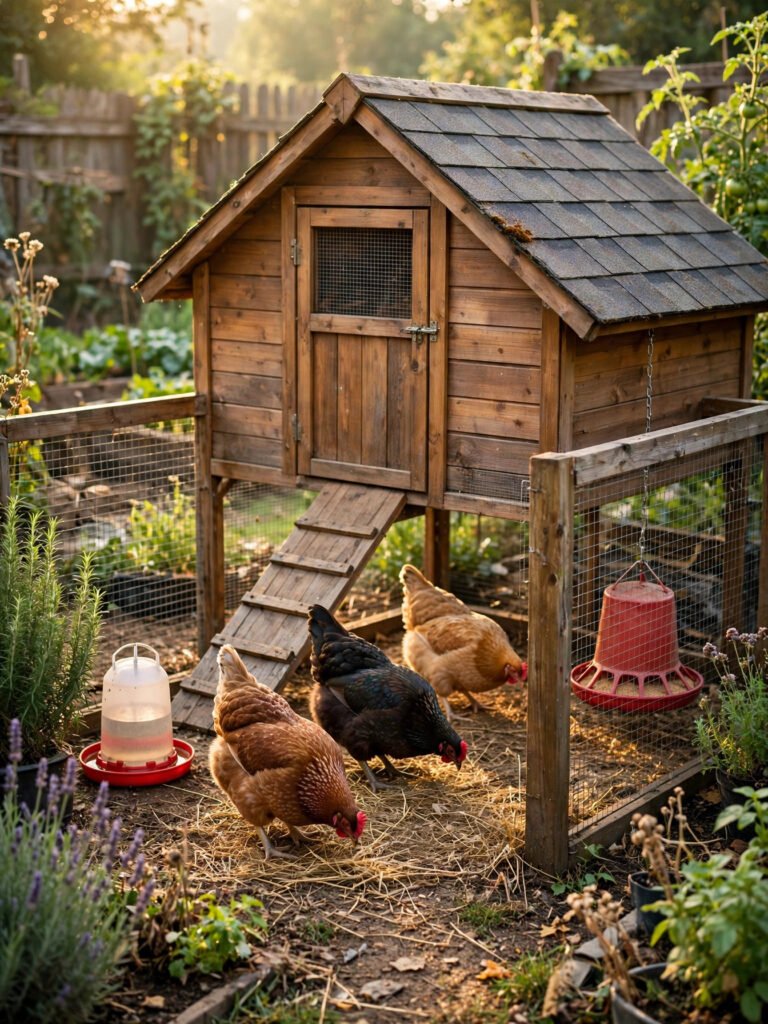
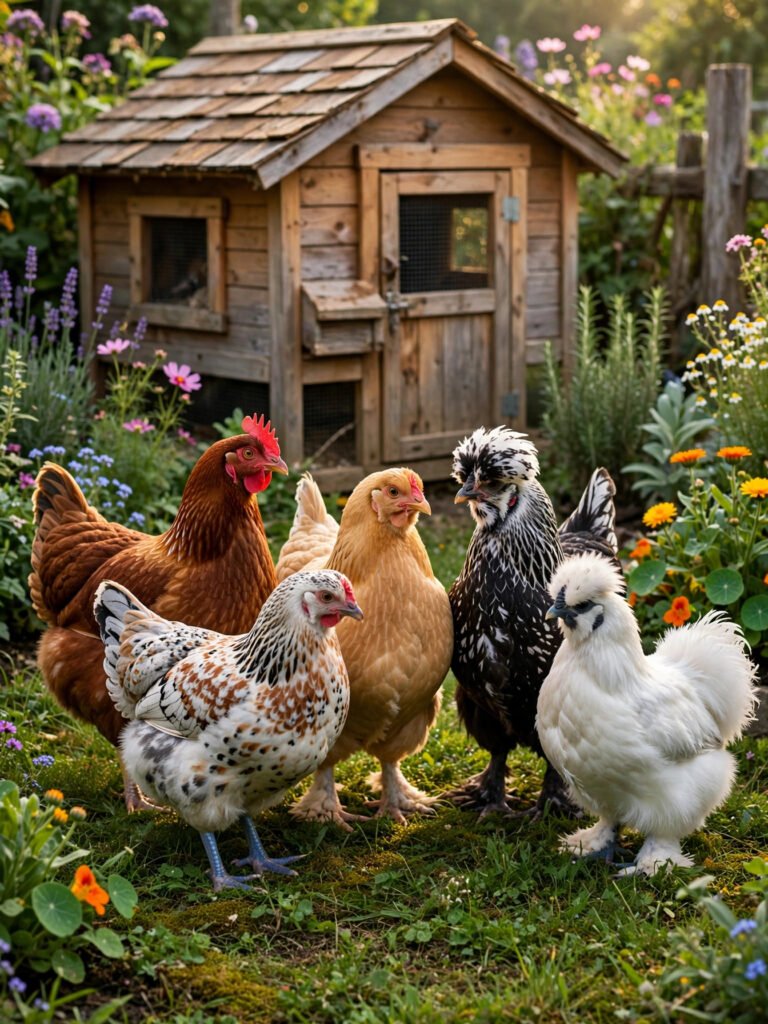

Short answer first: for most households, the right answer is 4 to 6 hens — and whatever number you land on, never start with fewer than 3. Chickens are flock animals. One hen on her own is a miserable hen, and with two, a single loss leaves the survivor alone and stressed. Three is the real minimum. Four to six is the sweet spot where the eggs cover a family, the chores stay small, and the coop stays easy to manage.
Most people pick this number backwards. They get excited at the feed store, point at a bin of chicks and say “let’s get ten.” Then the eggs pile up faster than anyone can eat them, the feed bill arrives, and the coop that looked huge in April feels small by August. Work it the other way around: count the eggs your household actually eats, check the space you actually have, and let those two numbers tell you how many chickens to get.
Start With the Egg Math
A good laying hen in her prime gives you roughly 5 eggs a week. Some weeks it is six, some weeks it is four, and high-production hybrids do a little better while heritage breeds do a little less. Take that 5-egg average and hold it up against your breakfast habits:
| Eggs your household eats per week | Hens you need |
|---|---|
| 6 eggs | 2 hens (but start with 3) |
| 12 eggs | 3 hens |
| 18 eggs | 4 hens |
| 24 eggs | 5 hens |
| 36 eggs | 8 hens |

Now the honest catch, because that table is peak-season math. Laying slows down in winter when the days get short, and it drops again after a hen’s second year. A bird giving you 5 eggs a week in June might give you 2 in January. So plan for your average week, not your best one — and do not panic about summer surplus. Extra eggs are the easiest problem in chicken keeping. Neighbors, coworkers and one coworker’s cousin will solve it for you.
The Three Limits That Actually Decide Your Number
The egg math gives you a wish. These three limits give you the real number — and your flock size is whichever one is smallest.
1. Your Space
Every hen needs 4 square feet inside the coop and 10 square feet in the run. If the egg math says 6 hens but your yard honestly fits 4, the answer is 4 — crowded hens peck, fight and stop laying, which defeats the whole point. Run your yard measurements through our Coop Size Calculator before you buy a single bird, and let it argue with your enthusiasm.
2. Your Local Rules
A lot of towns are fine with backyard hens and completely against roosters — the crowing is usually the issue, not the chickens. Plenty of suburbs cap flocks at 4 to 6 hens, some neighborhoods and HOAs ban poultry altogether, and the rules are rarely advertised until somebody complains. Five minutes with your city or county code now beats a very awkward conversation with animal control later. Check before you buy, not after.
3. Your Budget and Your Time
Daily chicken chores are genuinely small — ten to fifteen minutes of feeding, watering and checking, whether you have 4 hens or 8. But feed, bedding and supplies scale with every bird you add, and so does the muck-out when cleaning day comes. Our full breakdown of how much it costs to raise backyard chickens runs the real numbers. The short version: chickens are cheap per bird, but they are not free per flock, and the happiest keepers are the ones whose flock size fits the feed budget without any grumbling.
Why Starting Small Wins
Four hens forgive beginner mistakes. The pecking order settles faster, the coop stays cleaner longer, and when something goes wrong — and in your first year, something always goes mildly wrong — you are solving it for a small flock while you learn. You can always add birds later. Plenty of keepers start with 4, get hooked, and are running 9 by the second spring. There is even a name for it: chicken math.
One honest warning about adding later, though, because it is not as simple as dropping new hens into the run. New birds need quarantine first, then a slow introduction, and the existing flock will still spend a week or two reminding the newcomers exactly where they rank. It is manageable, and keepers do it every spring — just know that buying all your birds at once, the same age from the same source, skips the whole drama. If you already know you want 6, get 6.
How Many Chickens for Your Household?
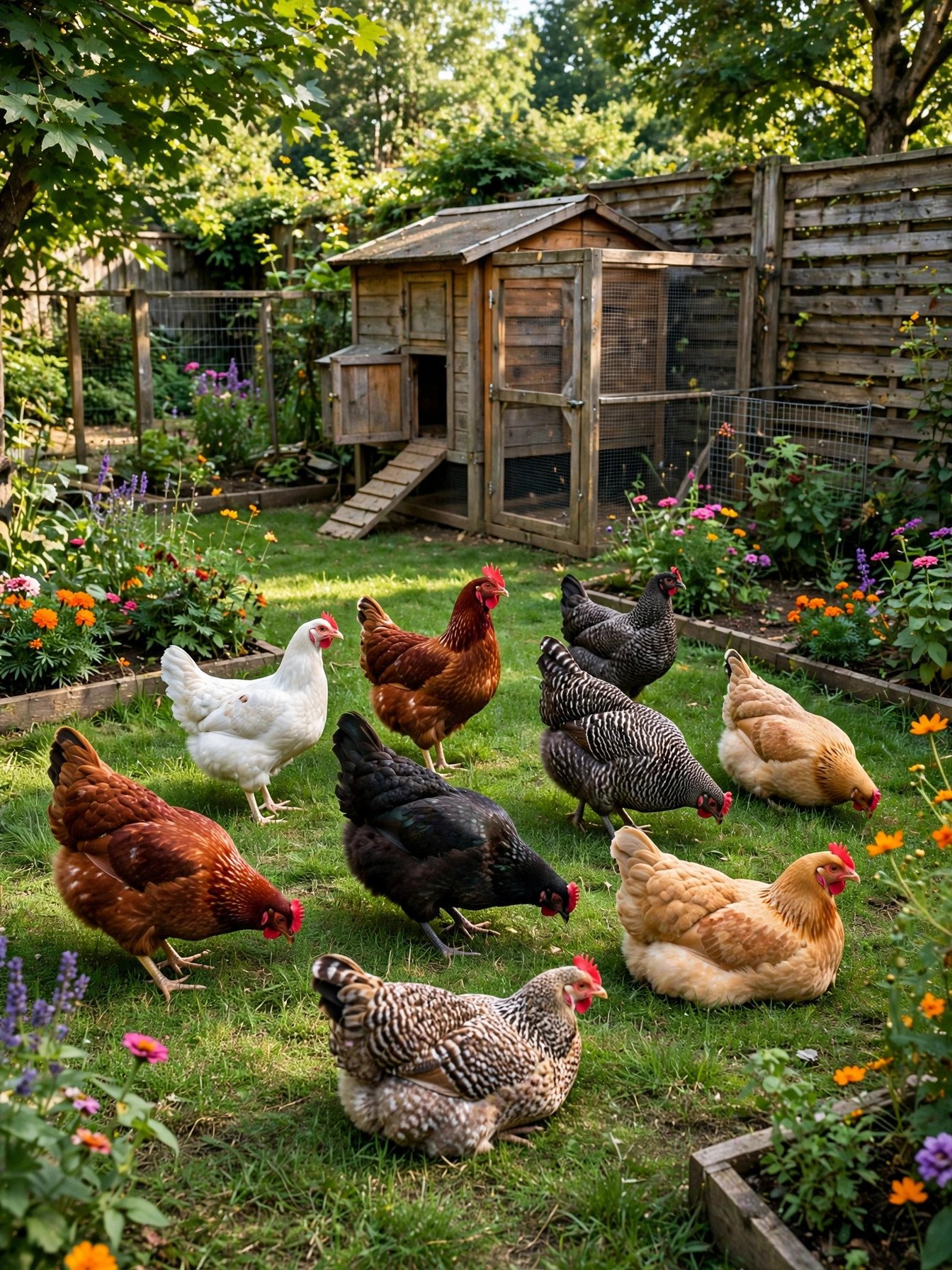
- Single or a couple: 3 to 4 hens. That is roughly a dozen eggs a week through the good months, a small coop, minimal chores, and enough birds that the flock still feels like a flock.
- Family of four: 5 to 6 hens. This covers daily breakfasts, weekend baking and the odd cake, with a few eggs left over to give away — which, fair warning, makes you very popular on your street.
- Big family or small homestead: 8 to 12 hens. Now you have a serious egg supply and enough surplus to sell or gift regularly. At this size it is worth rotating in a few young hens each year, so when the older birds slow down, your winter egg supply does not fall off a cliff.
Do You Need a Rooster?
No. Hens lay the same eggs, on the same schedule, whether a rooster exists or not. You only need him if you want fertile eggs for hatching chicks. In exchange for that one job he eats feed, contributes zero eggs, announces sunrise at full volume whether you are awake or not, and is the exact bird most town ordinances ban. If your rules allow one and you want one anyway, plan on one rooster for every 8 to 10 hens, so his attention is spread around instead of wearing out a favorite.
If you like having one solid reference on the shelf while you plan all this, this is the book that comes up in every chicken keeper conversation I have ever been part of:

- Gail Damerow’s reference covers the whole plan in one place — breed selection, housing, feeding, health care and managing layers
- The book experienced keepers consistently point beginners to first, and detailed enough that you will still be looking things up in year three
- The honest note: it is a big book. You will not read it cover to cover — you will use it like an encyclopedia, one question at a time, which is exactly what it is for
Frequently Asked Questions
Can I keep just 2 chickens?
You can, but I would not. Two hens are one accident away from a single, lonely, stressed bird, and a lone chicken genuinely does not do well. Three is the smallest number that still behaves like a flock if something happens to one of them.
How many chickens does a family of 4 need?
Five to six hens covers most families of four — roughly 25 to 30 eggs a week at peak laying, which handles breakfasts and baking with a few to spare. If your family puts eggs in everything, go with 6 and thank yourself in baking season.
How many eggs does one hen lay per week?
About 5 eggs a week from a good laying breed in her prime. Expect fewer in winter when daylight is short, fewer from heritage breeds that lay around 3 to 4, and a steady decline after her second year.
Should I buy all my chickens at once?
If you can, yes. Birds the same age from the same source settle in together without the quarantine and slow-introduction work that adding hens later demands. Decide your number first, then buy that number once.
The Bottom Line
Start with the eggs, check them against your space and your local rules, and let the smallest of those numbers win. For most households that lands on 4 to 6 hens, never fewer than 3, and no rooster required. Get that decision right and nearly every other beginner decision gets easier. When you are ready for the full picture — setup, first weeks, the works — our complete guide to backyard chickens for beginners walks through all of it in order.