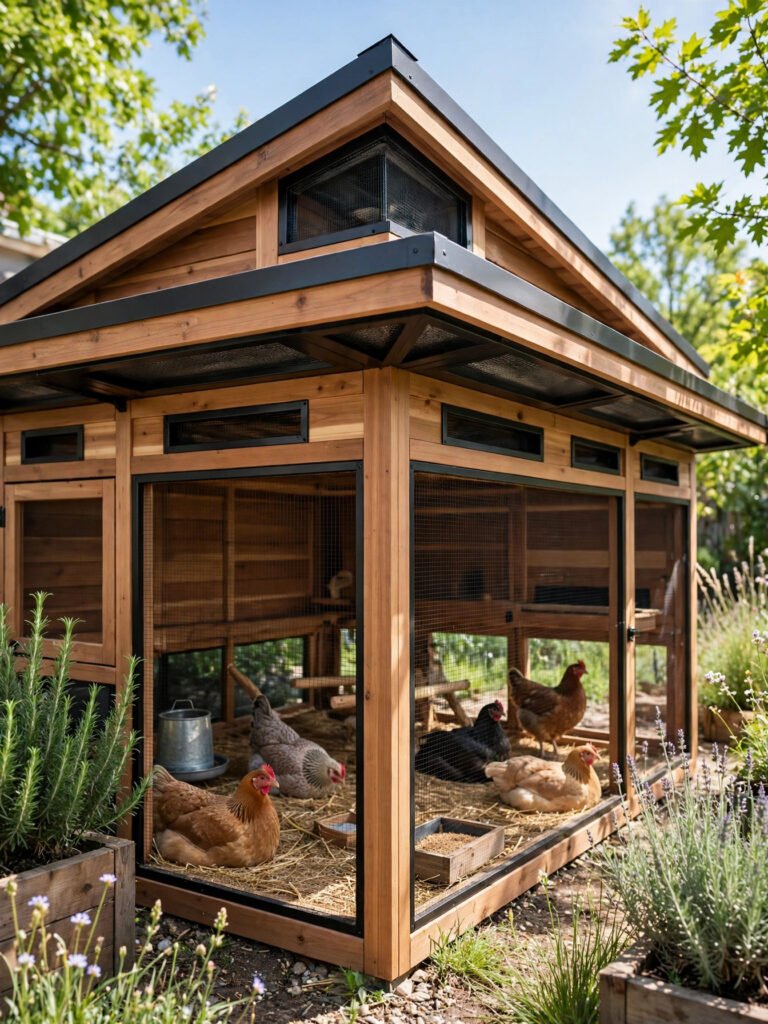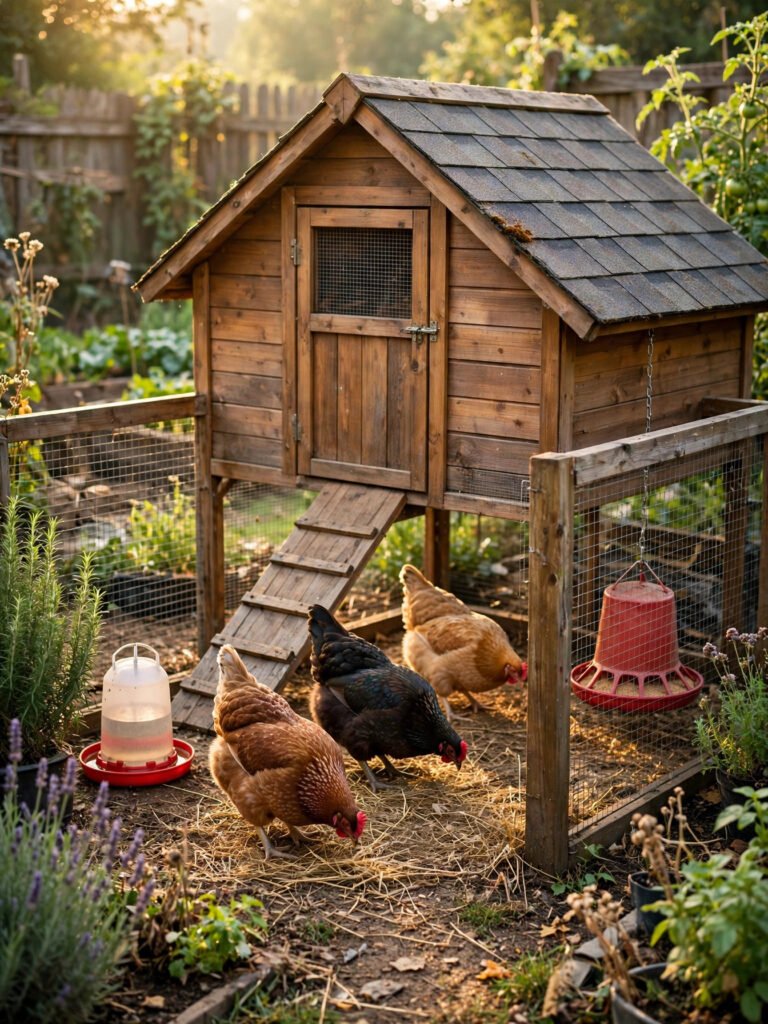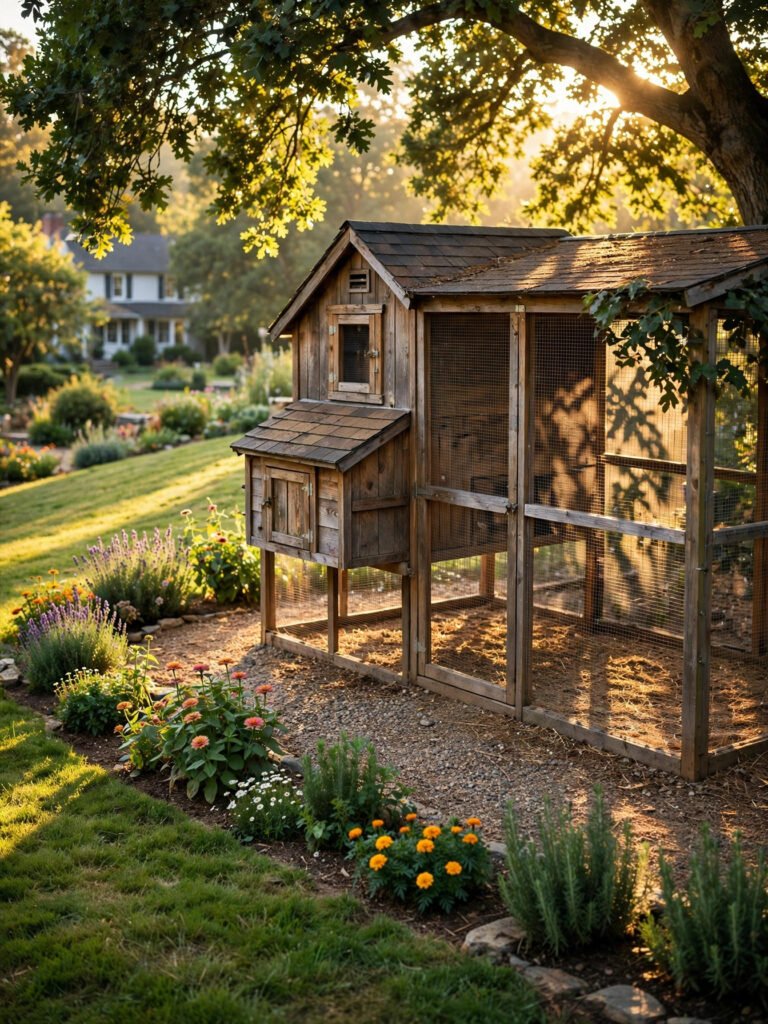


Short answer first: a standard laying hen needs at least 4 square feet inside the coop and 10 square feet in the run, about 10 inches of roost bar to sleep on, and a share of one nesting box for every 4 hens. Bantams need a little less. Big breeds like Orpingtons need a little more. Below, those numbers are worked out flock by flock so you can size your coop once and get it right the first time.
If you remember one thing from this page, make it this: never trust the number printed on a coop box. A coop sold as “suitable for up to 12 chickens” usually keeps about half that number comfortably, and almost every beginner problem I hear about — the pecking, the smell, the mud, the hens that stop laying — traces back to birds that simply do not have enough room. Space is the cheapest fix in chicken keeping. It is also much easier to build roomy than to rebuild.
Chicken Space Requirements at a Glance
| Bird size | Coop space per hen | Run space per hen | Roost space per hen | Nesting boxes |
|---|---|---|---|---|
| Bantam | 2 sq ft | 6 sq ft | 8 inches | 1 per 4 hens |
| Standard laying hen | 4 sq ft | 10 sq ft | 10 inches | 1 per 4 hens |
| Large breed | 5 sq ft | 12 sq ft | 12 inches | 1 per 4 hens |
These are the roomier end of the numbers poultry extension guides publish — Oregon State University Extension, for example, lists 3 square feet per bird as the minimum when hens have run access — and they are the numbers long-time keepers settle on. Treat them as minimums, not targets. No hen ever suffered from a run that was too generous.
How Much Space Do 4, 6, 8, 10 or More Chickens Need?
Here is the math already done for standard-size hens, with a common coop size that fits each flock. If you are still choosing the flock itself, work through how many chickens you should get first — egg goals first, coop second.
| Hens | Coop space needed | Example coop size | Run space needed |
|---|---|---|---|
| 4 | 16 sq ft | 4 × 4 ft | 40 sq ft |
| 6 | 24 sq ft | 4 × 6 ft | 60 sq ft |
| 8 | 32 sq ft | 4 × 8 ft | 80 sq ft |
| 10 | 40 sq ft | 5 × 8 ft | 100 sq ft |
| 12 | 48 sq ft | 6 × 8 ft | 120 sq ft |
| 16 | 64 sq ft | 8 × 8 ft | 160 sq ft |
| 20 | 80 sq ft | 8 × 10 ft | 200 sq ft |
How Much Space Do Chickens Need Inside the Coop?
Plan on 4 square feet of floor space per standard hen inside the coop. That is enough room for every bird to turn around, get down off the roost without landing on a flock mate, and — this part matters more than people expect — get away from a hen who has decided to be difficult. Chickens run a strict pecking order, and the birds at the bottom of it need somewhere to go.
Two things to know about that floor space. First, only open floor counts. Nesting boxes, feeders and waterers sitting on the floor eat into it, which is one reason wall-mounted feeders and external nesting boxes are worth having. Second, if your hens will ever spend whole days inside — snowed in, storm days, a predator hanging around — 4 square feet stops feeling generous very fast. Keepers in cold climates usually aim for 5 or more, and their winters go a lot smoother.
Buying a ready-made coop instead of building? Judge it by its floor measurements, never by the hen number in the product name. The OverEZ Classic Large is one of the better built prefab coops out there — solid wood, made in the USA — but even it is sold as a 15 hen coop, and most keepers who run the floor space through the chart above end up housing fewer birds than that in it. Measure first, then decide. That rule will save you more money than any other advice on this page.

- Solid wood construction, made in the USA by Amish-trained craftsmen — a different league from the flat-pack coops that wobble after one winter
- A genuinely big footprint at 74 × 60 inches, with lockable doors and built-in nesting boxes
- The honest catch: it is sold for up to 15 hens, but by the 4 square foot rule above, most keepers will house fewer birds than that in it. Buy it for the floor space it truly gives, not the number on the box
How Much Run Space Do Chickens Need?
The standard answer is 10 square feet per hen in the run, and honestly, this is the number to stretch if you can stretch any of them. The run is where your hens will spend almost all of their waking hours. It is where they scratch, dust bathe, argue, make up, and turn every blade of grass into bare dirt with a focus that is honestly impressive.
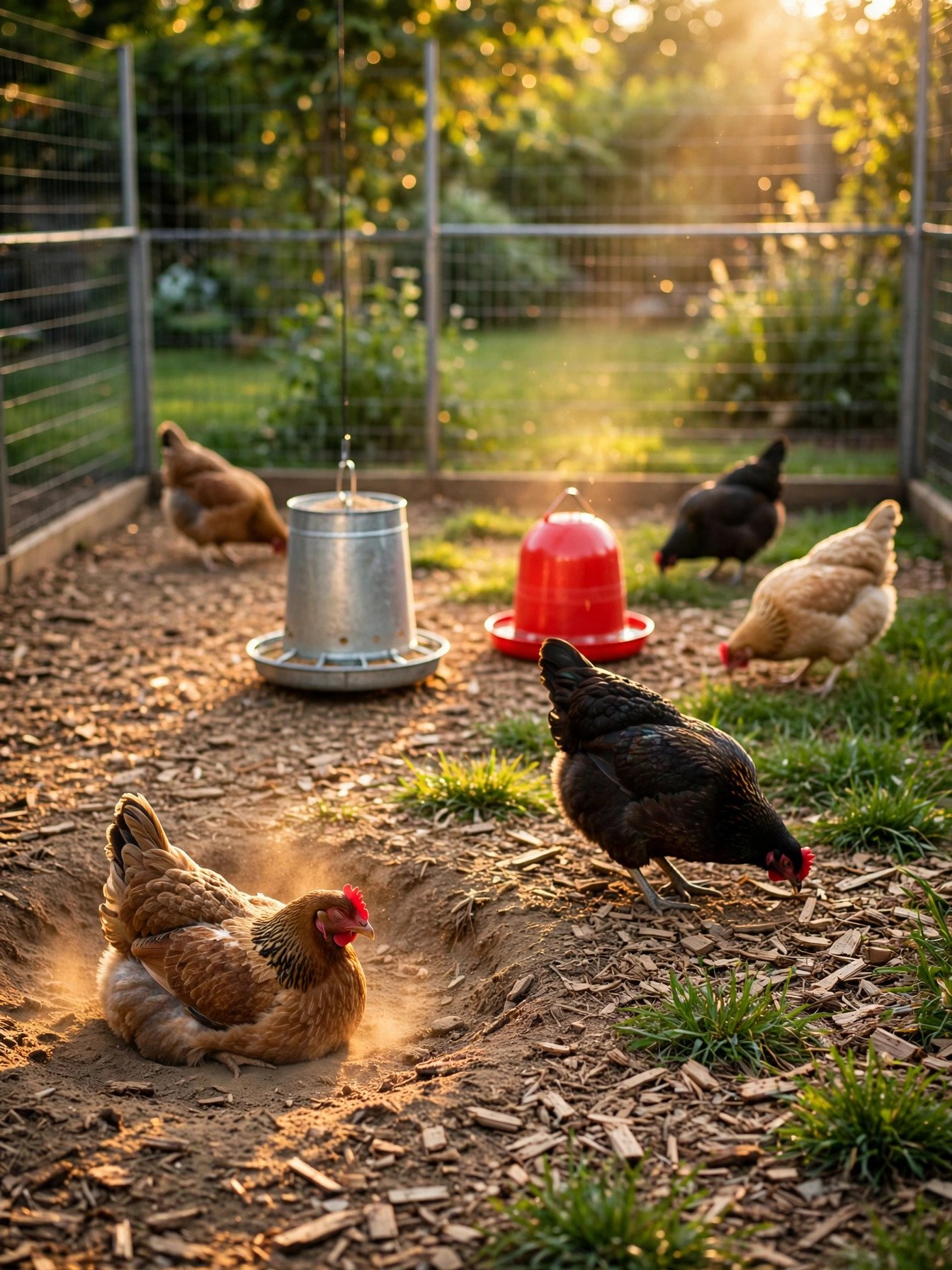
If your flock free ranges for most of the day, the run can be closer to half that size — it is really just a safe holding area for mornings and the odd day you are away. But notice what does not shrink: the coop and roost numbers. Every bird still sleeps inside, and on the worst weather day of the year, every bird will be inside all day whether you planned for it or not. And because the run is the first thing a raccoon tests at night, it is worth reading how to predator proof a chicken coop before you build, not after the first bad night.
How Much Roost Space Does Each Chicken Need?
Give each hen about 10 inches of roost bar (8 for bantams, 12 for large breeds). On paper that sounds like plenty. In practice, on a warm night your hens will spread out and use every inch of it, and on a cold night they will squash together onto half the bar and ignore the rest. Plan for the warm night.
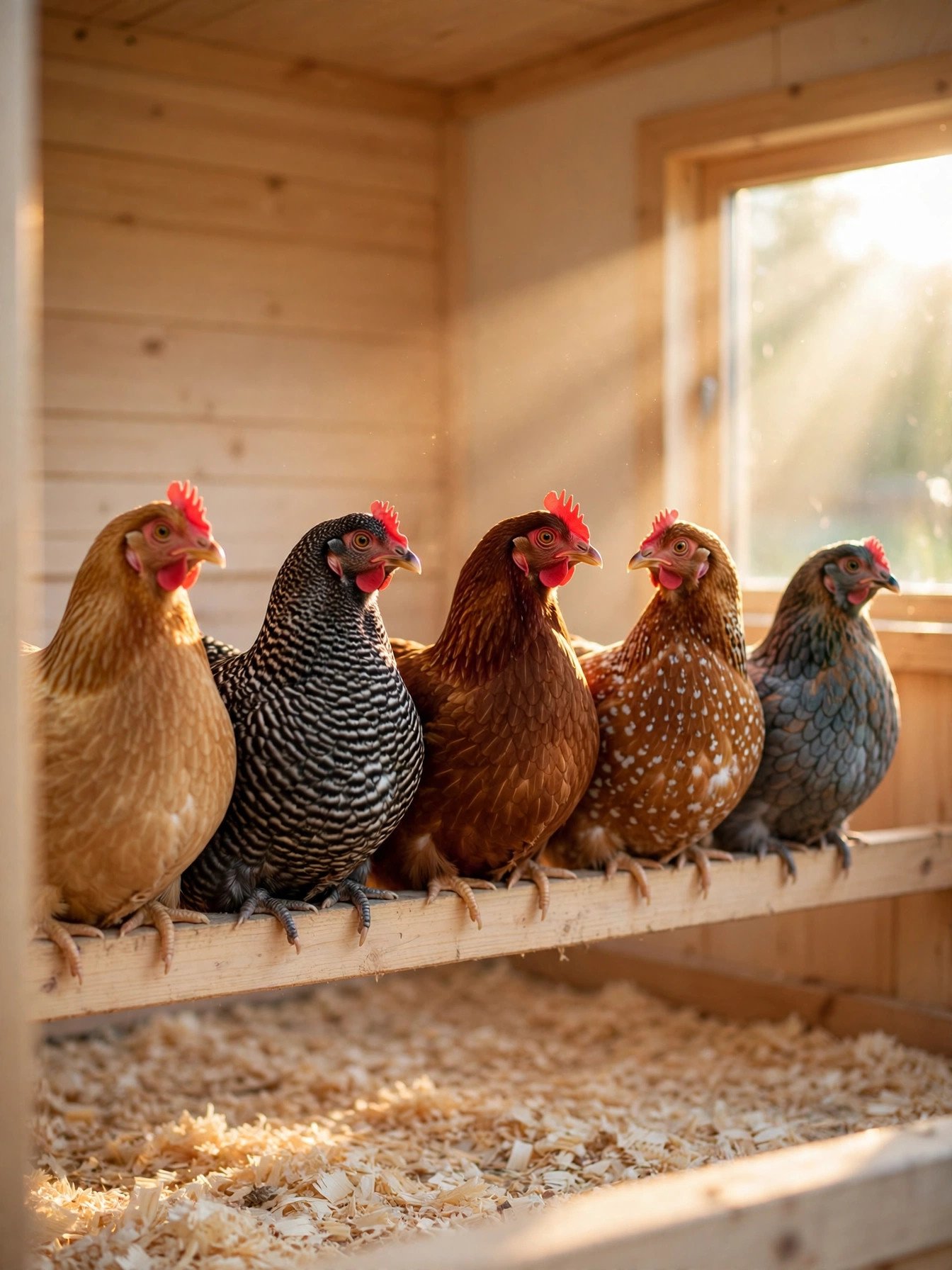
Use a wide, flat bar — a 2×4 with the wide side facing up is the classic choice — so hens can sit flat-footed and cover their toes with their feathers in winter. Round branches and narrow rails look natural, but they force hens to grip all night and leave toes exposed to the cold. Bar heights, spacing between bars and the setup mistakes that cause nighttime squabbles are all covered in our guide to roost space per chicken.
How Many Nesting Boxes Do Chickens Need?
One nesting box for every 4 hens is plenty, and each box should be roughly 12 × 12 × 12 inches. Here is the thing nobody tells beginners: it does not matter if you build two boxes or twelve. Your hens will pick one favorite, queue up for it, and occasionally two of them will climb into it at the same time while the identical box next door sits empty. That is normal. Boxes are the one place where more really does not help. For exact box counts by flock size, see our guide to how many nesting boxes you need.
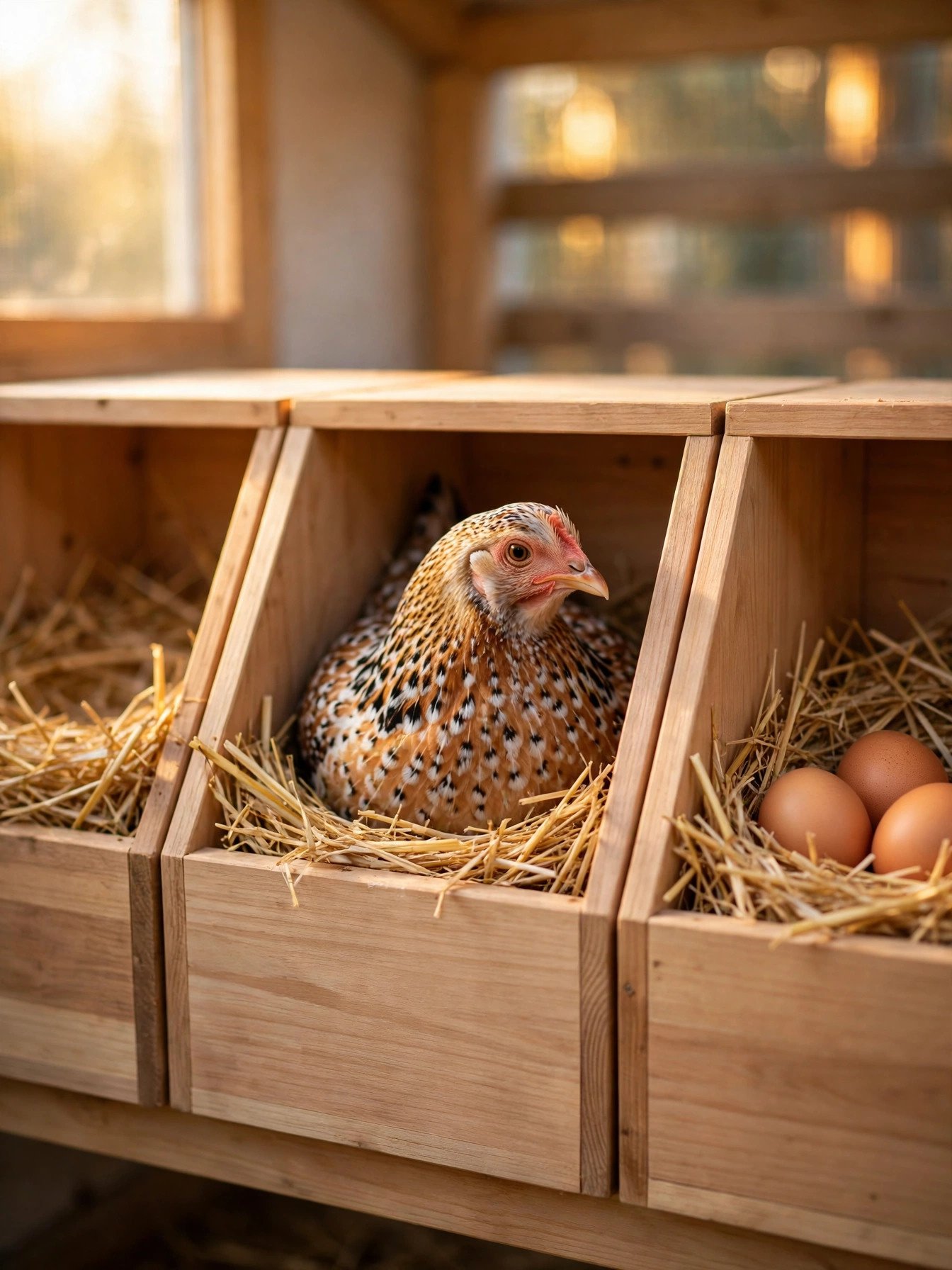
One more space trick while we are here: mount the boxes on the wall instead of standing them on the floor, and the floor space stays fully open. A rollout box like the COZOFU 4 Hole Nesting Box hangs on the wall, and the eggs roll gently into a covered tray where hens cannot peck at them or eat them — which quietly solves one of the crowding problems we get to further down this page.
Not Sure About Your Flock Size? Run the Numbers
If you are between flock sizes, or you keep bantams or big breeds, use our free Coop Size Calculator. Put in your bird numbers and it works out the coop size, run space, roost length and nesting boxes for your exact flock in about ten seconds. While you are working out numbers, our Chicken Feed Calculator shows what that same flock will eat each month.
Gear That Gives You Space Back
Once the coop and run are sized right, the last space trick is getting the furniture off the floor. Every feeder and waterer standing in the middle of the coop is standing on square feet your hens were supposed to get. Gear that hangs, mounts or hugs the wall hands that space back.

- Holds a full 50 lb bag of feed — for a flock of 6 to 11 hens that means refilling every 2 to 3 weeks, not every few days
- Three hens feed at once through no-waste ports, so feed ends up in the birds instead of billed out onto the floor
- Rainproof design works inside the coop or out in the run, and it takes up one small corner instead of the middle of the floor
Prefer one matched feeding station instead? The RentACoop Feeder and Waterer Set pairs a 10 lb no-waste feeder with a 2 gallon waterer, and both hang on the run wire or coop wall, so almost no floor is lost at either end of the day.
What Happens When Chickens Do Not Have Enough Space?
Crowding rarely looks like crowding at first. It looks like behavior problems:
- Feather pecking and bullying — bored, frustrated hens pick on the lowest-ranking bird, and it can escalate to real injury
- Egg eating — hens stuck inside together learn that eggs are interesting
- A coop that smells within days — droppings build up faster than bedding can handle, and ammonia irritates eyes and lungs, yours included
- Mud — too many feet on too little ground kills the grass in weeks
- Fewer eggs — stressed hens simply lay less
Most “bad behavior” in a backyard flock is a space problem wearing a disguise. Before you blame the hen, measure the coop.
Can a Chicken Coop Be Too Big?
Almost never — with one exception. In a very cold climate, a huge, tall coop holds more cold air than a small flock can warm with body heat, so an oversized coop can actually be the colder one in January. The fix is not a cramped coop; it is a coop that fits your flock with a little room to spare, good ventilation up high, and no drafts at roost level. Everywhere else, and in every run ever built, bigger is simply better.
Space Rules for Bantams, Large Breeds and Roosters
- Bantams: about two thirds of the standard numbers — 2 sq ft in the coop, 6 in the run. A mixed flock of bantams and standard hens should be sized using the standard numbers.
- Large breeds (Orpingtons, Brahmas, Jersey Giants): go up, not down — 5 sq ft in the coop and 12 in the run, and keep roosts lower, because heavy birds injure legs jumping down from high bars.
- Roosters: count a rooster as one large hen in your math, and give the flock extra run space if you can. Roosters need room to do their job without cornering hens.
- Chicken tractors: the run numbers still apply per bird, but because the ground under a tractor is always fresh, birds in tractors moved daily do well at the lower edge of the range.
Frequently Asked Questions
How much space do 6 chickens need?
Six standard hens need a coop of at least 24 square feet — a 4 × 6 ft coop is the classic size — plus about 60 square feet of run, 5 feet of roost bar, and 2 nesting boxes.
How much space do 10 chickens need?
Ten standard hens need at least 40 square feet inside the coop (a 5 × 8 ft coop works well) and about 100 square feet of run, which is a 10 × 10 ft space. Roost space comes to about 8 feet of bar, and 3 nesting boxes are enough.
Do nesting boxes and feeders count toward coop space?
No. The square footage numbers refer to open floor space the hens can actually walk on. Anything sitting on the floor — nesting boxes, feeders, waterers — takes away from that space, which is why wall-mounted or external fittings are a smart choice in a small coop.
If my chickens free range, can I build a smaller coop?
Not really. Free ranging shrinks the run you need, but the coop numbers stay the same, because every hen still sleeps inside and will spend full days inside in bad weather. Roost space is the hard limit: if there is not 10 inches per hen, somebody sleeps on the floor.
Is 3 square feet per hen enough?
It is the bottom figure some guides quote, and small hens in a mild climate with a large run can manage at it. But it leaves no margin for growth, bad weather days or a hen who needs to be separated. Four square feet is the number that keeps working in real life, which is why it is the one we recommend.
The Bottom Line
Four square feet in the coop, ten in the run, ten inches of roost, one box for every four hens. Write those four numbers on the first page of your coop planning notebook and let every other decision — the coop you buy, the flock size you settle on, the run you fence — answer to them. Your hens will be calmer, your coop will be cleaner, and you will not be rebuilding anything next spring. New to chickens altogether? Start at the beginning with our complete guide to backyard chickens for beginners.