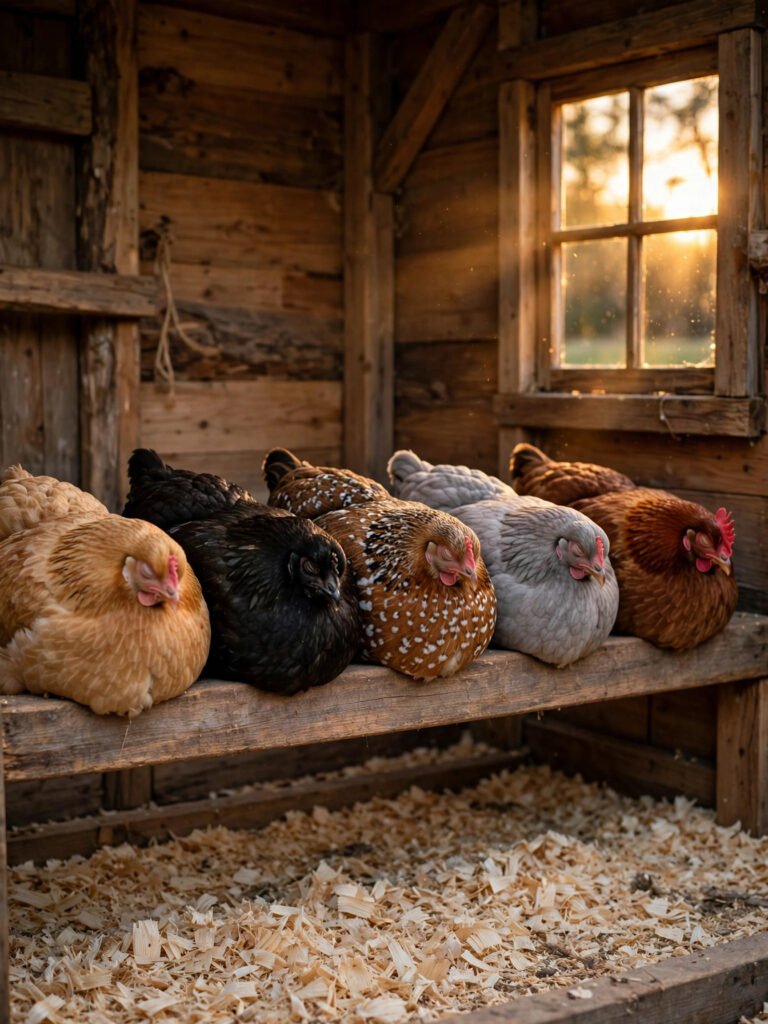

Short answer first: give every standard laying hen 10 inches of roost space — 8 inches for bantams and 12 inches for large breeds like Orpingtons and Brahmas. And size the bar for a summer night, not a winter one. Hens squash shoulder to shoulder when it is cold, then spread out like they own the place when it is warm. The bar has to fit them at their most spread out, or the hen at the bottom of the pecking order ends up sleeping somewhere else.
That “somewhere else” is usually your nesting boxes, which is why so many “my hen sleeps in the nest box” problems are really roost problems in disguise. Chickens run a strict evening routine: at dusk they file in, squabble over the good spots for five noisy minutes, and settle. Give them a bar that is long enough, wide enough and at the right height, and the argument ends before it starts. Here is how to get all three right.
Roost Length by Flock Size: The Chart
Roost space is just multiplication. Count your hens, multiply by their inches, and that is your total bar length. It does not have to be one bar — two shorter bars add up exactly the same, and in most coops two bars are far easier to fit than one long one.
| Hens | Total roost length needed |
|---|---|
| 4 | 40 inches (3 ft 4 in) |
| 6 | 60 inches (5 ft) |
| 8 | 80 inches (6 ft 8 in) |
| 10 | 100 inches (8 ft 4 in) |
| 12 | 120 inches (10 ft) |
| 16 | 160 inches (13 ft 4 in) |
| 20 | 200 inches (16 ft 8 in) |
Bantam flock? Multiply by 8 inches instead. All big breeds? Multiply by 12. Mixed flock, use the standard 10 and round up — nobody has ever regretted an extra foot of roost. Planning the whole coop rather than just the bars? Our free Coop Size Calculator works out roost length alongside floor space and nesting boxes.
Why Bar Width Matters as Much as Length
Ask most people to picture a roost and they picture a branch. It makes sense — wild jungle fowl sleep in trees. But a round pole is honestly the worst shape you can give a laying hen. On a round bar she has to grip all night, toes curled around and underneath it, and in winter those exposed toes are exactly where frostbite starts.
The fix is boring and it works: a 2×4 with the wide side facing up. That gives her a flat platform about three and a half inches wide. She stands on it flat-footed, settles her breast down over her feet, and her own belly feathers tuck over her toes like a blanket. Flat bar, warm feet, no gripping. While you are at it, sand off any sharp corners and splinters — bumblefoot often starts as one small cut on the foot, and rough lumber is full of opportunities.
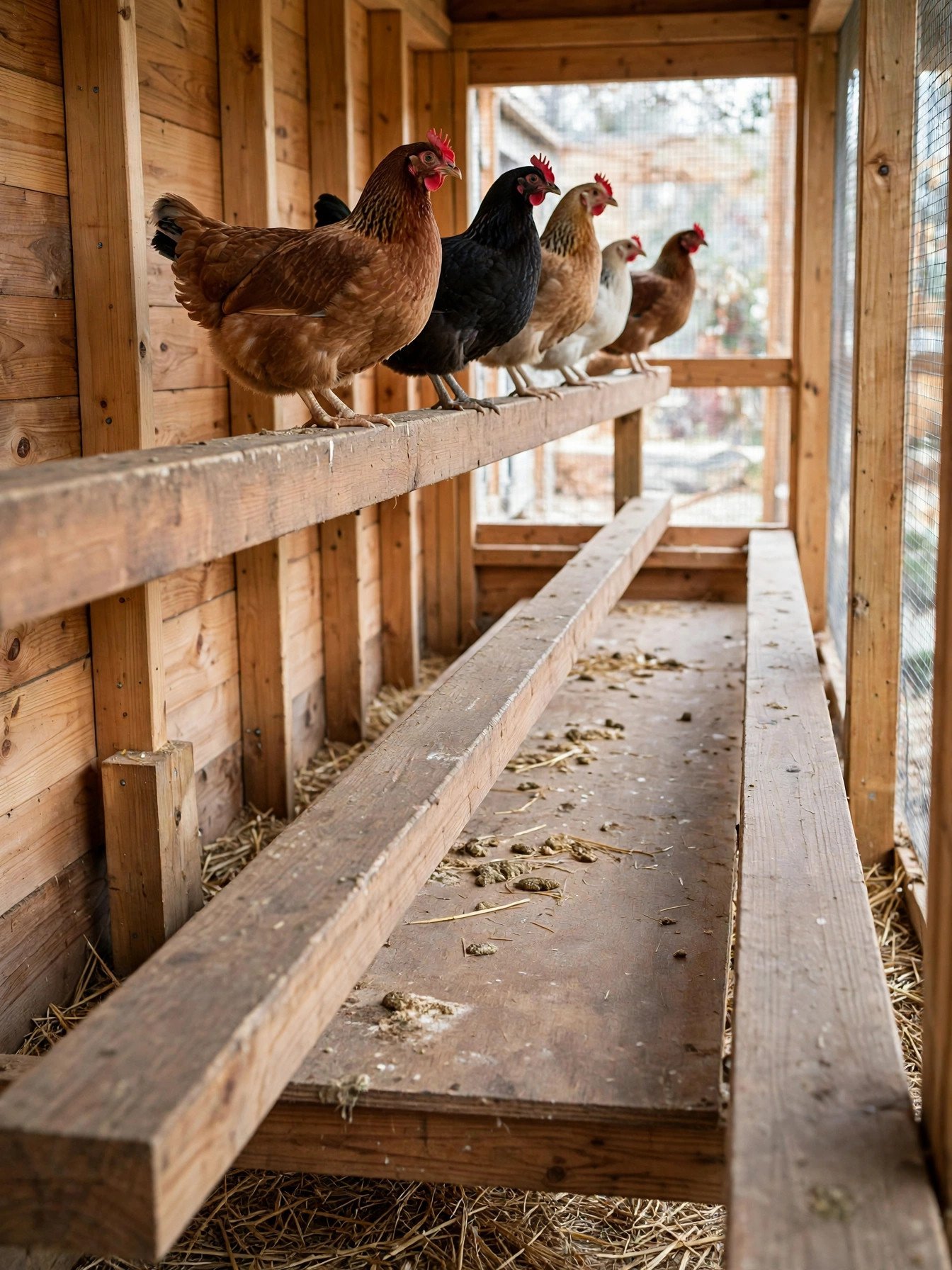
A flat board anywhere in the 2 to 4 inch range works too. Avoid anything narrower, and skip smooth plastic or metal — slippery underfoot, and metal is brutally cold in January.
How High Should Roosts Be?
For most standard hens, somewhere between 2 and 4 feet off the floor is the sweet spot. High enough to feel safe — chickens are wired to sleep above ground-level trouble — and low enough that the morning drop does not punish their legs a little more every day.
Heavy breeds are the exception. An Orpington or a Brahma is a lot of bird landing on two feet, and repeated drops from a high bar are a straight road to bumblefoot and strained legs. For the big girls, keep bars at 12 to 24 inches, or add a ramp or a couple of low step bars so they can climb up and stroll down like the dignified ladies they are. A stepped setup ends most of the bedtime arguments too: the top hen takes the penthouse, and everyone else still gets a decent spot.
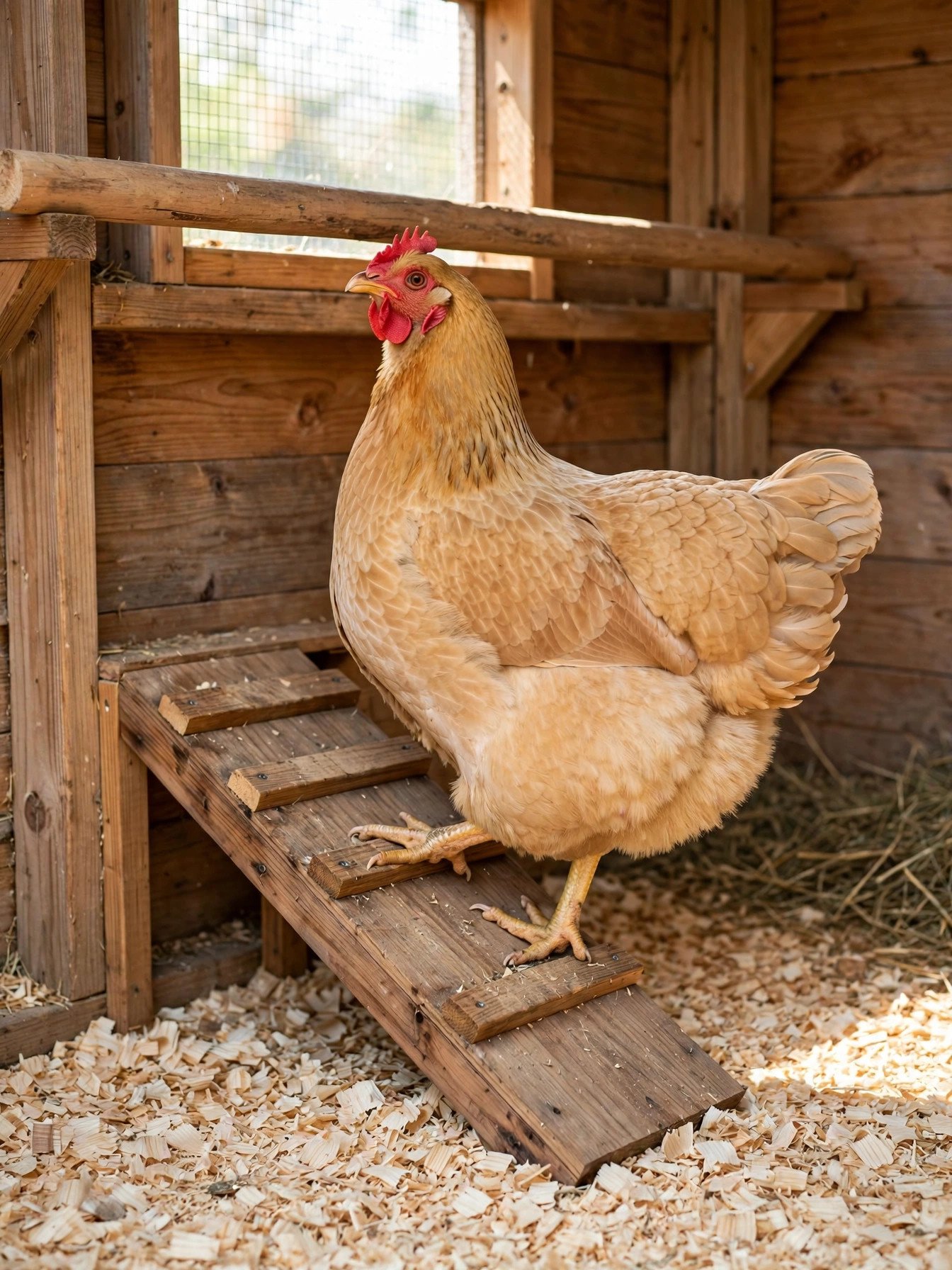
One rule outranks all the others: roosts must sit higher than the nesting boxes. Chickens sleep at the highest comfortable point they can reach. If the boxes are higher than the bar, they will sleep in the boxes, fill them with droppings overnight, and hand you dirty eggs from a filthy bed. Set the bars higher and the problem never starts — and plan the two together using our guide to how many nesting boxes you need.
Spacing Rules: Between Bars, Walls and the Ceiling
Two bars are only useful if hens can actually use both. Set parallel bars 12 to 15 inches apart, measured centre to centre. Closer than that and a hen on one bar gets a face full of tail feathers from the other. If your bars sit at different heights, offset them sideways as well as stepping them down, so the birds below are not sleeping under a slow rain of droppings from the birds above.
Keep the nearest bar at least 12 inches from the wall — 14 is better. Hens sleep facing outward with their tails toward the wall, and a bar hard against it means rubbed-out tail feathers and droppings smeared down your coop wall instead of falling cleanly where you want them. Above the bar, leave 18 inches or more of headroom. A hen stands up, stretches and gives a flap before she settles, and on a hot night that gap is also where the warm air needs somewhere to go.
Roost length is one piece of a bigger puzzle, of course. If you are still at the planning stage, read the full breakdown of how much space chickens need — coop, run and roost together — before you cut a single board.
Prefer a Ready-Made Roost?
Most roosts are a ten-minute job with a 2×4, and building your own is always the better value. But if your coop walls cannot take fixings, or you want a roost you can drag out into the run on a sunny afternoon, a freestanding frame is the one ready-made option that makes sense.

- One freestanding square frame, 55 × 40 inches, with wooden roosting bars — no screws, no fixings, nothing drilled into your coop walls
- Solid wood bars and a frame that comes apart for cleaning, and the whole thing can move between coop and run as your setup changes
- The honest catch: a frame this size eats real floor space, so it suits a walk-in coop or a run corner far better than a small prefab. In a tight coop, wall-mounted 2×4s are the smarter spend
Droppings Boards: Catch the Mess Where It Falls
Here is a fact that changes coop cleaning for good: chickens produce a huge share of their droppings — close to half of the day’s total — while they sleep. And it all lands in one straight line under the roost. So put something there to catch it.
A droppings board is nothing fancy. It is a flat shelf under the bars — plywood offcuts, an old piece of worktop, anything smooth you can scrape. Sprinkle it with sand or PDZ and the morning clean becomes a two-minute scrape into a bucket instead of a full bedding change. Your floor bedding lasts weeks longer and the coop smells noticeably better. A long-handled sifting scooper makes the job quicker still, especially under a low bar where you would rather not crawl.
Make the board a few inches wider than the bar on each side, and leave yourself a gap a scraper can get into. That is the entire design. Fancy has nothing to do with it.
6 Roost Mistakes I See Again and Again
- Round poles and branches — they look natural, but toes grip all night and freeze in winter. Flat beats round, every time
- The 6-inch myth — kit coop instructions still claim 6 inches per hen is plenty. That is survival space, not sleeping space
- Bars lower than the nest boxes — you are choosing droppings in the laying boxes, every single night, forever
- One bar and no choice — a single bar means the top hen owns all of it. A second bar or a step gives the low hens somewhere legal to sleep
- Bars hard against the wall — rubbed tails, smeared walls, and no room for a hen to turn around
- Sky-high bars for heavy breeds — if your Orpington thumps to the floor every morning, her feet will tell you about it by autumn
Frequently Asked Questions
How many feet of roost do 6 chickens need?
Five feet. Six hens at 10 inches each comes to 60 inches of bar. It can be one 5-foot bar or two shorter ones — the hens only care about the total, and about every bird being able to claim a spot without a fight.
Do hens actually use all 10 inches?
In winter, honestly, no — they pack together for warmth and leave half the bar empty, and that is fine. In summer they spread out, wings slightly open, and use every inch. Always size for the summer night — and the spare winter space is not wasted, because a hen who can shuffle away from a bully sleeps better than one who cannot.
Should roost bars be round or flat?
Flat, and it is not close. A 2×4 with the wide side up lets a hen stand flat-footed and cover her toes with her breast feathers, which is how she keeps them warm through the night. A round bar forces her to grip for hours and leaves her toes exposed underneath it.
Why is my hen sleeping in the nesting box?
Work through it in order: is the bar long enough that she can get on without being pecked off? Is the bar higher than the box? Is it flat and comfortable, not a pole? Nine times out of ten it is one of those three. The tenth is red mite, which hides in cracks around the bar ends by day and comes out to bite at night — if a hen suddenly refuses a roost she used to love, check the bar ends with a torch after dark.
The Bottom Line
Ten inches per hen on the bar — 8 for bantams, 12 for the big breeds — on a flat 2×4, set 2 to 4 feet up (lower for heavy hens), always higher than the nesting boxes, 12 to 15 inches between bars, 12 or more from the wall, and a droppings board underneath to catch what the night shift produces. That is the whole recipe. Get the roost right and bedtime turns from the loudest ten minutes of the chicken day into the quietest. If you are setting up from scratch, our complete guide to backyard chickens for beginners puts the roost in its proper place in the build order.