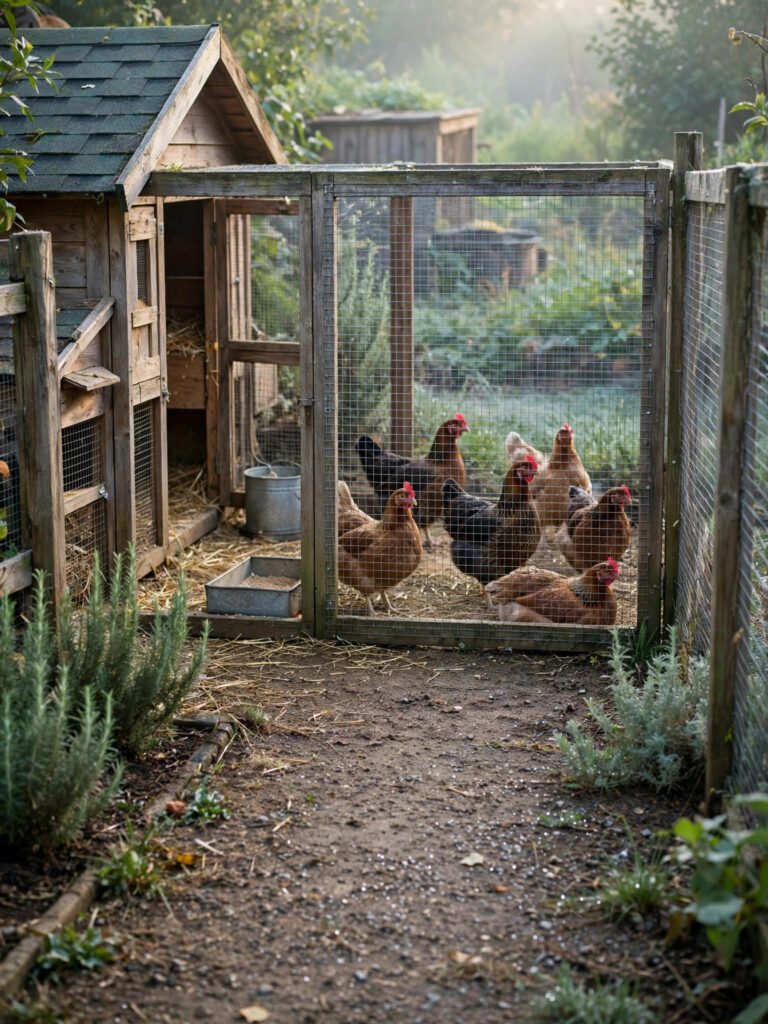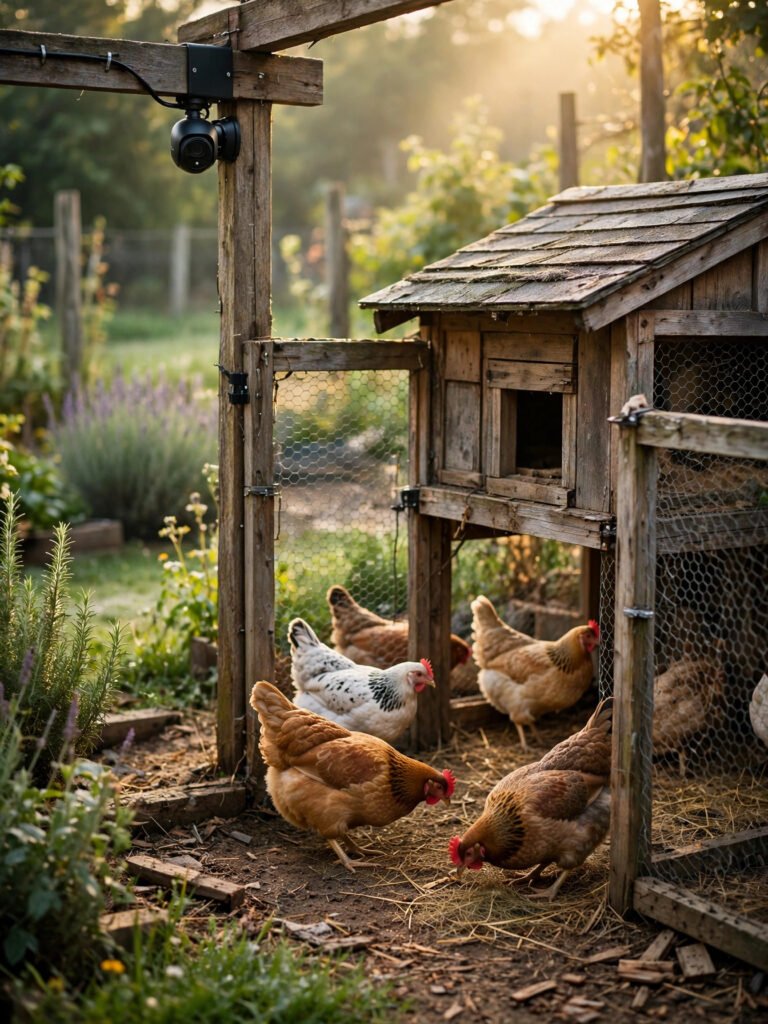

Short answer first: chicken wire keeps chickens in. It does not keep predators out. That is the whole difference, and it is not a small one. A raccoon can tear chicken wire apart with its paws and reach straight through the holes that it cannot tear. A neighborhood dog or a coyote goes through it in seconds. Hardware cloth — welded galvanized steel mesh, 1/2 inch squares, 19 gauge — is the material that actually protects a flock, and it is the standard on every opening of the coop itself. If the two rolls are sitting side by side at the store and you are deciding where each one goes in your build, this page is that decision.
The confusion is understandable, because the name does the damage. It is called chicken wire, so people assume it was made for keeping chickens safe. It was not. It was made for keeping chickens contained — in a pen, out of a garden, off the flower beds. Protection was never its job, and judging by how often keepers lose birds behind it, it does that job badly while looking like it might. Hardware cloth has the opposite problem: a boring name that tells you nothing, attached to the one material your coop genuinely depends on.
Hardware Cloth vs Chicken Wire at a Glance
| Chicken wire | Hardware cloth | |
|---|---|---|
| Build | Thin steel wire twisted into hexagonal holes, usually 1 to 2 inches across. Flexible, almost like fabric. | Galvanized steel wire welded at every crossing into a stiff square grid, usually 1/2 inch mesh in 19 gauge for coop work. |
| Predator resistance | Essentially none. Raccoons tear it and reach through it; dogs and coyotes push straight through. | High. Welded joints do not unravel, the wire is too thick for raccoon paws to tear, and 1/2 inch holes are too small to reach through. |
| Rust life | Short. The thin wire and light coating rust quickly outdoors, often weakening within a season or two. | Long. Galvanized after welding, so even the joints are coated; a properly fitted roll lasts for years outdoors. |
| Cost class | Cheap — among the least expensive fencing per foot you can buy. | Moderate to premium fencing cost — several times chicken wire per foot, and worth every bit of the difference on the coop. |
| Best uses | Dividing birds, garden fencing, keeping hens off beds and seedlings, visual boundaries inside an already secure fence. | Every opening on the coop and run: vents, windows, run walls and roof, the ground apron, door surrounds. |
Read that table honestly and the pattern is obvious: these are not two versions of the same product. They are two different tools that happen to both be sold in rolls. The rest of this page is about what each one actually is, so the choice stops being a guess.
What Chicken Wire Actually Is
Chicken wire — sold as poultry netting in most stores — is thin steel wire twisted, not welded, into a pattern of hexagons. The twisting is the point. It makes the mesh flexible, light and cheap to manufacture, and it lets the roll drape and bend around posts and odd shapes. Those are useful qualities. They are also exactly why it cannot protect anything. A mesh that flexes in your hands will flex under a raccoon’s, and twisted joints can be worried apart one twist at a time by an animal with all night to work on them.
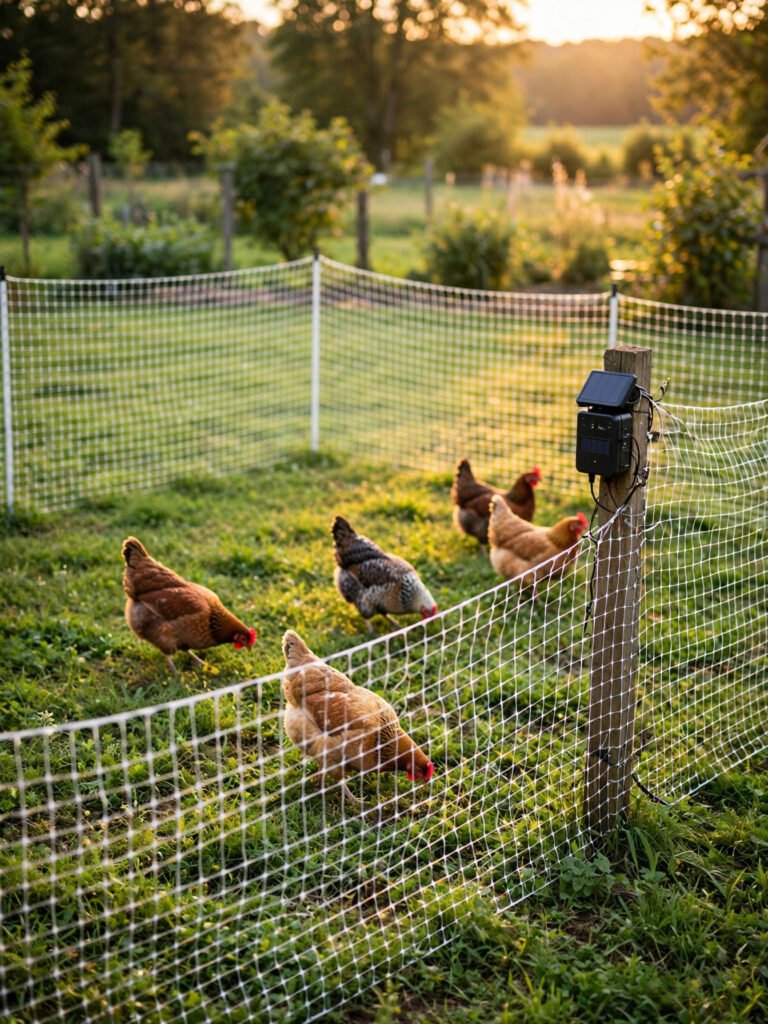
What was it designed for? Containment. It was made to fence poultry into an area, divide one group of birds from another, and keep hens out of places they should not scratch. At those jobs it is genuinely fine, and I am not going to pretend otherwise just because the safety argument is one-sided. Chicken wire is a reasonable choice for a garden fence that keeps hens off your seedlings, for splitting a large run into a grow-out pen, or as a light visual boundary inside a yard that is already fenced against predators with something stronger.
Notice what is not on that list: the top of a run. People sometimes assume wire over the run is fine because the threat there comes from the sky, and it is true that a hawk will not chew through mesh. But a run top is also a climbing route. Raccoons walk across run roofs at night, and a roof made of twisted wire gives under their weight and their hands. Hawk protection over a run should be netting rated for the job, hardware cloth, or a solid roof — the same answer as in our full guide to how to predator proof a chicken coop. Chicken wire’s safe zone is narrower than its name suggests: inside the perimeter, at ground level, where nothing is depending on it for safety.
What Hardware Cloth Actually Is
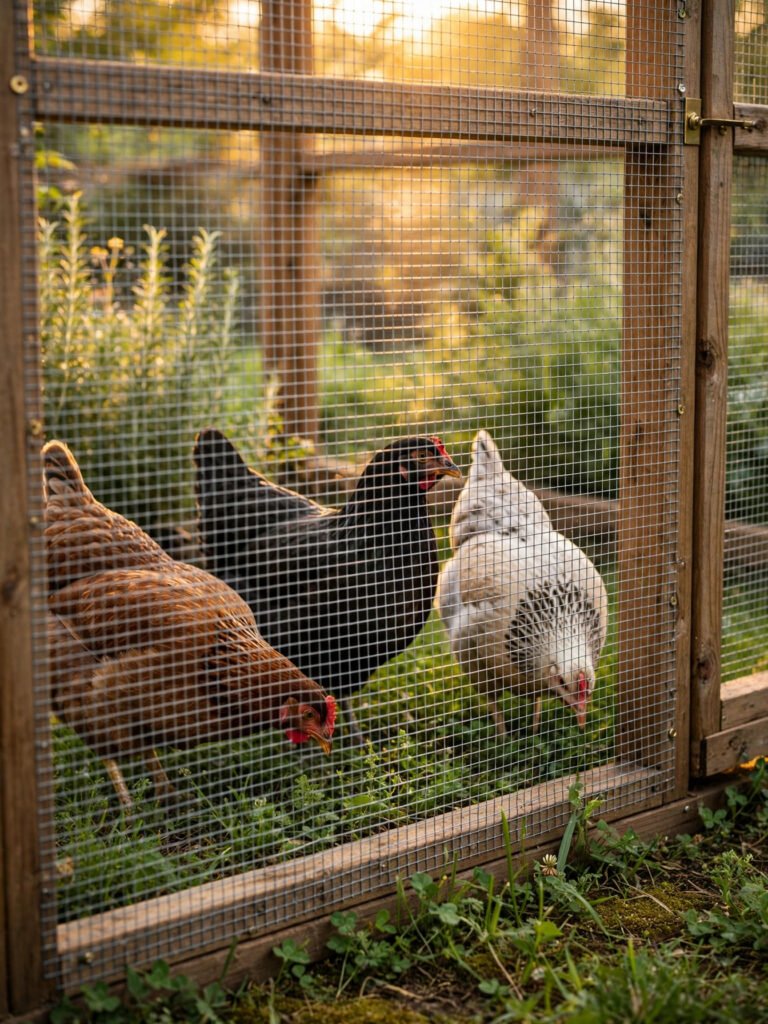
Hardware cloth is not cloth at all. It is steel wire woven or welded into a square grid and then galvanized — coated in zinc — to resist rust. For coop work, the spec that matters is welded, not woven. A weld at every crossing means the grid cannot unravel when one wire is cut or chewed, and the sheet stays rigid enough to hold its shape across a vent or window frame. The two numbers on the label are the mesh size, the width of each square, and the gauge, the thickness of the wire itself. A lower gauge number means thicker wire. For almost everything on a chicken coop, 1/2 inch mesh in 19 gauge is the standard, and it is the standard for a specific reason.
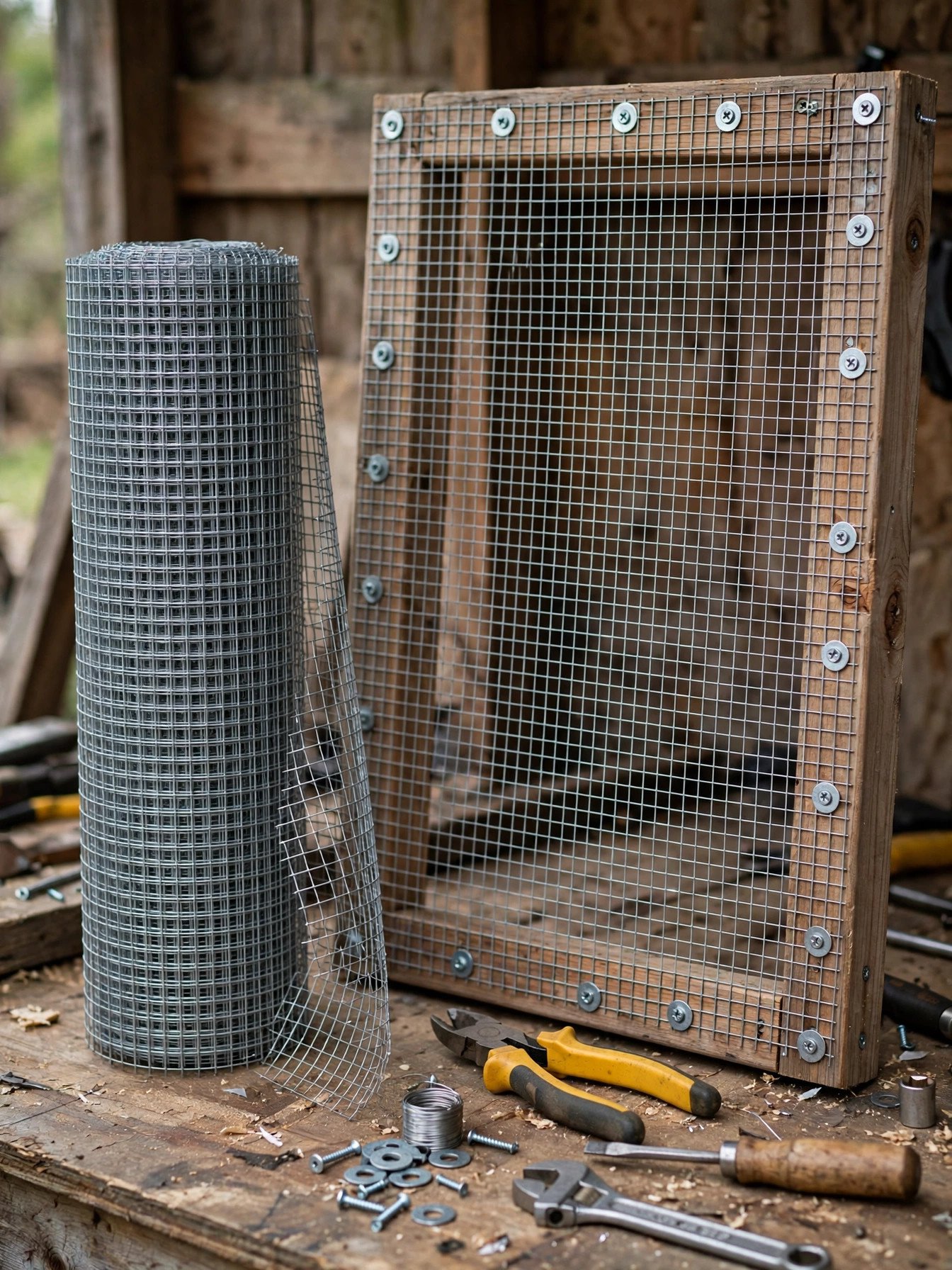
That half inch is not arbitrary. A raccoon’s paw is its main weapon, and a half-inch square is too small for that paw to get through and grab a hen sleeping on the other side. It is also too small for a rat to squeeze through, and it stops most snakes. There is a finer option, 1/4 inch mesh, and it does have its place: brooders and chick pens, and yards where small snakes or mice are a real problem. But it costs more, the cut edges are sharper to handle, and it blocks a little more airflow and light. For the coop and run themselves, half inch does the job, which is why keepers, builders and extension guides all land on the same number.
One last detail, and it decides whether the cloth works in year three or quietly fails in year one: how you fasten it. Hardware cloth goes on with screws and fender washers, or with its edges trapped under a batten board. Poultry staples alone pull out a little more every season, and the day a raccoon leans on a stapled edge is the day you find out. Screws and washers hold the mesh flat and tight, and they are what we specify everywhere in the predator proofing guide too. The mesh is only as strong as its fasteners, so buy the washers when you buy the roll.
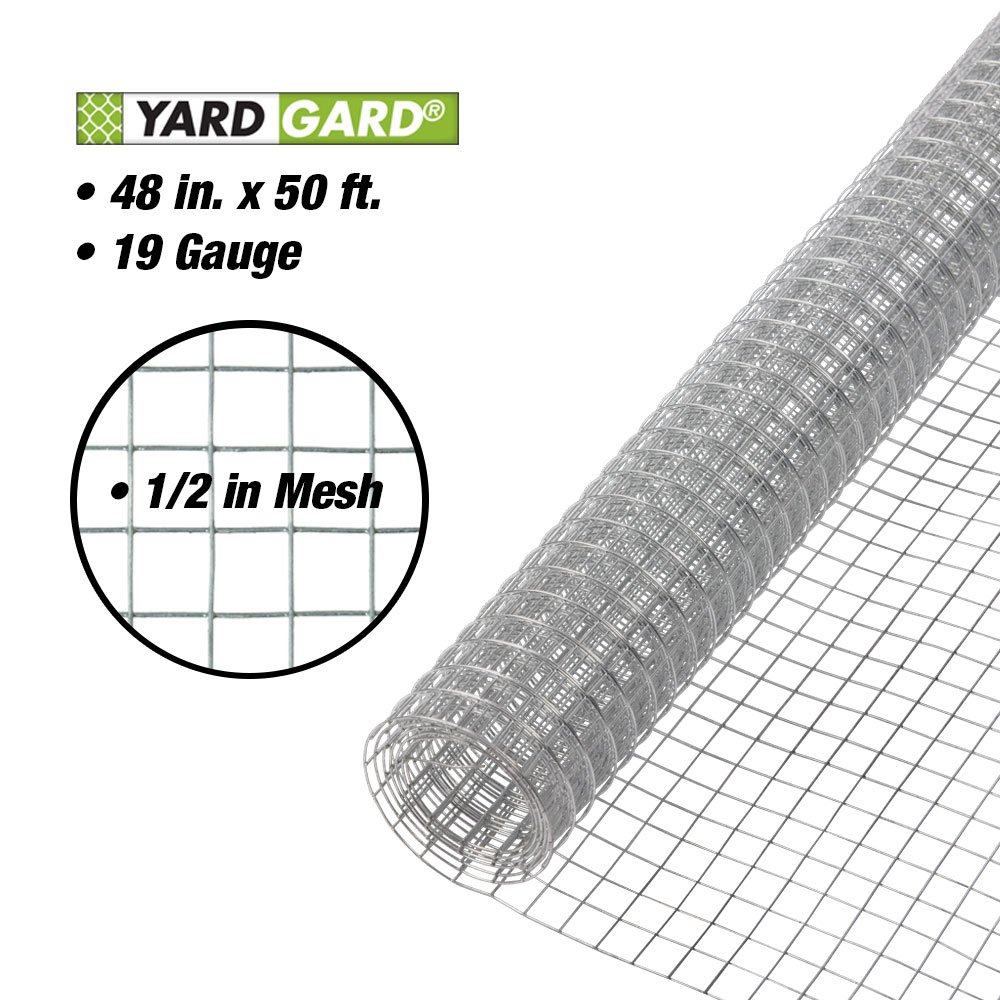
- Half-inch openings are too small for raccoon paws to reach through and too small for rats to squeeze past
- 19 gauge galvanized steel, welded at every joint, so it stands up to tearing, chewing and years of weather
- The 48 in × 50 ft roll is the practical size for a backyard build — enough for a typical run, the vent and window covers, and the apron around the base
The Three Ways Chicken Wire Fails
It is worth being specific about this, because “chicken wire is weak” is easy to nod at and then ignore. It fails in three distinct ways, and a coop only needs one of them.
- It tears. The twisted joints that make chicken wire flexible are also its breaking points. A raccoon grips the mesh in both paws and pulls the twists apart. A dog or coyote does not even need technique — it pushes, the wire gives, and it is inside. Welded hardware cloth has no twists to unravel, and 19 gauge wire is beyond what raccoon paws can tear.
- Predators reach through it. The hexagons in chicken wire run one to two inches wide. A hen sleeping pressed against the fence at night is within reach of any raccoon walking past, and raccoons are known for grabbing birds they cannot pull out. Keepers who find an injured hen by the fence in the morning are usually looking at a reach-through, and half-inch hardware cloth is the specific fix, because the paw simply does not fit.
- It rusts and sags. Chicken wire is thin, and its rust protection is as thin as the wire. Outdoors it corrodes fast, and the weakened mesh sags, stretches and breaks at the rusted twists. Wire that felt adequate the spring you installed it can be a formality by the following year — and predators test fences far more often than owners do.
Put together, that is why experienced keepers treat chicken wire on a coop the way electricians treat a frayed cord. It is not that it never works. It is that you cannot tell which night it stops working, and something else in the yard is keeping that schedule for you.
Where Each One Belongs, Coop Part by Coop Part
Here is the practical version, walking the coop from top to bottom. The rule underneath every line is the same: if a predator can reach it, lean on it or climb to it, it gets hardware cloth.
- Vents: hardware cloth, always, screwed on with washers. Vents are openings by design, and predators know it. The mesh size here also shapes your airflow, which is covered in our guide to chicken coop ventilation.
- Windows: hardware cloth on the inside or outside face. A window propped open all summer with chicken wire behind it is an open door with extra steps.
- Run walls: hardware cloth on any run the birds sleep next to or spend unsupervised hours in. This is the surface raccoons test nightly and dogs hit at full speed.
- Run roof: hardware cloth or a solid roof panel. Never chicken wire — it is a climbing surface, not a barrier.
- The ground apron: hardware cloth, laid flat 12 to 18 inches out from the base or buried, so diggers hit mesh under their paws and give up. Chicken wire rusts out underground in no time and was never going to stop a fox anyway.
- Pop door surrounds and gaps: hardware cloth offcuts are perfect for screening the gaps around doors, at the roofline and where walls meet the floor. Any gap wider than half an inch gets covered.
- Brooder and chick pens: hardware cloth again, and here the 1/4 inch mesh earns its extra cost, because day-old chicks and small snakes play by smaller numbers.
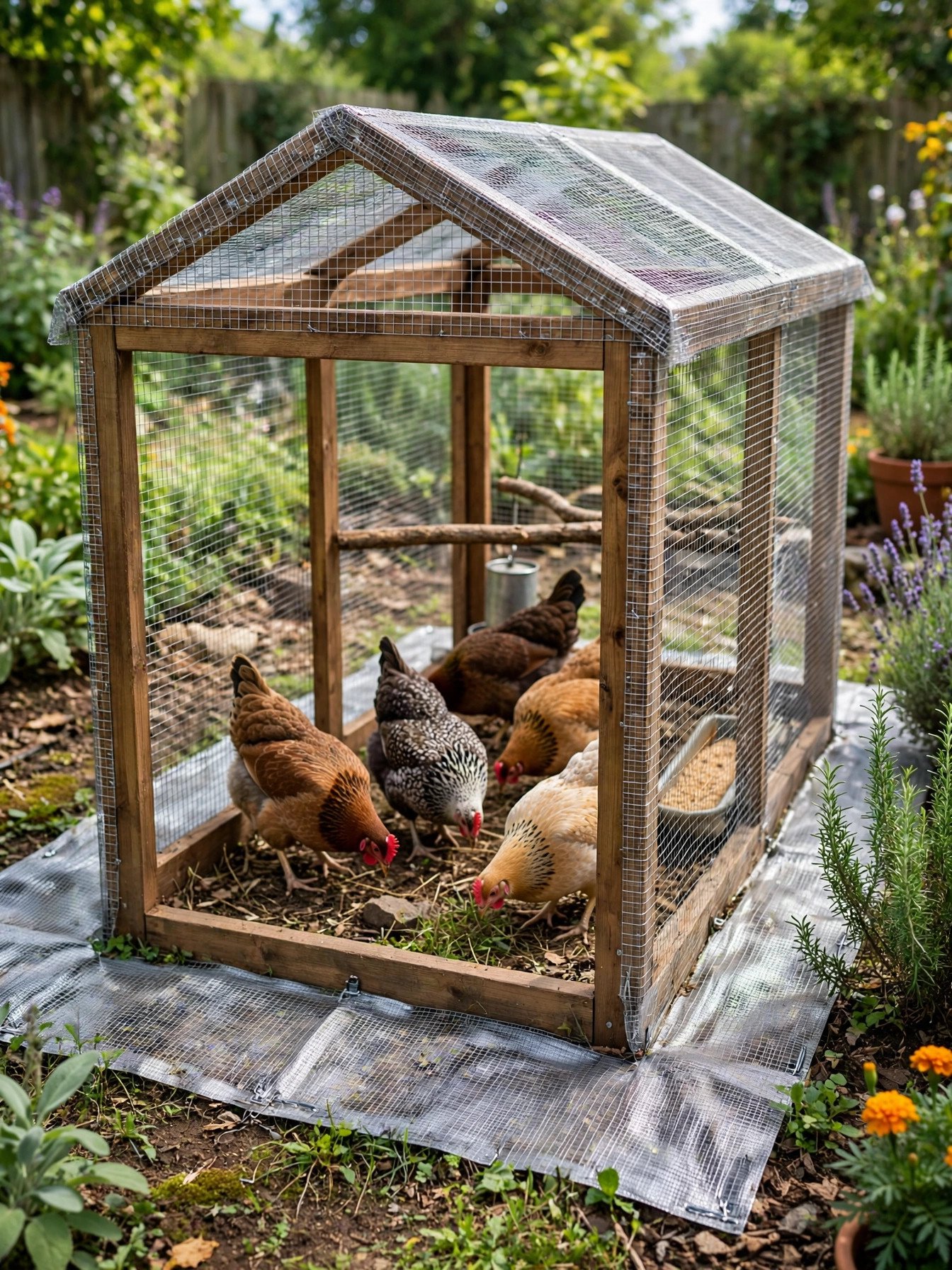
And chicken wire’s honest list is short: dividing a flock inside a secure run, fencing a garden against the hens themselves, and forming a temporary visual boundary within a yard that already has a real predator fence around it. Used there, it is cheap and handy and lasts long enough. Used on the coop, it is a risk you are taking on behalf of birds that cannot take it themselves. Where the coop sits in the yard changes how hard predators press on all of this, by the way — fence lines, tree cover and dog traffic all matter — which is why placement gets its own guide on where to put a chicken coop.
Frequently Asked Questions
Can I use chicken wire if my yard is already fenced?
Only inside the fence, and only for jobs that are not about safety — dividing birds, protecting a garden, marking a boundary. A typical yard fence stops dogs from wandering in, but raccoons climb straight over it and hawks ignore it completely. The coop and run still need hardware cloth, because the fence was never screening them.
Is 1/2 inch or 1/4 inch hardware cloth better?
Half inch, 19 gauge is the standard for coops and runs: it stops raccoon paws, rats and most snakes, and it is the best balance of strength, price and airflow. Quarter inch is worth it for brooders, chick pens, and yards with a real problem with small snakes or mice. Everywhere else, it costs more and cuts down light and air without adding protection the flock needs.
My prefab coop came with chicken wire fitted. Do I really have to replace it?
Yes, and it is the single highest-value hour you will spend on that coop. Keep the frame, keep the roof, and swap the wire panels for hardware cloth, screwing it over or in place of the original mesh with washers. Most prefab coops are built to a price, and the wire is where the saving shows. Replacing it turns a decent coop into a safe one.
Can I put hardware cloth over the chicken wire instead of removing it?
You can, and plenty of keepers do exactly that as a quick fix: screw the hardware cloth flat over the existing wire so it becomes the working layer. Just make sure the hardware cloth is the one taking the load — fastened to the frame with screws and washers, edges covered — and check the sandwich once a season, because the chicken wire underneath will keep rusting even though it no longer matters much.
The Bottom Line
Hardware cloth vs chicken wire is not really a contest between two kinds of mesh. It is one question: is this opening part of my flock’s protection, or just part of their containment? Protection gets 1/2 inch, 19 gauge galvanized hardware cloth, welded, screwed down with washers, on every vent, window, run wall, roof and apron. Containment — the garden, the divider, the inside boundary — can have the cheap twisted wire and nobody gets hurt. Buy both rolls if your yard needs both jobs done. Just never let the chicken wire stand between your hens and the night.