
Best Nesting Boxes for Chickens: Rollout, Wood and Plastic Picks
The best nesting boxes for chickens are the ones your hens will actually use: about 12 inches square inside, with a front lip that holds deep bedding, enough cover to feel dark and private, and a design you can clean without a fight. Get those four things right and the material almost does not matter. Get them wrong and your hens will lay in the coop corner no matter what you paid.
Below are the four boxes I would shortlist for a backyard flock: a metal rollout that keeps eggs clean and out of beak reach, a classic wooden row, a plastic single that hoses clean in seconds, and a budget 3 pack. First, work out how many holes your flock needs in my guide to how many nesting boxes you need, because buying the wrong number is the most common mistake I see. Full honesty before we start: these picks come from manufacturer specs and verified owner review patterns, not from hands on testing, and every pick lists its weak points as plainly as its strengths.
Quick Picks: The 4 Boxes at a Glance
| Box | Type | Holes | Material | Best for |
|---|---|---|---|---|
| COZOFU 4 Hole Rollout | Rollout | 4 | Galvanized steel | Clean eggs and egg eaters |
| PawHut 3 Hole | Standard | 3 | Fir wood, asphalt roof | The classic wooden coop |
| Little Giant Single | Standard | 1 | HDPE plastic | Easiest cleaning, small flocks |
| Touri 3 Pack | Standard | 3 | Polypropylene | Lowest cost per hole |
1. COZOFU 4 Hole Rollout Nesting Box
If your eggs come in dirty, cracked, or half eaten, this is the design that fixes it. The floor of each hole slopes gently forward, so the moment a hen stands up, her egg rolls into a covered tray at the front where no beak can reach it. You collect from the tray without opening the coop or disturbing the next hen.

- Heavy-duty galvanized steel — no wood for mites to hide in
- Eggs roll forward into a covered tray, safe from pecking and dirt
- Wall-mountable with a swing perch for easy entry
- 4 holes cover a flock of up to 16 hens by the 1-per-4 rule
What we like
- Eggs stay clean and whole. No more bedding stuck to shells, and an egg eating habit usually dies fast because the evidence disappears before anyone can peck it.
- Steel gives mites nowhere to live. There are no wooden joints and grain for them to hide in, and the whole unit wipes or hoses down.
- Wall mounting frees up floor space and puts the tray at a comfortable collecting height.
What holds it back
- The sloped floor cannot hold a deep, shaped nest. Some hens dislike that at first and need a nesting pad and a fake egg or two before they accept it.
- It is the most expensive design per hole in this guide, and the flat pack assembly is a proper project with a lot of small hardware.
- Rollout only protects eggs if you still collect daily. A full tray left for days defeats the point.
Not for: tiny flocks paying for four holes they will never use, or keepers whose hens are devoted deep litter nesters that reject anything without bedding. For: flocks of 8 to 16 with dirty eggs, cracked eggs, or an egg eater in the ranks. This is the pick for most laying flocks.
2. PawHut 3 Hole Wooden Nesting Box
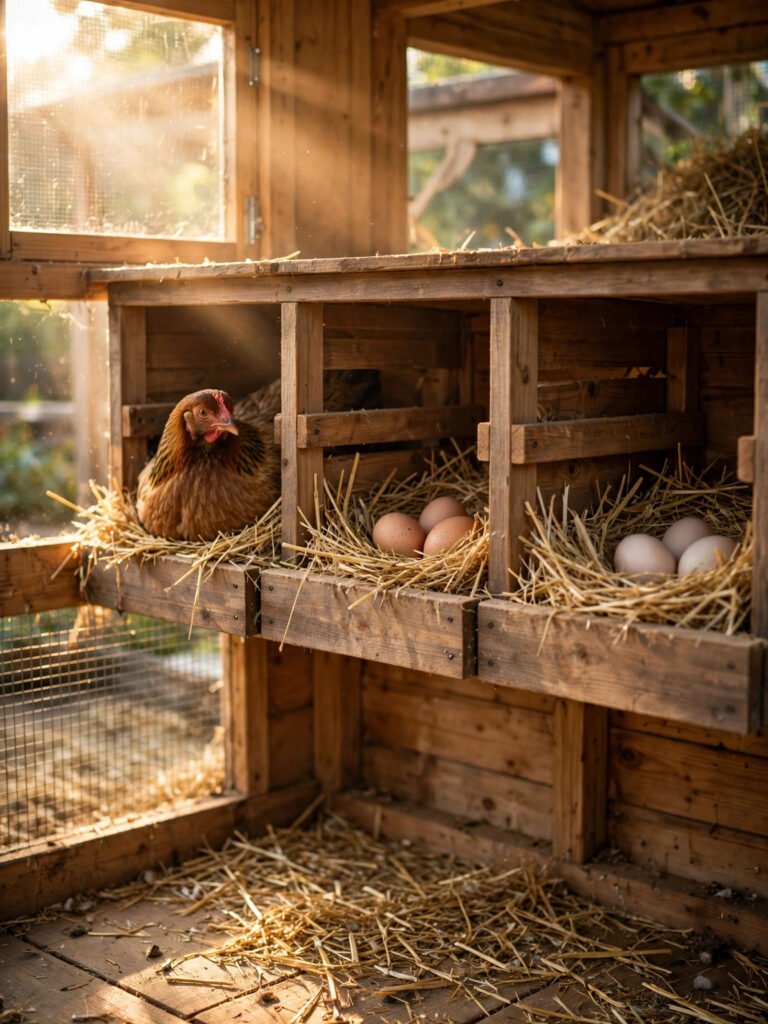
This is the box most people picture when they picture a nesting box: a simple fir wood row with three compartments under a flat asphalt roof, and room for a deep bed of straw in every hole. Hens take to wood faster than any other material in my experience of reading owner reports, because it feels like the hollow, sheltered spot they are wired to look for.

- Fir wood row, 37.5 x 14.5 x 13.5 inches overall — about 12 inches per hole
- Asphalt roof sheds weather, so it works in a covered run as well as the coop
- Raised floor keeps the bedding off damp ground
- Freestanding and light at about 14 pounds — easy to lift out for cleaning
What we like
- Hens accept it quickly. Deep bedding stays where you put it, and the low front board holds the straw in while hens scratch it into shape.
- The asphalt roof is a real step up from bare wood: it shrugs off rain, so the box can live in a covered run or an open front coop, not just a dry hen house.
- Wood insulates. In a cold coop it does not turn into the ice cold surface that metal and thin plastic can, and at about 14 pounds the whole row lifts out in one go for a proper scrub.
What holds it back
- Wood is where red mites live. The joints and seams need regular checking, and you cannot hose this box out and hang it up to dry like the plastic picks.
- The front is fully open and the back is open too, so it is less dark and private than an enclosed box, and it needs to sit against a wall or inside the coop rather than free standing out in the weather. Shy layers sometimes take longer to settle in it.
- Fir is a softwood and the panels are light duty. It does the job, but it is not the heavy, buy it for a decade build quality of a hardwood or homemade box.
- It is a standard box, so eggs sit in the bedding until you collect them, and at three holes it suits flocks up to about 12 hens. Bigger flocks will need a second unit.
Not for: coops that have fought mites, anyone who wants the box itself to solve dirty or eaten eggs, or an exposed spot with no wall behind it and no roof over it. For: traditional wooden coops and flocks of 6 to 12 where hen acceptance matters more than egg protection.
3. Little Giant Single Plastic Nesting Box
The Little Giant has been hanging in American coops for years, and the reason is cleaning. It is one molded piece of high density polyethylene that hooks onto the coop wall, lifts off in seconds, and survives a hose, a scrub brush, and being dropped on concrete. If a dirty nesting box is the chore you dread, this is your box.

- High-density polyethylene — will not rust, rot or corrode
- Sloped roof stops hens roosting (and pooping) on top
- Ventilation holes and a pre-installed front perch
- Mounts on a 16 inch on-center stud and lifts off for cleaning
What we like
- Cleaning really is a two minute job: unhook it, hose it, hang it back. Smooth plastic gives mites and lice no seams to colonize, which matters more than most buyers realize until their first infestation.
- You buy exactly the holes you need, one at a time. Add a fourth box when the flock grows, or keep a spare for a broody hen or an isolation pen.
- It mounts side by side or stacked, so a row of singles can follow your wall instead of demanding one long flat run.
What holds it back
- The smooth floor lets bedding slide out as hens scratch. Owners fix this with a nesting pad or a liner, but out of the box it is a real annoyance.
- The per hole cost of four singles can pass a single four hole unit, and a wall of separate gray boxes looks purely functional. No rollout either: eggs wait in the box until you arrive.
Not for: anyone who wants rollout collection or a tidy matched row, or very large breeds that like a wide hole. For: small flocks, mite conscious keepers, and anyone who wants a spare box that can be sterilized between uses.
4. Touri 3 Pack Nesting Boxes
The cheapest honest way to put three holes in a coop today. The Touri pack is three separate flat pack boxes in bright orange polypropylene that you fold and fasten together, then mount or stand wherever the hens need them. Each one is a touch bigger than the 12 inch minimum, which larger hens appreciate.

- 3 separate boxes, each 14.25 x 12.5 x 12.25 inches
- Polypropylene sheet construction, 0.2 inches thick
- Flat pack: fold, fasten, mount or place where you need them
- Plastic wipes and hoses clean like the other plastic picks
What we like
- Three holes for the lowest spend in this guide, and the separate units are a real advantage: put one in the coop, one in the run shelter, one wherever a hen has decided to lay anyway.
- The size is generous. At over 14 inches long and 12.5 wide, big hens fit properly instead of squeezing.
- Plastic cleanup, nothing to rot, and light enough to move with one hand.
What holds it back
- The 0.2 inch sheet is the thinnest material here, and flat pack panels flex under a heavy hen. Expect this to be the first box in the guide you eventually replace.
- The build is basic: no perch, a shallow feel compared with the wooden row, and bright orange is a look you either enjoy or tolerate.
Not for: a permanent, buy it once installation, or heavy daily use by the biggest breeds. For: a first flock on a budget, spare and overflow boxes, and anyone who needs holes in more than one place.
Rollout vs Standard Nesting Boxes: The Honest Trade
Every other choice in this guide is small compared with this one. A rollout box protects the egg. A standard box pleases the hen. Those are both true, and which one matters more depends on the problem you actually have.
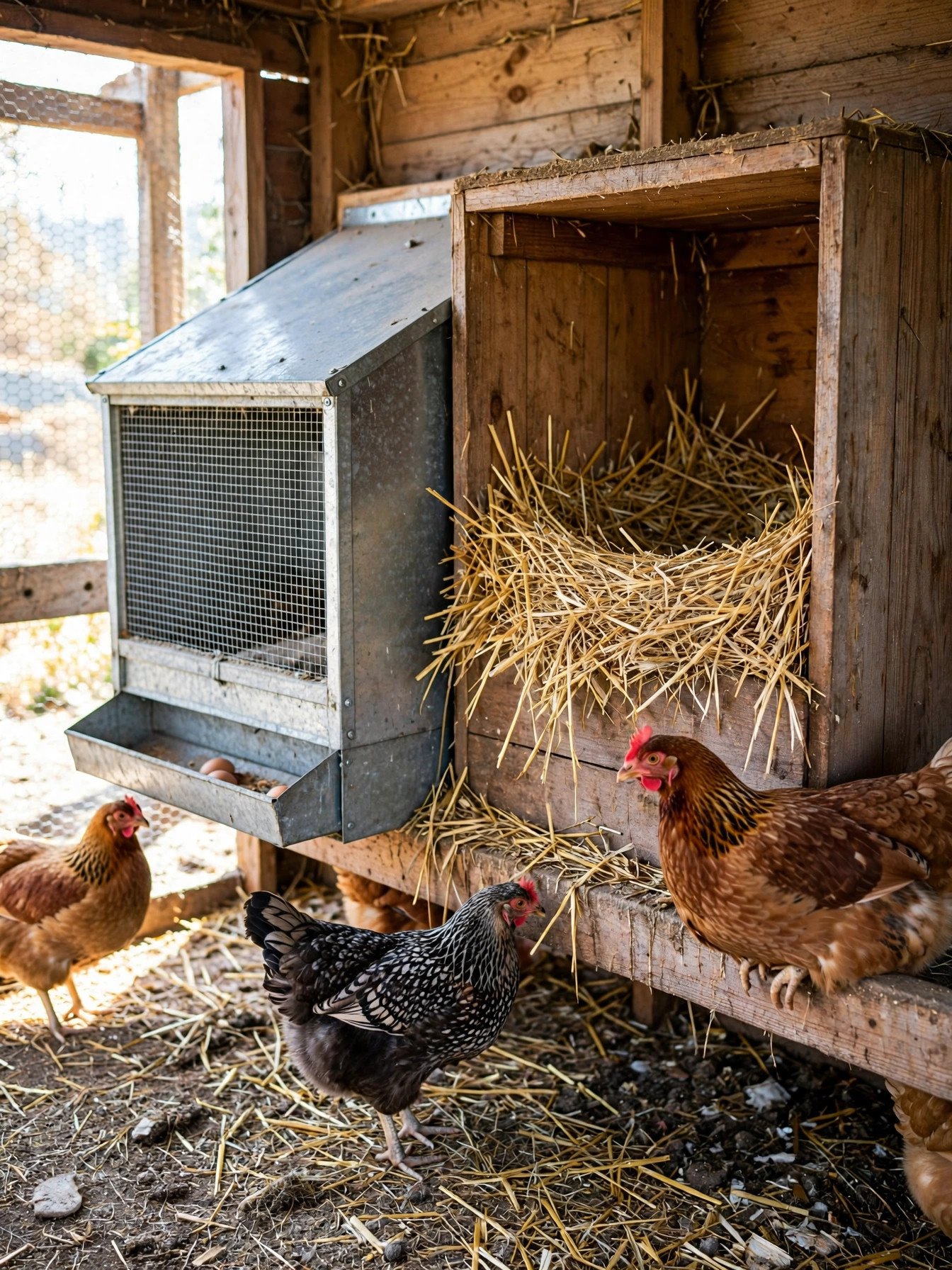
With a standard box, the egg lands in deep bedding and stays there until you collect it. Hens love that setup because it matches what they are looking for: a soft, dark hollow they can scratch into a bowl shape before they settle. The cost shows up at collection time. Eggs come in dirty, the occasional one gets cracked underfoot, and if one hen ever tastes a broken egg and likes it, you can have an egg eating problem that spreads through the flock.
A rollout box removes the egg from the equation seconds after it is laid, which is why it ends egg eating and delivers the cleanest eggs. The trade is the floor. A sloped rollout floor cannot hold that deep bed of straw, so the nest never feels quite as inviting, and some hens, especially older ones set in their ways, will lay on the coop floor for a while rather than use it. Nesting pads and fake eggs persuade most of them within a week or two, but go in knowing there is a persuasion period. My honest take: if your eggs are clean and whole, buy the standard box your hens will love. If you are fighting dirty, cracked or eaten eggs, buy the rollout and be patient for the first fortnight.
What Size Nesting Box, and How Many?
The short version: plan on one box per 4 hens, with a minimum of two even for a tiny flock, because hens all want to lay in the same favorite box and a single box starts arguments. Each hole should be about 12 x 12 x 12 inches for standard breeds, closer to 14 inches for big girls like Jersey Giants and Brahmas, and 10 to 11 inches is plenty for bantams. Too big is its own problem: an oversized box fits two hens, and two hens in one box means jostling and cracked eggs. I walk through the math for different flock sizes in the full guide to how many nesting boxes you need, including where to hang them and why lower than the roost matters.
Bedding and Fake Eggs: The Cheap Upgrade Every Box Needs
Whatever box you buy, what goes inside it does half the work. Straw, pine shavings, hemp, or a fitted nesting pad all work; the rule is depth and freshness. Hens want enough material to scratch into a bowl, and they will quietly stop using a box whose bedding has gone flat, dirty, or buggy. A handful of fresh bedding each week keeps a box in service.
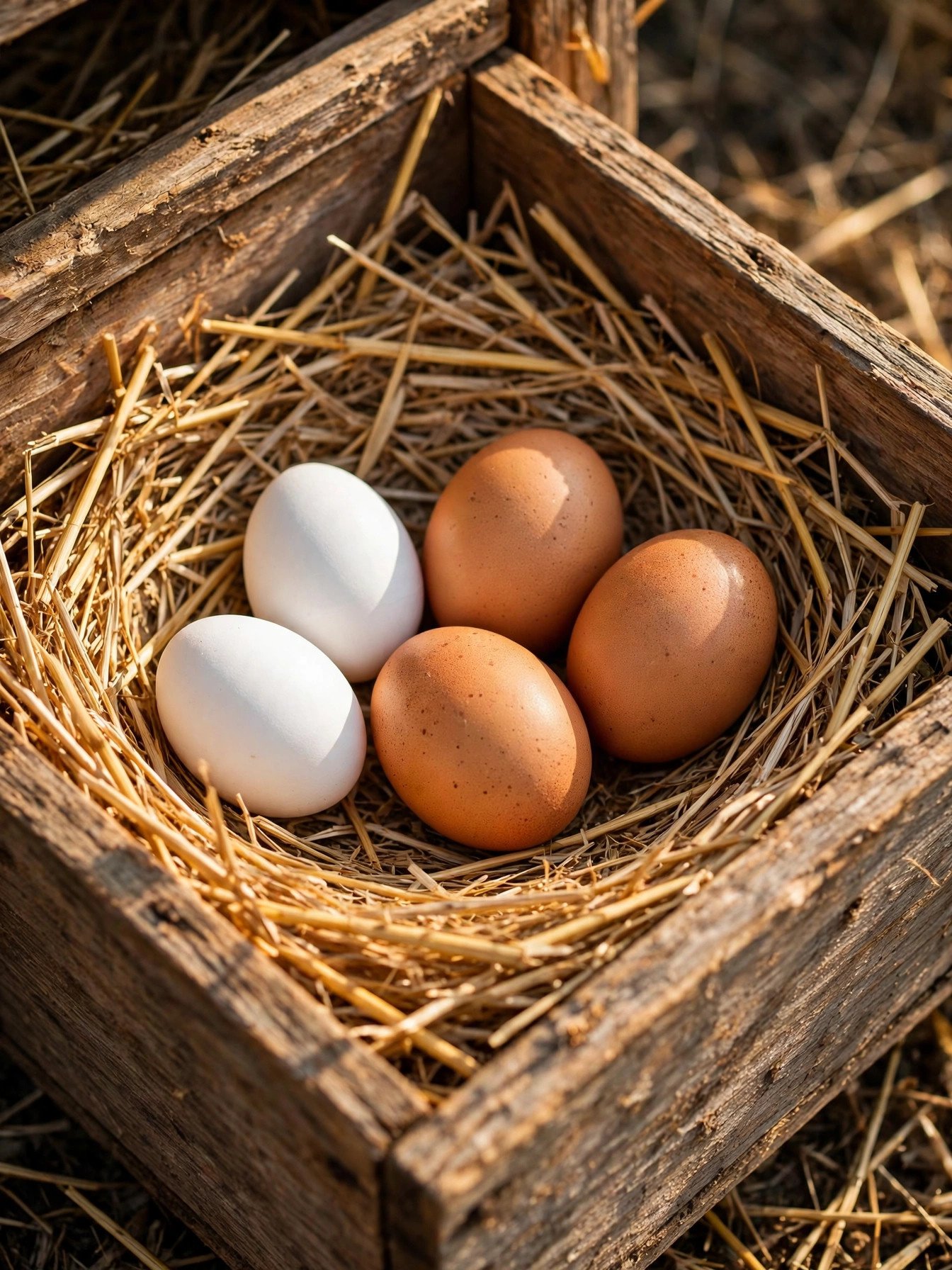
And put a fake egg in every box. A ceramic or wooden egg tells a young pullet “eggs happen here” better than anything else you can do, settles hens into new boxes (including rollout boxes they are still suspicious of), and gives would be egg peckers something hard and disappointing to peck. I keep ceramic nest eggs in my own boxes year round. They cost very little and quietly solve half the laying problems people write to me about.
Frequently Asked Questions
How many nesting boxes do I need for 12 hens?
Three, by the one box per four hens rule, and four if your hens are fussy or synchronized morning layers. In this guide that is one PawHut 3 hole plus a spare, or the COZOFU 4 hole and you are done. Always keep at least two boxes even for three or four hens, because one favorite box with a queue behind it leads to floor eggs.
Do hens prefer rollout or standard nesting boxes?
Given the free choice, most hens prefer a standard box with deep bedding they can shape. Rollout boxes are a keeper’s tool, not a hen’s preference: they win on clean, uneaten eggs, and most hens accept them within a week or two when you add a nesting pad and a fake egg. If your hens refuse a rollout outright and lay on the floor, that refusal is information, not stubbornness.
Why are my hens laying eggs on the floor instead of the box?
Usually the box, not the hen. The common causes are boxes that are too bright, too high, too few, or filled with stale bedding, and young pullets who simply have not learned yet. Lower the box below roost height, deepen the bedding, add a fake egg, and block off the corner where the floor eggs appear. If laying has stopped everywhere rather than just moved, read my troubleshooting guide on why your chickens are not laying eggs before you blame the furniture.
What is the best material for a chicken nesting box?
There is no single winner, which is why this guide has one of each. Galvanized steel is the most hygienic and the only choice that pairs with rollout collection. Wood is the material hens accept fastest and the warmest in winter, but it shelters mites. HDPE plastic is the easiest to clean and gives pests nowhere to hide, but it cannot hold bedding as well and never looks like furniture. Choose by your biggest problem: eggs, mites, cleaning, or budget.
Bottom Line
For most laying flocks, the COZOFU rollout is the buy: it solves the problems that actually cost you eggs, and its four holes cover up to 16 hens. If your eggs already come in clean and your coop is classic wood, the PawHut 3 hole will make your hens happiest. Small flocks and anyone who has battled mites should look hard at the Little Giant singles, and the Touri 3 pack is the right answer when the budget is the whole conversation. Whatever you choose, size it at 12 inches, keep the bedding deep and fresh, and put a fake egg in it. If you are still setting up the rest of the coop, start with my backyard chickens for beginners guide and build out from there.