
Short answer first: when hens stop laying, it is almost never some mystery disease. In most cases it is one of three completely normal things — the days have got too short, they are molting, or they are getting older — and all three are fixable or just a matter of waiting. Below are all twelve reasons I would work through, so you can find yours in a few minutes.
One reassurance before the list: a hen is not an egg machine with an on-off switch. Even a great layer takes breaks. The real skill is telling a normal break from a genuine problem, and most of the time that is simple elimination. If your hens are eating, drinking and acting like themselves, start at the top and do not skip to the scary end.
Start With the Quick Check
Match what you are actually seeing to the most likely cause before you read the whole list:
| What You See | Most Likely Reason | First Fix |
|---|---|---|
| Feathers everywhere, hens look scruffy | Molting | Add protein, then wait it out |
| It is late fall or winter and days are short | Not enough daylight | Add a morning light, or let them rest |
| One hen sits in the box all day and growls | Broody hen | Break her, or let her sit it out |
| Hens look fine but the boxes stay empty | Hidden nest or egg eating | Hunt for the stash, collect eggs more often |
| Shells went thin or soft before eggs stopped | Feed and calcium | Proper layer feed plus oyster shell |
| Everything stopped right after a change or a scare | Stress | Restore the routine, give it a week or two |
12 Reasons Your Chickens Stopped Laying
1. They Are Not Old Enough Yet
If your pullets are under about 18 to 24 weeks, there is probably nothing wrong at all — the eggs just have not started. Light breeds often begin near 18 weeks; bigger heritage breeds can keep you waiting past 24. Watch for the real signs instead: a comb that reddens and grows, and a squat when you reach toward her. The fix is patience. Move them onto layer feed at around 18 weeks and let them start in their own time.
2. They Are Getting Older
A hen’s best laying happens in her first year, and from year three onward most hens slow down noticeably. High-production hybrids fade faster than heritage breeds, which lay fewer eggs but keep going longer. Nobody did anything wrong, and no feed or supplement reverses it — it is just biology. If a full egg basket matters to you, the practical answer is rotating a couple of young pullets into the flock every year or two.
3. The Days Are Too Short
Laying runs on light. A hen’s body needs roughly 14 hours of daylight to keep production going, and in late fall and winter most of us are nowhere near that. This is the single most common reason flocks slow down. Two honest options: add a low-watt bulb on a timer, topping up the hours in the morning so hens still roost at dusk — or let them rest for winter, like plenty of keepers do.
4. They Are Molting
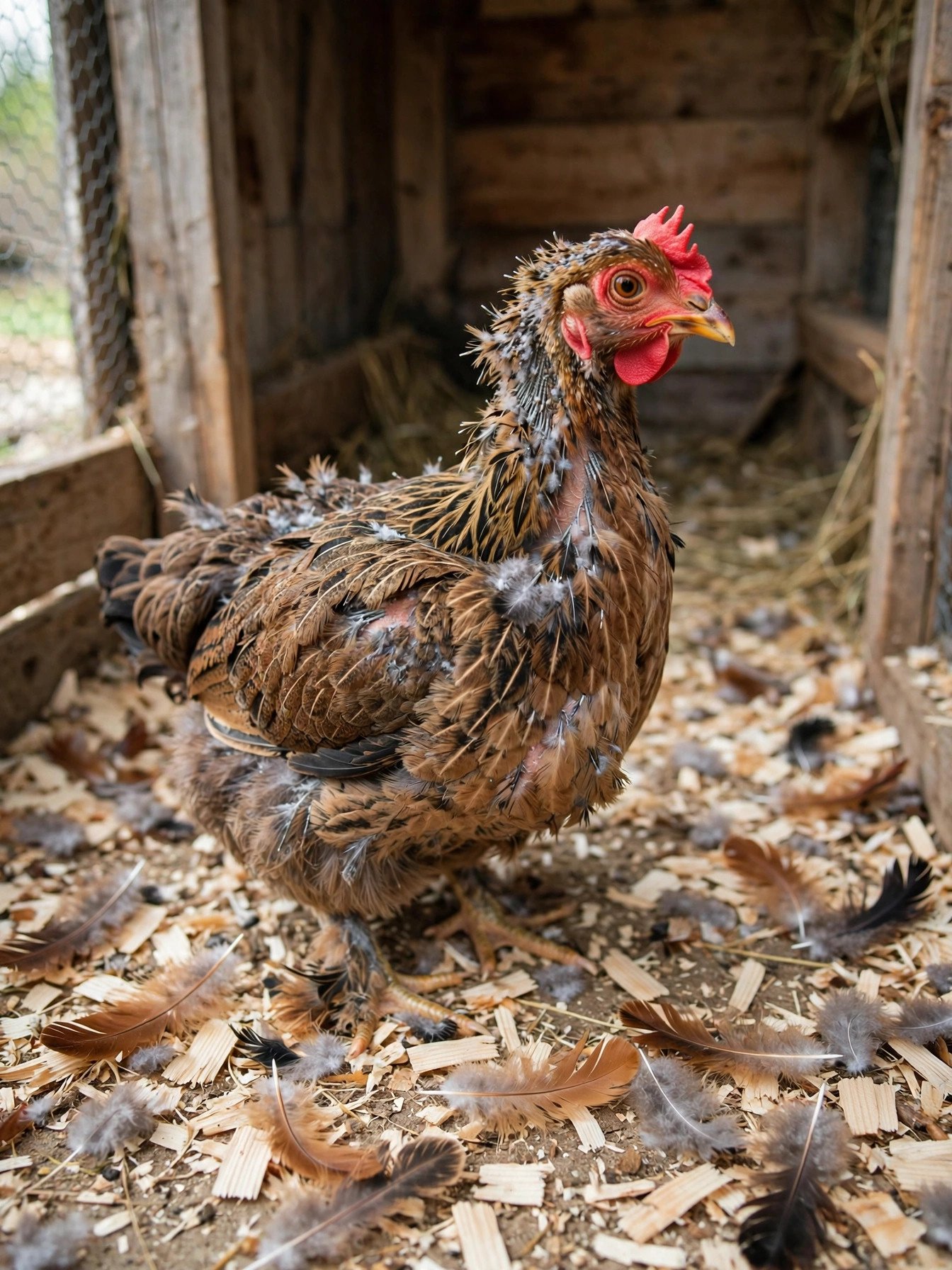
Once a year, usually in the fall, every hen drops her old feathers and grows a new set. It looks alarming — bare patches, pin feathers, a run that looks like a pillow exploded — and it takes real protein to build feathers, so egg production shuts down while it happens. Keep handling to a minimum, because growing pin feathers are genuinely uncomfortable, and bump up the protein with a higher-protein feed or modest extras.
5. A Hen Has Gone Broody
A broody hen parks herself in a nesting box and refuses to leave — flattened like a pancake, puffed up, growling when you reach in, often with feathers plucked from her own breast. She is not sick — her hormones have told her to hatch something, and a sitting hen lays nothing, for about three weeks if left alone. Either give her fertile eggs if you actually want chicks, or break the cycle with a few days in a wire-bottomed cage with good airflow, which cools her underside and usually snaps her out of it.
6. They Are Laying Somewhere Else
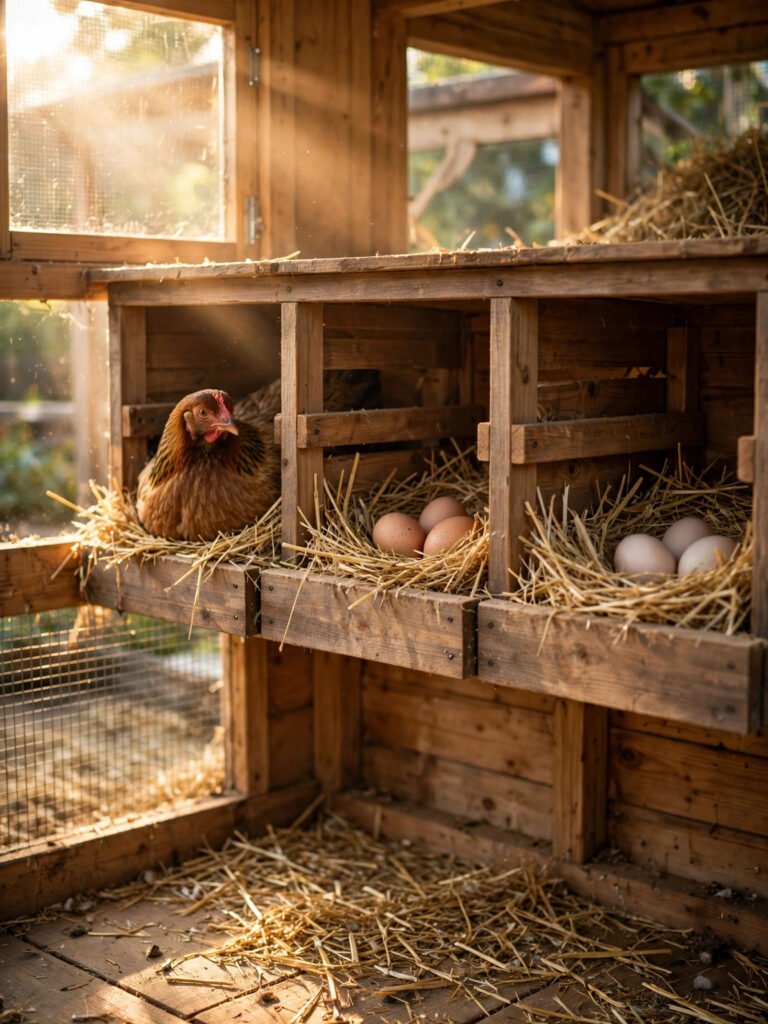
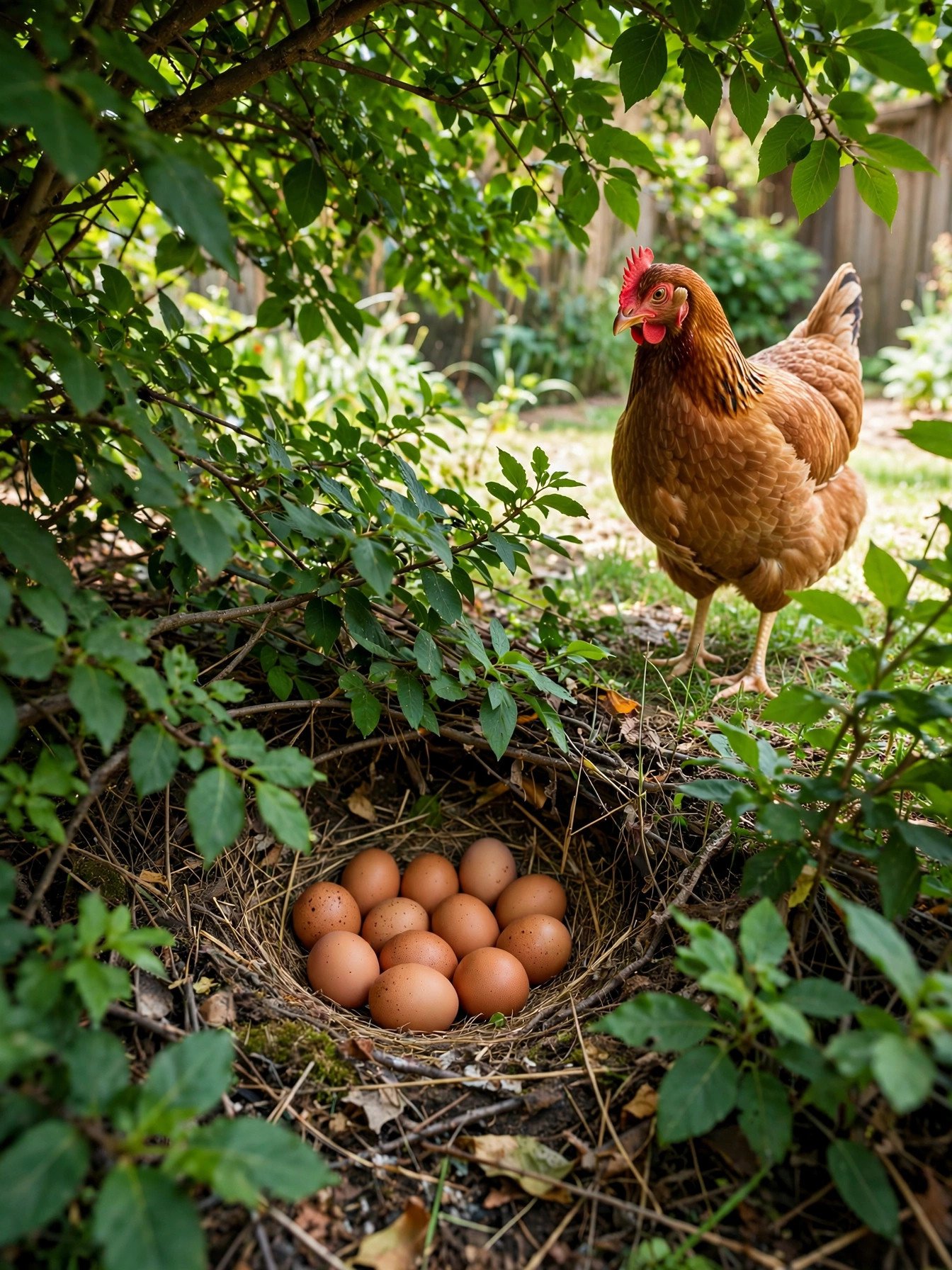
The classic false alarm. Egg counts crash, the hens look wonderful, and it turns out production never stopped — it just moved. Under the porch, behind the feed bins, under a bush. Free-ranging hens are famous for it. Follow them mid-morning, watch where they disappear to, and check every shady, private spot. Then retrain: keep the flock in the run until mid-morning for a few days, and leave fake eggs or golf balls in the real boxes. It also helps to have enough boxes the hens actually like — our guide to how many nesting boxes you need covers the counts and sizes.
7. Someone Is Eating the Eggs
If eggs are laid in the boxes but never survive until you collect them, look for the evidence: bits of shell in the bedding, yolk dried on a hen’s beak, a box that is damp and sticky. It usually starts with one hen and one accidentally cracked egg, and then the whole flock learns. Collect eggs two or three times a day, keep boxes deeply bedded so eggs do not crack on landing, and consider a rollout box, which takes each egg out of reach as it is laid. A persistent daily egg eater may need separating from the flock.
8. Predators Are Stressing Them, or Stealing
A hen does not need to be caught to be affected. A raccoon rattling the wire at 2 a.m., a hawk that missed by inches, a loose dog at the fence — any of these can shut a flock down for days, because a hen who feels hunted puts survival ahead of eggs. And some losses are theft, not stress: snakes, rats and crows take eggs straight from the boxes. Walk the perimeter, look for gaps, tracks and disturbed bedding, and fix what you find. Our guide to how to predator proof a chicken coop goes through it wire by wire.
9. The Feed Is Not Up to the Job
An egg is mostly protein and calcium, and a hen cannot build one out of good intentions. Layers need a proper layer feed at around 16 percent protein, served as the main event — not a side dish to a mountain of scratch and scraps. Treats are fine, but past roughly a tenth of the diet the numbers stop adding up — usually with shells thinning first, as an early warning. Unsure what your flock gets through? Our rundown of how much chickens eat a day and the free Chicken Feed Calculator will put figures on it.

- 16 percent protein — the level a hen in lay actually needs, in a crumble most hens eat without sorting
- High calcium built into the feed, aimed at strong shells rather than the thin, crack-prone kind
- Made for hens from 18 weeks onward, so it covers pullets just coming into lay and older layers alike
Calcium deserves its own sentence, because layer feed is not always the whole answer. Put out Manna Pro Crushed Oyster Shell in a separate little dish, free choice. Hens are surprisingly good at eating exactly as much as they need — a hen who is short on calcium will visit that dish like she means it.
10. They Ran Out of Water
This one is embarrassingly common and just as easy to miss. An egg is mostly water, and a hen who goes even a single day with an empty, frozen or filthy waterer can pause laying for days afterward. Winter is the usual culprit — the waterer freezes by morning and nobody notices until evening. Check the water every single morning, keep a second waterer so one is always in rotation, and in freezing weather either swap waterers during the day or use a heated base.
11. They Are Stressed
New birds added to the flock. A move to a new coop. The neighbor’s dog. Construction noise, a visiting grandchild chasing hens around the yard, even a new rooster working overtime. Chickens are creatures of routine, and almost any disruption can cost you a week or two of eggs. There is no clever fix here — keep feed, water and the daily routine exactly the same, and wait. Stress breaks usually end as suddenly as they started.
12. Illness or Parasites
Last on the list on purpose, because it is the least common — but it is real. Mites and lice are the usual suspects: check around a hen’s vent after dark with a flashlight, and look in the roost cracks, where red mites hide by day and feed at night. A flock carrying mites or worms will slow down or stop — watch for pale combs and hens losing condition despite eating. Start with the basics — inspect the birds, clean the coop properly, and use treatments labeled for poultry. But know where the checklist ends: if a hen looks genuinely sick, that is a vet question, not a blog post question.
How Long Can a Break Last?
It depends on the reason. A molt costs six to twelve weeks. A winter break lasts until days lengthen or you add light — a few weeks to a couple of months is normal. A broody hen sits about three weeks, then needs another week or two to come back into lay. Stress and water breaks are short: fix the cause and most hens are back within days to two weeks.
The case that deserves a second look: young hens, spring or summer, plenty of daylight, eating well — and still nothing after a month of working through this list. That is not a normal break. Check the parasite section once more, and if everything still looks fine, that flock needs a vet’s eyes, not another article.
Frequently Asked Questions
Do hens need a rooster to lay eggs?
No. Hens lay eggs on exactly the same schedule with or without a rooster — he only determines whether those eggs are fertilized and could hatch. If anything, an over-attentive rooster can stress hens enough to slow laying on its own.
My hens stopped laying but look perfectly fine. Should I worry?
Almost certainly not. Hens who are eating, drinking and acting like themselves are almost always taking one of the normal breaks — light, molt, age or a hidden nest. Worry when behavior changes too: a hen who is hunched, off her feed or left behind by the flock is a different story.
Do chickens lay eggs in winter?
They can, but most slow down or stop as daylight drops below about 14 hours. Young pullets in their first winter often lay straight through, and so do strong production breeds. If winter eggs matter to you, a coop light on a morning timer is the standard answer.
How long does a molting hen stop laying?
Roughly the length of the molt — six to twelve weeks for most hens, though fast molters can be done in a month and often come back as better layers. Either way, the feathers come first and the eggs follow.
At what age do chickens stop laying completely?
There is no fixed age. Production fades year by year after the second or third year rather than stopping all at once. Plenty of heritage hens still lay a few eggs a week at five, six or seven — nowhere near their first-year pace. A hen who slows with age is not broken; she is retired in stages.
The Bottom Line
Nine times out of ten, an empty nesting box is not an emergency. It is a hen doing what hens have always done — molting, resting through the short days, sitting on imaginary eggs, or quietly slowing down with age. Check the light, check the feathers, check the water, check the feed, then go hunting for the secret nest before you go hunting for problems. Give a normal break the time it asks for. And if you are building a flock from the beginning, our complete guide to backyard chickens for beginners walks through the whole first year, laying breaks included.