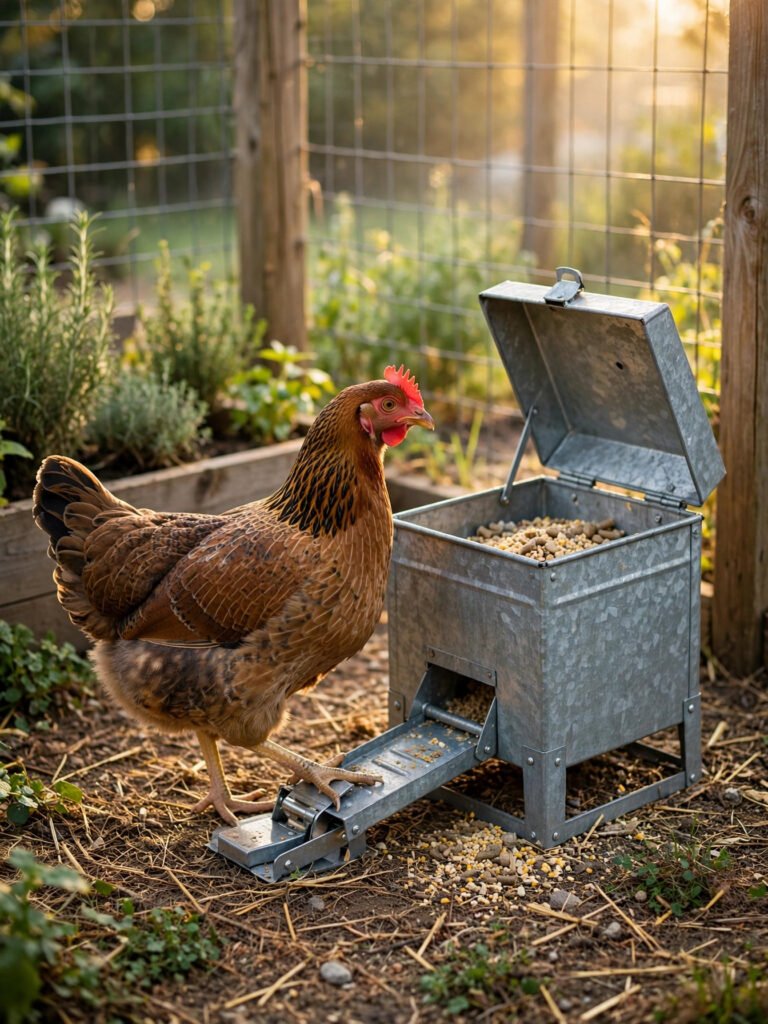

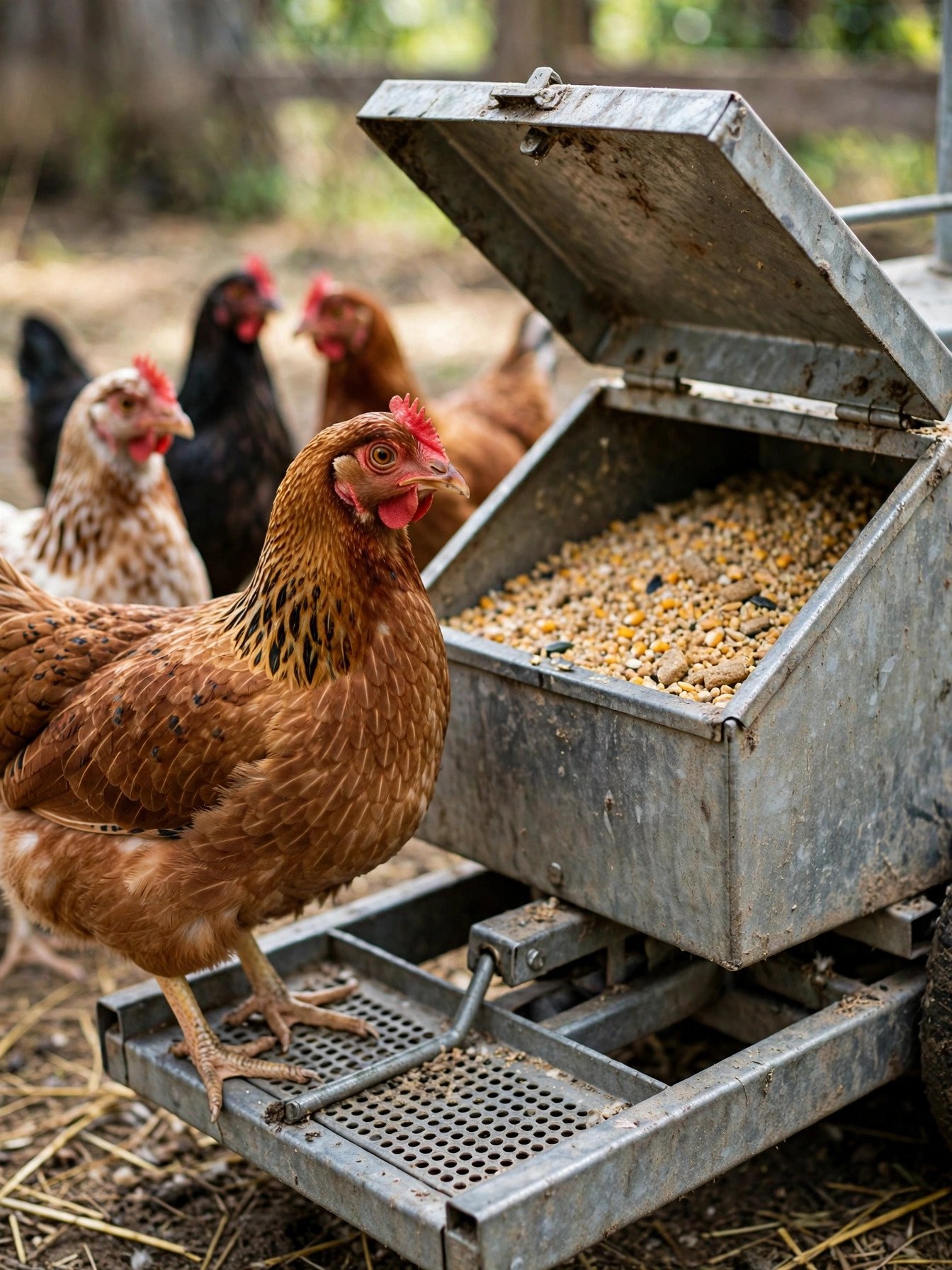
Short answer first: the best rat proof chicken feeders are galvanized steel treadle feeders. The feed sits under a closed steel lid that opens only when a hen stands on the treadle plate — and a rat fails that test twice over. It is too light to trip the plate (a brown rat weighs roughly 10 ounces; the plate wants about a pound), and it cannot gnaw through galvanized steel to go around it. Feed is never sitting open, day or night. But the honest part, up front: no feeder on its own beats an established rat problem. If rats already live under your coop, the feeder has to arrive with the night routine further down this page — feeder plus routine ends rat problems; a feeder alone just moves the rats to the next easiest meal, usually the feed bag.
A rat proof feeder has two jobs. It makes the hen work for the feed — a treadle plate or a port — so nothing edible is ever left sitting open. And it survives the opponent: steel a rat cannot chew and a lid that stays shut at 2 a.m. The picks below come from manufacturer specs and the patterns that repeat in verified owner reviews — we do not claim to have run a rat colony against each one in our own run. We checked how each feeder closes, what it is made of, and where owners say the rats still got in.
Quick Picks: The Short Version
| Feeder | How it keeps rats out | Capacity | Best for |
|---|---|---|---|
| Grandpa’s Feeders Automatic | Weight-activated steel treadle — lid stays shut until a hen stands on it | 20 lb | The rat problem you want solved properly, once |
| RentACoop Metal Treadle | Steel treadle with a locking lower lid | 25 lb | Determined rats, and keepers who want the training made easy |
| RentACoop Metal Treadle, 40 lb | The same treadle and lid locks, with a much bigger hopper | 40 lb | Flocks of 10 to 12 hens or more |
| RentACoop Chick2Chicken 4-Port | Hens eat through ports; a slider cover closes the ports at night | 10 lb | Mild rat pressure and small flocks — with honest limits |
Notice the shape of that table: three of the four picks are steel treadles, and the fourth is here with its limits printed on it. If a feeder leaves feed reachable in the middle of the night, it is not rat proof, whatever the listing calls it.
1. Grandpa’s Feeders Automatic — Best Rat Proof Feeder Overall
This is the feeder that defines the category. Grandpa’s Feeders has been building treadle feeders in New Zealand since the mid-1990s, and the design has barely needed to change: a galvanized steel hopper, a weatherproof lid, and a plate calibrated so a hen’s weight opens it and a rat’s does not. The trough’s anti-flick grill means a hen eating with the lid up cannot rake feed onto the ground — which matters, because ground feed is feed the rats still get. The 20 lb hopper holds roughly ten days of feed for six hens, at the rate in our guide to how much chickens eat a day. A 40 lb Large version of the same Grandpa’s feeder exists for flocks of a dozen or more.

- 20 lb galvanized steel hopper — enough to feed 6 hens for up to 10 days between fills
- The lid opens only under a hen’s weight on the treadle plate, so rats, mice and wild birds are locked out around the clock
- Anti-flick grill in the trough stops hens raking feed out sideways, and the weatherproof lid keeps feed dry outdoors
What we like:
- It answers both rat tricks at once. Too light to open it, and nothing on it a rat can chew through — both ways rats beat feeders, closed
- The track record. Three decades in production, and owner reviews repeat one story: the rat sightings end within weeks of the swap
- Nothing to plug in or charge. Pure weight and gravity, so it works the same in year ten as on day one
What holds it back:
- It is the premium option here by a wide margin — you are paying for steel, mechanism and thirty years of refinement
- There is a training period: the lid starts propped open and lowers in stages over one to three weeks. In the first stage the feeder is briefly an open one, so run the night routine below while you train
- Very light bantams may not trip the plate reliably
Not for: bantam-only flocks, or anyone who wants the problem solved the day the box arrives — training is part of the deal. For: a standard-size flock with a real rat problem, and a keeper who wants to buy the feeder once.
2. RentACoop Metal Treadle — Best Locking Lid
RentACoop took the same treadle idea and worried about the clever rat instead of the average one. Alongside the treadle, this feeder adds locks on the lower lid, so even if something heavier than a rat — a raccoon on the night shift — stands on the plate, the feed stays shut away. The body is galvanized sheet metal with stainless steel screws, and the detail owners mention most is the training system: bolts that hold the lid at set stages while the flock learns. Rainproof by design, it is the natural pick for an uncovered run.

- 25 lb galvanized sheet metal body with stainless steel screws — nothing on it a rat can chew through
- Lower-lid locks keep raccoons, squirrels, mice and wild birds out even if something heavy finds the treadle plate
- Training bolts hold the lid at learning stages while the flock catches on, and the rainproof build suits an outdoor run
What we like:
- The lid locks. A plain treadle trusts weight alone; the locks are the backup for the one heavy or persistent animal the plate was not calibrated for
- The training bolts. Teaching a flock a treadle is the fiddly part of owning one — this design treats training as a feature, not an afterthought
- 25 lb is the useful middle size — a week and a half or more of feed for a small flock
What holds it back:
- Some assembly is required, and a treadle only stays rat proof if it stays clean — litter around the plate can hold a lid ajar, so it wants a weekly wipe and a level spot
- Owner reviews are good but more mixed on long-term mechanism wear than the Grandpa’s above — the design is newer, with fewer years behind it
- Not suitable for chicks, like every treadle here — young birds are too light to trip it
Not for: chick brooders, or keepers who will never clean around a mechanism. For: outdoor runs in raccoon country, and anyone who likes the treadle idea but wants a lock behind it.
3. RentACoop Metal Treadle, 40 lb — Best for Bigger Flocks
Everything said about the 25 lb RentACoop applies here, scaled up: the same galvanized treadle feeder with locking lower lid, training bolts and rain cover, wrapped around a 40 lb hopper RentACoop rates for 12 hens for 10 days. It adds two extras: side blinders, which keep nervous hens focused on the trough instead of flock politics, and an anti-roost lid, so the feeder top stops being the best seat in the run.
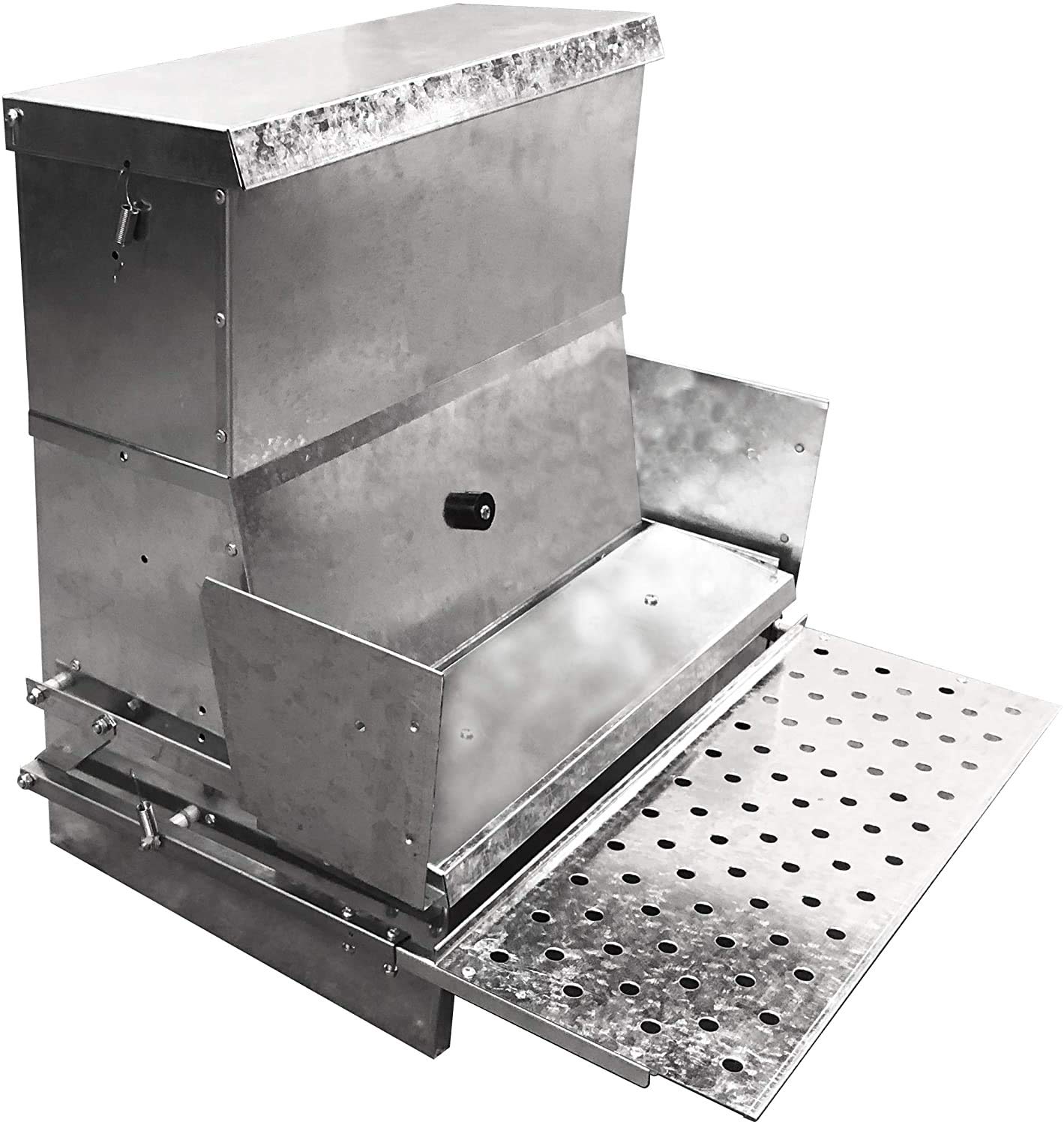
- 40 lb capacity — RentACoop rates it to feed 12 hens for 10 days between fills
- Lower-lid locks keep out raccoons, wild birds, squirrels and mice, with training bolts to teach the flock in stages
- Blinders, rain cover and anti-roost lid all in the box, and 15 lb extensions available if the flock keeps growing
What we like:
- Capacity without giving up the locks. Most big hoppers are open gravity feeders — a rat’s dream at scale. This one keeps the treadle and locks at a full 40 lb
- The blinders. Shy hens eat more calmly when they cannot see the hen beside them, and calm hens learn the plate faster
- The anti-roost lid keeps droppings off the feeder top, away from the feed below
What holds it back:
-
- It is a big, heavy unit that wants a level, solid spot — one corner sunk into soft litter eventually shows in how the lid sits
- Not suitable for chicks, and the extensions that take it past 40 lb are a separate purchase
Not for: small flocks — a 40 lb hopper for four hens just means older feed. For: flocks of ten or more, and keepers who refill on weekends, not weekdays.
4. RentACoop Chick2Chicken 4-Port — Best Port Feeder, With Honest Limits
Not every rat situation needs a steel treadle. If your problem is the occasional rat passing through rather than a colony under the coop — or your flock includes bantams too light for a treadle plate — a port feeder with a closing cover is the middle path. Hens eat through ports, so feed never sits in an open trough, and a slider cover closes the ports at night. Now the honest limits: the body is BPA-free plastic, not steel, and a determined rat with weeks of undisturbed access can gnaw plastic as it never will gnaw the treadles above. And the slider only protects you on the nights you remember to close it.
Best Port Feeder — With Honest Limits RentACoop Chick2Chicken 4-Port Feeder — 10 lb
- 10 lb BPA-free body with 4 feeding ports — RentACoop rates it for up to 12 adult chickens
- Slider port cover closes the ports at night, and the adjustable stand in the box sets the right port height as birds grow
- Anti-roost cone on top keeps hens off the lid and the ports cleaner
Prices move around on Amazon, so the button shows the current one.What we like:
- No training period. Hens use ports the day the feeder arrives, including the bantams a treadle leaves behind
- It stops the hens’ waste completely. Heads in, feet out — no feed billed onto the ground for rats to find
- The closing slider — shut ports at dusk end the casual night raiding this feeder is aimed at
What holds it back:
- It is plastic. Against an established colony with time and motivation, plastic is a delay, not a wall — if rats are already resident, start with a treadle
- Ten pounds is not much. Six hens eat about a pound and a half a day, so expect to refill roughly weekly
- All its night protection depends on a human remembering a slider, every evening. The treadles above ask nothing of you once set up
Not for: an established rat colony, or anyone who knows they will forget the slider by the third week. For: small and bantam flocks with passing rat pressure, and keepers who want the waste savings today.
Why Rats Win Against Normal Feeders
It helps to understand the opponent, because a rat is not raiding your feeder by accident — it is running a routine your feeder fits perfectly. First, rats own the night. Your hens roost at dusk and do not come down until dawn; a rat colony works the opposite shift, and an open trough is a restaurant that never closes.
Second, they spoil more than they eat. Rats drag feed to caches, scatter it, and foul what they leave with droppings and urine. You can tell the night shift is eating at yours when the hopper empties faster than your flock’s ration says it should: six hens eat about a pound and a half a day between them. If your feed vanishes at twice that rate, the difference is not evaporation. It has whiskers.
Third, they are built to get in. A rat’s front teeth never stop growing, so gnawing is not vandalism, it is dentistry — and plastic, rubber and thin wood all lose that argument eventually. Galvanized steel is where it ends. And a rat needs almost no door: a gap of about half an inch — under a door, around a pipe, through a rotten board — is an entrance if its head fits. So seal the building alongside the feeder: the mesh and hardware-cloth work in our guide to how to predator proof a chicken coop is rat proofing too, because the holes are the same holes.
The Routine That Actually Ends the Problem
Here is the part of this guide that matters most, and it costs almost nothing. The feeder handles the food; this routine handles the rest — it is what turns “the rats moved to the feed shed” into “the rats left.”
- Close the buffet. Feed only from a feeder that shuts — any of the four above. Scatter treats in the morning only, and only as much as the flock cleans up in ten minutes; scratch scattered at dusk is a rat invitation with a time on it
- Take the feed up at night while the problem is hot. If rats are established, lift the feeder into a locked store at dusk for the first few weeks. It is a chore, and the fastest way to make your run boring to a colony — and it covers the treadle training window, when a propped-open lid briefly makes the feeder an open one
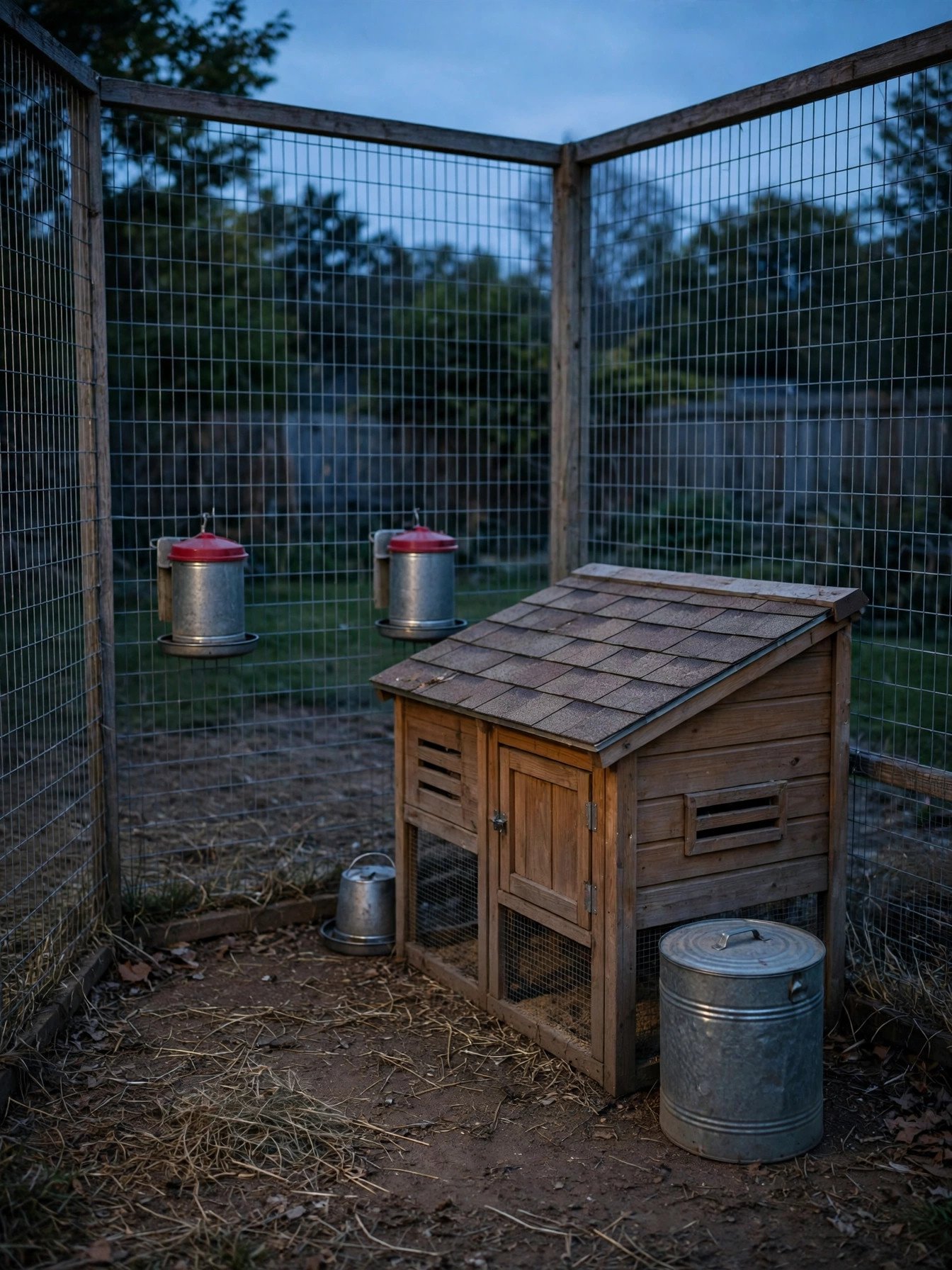
- Store the bag in steel. More “feeder problems” turn out to be feed-store problems than anyone expects — rats chew through bags and plastic bins without slowing down. A lidded metal can ends it; the Behrens 10 gallon storage can is the one we link across this site for this job
- Starve the floor. Rake up spilled feed around the feeder weekly. A treadle protects the hopper, not the pellets on the ground — a colony will live comfortably on those alone
- Clear the housing. Wood piles, junk corners and overgrown edges against the coop are rat apartments — move them
None of this is exotic — it is the same discipline behind our guide to the best no waste chicken feeders, because wasted feed and rat feed are usually the same feed wearing two names. Give it two to four weeks: when the hopper starts dropping at exactly your flock’s ration, the colony has moved on.
What “Rat Proof” Does Not Mean
“Rat proof” describes a feeder, not a yard. A steel treadle guarding one door while feed is scattered at dusk, the bag sits open in the shed, and the coop floor is a dropped-pellet buffet is a lock on a house with the windows open. Expect the feeder to do its one job — keeping stored feed unreachable and unchewable — and the routine to do the rest.
And a plain word about poison, because somebody always suggests it: do not use rat poison around chickens. Three reasons, and any one would be enough. Your hens can find and eat scattered bait, or scratch up bait a rat has cached — the flock becomes the casualty. A poisoned rat does not vanish; it gets eaten — by the barn owl doing your free pest control, by the neighbor’s cat, by the farm dog — and secondary poisoning of exactly those animals is the well-documented pattern with rat baits. And a rat that dies inside a coop wall announces itself for weeks. Poison risks your hens, pets and wildlife to solve a problem a steel lid and a month of routine solve safely.
Traps are the lesser tool, and only with care: a snap trap inside a locked wooden tunnel or box that hens cannot reach, checked every morning, retired the moment sightings stop. Never set a loose snap trap in a run — a trap that can break a rat’s neck can break a hen’s toe, or worse. Treat traps as the mop-up, never the strategy. The strategy is the boring one: no open food, nowhere to live. Rats leave boring yards.
Frequently Asked Questions
Can rats open a treadle feeder?
A single rat, no — it weighs roughly a third of what the plate needs, and the lid is steel it cannot chew or pry. The honest edge cases are mechanical: litter jammed under the plate can hold a lid ajar, two animals together can occasionally trip one between them, and during training weeks the lid is deliberately propped open. Keep the plate clean, take feed up at night while you train, and that is as close to rat proof as feeders get.
Will a treadle feeder stop mice and wild birds too?
Mice, yes — lighter than rats, so the plate ignores them completely. Wild birds are mostly stopped too: sparrows and starlings cannot trip the treadle, and the closed lid ends their free access. The classic owner complaint is a bold sparrow darting in beside a hen while the lid is up — a theft of grams, not the sacks an open feeder loses.
How long does it take hens to learn a treadle feeder?
Plan on one to three weeks. Start with the lid propped fully open so the flock learns where the food lives, then lower it in stages until the hens work the treadle themselves — Grandpa’s prints the steps under the lid, and the RentACoops use training bolts to hold each stage. One brave hen figures it out first and the rest copy her. The exception is very light bantams, who may never trip a plate reliably; they are the flock the port feeder in this guide exists for.
Is rat poison ever a good idea around chickens?
No. Hens can eat the bait itself, or bait a rat has moved; owls, cats and dogs are secondarily poisoned by eating rats that ate bait; and the rat you do kill tends to die inside the structure of your coop. Every part of that is worse than the problem you started with. A steel treadle, feed in a metal can, spilled feed raked up and harborage cleared ends a backyard rat problem without risking the flock — in two to four weeks, not a weekend.
The Bottom Line
If you forced me to pick one rat proof feeder and walk away, it is the Grandpa’s Feeders treadle — the original design, in steel, with thirty years of rat problems ended behind it. If your rats share the yard with raccoons, the RentACoop treadle’s locking lid is the upgrade that matters, and its 40 lb version is the one for a flock in double figures. The port feeder earns its place for bantams and mild pressure, as long as you close its slider every night without exception. And whichever you choose, run the routine with it: feed in steel, spill raked up, nothing edible out after dark. The feeder shuts the door. The routine makes the rats move out.
Still setting up your feeding station from scratch? Our guide to backyard chickens for beginners walks through the whole setup in the order you will actually need it.