
Short answer first: both systems beat an open bowl by a mile, and the right choice depends on your flock and your winters. Cups are easier — for the hens, who drink on sight with zero learning, and for beginners, who can see the water level and the dirt at a glance. Nipples keep the water cleanest, because the reservoir stays sealed, and they are the better system for big flocks and for freezing climates, where they pair with heated bases and de-icers. The caveats run both ways, though: cups freeze solid and catch dirt, and nipples hide their grime where you cannot see it and ask your hens to learn a new trick first. This guide walks through both, honestly.
A quick word on how this comparison was made, because it matters. We did not run these systems side by side in a lab, and you should be wary of any site claiming it stress-tested forty waterers. What follows is built from manufacturer specs and the patterns that show up again and again in verified owner reviews — the same complaints and the same compliments, from keepers who actually live with these things. Where owners disagree, I say so.
Nipple vs Cup Chicken Waterers at a Glance
| System | How hens drink | Water cleanliness | Learning curve | Freezing behaviour | Cleaning chore | Best for |
|---|---|---|---|---|---|---|
| Nipples | Peck a small pin and catch the drops as they fall | Cleanest of the two — the reservoir stays sealed, with nothing open to the air | Real, but short: most hens get it within a day, and one hen teaches the rest | Best of the two — very little exposed water, and the reservoir pairs with heated bases and de-icers | Weekly scrub of the reservoir, plus a check that no nipple is dripping | Bigger flocks, cold climates, keepers who hate scrubbing |
| Cups | Drink from a small open pool that refills itself as they drink | Good, not perfect — dust, shavings and the odd feather land in the pool | None at all — a hen sees water and drinks, including chicks | The weak point — the pool freezes into a solid ice puck and can crack the cup | A quick rinse most days, a proper scrub weekly | Beginners, small flocks, chicks, and flocks with ducks |
One number before the details, because it shapes everything below: a laying hen drinks roughly a pint of water a day, and close to double that in hot weather — about twice the weight of the feed she eats. Our guide to how much chickens eat a day covers the feed side of that math. The point here is that water is not a minor chore you can half-solve. Whatever system you choose gets used hard, every single day, which is exactly why the differences in that table are worth an hour of thought now.
How Nipples Actually Work
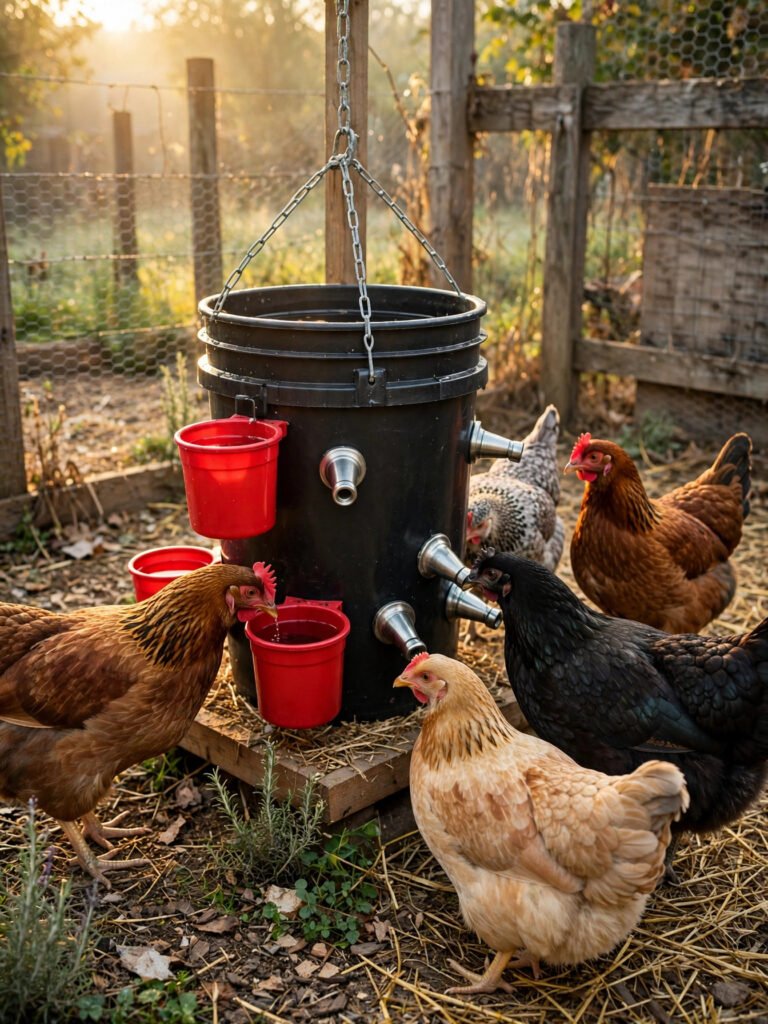
A nipple waterer is a sealed bucket, barrel or pipe fitted with small metal or plastic valves. The hen pecks the valve, a drop or two of water falls, and she catches it. Nothing sits open. No pool, no surface for dust to land on, no water for a hen to stand in, kick bedding into or — forgive the image — back into. That sealed design is the entire appeal, and it is a genuine one.
There are two kinds, and the difference matters. Vertical nipples point straight down and screw into the bottom of a bucket or a pipe run overhead. They work, but they only mount underneath something, and the little exposed droplet at the tip freezes early. Horizontal nipples mount through the side of a container, near the bottom, and the hen pecks them from the side. This is the style to buy. Side mounting means the reservoir can sit flat on a heated base in winter — the single biggest practical advantage in this whole comparison — and most horizontal nipples come with a small dribble dish underneath that catches stray drops instead of letting them dampen the bedding. If a listing does not say which kind it is, look at the photo: the side-mounted ones look like little red pegs sticking out of the bucket wall.
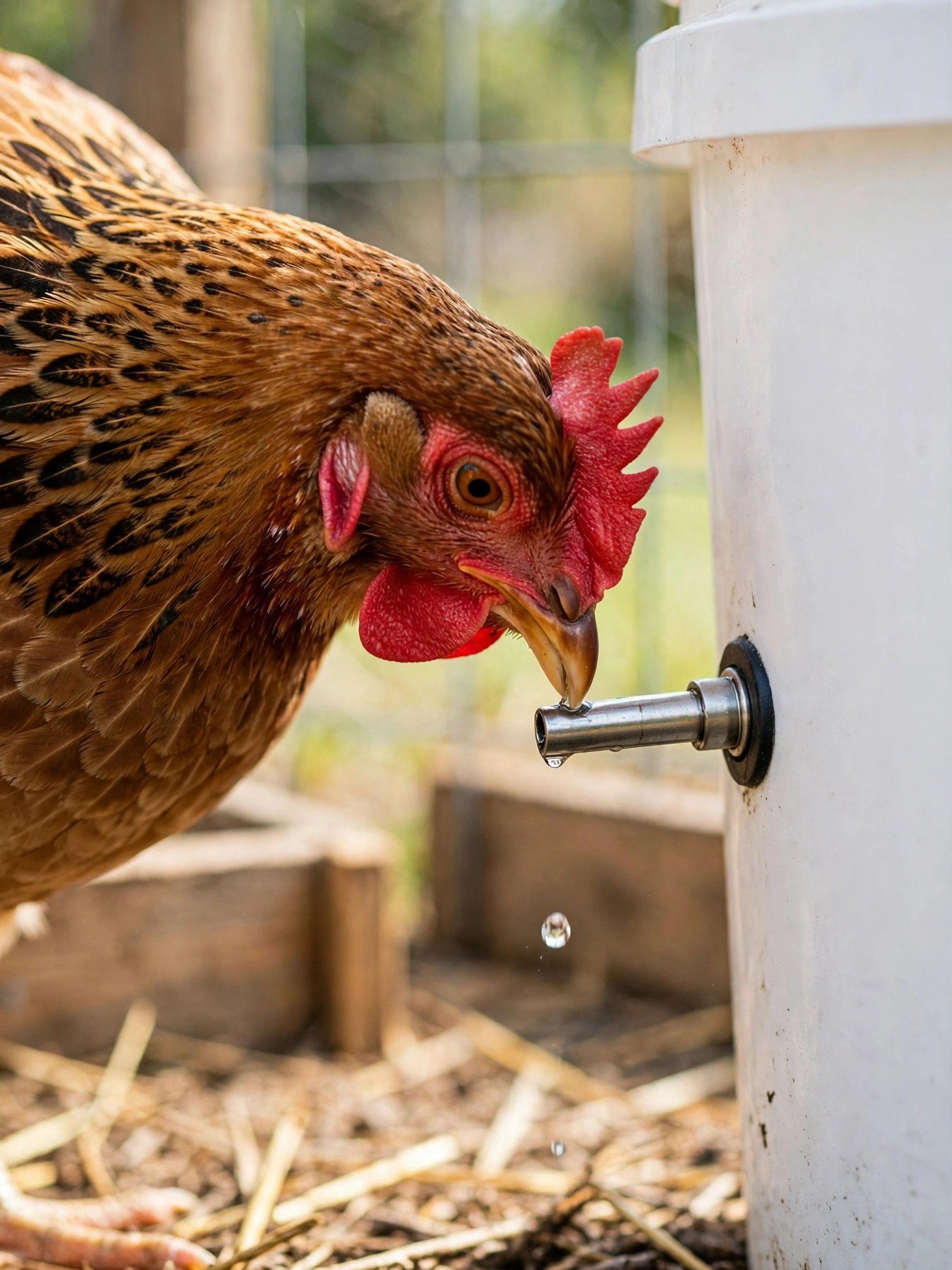
The honest catch is the learning curve. Most hens figure nipples out within a day, and it only takes one — once a single bird gets it, the rest copy her within the hour, because copying is what chickens do best. But “most” is not “all,” and owner reviews are full of the same story: one stubborn hen standing at the empty bowl spot, offended. The teaching method that works is simple. Tap the nipple yourself so drops fall where the hens can see them, smear a dab of something tasty on one nipple if you have a real holdout, and only remove the old waterer once you have watched a few hens drink. Never take the old water away on day one and hope. A hen who has not learned is a hen going thirsty, and thirst hits laying fast.
If you want to see the horizontal idea done properly, look at kits rather than finished waterers — you supply the bucket, which keeps the whole setup cheap and lets you size it to your flock:

- Six horizontal nipples with dribble dishes, plus the installation tool in the box — you supply a food-grade bucket or barrel, drill, and push them in
- Side mounting means the finished waterer sits flat on a heated base in winter, which is exactly where you want it
- The honest catch: it is a kit, not a waterer. There is a small build job before the first drink, and the bucket you choose decides your capacity
How Cups Actually Work
Cups take the opposite approach: instead of hiding the water, they hold a small open pool of it. Most cups sold now are the auto-fill kind — as the hen drinks and the level drops, a float or gravity valve lets more water in, so the cup sits about half full all day. The older style works differently: the hen pecks a small tab or lever inside the cup and releases the water herself. Auto-fill has mostly won, and owner reviews say why — no moving target for the hen, no knack to learn, and the tab-style cups are the ones that gum up. Either way, the pool is the point. A hen walks up, sees water, and drinks the way birds have always drunk. Chicks manage cups from their first week. In hot weather hens dip their wattles in the pool, which genuinely helps them cool off — no nipple system offers that.
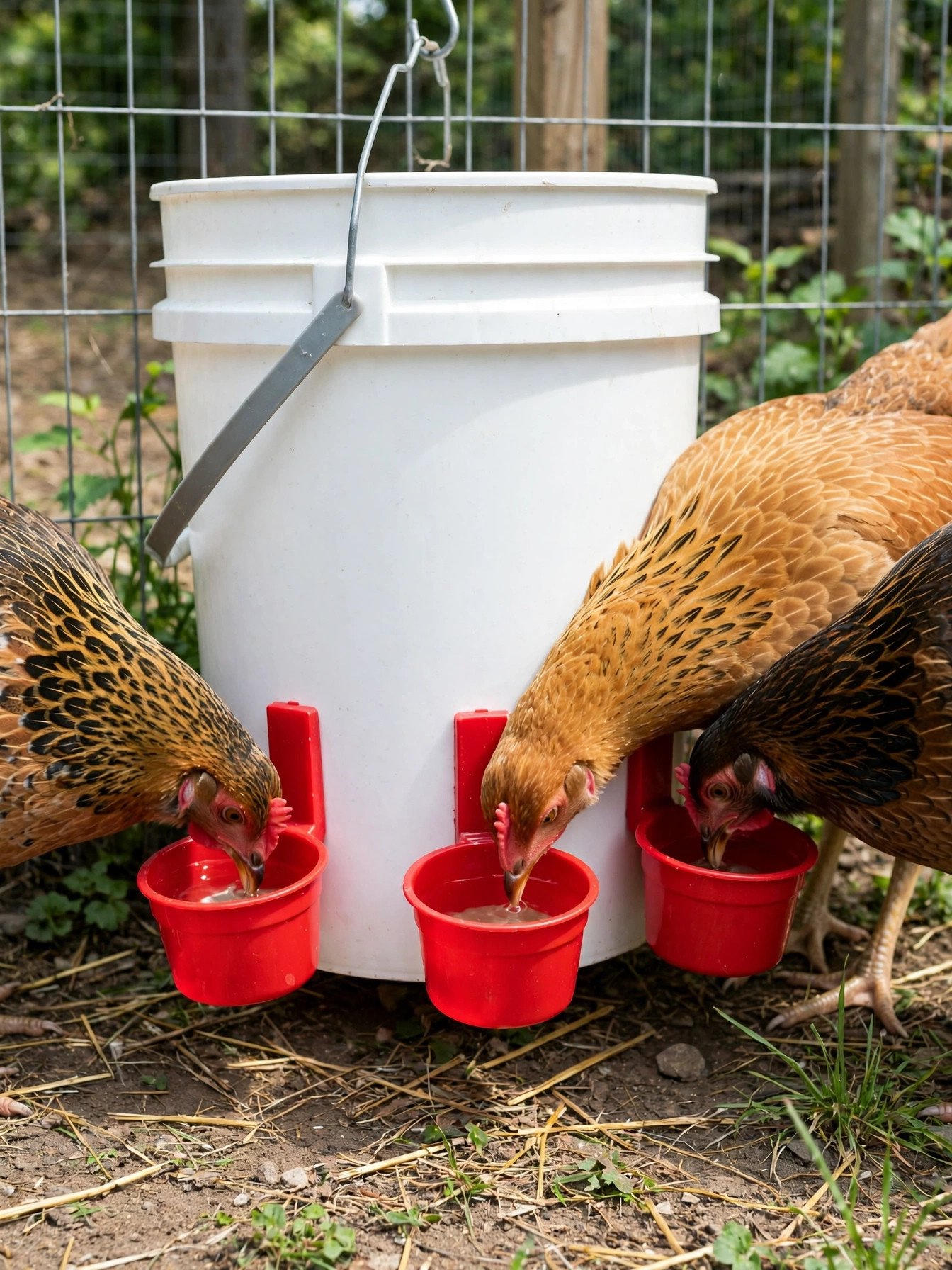
Now the other side of the pool, because there is one. An open pool in a chicken run collects what a chicken run produces: dust, kicked-up shavings, feed crumbs, the occasional feather. Nothing dangerous on a normal day, but the cup needs a swish and a rinse far more often than a nipple needs anything. Cups also sit low and exposed, which makes them the flock’s most splashable fixture. Ducks take this to another level entirely — a duck treats a water cup as a personal splash pool, empties it for fun, and fills it with mud, which is either a dealbreaker or a reason to put the ducks on their own setup, depending on your flock. And one fitting note owners repeat: cups want the waterer raised so the pool sits around back height of the hens. Too low and they scratch bedding straight into it.
The easiest way into cups is a ready-made waterer, and this is the pattern to look for — auto-fill cups on a decent-sized reservoir, mounted at the coop wall rather than standing in the middle of the run:

- A 2 gallon waterer with auto-fill cups that hold a small pool and refill as the hens drink — the zero-learning-curve option, working from the first morning
- Mounts inside or outside the coop on wood or wire with the included screws and hooks, up at back height where the cups stay cleaner
- The honest catch: it is sold as a set with a 10 lb port feeder, so judge it as a feeding and watering pair rather than a waterer alone
That feeder half of the set deserves one sentence of its own: port feeders keep feed dry, off the ground and much harder for rodents to raid than an open pan. If rats are already visiting your run, feed storage is the bigger half of that fight, and our guide to the best rat proof chicken feeders covers the heavy-duty end of it.
Winter: The Section That Decides It
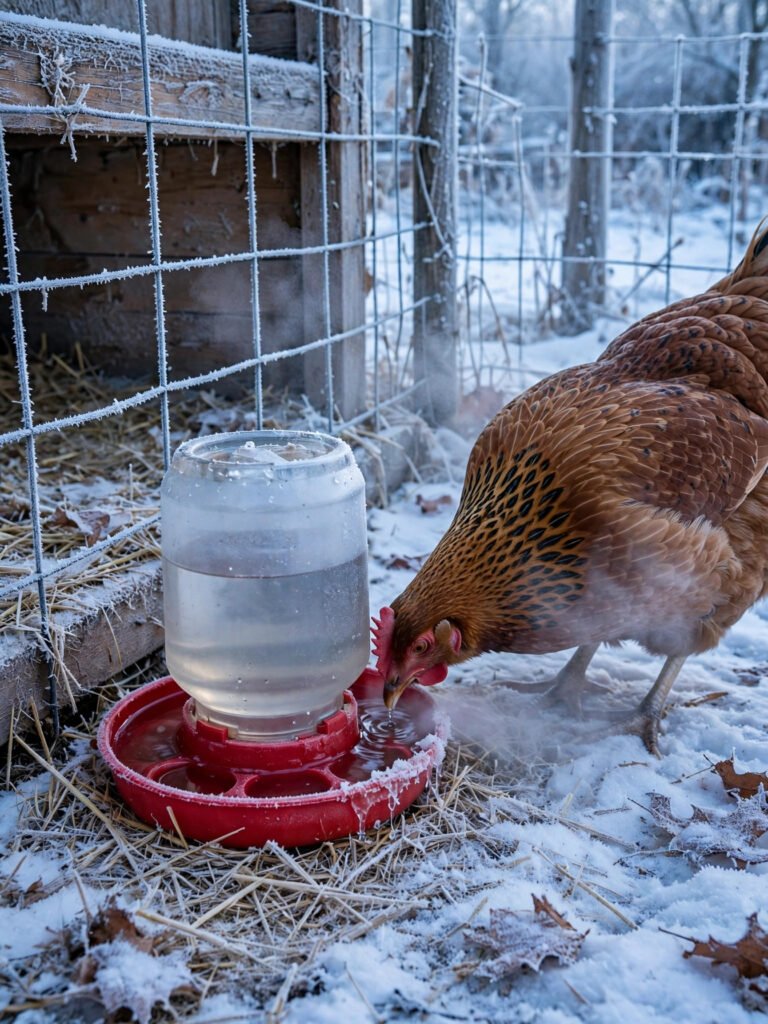
If your winters drop below freezing for weeks at a time, honestly, you can stop deliberating — this section outranks everything above it. Start with cups. The whole design rests on a small open pool of water, and a small open pool in January is an ice puck by morning. The hens cannot drink ice, so your first chore of the day becomes knocking frozen cups free. Worse, water expands as it freezes, and a cup that freezes full night after night will eventually split along a seam or crack at the fitting. Owner reviews from cold states say this plainly: cups are a three-season system unless you are carrying warm water out twice a day.
Nipples were made for this fight. The water lives inside a sealed reservoir, where a heated base or a stock tank de-icer keeps it liquid, and the only water exposed to the air is the tiny amount at the nipple tip. Horizontal nipples on a reservoir sitting on a heated base are the combination cold-climate keepers land on, year after year. It is not magic — in a hard enough freeze, a nipple pin can still freeze shut, which is why the daily check stays on your list — but it turns winter water from a twice-daily hauling chore into something close to set-and-forget. Our guide to the best heated chicken waterers for winter walks through the bases, de-icers and ready-made heated waterers that make this work, including what to do when there is no power at the coop.
Hygiene and the Biofilm Nobody Sees
Here is the trade nobody puts on the box. Cups show you their dirt. The pool goes cloudy, a shaving floats in it, you see the problem the moment it happens and a ten-second rinse fixes it. Nipples hide theirs. The water in a nipple reservoir looks clean for weeks while a slimy film — biofilm, the same stuff that coats the inside of any water container left too long — quietly builds on the walls, in the lines and around the nipple seals. By the time a nipple starts dripping or a hen’s water smells faintly like a pond, the film has been there a while. Neither system escapes the scrub brush. They just schedule your honesty differently.
So the routine is the same for both, and it is not optional: dump and scrub the reservoir once a week with a bottle brush, work a small brush around every cup or nipple, and rinse with clean water before refilling. A monthly soak with a splash of plain vinegar in the water helps loosen film and scale in nipple lines — flush them through afterwards. Keep the waterer in shade if you can, because warm sunlit water grows algae at a speed that surprises people every summer. None of this takes ten minutes once it is a habit. The keepers who get into trouble are the ones who believed “sealed” meant “self-cleaning.” It does not. It means the dirt waits politely out of sight.
Which One for Your Flock?
Forget the spec sheets for a moment and match the system to the flock you actually have:
- Small beginner flock (under 10 hens): cups. You will see the water level and the dirt at a glance, the hens drink from the first hour, and the daily rinse takes less time than reading this paragraph. Learn chicken keeping first; upgrade later if you ever need to.
- Large flock (15 hens and up): nipples. A row of cups empties, splashes and fouls in proportion to the crowd, while a big sealed reservoir on nipples serves the whole flock and stretches refills to days instead of hours.
- Cold climate: nipples, horizontal ones, on a reservoir that can sit on a heated base. Cups will spend your winter frozen, cracked or carried back and forth to the house tap.
- Ducks in the flock: cups — with eyes open. Ducks cannot work nipples properly and need open water to dip their bills and clear their nostrils, so cups (plus a separate dunk bucket) are the only honest option here. Expect mud. Budget for rinsing.
- Chicks: cups. Day-old chicks are looking for water on the ground, not a valve to peck, and a shallow cup is the closest thing to what they expect. Move them to nipples at a few weeks old if that is where the flock is headed — young birds learn in minutes.
Frequently Asked Questions
Can I run nipples and cups on the same setup?
Yes, and plenty of keepers do — some ready-made waterers even ship with both fitted. Hens pick their favorites, chicks and shy birds use the cups, and you get the sealed reservoir of the nipple side with the no-training fallback of the cup side. It is a sensible compromise for a mixed-age flock, not a failure to decide.
How long does it take chickens to learn to use nipples?
Most hens get it within a day, usually within hours of watching the first bird succeed. Tap the nipples so drops fall visibly, keep the old waterer in place until you have seen several hens drink from the nipples, then remove it. The rare true holdout is almost always a low-ranking or unwell hen — give her extra time and a cup rather than forcing the issue.
Do nipple waterers leak?
A healthy nipple drips when pecked and seals when left alone. A slow constant drip almost always means grit stuck in the seal or a worn nipple — unscrew it, rinse it, and it usually behaves again. This is also why dribble dishes earn their place: the odd stray drop lands in a dish, not in the bedding, where damp patches quickly become a smell and fly problem.
Which is better for winter, nipples or cups?
Nipples, and it is not close. The cup’s open pool freezes into a solid puck and can crack the cup as it expands, while a nipple reservoir can sit on a heated base or run with a de-icer so the water stays liquid, with only the nipple tip exposed. In a mild climate where frosts are rare and brief, cups get through winter fine — just expect a few frozen mornings.
The Bottom Line
So, nipple vs cup chicken waterers — which is better? For a small flock, a mild climate and a keeper in their first year, it is cups: instant for the hens, honest to look at, and forgiving of every beginner mistake except forgetting the rinse. For a big flock, a cold winter, or anyone who is simply done scrubbing green slime out of open water, it is nipples: sealed, clean, and the only one of the two that still works in February. And if you are torn right down the middle, run both and let the hens vote. They will, loudly, within the week. What neither system forgives is neglect of the basics — fresh water daily, a weekly scrub, and shade in summer. Get those three habits right and either system will serve your flock well for years.