
Here is the number worth knowing before you buy anything: a laying hen eats about a quarter of a pound of feed a day. But with an open pan or trough feeder, a real share of that feed never reaches a hen. She bills it out onto the bedding, scratches it into the dirt, or leaves it for the sparrows and the rats. Keepers who change feeder styles commonly report waste dropping from a quarter to a third of everything they pour in down to nearly nothing. Spread over a year of feed, that is not a rounding error. It is bags of feed you bought and your hens never ate.
Do the math on one example flock — assumptions stated up front, because this is an illustration, not a promise. Six hens at a quarter pound a day eat about 550 lb of feed a year, roughly eleven 50 lb bags. Feed them from an open pan instead and some of every bag is lost before a hen swallows it:
| For 6 hens, per year | Amount |
|---|---|
| Feed your hens actually eat | About 550 lb (11 bags) |
| Feed you buy if 25% is wasted | About 730 lb (close to 15 bags) |
| Feed you buy if a third is wasted | About 820 lb (over 16 bags) |
Read that table the blunt way: an open pan costs a six-hen flock somewhere around three and a half to five and a half extra bags of feed every year, fed to the ground, the sparrows and the rats. Our Chicken Feed Calculator runs the same numbers for your flock size. A feeder that stops the waste only has to save a little each day to pay for itself.
So the feeders below earn their place by stopping waste, and they stop it in different ways, which is why this guide sorts them by the waste each one kills rather than by star ratings. The picks come from manufacturer specs and the patterns that repeat in verified owner reviews — we do not claim to have tested them in our own run. Every pick gets its honest downside too, including the kind of waste it does not stop.
Quick Picks: The Short Version
| Feeder | Type | Capacity | Stops which waste | Best for |
|---|---|---|---|---|
| Grandpa’s Feeders Automatic | Treadle | 20 lb | Billing, scatter, rodents and wild birds | Flocks with a rat or sparrow problem |
| RentACoop Chick2Chicken | Port feeder, 4 ports | 10 lb | Billing out and scatter; ports close at night | A ready-made feeder for small flocks |
| OverEZ Chicken Feeder | Gravity port feeder | 50 lb | Billing out and scatter | Keepers who hate refilling |
| ZenxyHoC DIY Port Kit | DIY ports for your own bucket | Your container (8 ports) | Billing out and scatter | The cheapest route into port feeding |
1. Grandpa’s Feeders Automatic — Best Rodent Proof
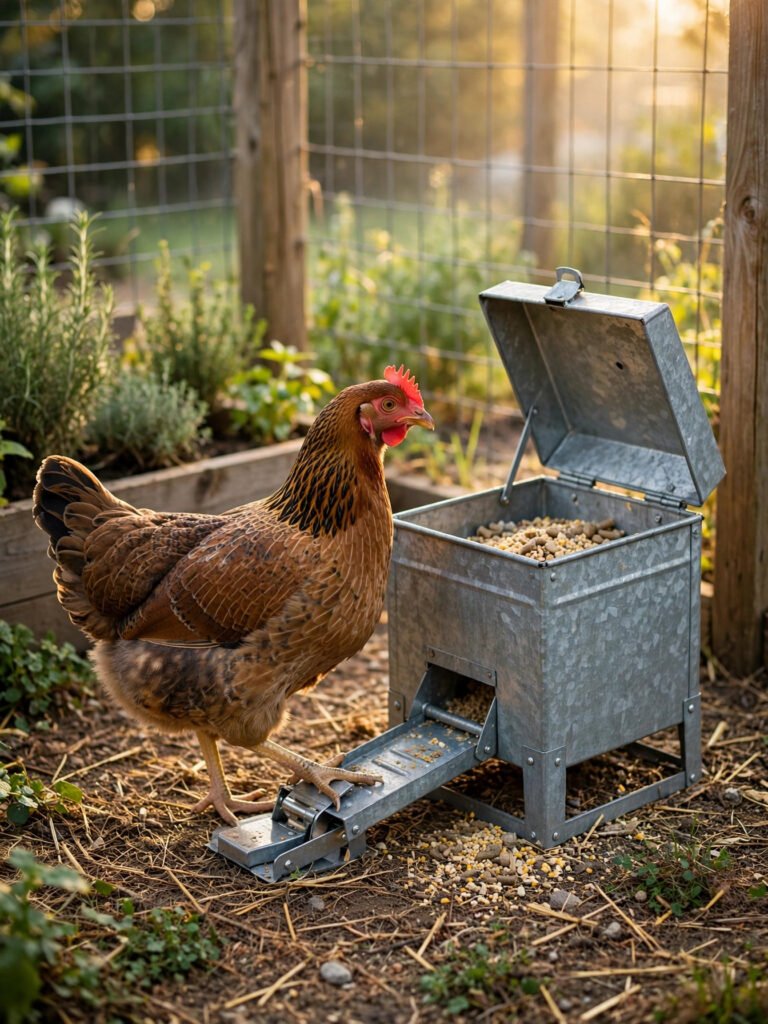
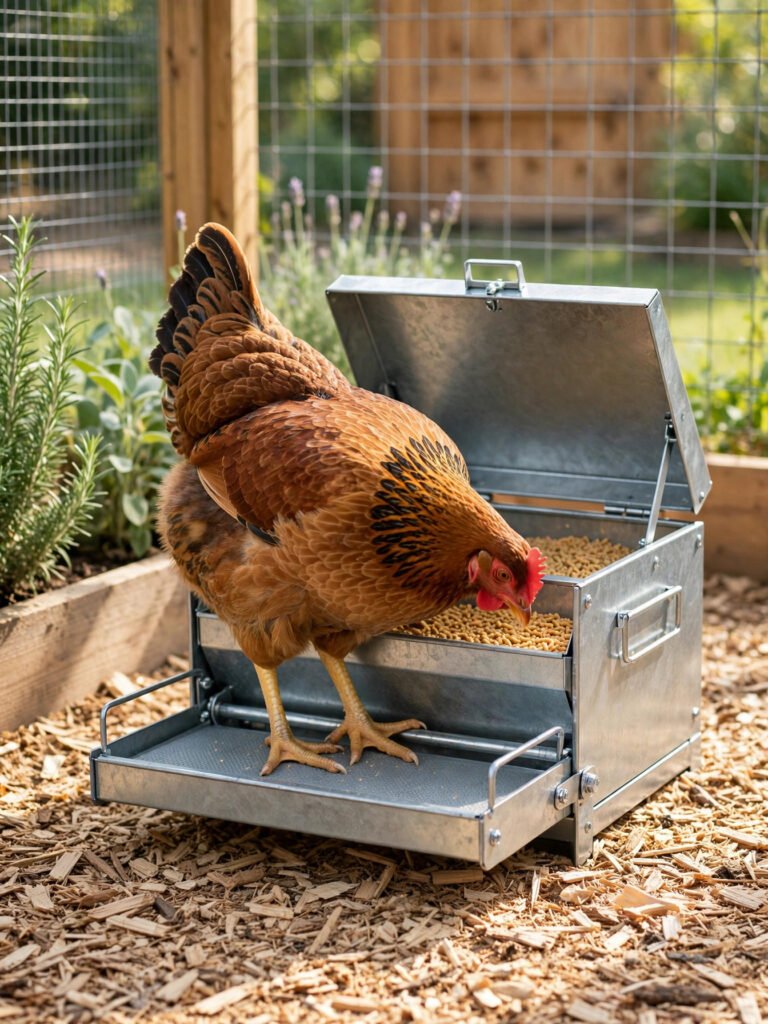
The treadle feeder is the oldest trick in this guide and still the most complete one. The feed sits under a closed lid, and the lid opens only when a hen stands on the treadle plate in front of it. The mechanism is calibrated around weight: a bird of roughly half a kilogram or more trips it, and a rat — around 300 g on average — physically cannot. Grandpa’s Feeders has been building this design in New Zealand since the 1990s, and the standard size on Amazon is a 20 lb galvanized steel unit with a weatherproof lid and an anti-flick grill in the trough, so even while a hen eats with the lid open, she cannot rake feed out sideways.

- 20 lb galvanized steel hopper — enough to feed 6 hens for up to 10 days between fills
- The lid opens only under a hen’s weight on the treadle plate, so rats, mice and wild birds are locked out around the clock
- Anti-flick grill in the trough stops hens raking feed out sideways while they eat, and the weatherproof lid keeps feed dry outdoors
What we like:
- The only complete lockout on this page. When no hen is standing on the plate, the feed might as well be in a safe — rats, mice and sparrows get nothing, ever, day or night
- It attacks billing out as well as theft. The anti-flick grill means the waste the hens themselves cause is handled too, not just the visitors
- Galvanized steel shrugs off the weather and cannot be chewed through, which is why owners measure these in years of service rather than seasons
What holds it back:
- It costs more than everything else in this guide — in some cases several times more. That is the honest price of the lockout, and the savings math at the top is the argument for it
- Your hens need training. Expect a week to three weeks of staged lid positions before the whole flock uses it confidently — the brand prints the steps on the underside of the lid
- Very light birds are the weak point. Bantams near the trip weight may not open it reliably, and the brand notes that lighter poultry can need slight modifications
- It has moving parts, and moving parts want an occasional brush-out. Owner reviews are clear that packed feed dust in the mechanism is what causes sticking
Not for: flocks of tiny bantams, or anyone who wants a feeder that works the minute it lands. For: any keeper whose feed bill currently includes feeding the local rats.
2. RentACoop Chick2Chicken — Best Ready-Made Port Feeder
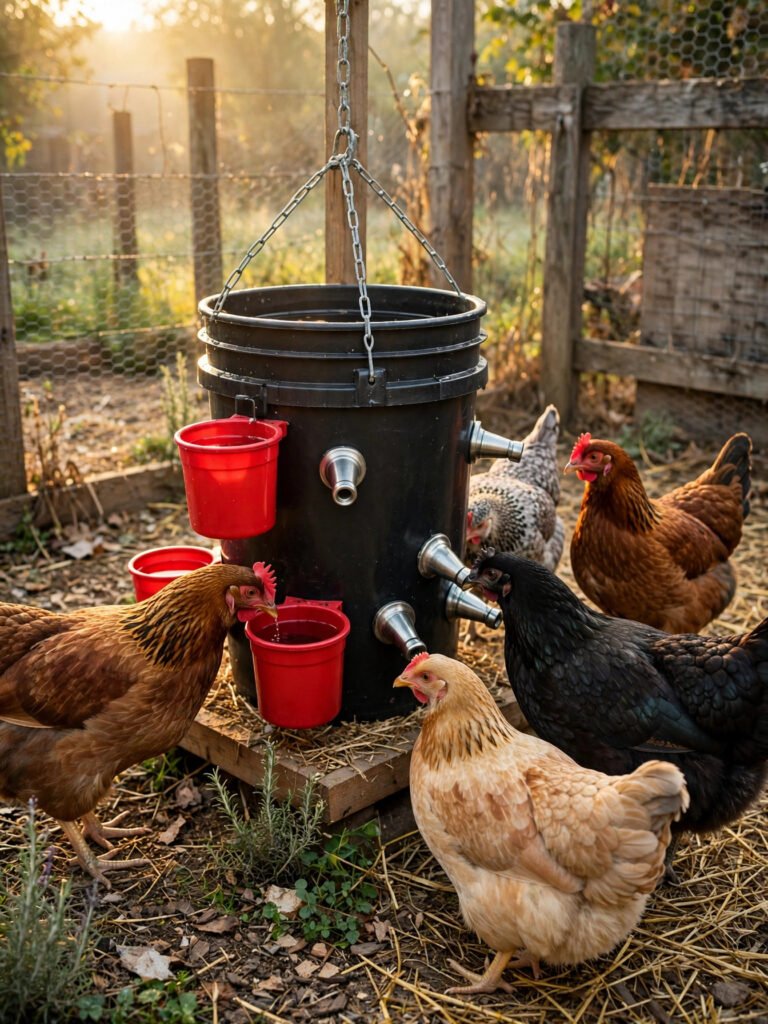
If the treadle is the vault, the port feeder is the drinking fountain. Feed stays inside a closed container, and hens put their heads into hooded ports to eat. A hen cannot get a foot inside a port, cannot rake feed out sideways, and anything she drops lands back inside the feeder. RentACoop is the brand that made this style mainstream, and the Chick2Chicken is its 10 lb version: BPA-free plastic, four ports, an anti-roost cone on top so nobody stands up there and messes on the lid, and a slider cover that closes the ports when you want them closed. An adjustable stand comes in the box, so the port height grows with the birds.

- 10 lb BPA-free body with 4 feeding ports — RentACoop rates it for up to 12 adult chickens
- Anti-roost cone on the lid keeps hens from standing, and messing, on top of the feeder
- Slider port cover closes the ports at night, and the adjustable stand in the box sets the right port height as birds grow
What we like:
- Working in minutes, with zero training. Fill it, set the stand height, walk away. A hen understands a port feeder the first time she sees one, which the treadle cannot claim
- The slider cover matters more than it looks. Port feeders normally sit open all night for any passing mouse. Closing up at dusk is the one real defense a port feeder offers, and this one has it built in
- Billing out simply ends. With her head inside a hooded port there is nowhere for feed to be flung, and no way to get a foot in and scratch
What holds it back:
- Ten pounds is not much. Six hens eat about a pound and a half a day, so expect to refill roughly once a week — this is a small-flock feeder
- It is plastic, not steel. A determined rat can chew plastic in a way it never will chew the Grandpa’s, and the slider cover only protects you on the nights you remember to close it
- Four ports can bottleneck at the morning rush if your flock has one particularly bossy hen guarding the feeder
Not for: big flocks, or anyone whose main problem is rodents rather than the hens themselves. For: small flocks that want the no-waste result with no DIY and no training period.
3. OverEZ Chicken Feeder — Best Big Capacity
Some keepers do not mind ports at all. They mind refilling. The OverEZ takes the port idea to silo scale: a rainproof gravity hopper that swallows an entire 50 lb bag of feed in one pour, with hens feeding three at a time through no-waste ports at the base. The arithmetic is the whole appeal. Six hens eat about a pound and a half a day, so one fill of this feeder lasts roughly a month. Feeding stops being a daily or weekly chore and becomes something you do when you happen to remember — and holidays stop requiring a neighbor who knows what a chicken is.

- Holds a full 50 lb bag of feed — for a flock of 6 that works out to roughly a month between refills
- Three hens feed at once through no-waste ports, so feed ends up in the birds instead of billed out onto the floor
- Rainproof design works inside the coop or out in the run, and keeps a month of feed dry and fresh
What we like:
- A month between refills for a six-hen flock. No other pick here comes close, and for keepers who travel, that alone can settle the question
- Same port physics as the RentACoop. Heads in, feet out — billing and scratching waste end the day you set it up
- The sealed, rainproof body protects the feed itself. A month of feed in an open pan would be stale or worse; in here it stays dry
What holds it back:
- The ports are always open, and there are no covers. Mice can help themselves at night, so this feeder stops the waste your hens cause — not the theft. Siting it inside a secure coop is doing real work here
- Full of feed, it is a big, heavy thing to shift. Pick its spot once and plan to leave it there
- It is one big bin holding one feed. Keepers who run different rations for different groups will still need a second, smaller feeder
Not for: anyone whose main battle is rats, or a very small coop where the footprint matters. For: bigger backyard flocks and any keeper who is simply done with refilling feeders.
4. ZenxyHoC DIY Port Kit — Best Budget DIY
The cheapest way into port feeding is not a feeder at all. It is a bag of ports. This kit gives you 8 ports and the hole saw sized to fit them, and you supply the container — a 5 gallon bucket, a storage bin, a barrel, a trough. Drill the holes, click the ports in, fill it up. A standard 5 gallon bucket holds roughly 25 lb of pellets, which means a kit plus a bucket you already own reproduces most of what the ready-made port feeders do, at a fraction of the commitment. If you are not yet sure port feeding is for you, this is how you find out.

- 8 feeder ports plus the matching hole saw included — everything except the container itself
- Fits buckets, barrels, bins and troughs, so capacity is whatever you build: about 25 lb of pellets in a standard 5 gallon bucket
- Ports keep hens’ heads in and feet out, ending billing and scratching waste on any container you already own
What we like:
- The lowest-cost entry to no waste feeding, full stop. The savings math at the top of this page works in your favor fastest when the feeder itself barely costs anything
- It scales with your flock. Two ports on a small bucket for three hens now, six ports on a big bin when the flock doubles — the same kit covers both
- Everything is replaceable. A cracked port is one port swapped out, not a whole feeder in the trash
What holds it back:
- It is genuinely DIY. You drill the holes, and a badly seated port leaks feed at the seam — take the ten minutes to fit them snugly and low on the container
- The ports are thin plastic. They are the wear point of the whole setup: they can crack in hard cold over time, and rodents can chew them in a way they cannot chew steel
- The ports stay open around the clock, with no covers on this kit. Like every port feeder, it stops hen waste only — keeping the bucket inside a secure coop at night is the workaround
Not for: anyone who wants it working straight out of the box, or feeders that will live outdoors in serious rodent country. For: budget builds, second and backup feeders, and trying the port idea before spending real money on it.
The 3 Ways Feed Gets Wasted
Every wasted pellet leaves by one of three doors, and knowing which door your feed uses tells you which feeder to buy.
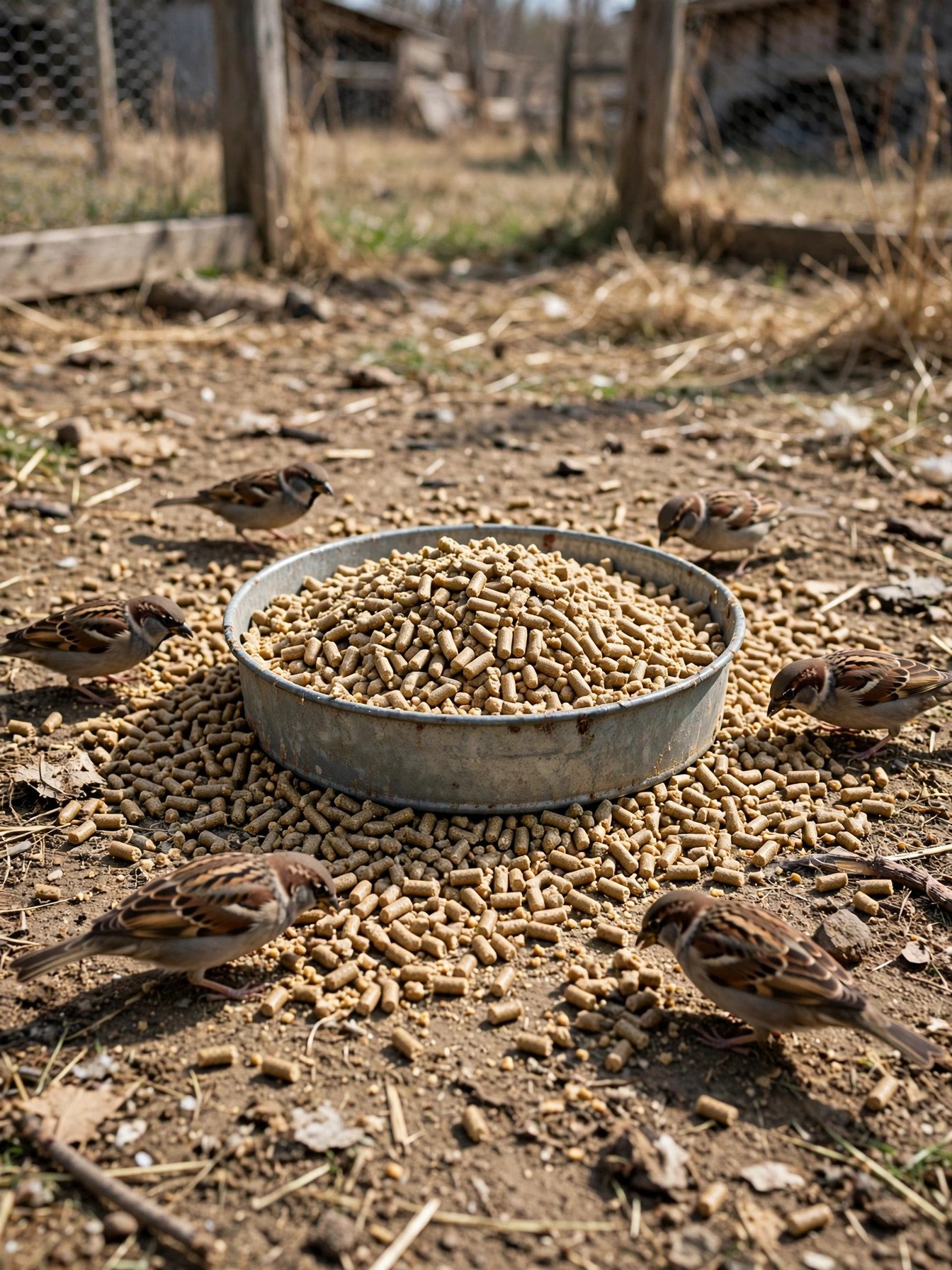
- Billing out. A hen eats by pecking, then flicking her beak sideways to sort for the tastiest bits. At an open pan, every flick lands feed on the floor. Port feeders end this because her head is inside a port where there is nowhere for feed to be flung — and the treadle’s anti-flick grill handles it even with the lid up
- Scratching and scatter. Given the chance, hens will happily climb into a trough or scratch at ground-scattered feed with their feet, kicking the rest into the bedding where it is trampled, soiled and done. Any design that keeps feet away from the feed — ports, treadle — stops this completely
- Theft. Sparrows work the day shift and rats and mice work the night shift, and between them they can eat as much as a hen. Spilled feed on the ground is an open invitation that also draws rodents toward your coop, which is why feed storage belongs in the same conversation as how to predator proof a chicken coop. Of the feeder styles here, only the treadle closes this door completely, because it is the only one that is shut when your hens are not eating
Treadle vs Port Feeder: The Honest Head-to-Head
For most buyers the real choice is between these two styles, so here it is without varnish. On waste stopped, the treadle wins: it is the only design that also shuts out rodents and wild birds, and its grill deals with billing. Port feeders stop everything the hens themselves do, and nothing the night shift does — unless you close slider covers at dusk or keep the feeder inside a secure coop. On ease, ports win: a hen understands a port in about four seconds, while a treadle asks for a training period of a week or more.
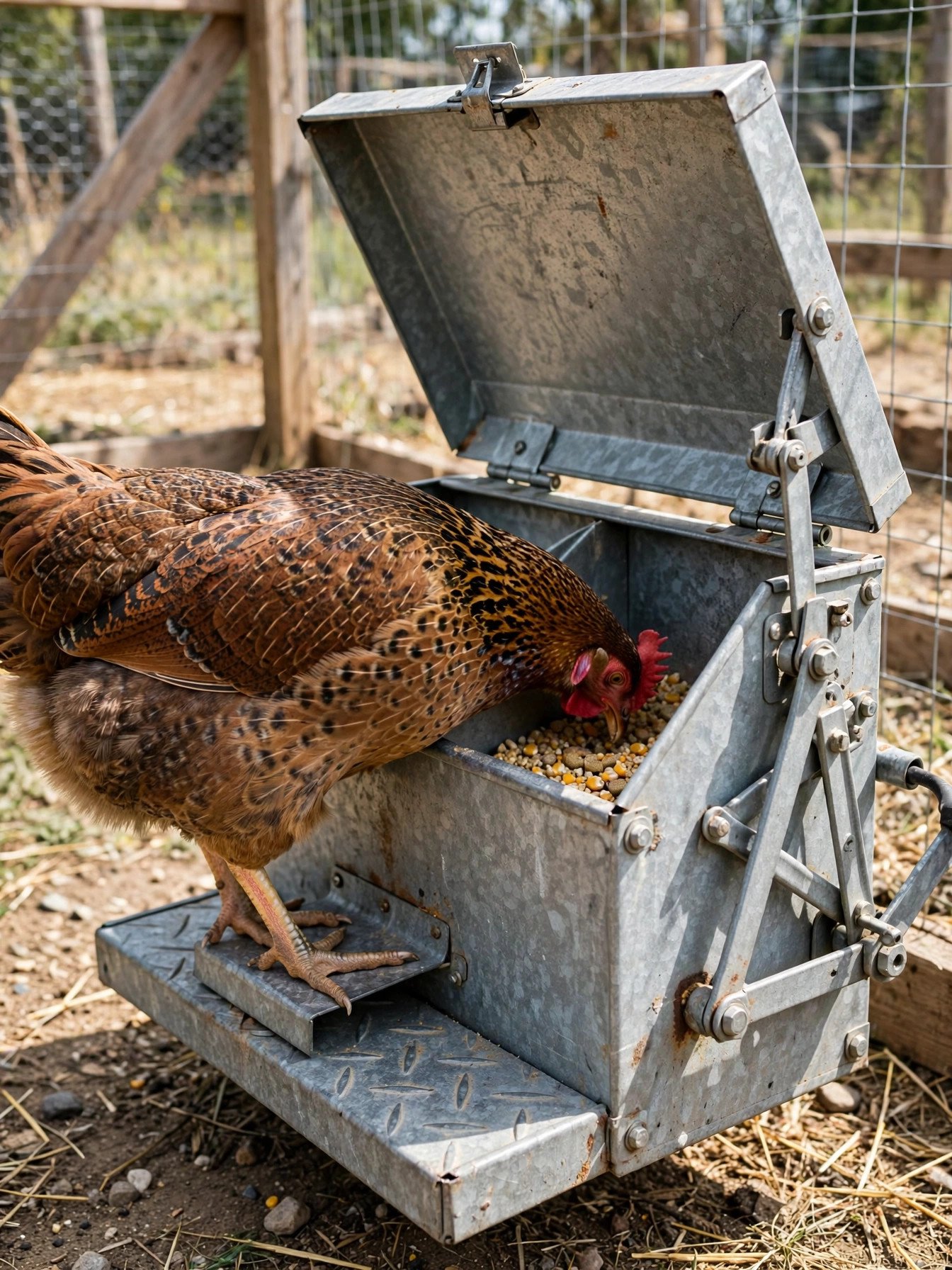
On cost of entry, ports win again — the DIY kit especially, and it is not close. On lifespan, the steel treadle wins: there is very little on a Grandpa’s to wear out, while plastic ports are the first part to age on every port feeder. On capacity, ports win: ports scale from a 10 lb box to a 50 lb hopper, where most treadle feeders sit in the 20 to 40 lb range. So the short answer is this: buy the treadle for the pests, buy the port for everything else, and do not let anyone sell you a port feeder as a rodent solution.
Frequently Asked Questions
Do no waste feeders really save money?
On the math at the top of this page, yes — as long as your current setup wastes what open pans typically waste. At a quarter of feed wasted, a six-hen flock loses around 180 lb of feed a year; at a third, around 270 lb. A no waste feeder that cuts that to near zero saves several bags of feed annually. Your figure depends on your flock and your current feeder.
Will my chickens actually learn to use a treadle feeder?
Yes — it is a training period, not a leap of faith. You start with the lid propped open so the flock eats freely and learns where the food lives, then lower it in stages until the hens are working the treadle themselves. Grandpa’s prints the steps on the underside of the lid, and most flocks are feeding confidently within one to three weeks. One brave hen usually figures it out first and the rest copy her. The genuine exception is very light bantams, who may not weigh enough to trip every treadle reliably.
Do port feeders work with crumbles and mash?
Pellets are what port feeders like best — they flow cleanly down to the ports. Crumbles generally work too, though in humid weather they can pack and bridge above a port, so give the feeder a shake when you pass it. Mash is the problem child: dry mash packs down and clogs gravity-fed ports. If you feed mash, keep a small open pan for it and let the port feeder handle the pellets.
Can rats still get into a port feeder?
Honestly, yes, they can try. Mice can reach into open ports at night, and rats can chew plastic ports and bodies given time and quiet. Closing slider covers at dusk, keeping the feeder inside a secure coop, and clearing up spilled feed all cut the problem down. But if rats are your main battle rather than a minor annoyance, skip the ports and go straight to the treadle — it is the only design in this guide that locks them out completely.
The Bottom Line
If you forced me to pick one feeder for most flocks, it is the Grandpa’s Feeders treadle — the only feeder here that stops the hens’ waste and the night shift’s theft in the same design, in steel that will outlast several flocks. If rats are not your problem, save the money: the RentACoop is the painless middle, the OverEZ ends the refill chore, and the ZenxyHoC kit on a bucket you already own gets you most of the savings for the least spent. Whatever you choose, you are choosing which of the three doors to close — just make sure you close the one your feed is actually using.
New to all of this and still setting up your first feeding station? Our guide to backyard chickens for beginners walks through the whole setup — feeder, waterer, coop and run — in the order you will actually need it.