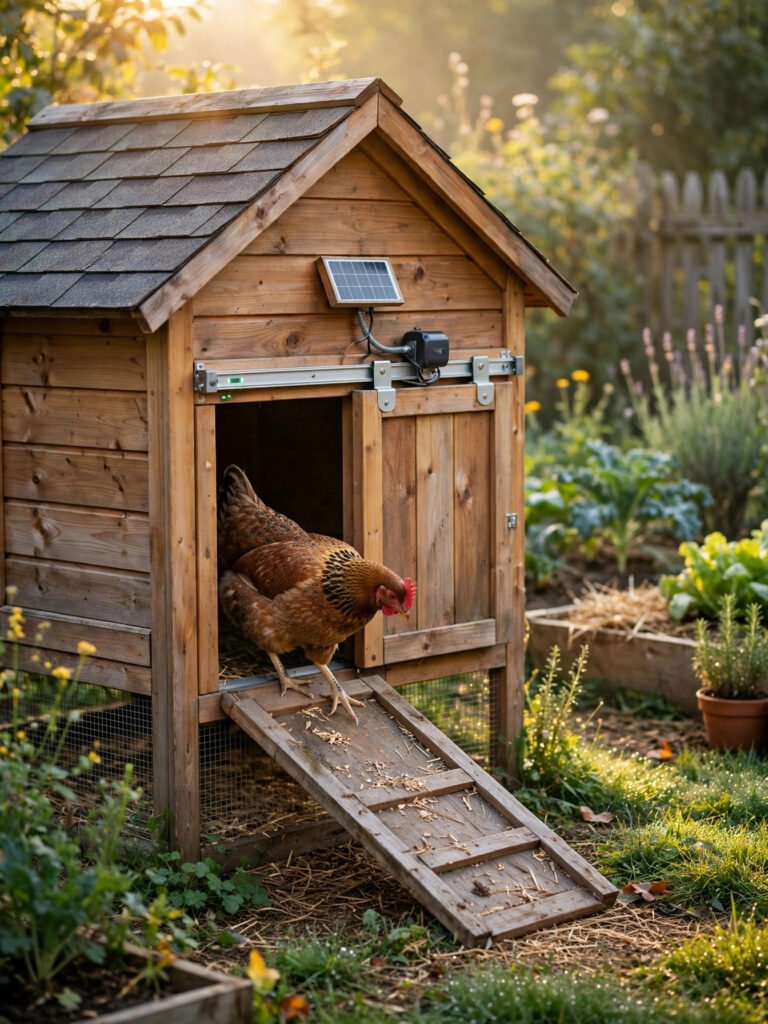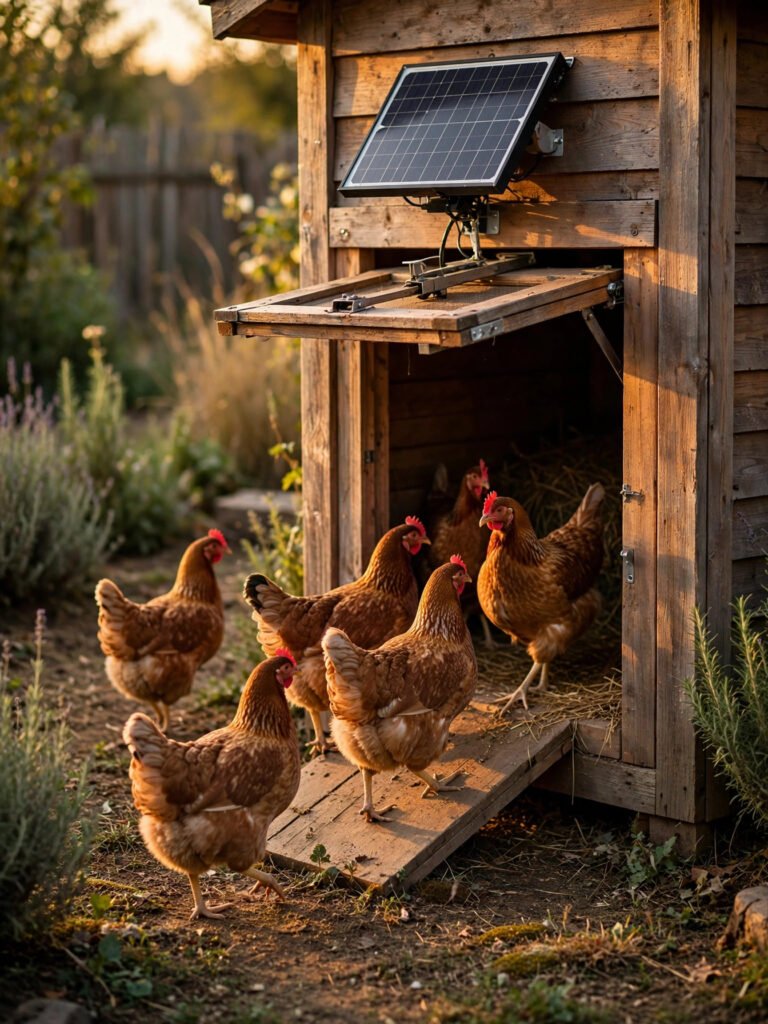
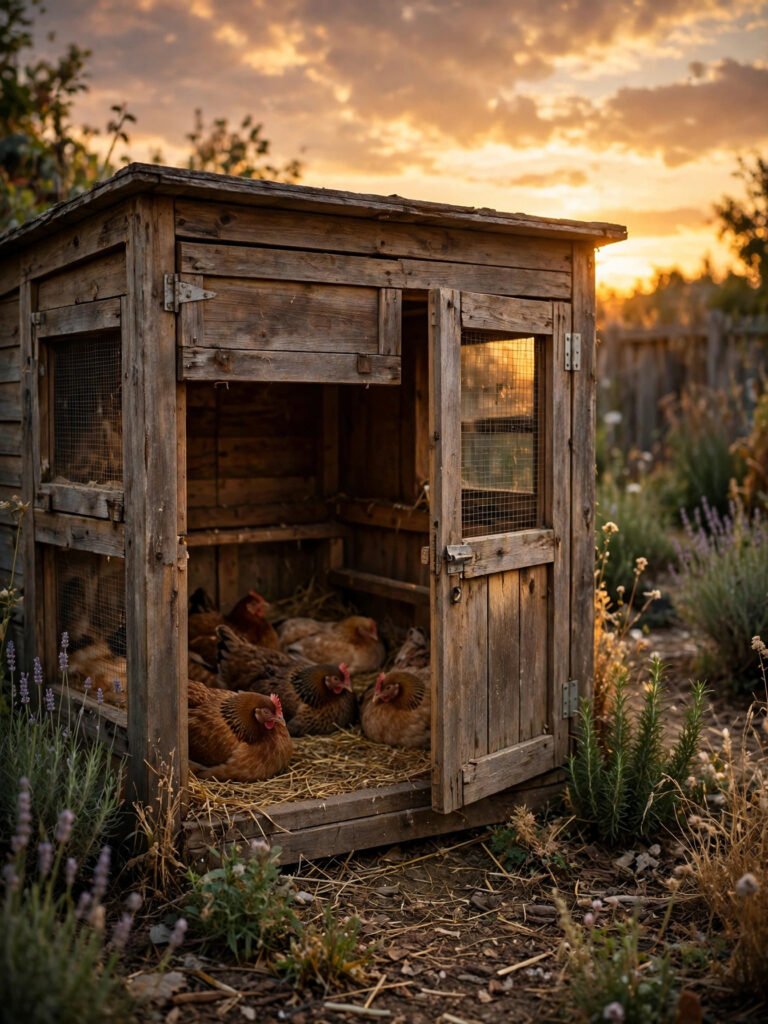

An automatic coop door is not really about the door. It is about the mornings you get to stay in bed, the weekends you get to go away, and the evenings you are stuck in traffic while the light fades — because dusk is exactly when predators start their rounds, and a flock left standing in an open doorway at dark is a flock at risk. The best automatic chicken coop doors open when the hens should be out and, far more importantly, close when the hens should be in, whether you remembered or not.
These four picks were chosen the way everything on this site is chosen: from manufacturer specs and the patterns that repeat in verified owner reviews. We do not claim to have tested these doors on our own coops, and you should be suspicious of any guide that claims it tested a dozen in a fortnight. Instead we read the fine print on power, closing logic and safety sensors, then cross-checked it against what owners praise and complain about after a winter or two.
Quick Picks: The Short Version
| Door | Power source | Open modes | Safety features | Best for |
|---|---|---|---|---|
| RUN-CHICKEN Door T50 | Built-in rechargeable battery | App timer, or sunrise/sunset mode | Anti-pinch obstruction sensor, solid aluminum panel | Most keepers — set it and forget it |
| ChickenGuard All in One | 4 x AA batteries (included), solar kit or DC mains | Timer, light sensor, DualSafe (both), manual | Auto-Stop anti-pinch (reverses and retries), Winter Mode, geared motor — closed door cannot be lifted | Cold climates, and keepers who want every closing option |
| Omlet Smart Autodoor | Battery or mains | Timer, light sensor, plus Wi-Fi app control and alerts | Built-in obstruction safety sensors, panel slides inside its own frame — no lifting cord | Smart-home keepers who want a phone alert when the door closes |
| ADOR1 | 6V lantern battery (included) | Light sensor only | Sprocket direct drive — no string to wear, freeze or lift; galvanized steel | Simple, steel, no-nonsense doors that just keep working |
1. RUN-CHICKEN Door T50 — Best for Most Keepers
Ask a yard full of chicken keepers which auto door they actually bought and this is the name that comes up most — the listing’s 1,900-plus ratings back that up. The T50 is a one-piece aluminum door with motor, battery and brains in a single housing, on the coop with six screws, run from the RUN-CHICKEN app: fixed times, or sunrise and sunset mode if you would rather the door followed the seasons by itself.

- One-piece weatherproof aluminum door — motor, battery and panel in a single unit
- Built-in rechargeable battery, rated by RUN-CHICKEN at up to a year per charge in cold climates, up to two in warm ones
- App timer or sunrise/sunset mode, an anti-pinch sensor that stops the door on an obstruction, and rated from -15°F to 140°F
What we like:
- Nothing else to buy. Door, motor and battery in one unit — no separate panel, no wiring
- Both closing styles are built in. Timer or daylight, switched in the app, not in hardware
- The anti-pinch sensor is standard, not an upgrade — the door stops for a dawdling hen
What holds it back:
- Owner ratings average around 4.1 stars — a happy majority, but a real minority report faults, and the warranty is only 1 year
- The clever features live in the app — hate running your yard from a phone and you are paying for smarts you will never open
- A built-in battery is a blessing until it wears out — then it is a conversation with the manufacturer, not an AA swap
Not for: keepers who want no app near the coop, or anyone with ducks and turkeys — RUN-CHICKEN makes a separate Giant model for big birds. For: the typical backyard flock, handled today with the least possible fuss.
2. ChickenGuard All in One — Most Modes, Best in Winter
ChickenGuard has been making coop door openers in the UK for a decade, and the All in One is the distilled version: door and motor in a single unit, an LCD panel, and more ways to decide when it closes than anything else here — timer, light sensor, both combined in DualSafe mode, or walk up and press the button.

- Four ways to run it: timer, light sensor, DualSafe (closes at whichever comes first — set time or sunset), and manual buttons
- Three power options: 4 x AA batteries (included in this version), a solar kit, or a 9-12V DC mains cable
- Auto-Stop anti-pinch reverses the door on a hen, then retries shortly after — plus Winter Mode motor boost against ice and snow, and a 3-year warranty
What we like:
- DualSafe is the smartest closing logic here. Set time or sunset, whichever comes first — no hen left out by a stormy early dusk
- Winter Mode is a real feature, not a sticker. Extra motor power against ice and snow, on a unit rated to -4°F
- The safety light. A red indicator flashes once the door is fully closed — ChickenGuard says visible from 100 yards
What holds it back:
- There is a lot of menu here. The setup wizard helps, but keepers who want two buttons find the LCD system more than they bargained for
- The version linked runs on AA batteries — a recurring chore and cost. Solar and mains are options, but separate purchases
- The motor lifts up to 4 lb — fine for its own panel, worth knowing before pairing it with a heavy homemade door
Not for: keepers who want to unbox, stick it on the wall and never think about settings again. For: cold climates, changeable weather, and anyone whose evenings are unpredictable — DualSafe was designed for exactly you.
3. Omlet Smart Autodoor — Best Smart Door
Omlet does doors differently. The Autodoor’s panel slides sideways inside its own purpose-built frame — no hanging cord anywhere in the design — and the Smart version adds Wi-Fi, so the Omlet app can open and close it, and tell you that it did. It fits Omlet’s Eglu coops directly and wooden coops with the included fittings, on battery or mains power.

- Wi-Fi enabled with the Omlet app — control the door from your phone and get notified that it opened and closed
- Timer or light sensor control at the panel too, battery or mains power, and built-in safety sensors that stop the panel on an obstruction
- The panel slides sideways inside a sealed frame, in a casing Omlet rates waterproof to IPX6 — no cord, no dangling door, nothing for bedding to jam
What we like:
- The sideways slide is the jam-resistant design. Bedding, dirt and ice have far less to grab onto than on a vertical lift track
- Notifications change the game for anxious keepers. Every other door here asks you to trust that it closed. This one tells you
- The optional Coop Light syncs with the door — on five minutes before closing to lead stragglers in, off once it is shut
What holds it back:
- Wi-Fi has a range, and Omlet is upfront about it: the app works best with the coop within about 30 feet of your router. A coop at the bottom of a long lot may never connect
- It is the premium-priced approach in this guide, and the app account is one more system to maintain
- The alerts depend on your home network. Timer and light modes work without Wi-Fi — the notifications, the reason to buy this version, do not
Not for: off-grid setups, coops far from the house, or anyone whose honest answer to “do you want another app?” is no. For: keepers whose coop sits near the house and who sleep better with a notification that says the girls are in.
4. ADOR1 — Steel, Simple, Made in USA
The ADOR1 is the door the gadgets are not. A galvanized steel panel slides sideways across the pop hole, driven by a sprocket — no string, no cord, nothing to stretch or snap. It runs on a light sensor, mounts outside the coop over your existing opening, and is made in the USA by a small maker who, judging by owner threads, actually answers the phone. One review headline on its listing reads “3 Years Still Works.” That is the whole pitch.

- Heavy galvanized steel construction, designed and made in the USA, with a 1-year manufacturer warranty
- Sprocket direct drive — no string puller, so no cord to wear out, freeze up or give a predator a lifting point, and the door stays locked down when closed
- Runs on a single 6V lantern battery (included) that owners report lasting around a year, with light-sensor operation and adjustable sensitivity
What we like:
- The mechanism is the feature. A sprocket driving a steel panel removes the commonest auto door failure point — the lifting cord
- The sideways, exterior mount solves awkward coops. Low rooflines and odd pop holes that defeat vertical doors are its home ground
- Owner loyalty is striking. Forum users describe years of set-and-forget service, a battery a year, and a maker who sells spares
What holds it back:
- There is no timer. Light sensor only — want the flock held in until 9 a.m. because a fox does dawn rounds, and this door cannot do it
- There is no screen. Programming is button presses counted in LED blinks, which owners describe as fiddly the first time
- No electronic anti-pinch sensor is listed in its specs — its safety story is the slow geared drive, not a reversing sensor
Not for: anyone who needs a clock-based schedule, app control, or a door open before full daylight on a dark winter morning. For: the keeper who wants steel, simplicity, and a door still working when the apps have been redesigned twice.
The Safety Features That Matter
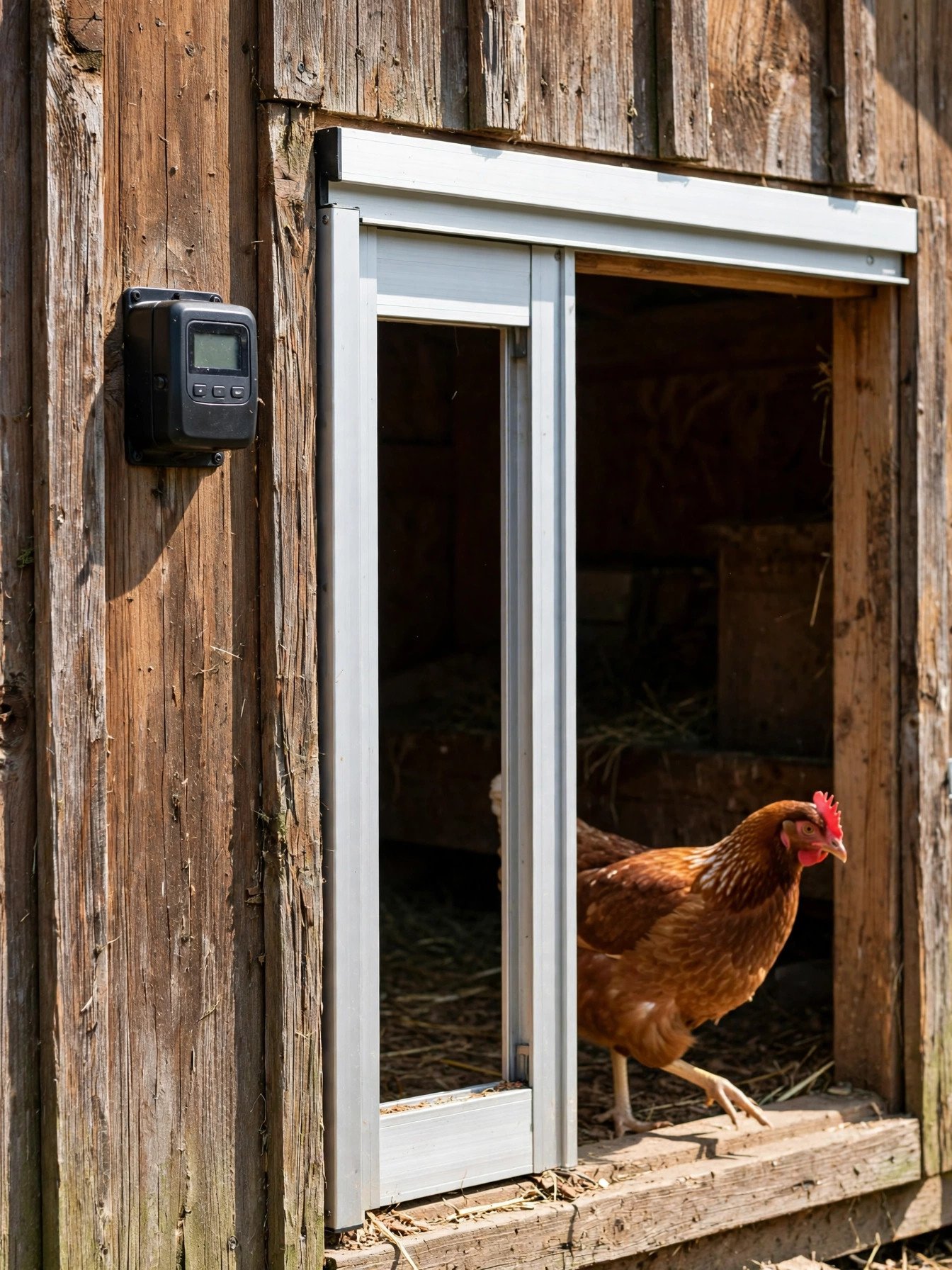
Strip away the apps and the marketing and an auto door is a machine that moves a panel twice a day, inches from your hens’ necks. Four things separate a safe door from a worrying one. First, an anti-pinch or obstruction sensor. Hens dawdle in doorways; it is practically the flock motto. A good door senses the bird and stops — the better ones, like ChickenGuard’s Auto-Stop, reverse to open and try again after a pause, so one slow hen does not leave the whole flock locked out for the night. Treat any door with no obstruction handling at all as a door to supervise, not to trust.
Second, how the panel moves. Doors that hang from a string or cord carry a known wear item: cords fray, cords freeze, and a cord gives a predator — or a tangled hen — something to interact with. Owners of cord-lift doors are advised to inspect the cord at every battery change; it is a maintenance point, not a fit-and-forget part. Geared and sprocket drives, and panels sliding inside their own frames like the Omlet, design the exposed cord out. Third, a manual override you have actually used — every door here can be opened by hand or button; learn how on a calm Saturday, not in a power cut in the rain. Fourth, battery behaviour. A battery door keeps working through a power cut; a mains-only door stops wherever it is, and a dying battery usually fails in place too. So swap or charge batteries on a schedule, spring and autumn.
And the other side of the panel: a closed door only counts as predator-proof if it cannot be lifted, pried or slid by paw. Geared motors and locking designs hold their panels down; a gravity panel on a slack cord may not. The door is one layer, not the system — our guide to how to predator proof a chicken coop covers the hardware cloth, latches and aprons that do the rest.
Timer vs Light Sensor: Which Suits Your Flock?
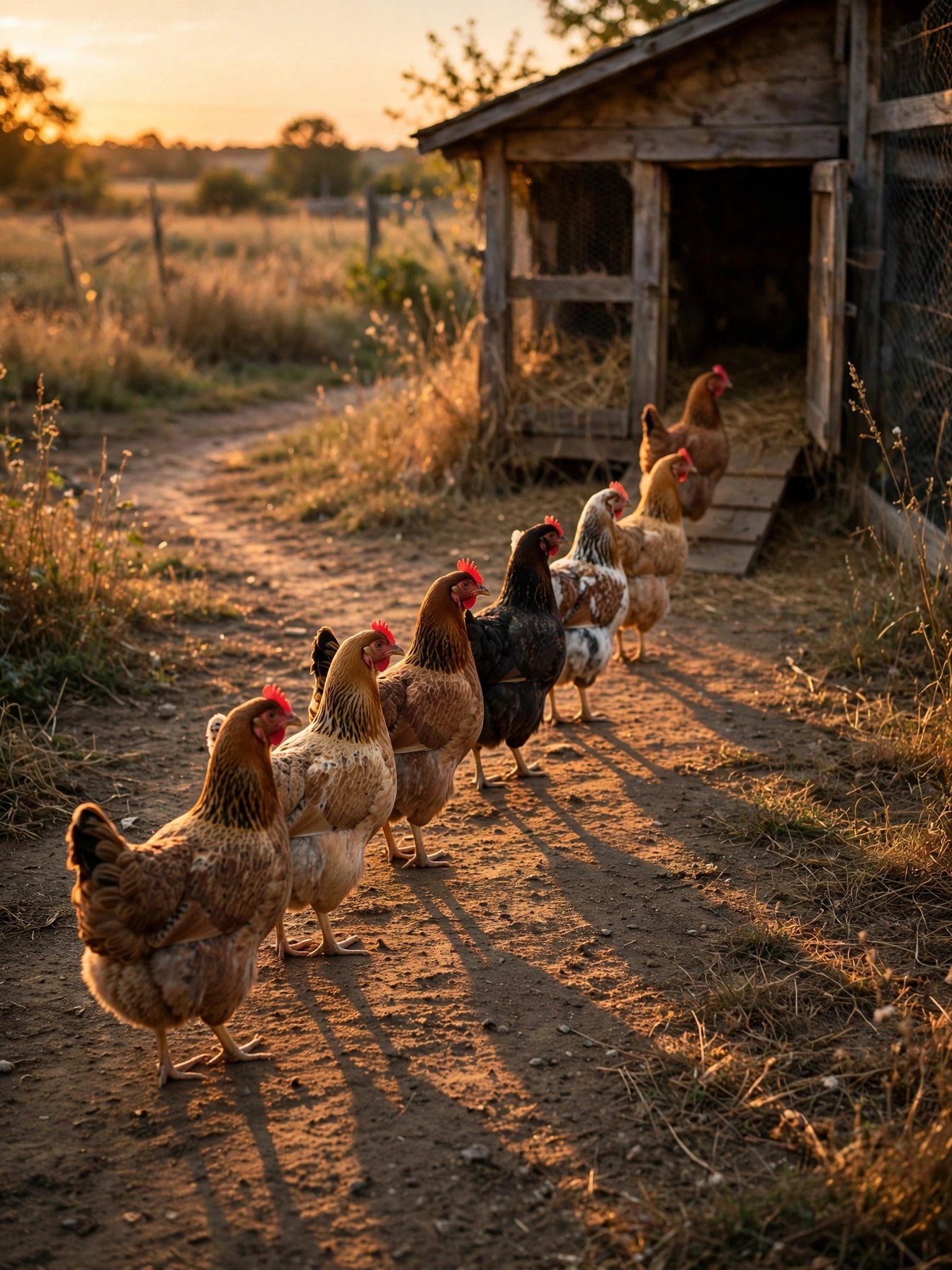
Every keeper lands on one side of this, so here is the honest version of both. The light sensor matches the hens’ own clock. Chickens roost by light, not by the hour, so a sensor door opens as the flock wakes, closes as the last bird files in, and quietly adjusts through the seasons with no reprogramming. Its weakness is that light is local: heavy tree cover, or a week of black storm evenings, can talk a sensor into closing early — owners with shaded coops do report the occasional hen locked out at dusk.
The timer matches your clock instead. It is predictable — and it has one safety trick a sensor cannot copy. Predators learn dawn too, and more than one keeper in the forums tells the same story: a fox took a hen let out at first light, so the timer went back to 9 a.m. and the problem ended. Its weakness is the mirror image: the clock knows nothing about the seasons, so a 7 p.m. close that was perfect in June is an hour after dark in December, and you will reprogram it — daylight saving included — several times a year. Our honest verdict: the best setup does both. Close on whichever comes first, like ChickenGuard’s DualSafe, or pair a timer opening with a sensor closing. Pure sensor doors like the ADOR1 suit keepers whose hens are the schedule; pure timer keepers tend to have a predator pattern to beat.
What an Auto Door Cannot Do
Say this part out loud before you rely on any door in this guide: an automatic door does not count your chickens. A door that closes on time looks exactly the same whether six hens are inside, or five are inside and one is roosting in the run, hiding under the coop, or gone. The head count is still your job — not every night, but often enough that a missing bird is a same-day discovery, not a next-week one. New keepers especially should read our guide to backyard chickens for beginners on building that evening routine, because the door is a helper in it, not a replacement.
- It cannot beat deep winter by itself. Ice can freeze any panel in its tracks — Winter Modes and sideways sliders help, but in a hard freeze the keeper who clears the pop hole area sleeps better than the one who trusts the brochure
- It cannot train your hens. Birds that roost in the run will be locked out by a perfectly working door. Young flocks need a week or two of being put to bed by hand first
- It cannot fix a crowded coop. A door opening into a tiny run just creates a traffic jam with feathers on it — the flock still needs its coop and run space sorted
Frequently Asked Questions
Are automatic coop doors safe for chickens?
The good ones are, because they are built around the dawdling hen. Look for a named obstruction feature — an anti-pinch sensor that stops the door, or an auto-stop that reverses it and retries — and a drive with no exposed cord. Three of the four doors here carry electronic obstruction sensing; the ADOR1 relies on a slow geared sprocket drive instead.
What happens to an automatic coop door when the power fails?
Battery-powered doors — most of this guide — do not notice a power cut at all. A door on mains power without a battery option stops wherever it is until the power returns. Flat batteries behave the same way: the door stays in its current position rather than swinging open, which is safer, but it is why batteries belong on a replacement schedule, not a wait-until-it-dies plan.
Is a timer or a light sensor better for a coop door?
For closing, the light sensor has the edge — hens come home by light, and the sensor follows the seasons for free. For opening, a timer has one real advantage: holding the flock in past dawn, when predators are still about. A door that combines both, closing at whichever comes first, is the best of both worlds — which is why ChickenGuard’s DualSafe mode gets the praise it does here.
Can a raccoon open an automatic chicken coop door?
A raccoon can lift a loose panel, slide a simple latch and worry at a cord — which is why the drive matters as much as the door. Geared motors and sprocket drives hold their panels down when closed, and framed sliders give paws nothing to grip. Choose a door whose closed panel cannot be budged by hand.
The Bottom Line
For most keepers, the answer is the RUN-CHICKEN Door T50 — one box, six screws, a battery that minds itself, and both timer and daylight modes ready in the app. If your winters are serious or your evenings are chaos, step up to the ChickenGuard All in One for DualSafe closing and Winter Mode. If the coop sits near the house and you want proof, not hope, that the door closed, the Omlet Smart Autodoor’s notifications are worth their premium. And if you would rather buy steel once and think about it never, the ADOR1 is the door your grandchildren’s hens will complain about replacing.
Whichever you choose, spend the first week watching it work at dusk before you trust it with a weekend away — every flock has one hen who treats the closing door as a personal challenge, and it is better to meet her while you are still home. After that, enjoy the lie-in.