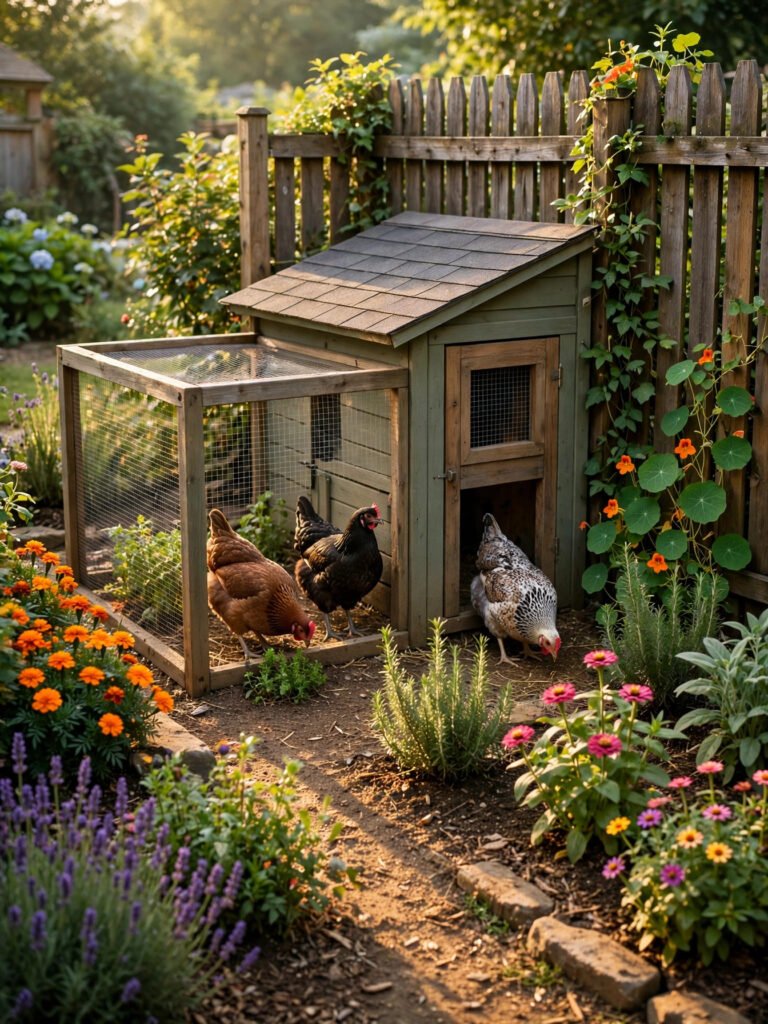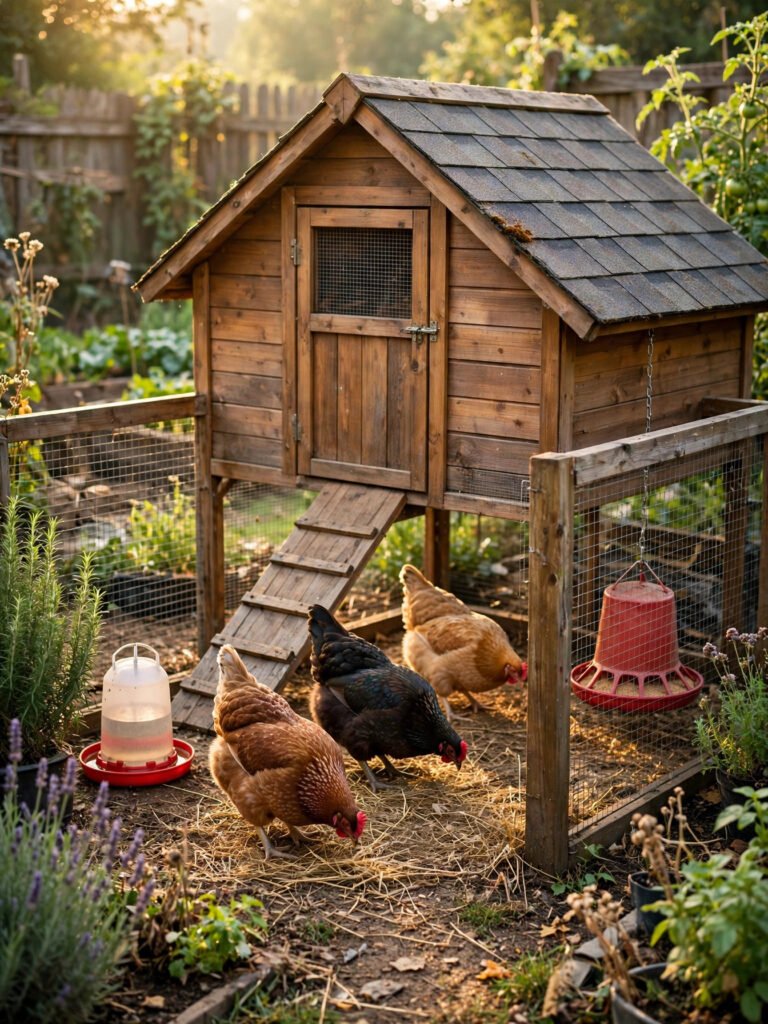
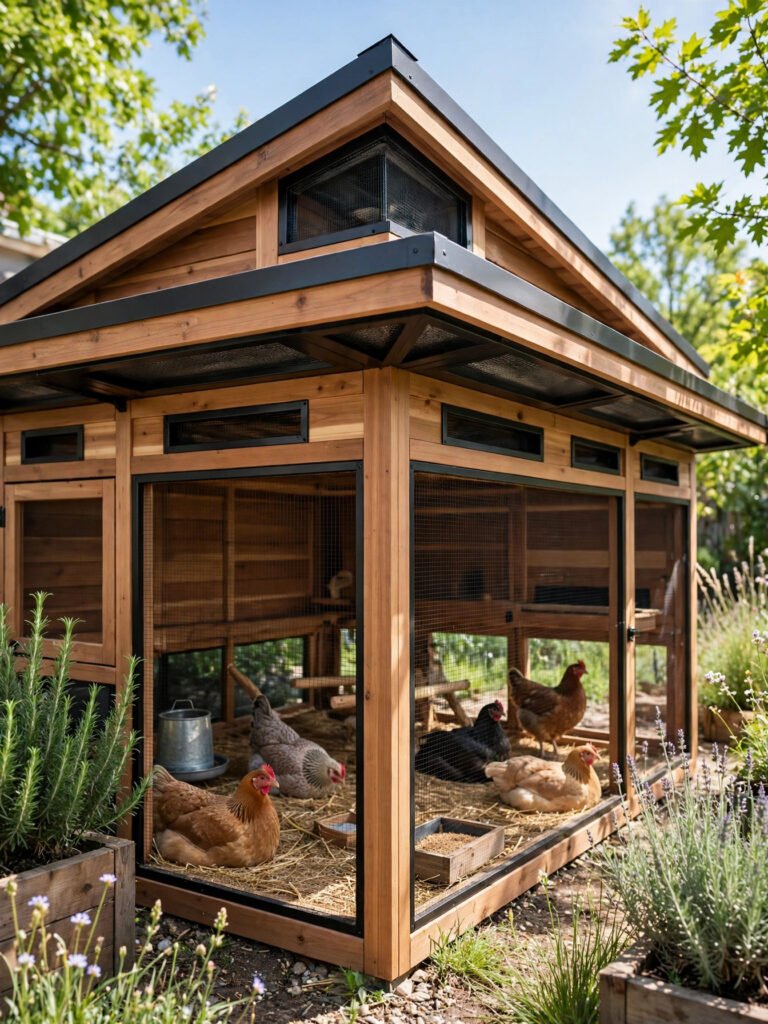

Short answer first: plan on about 1 square foot of vent opening for every hen, placed high on the coop walls, above the roosts, and leave it open all year. Chickens shrug off dry cold that would send most of us back inside for a coat. What actually makes them sick is damp, stale, ammonia-heavy air, and that builds up fast in a coop that looks warm and cozy. Ventilation is the least glamorous part of sizing and planning a coop, but it is the part that quietly decides whether a flock thrives.
Here is the mistake I see most often, and it is an understandable one. The first cold snap arrives, the keeper feels the wind coming through the vents, and seals the coop up tight to keep the hens warm. Within a week there is condensation on the windows, a sharp smell when you duck your head in, and by January the big-combed hens have blackened, frostbitten comb tips. The cold did not do that. The moisture did. Every hen breathes out damp air all night, and the droppings add more. If that moisture cannot escape above their heads, it settles on combs, in lungs and into the bedding. Keep the air moving up high, and winter mostly takes care of itself.
How Much Ventilation Does a Coop Need? The Numbers
| Hens | Minimum vent area | In summer heat (double it) |
|---|---|---|
| 4 | 4 sq ft | 8 sq ft |
| 6 | 6 sq ft | 12 sq ft |
| 8 | 8 sq ft | 16 sq ft |
| 10 | 10 sq ft | 20 sq ft |
| 12 | 12 sq ft | 24 sq ft |
Measure that vent area honestly. A 12 × 12 inch opening is one square foot, but only the open part counts. A louvered vent with slats may pass half the air its size suggests, and the hardware cloth you will cover it with takes a small bite too, so when in doubt, cut the hole bigger. Two smaller openings on opposite walls also beat one big one, because air needs a way in as well as a way out. The pop door and a low, protected intake handle the “in” side during the day; the high vents do the heavy lifting around the clock.
Ventilation Is Not a Draft
This is the distinction the whole topic turns on. Ventilation is air moving above the hens’ heads. A draft is air moving through the hens. Warm, moist air rises, so openings up near the roof pull the damp air out while the birds sleep undisturbed below in still air. An opening at roost level does the opposite: it blows directly across perched birds all night, strips the warm air out of their feathers, and chills them no matter how mild the weather is.
There is a simple test. On a breezy night, tape a strip of tissue paper at roost height inside the coop. If it barely stirs, your ventilation is doing its job. If it flutters hard, that opening is a draft, and the fix is to baffle it, shrink it, or move it higher, not to close everything down. Roost placement and vent placement are the same decision made twice, which is why bar heights and spacing matter as much as the vents themselves; both are covered in our guide to roost space per chicken.
Where Do Coop Vents Belong?
High, on more than one wall, and above the tallest roost. The three classic spots:
- Under the eaves — the gap where the wall meets the roof overhang. This is the best vent location on most coops: it sits right where warm, damp air collects, and the roof overhang keeps rain from blowing in.
- Gable ends — the triangular sections at the top of the end walls. A vent on each gable sets up a gentle cross-flow across the whole coop.
- The ridge — a vent strip along the roof peak lets the hottest air escape at the very highest point. Common on sheds and barn-style coops, and easy to add to a build.

The rule that ties it together: every fixed opening should clear the hens’ heads by a good margin when they are perched — a foot above the roost is a comfortable target. Openings down low are not forbidden, and in summer a low intake on the shady side genuinely helps, but a low opening that blows across the roost on a winter night is a draft with a different name.
4 Signs Your Coop Is Not Getting Enough Air
Your coop will tell you when the vents are too small. It tells you in these four ways, roughly in this order:
- Condensation. Windows fogged or dripping on a cold morning, walls damp to the touch, bedding that feels wet a day after you changed it. The moisture your hens produced overnight had nowhere to go.
- Ammonia smell at nose level. Duck your head in to roost height and breathe. If the smell catches your throat or stings your eyes, your hens have been breathing that air all night, every night, and their lungs are more delicate than yours.
- Frostbite on combs and wattles. The winter surprise: frostbite usually happens in sealed, damp coops, not cold, dry ones. Moist air settles on a big comb, then the cold gets it. Dry air at the same temperature rarely does.
- Hens avoiding the coop. Birds roosting in the run, crowding the pop door at bedtime, or a flock that is restless and squabbly after dark. Hens vote with their feet, and stale air is one of the things they vote against.

Any one of these means the same thing: open more area up high before you change anything else. Nine times out of ten, the fix costs an hour with a saw and a piece of hardware cloth.
Winter Ventilation vs Summer Ventilation
In winter, never close the vents fully. This is the rule keepers resist most and the one that matters most. A healthy hen in dry air handles serious cold; her feathers are a better coat than anything we own. What she cannot handle is a warm, wet box. Moisture is the enemy, cold is just weather. Keep the high vents open, keep the bedding dry, and top up the bedding rather than sealing the coop when a hen’s waterer spills. If your winters are severe, baffle the windward vents so they shed direct gusts, but leave the area open underneath the baffle.
In summer, the vents you have are probably not enough. Work toward double the winter area: open every window and vent the coop has, add shade over the coop and run so the air the vents draw in starts cooler, and make sure at least one opening catches whatever evening breeze your yard gets. Summer is also the one season where a little powered help earns its place, because the worst coop heat arrives on still, airless afternoons when passive vents have nothing to work with.
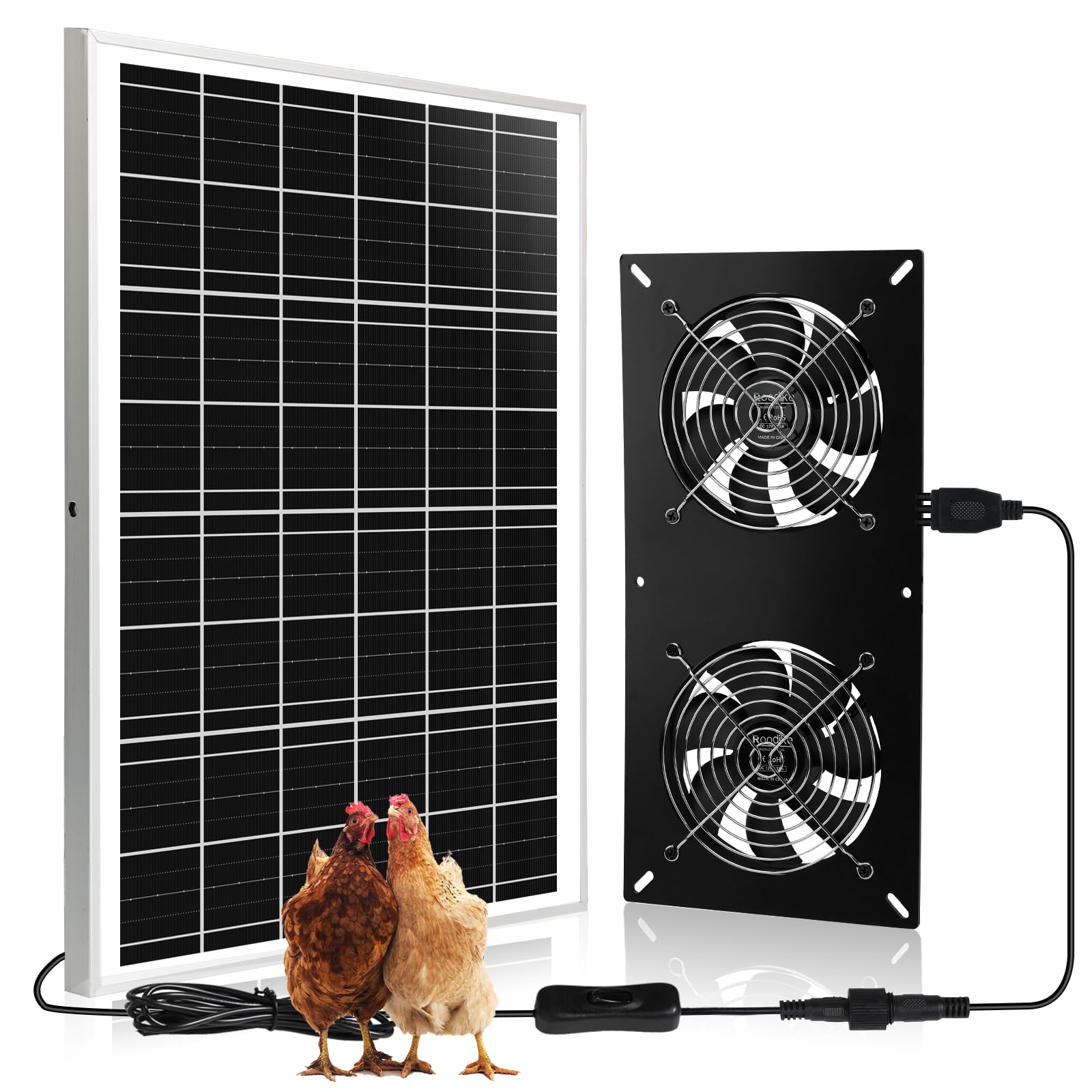
- A 25 watt solar panel runs two exhaust fans, so there is no wiring back to the house and no electricity cost to keep air moving
- The fitting gear is in the box: the dual fan kit, an installation screw kit, zip ties and a user manual
- Waterproofed design made for outdoor structures — coops, greenhouses, sheds and pet houses
- 12 volt DC fans on a standard DC 5521 connector, rated for temperatures up to 140°F
One honest note about solar fans, this one included: the kit’s component list has no battery, so the fans spin while the sun is on the panel and rest when it is not. That lines up neatly with summer heat, which peaks with the sun — but it means a fan never replaces the passive vents, which work all night for free. Think of a fan as a boost on the worst afternoons, not the system itself.
Cover Every Vent With Hardware Cloth
Every opening you cut is also a door, and at night things will try it. A raccoon will reach through a gap you would swear was too small, pull things apart given a loose edge, and test every vent on the coop before it tries the door. So every vent, window and eave gap gets covered with 1/2 inch hardware cloth, screwed down with screws and washers so the edges cannot be peeled back. Staples alone do not count; a determined raccoon treats them as a suggestion.
A roll of YARDGARD 1/2 inch hardware cloth covers a whole coop’s worth of vents with plenty left over for the next job. Never use chicken wire for this: chicken wire keeps chickens in, and that is all it has ever done. The same material, fitted the same way, does the heavy lifting in our full guide to how to predator proof a chicken coop — read it before your first night with birds, not after.
Vent Space Belongs in the Plan From Day One
Vents are far easier to cut while you are building than after the first ammonia morning, so put them in the plan next to the floor space. If you are still at the sketch stage, our free Coop Size Calculator works out the coop, run and roost sizes for your exact flock — and once you know the hen count, the vent math on this page is just one square foot per bird, doubled for summer. Ten minutes with the calculator now beats a weekend of retrofitting later.
Frequently Asked Questions
Should I close the coop vents in winter?
No, never fully. Winter is when the moisture load is highest, because the hens are inside for the longest hours. Keep the high vents open so damp air escapes; if wind blasts straight through one vent, baffle that vent, but do not seal the coop. Frostbite and respiratory trouble both trace back to sealed, damp coops far more often than to cold ones.
How much ventilation do 6 chickens need?
At least 6 square feet of open vent area, placed high — for example, two eave vents of about 1 × 3 feet, one on each side — and roughly double that available in summer. If the vents are louvered, go bigger, because the slats cut the effective opening down.
Can a chicken coop have too much ventilation?
A coop can have too much draft, but almost never too much ventilation. An opening above the hens’ heads can be large without bothering them, because the air moves overhead. What you want to avoid is wind at roost level and rain blowing in; if neither is happening, more high vent area is simply safer.
Do open vents make chickens cold at night?
Not in any way that matters. A hen’s feathers trap a layer of warm air against her body, and dry cold does not disturb that layer, even well below freezing. Damp air does, which is the whole reason the vents stay open: they keep the air inside dry, and dry hens stay warm.
Do I need a fan in my chicken coop?
Not if your passive vents are sized and placed right — most coops never need one. A solar exhaust fan earns its keep in hot climates, on still afternoons when there is no breeze for the vents to work with. Fit the openings first; add the fan second, if your summers call for it.
The Bottom Line
One square foot of vent per hen, up high, open all year, with hardware cloth on every opening. That single rule prevents most of the condensation, ammonia, frostbite and coop smell that beginners blame on the weather. Size the vents when you size the coop, glance at them each season, and let dry air do the quiet work. Still setting up your first coop from scratch? Our complete guide to backyard chickens for beginners walks through the whole setup in the order you will actually do it.