
Short answer first: a laying hen eats about 1/4 pound of feed a day — roughly 110 to 120 grams. In a scoop, that comes out to around 3/4 to 1 cup of pellets depending on pellet size, but weigh your scoop once and you’ll see why I don’t trust cups: the same scoop holds a very different weight of crumbles, pellets or scratch. The quarter pound is the anchor number. Everything on this page — the tables, the bag math, the budget — hangs off it, and for most backyard hens, in most backyards, it holds up.
Here’s why this one number matters more than most feeding questions: feed is the biggest bill in chicken keeping, and it never takes a month off. A flock of six hens quietly works through a 50 pound bag every month or so, year after year. Buy blind and the bag goes stale in the corner while money walks out the door. Get the number right and the whole feeding routine — and most of your flock budget, which we break down in our guide to how much it costs to raise backyard chickens — falls into place.
How Much Feed Do Chickens Eat at Each Age?
The quarter pound only applies to a grown laying hen. A chick runs on tablespoons, and a meat bird eats like it’s training for something. Here is the whole life of a chicken, measured in feed:
| Stage | Typical age | Feed per day |
|---|---|---|
| New chicks | First week | About 0.02 lb (a tablespoon or two) |
| Young chicks | 2 to 6 weeks | 0.03 to 0.05 lb |
| Growers and pullets | 6 to 18 weeks | About 0.15 lb |
| Laying hens | 18 weeks and up | 0.25 lb (1/4 lb) |
| Broilers, near finishing | 6 to 8 weeks | 0.4 lb or more |
Add it up and a chick eats only about 1.5 to 2 pounds of feed in its entire first six weeks. Then it grows up, starts laying, and eats that much every week and a half for the rest of its life. Chickens are cheap exactly once — right at the beginning.
How Much Feed Does Your Whole Flock Eat?
Multiply the quarter pound by your hen count and you get the numbers that actually run your feed store trips:
| Hens | Feed per day | Feed per month | 50 lb bags per month |
|---|---|---|---|
| 4 | 1 lb | 30 lb | About 0.6 |
| 6 | 1.5 lb | 45 lb | About 0.9 |
| 8 | 2 lb | 60 lb | About 1.2 |
| 10 | 2.5 lb | 75 lb | About 1.5 |
| 12 | 3 lb | 90 lb | About 1.8 |
| 20 | 5 lb | 150 lb | 3 |
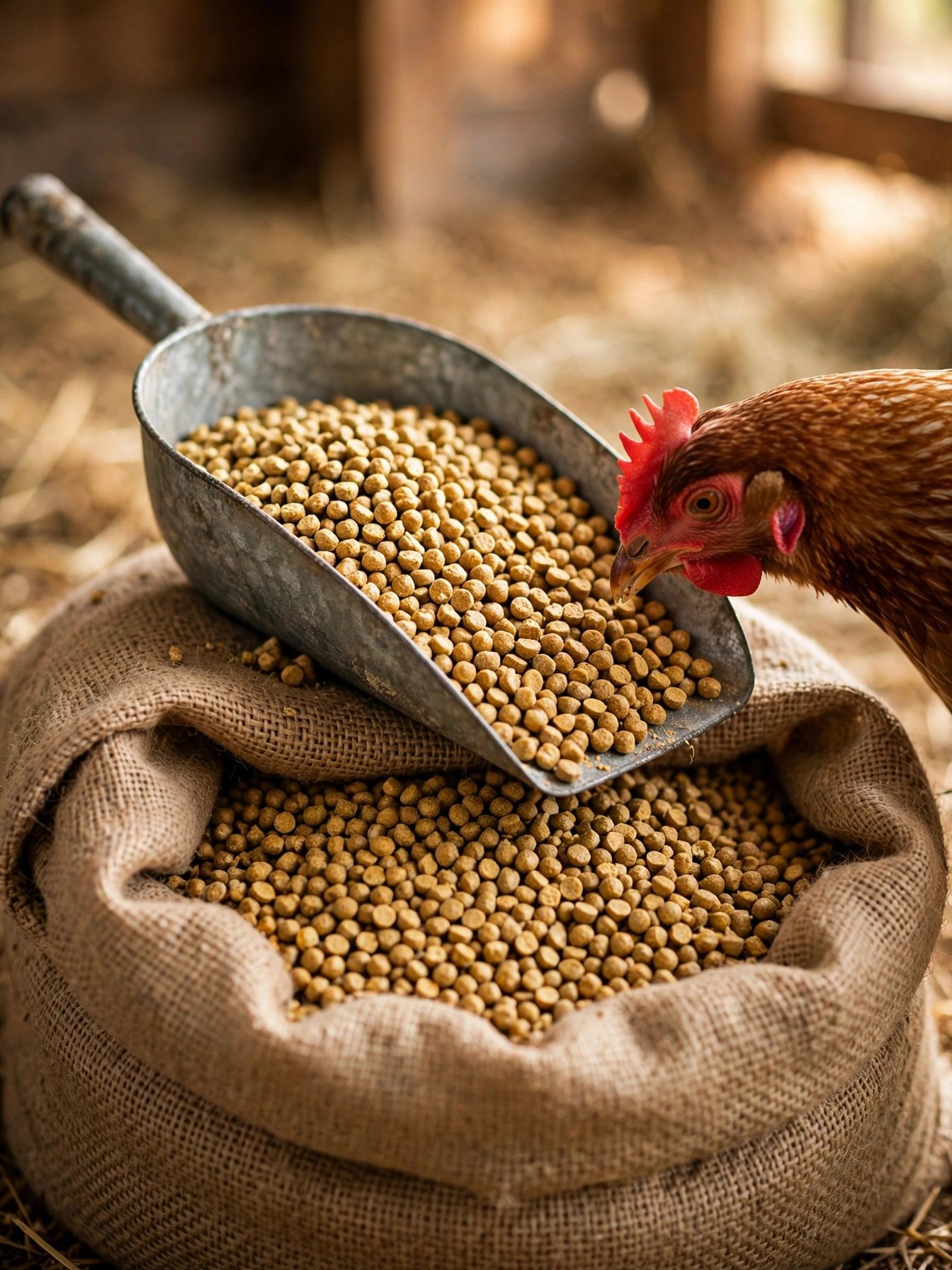
The line most people remember: six hens go through roughly one 50 pound bag a month. If your bag is vanishing in two weeks with six hens, the hens are not the problem — something else is eating it, wearing it, or throwing it on the ground. We’ll get to that below.
What Should That Quarter Pound Actually Be?
All of this math assumes a proper layer ration — about 16% protein, with extra calcium built in for shells. That’s the feed a laying hen is built to run on. Chicks get starter, growers get grower, and the day your pullets start laying (or reach about 18 weeks) is the day you switch. Layer feed given too early overloads young kidneys with calcium they don’t need yet; starter fed to layers shortchanges their shells. The right feed at the right age does half the work on this page for you.

- 16% protein with high calcium — the standard layer ration, formulated for laying hens once they reach 18 weeks of age
- Prebiotics, probiotics and yeast are already mixed in to support digestion and steady laying
- Crumbles rather than mash, so hens can’t pick out their favorite bits and leave the nutrition sitting at the bottom of the feeder
- The 50 lb bag is the exact size all the flock math above is built on — about one month of feed for six hens
We pick feeds the boring way — by the label, not by whoever argues loudest online. If the protein and calcium numbers are right for a laying hen, you’re most of the way there, whichever reputable brand is on the bag.
What Changes How Much a Chicken Eats?
The quarter pound is an average, and averages hide a lot of ordinary Tuesdays. Five things move it — sometimes a long way:
- Free ranging — a hen on good pasture in bug season might find 10 to 20 percent of her day out there. Never budget for more than that, and never leave the feeder empty because the yard “should” be enough. Ranging only works if there’s actually room to range, which is its own set of numbers — see our guide to how much space chickens need.
- Treats and scratch — keep everything that isn’t the layer ration under about 10 percent of the day’s intake. A tablespoon of scratch per hen per day is plenty. Go past that and you dilute the protein and calcium the ration was carefully balanced for — the classic setup for a well-fed flock laying soft-shelled eggs.
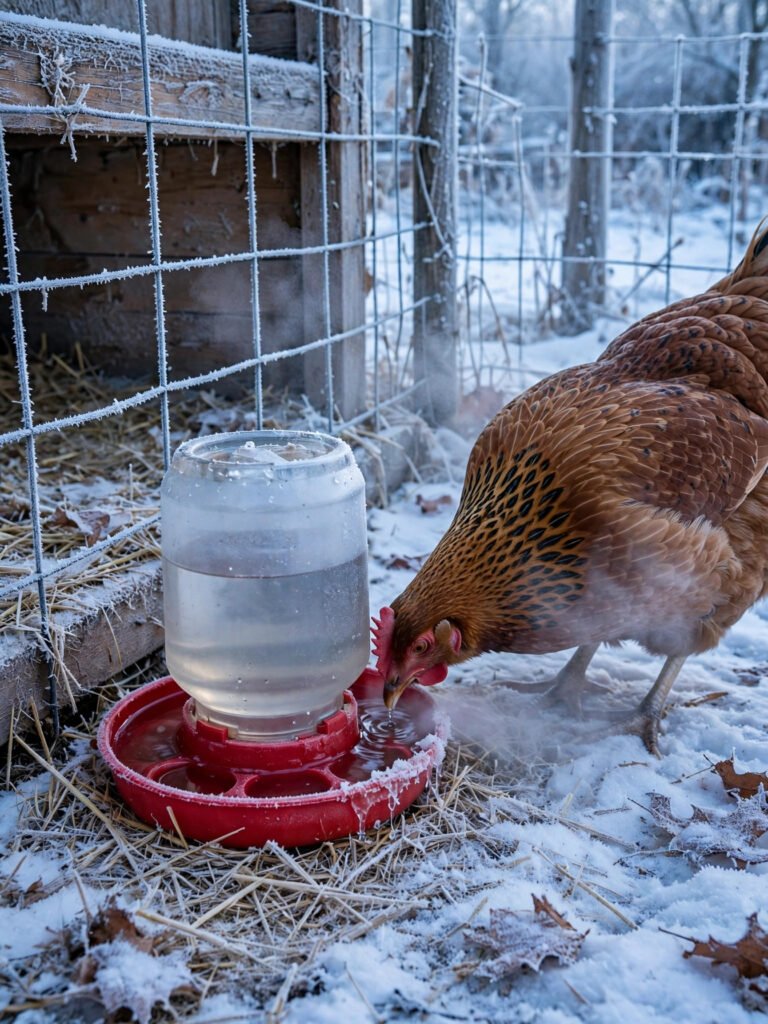
- Cold weather — hens burn feed to make body heat. In a hard cold snap, intake can climb by a third or more, and the feeder that lasted all summer suddenly empties by Wednesday. That’s normal, and it is not the week to ration anybody.
- Molting — appetite often dips while the old feathers drop, then protein demand jumps while the new ones grow in. Many keepers offer a higher protein feed through the molt. At minimum, don’t panic when the scoop count wobbles for a few weeks each fall.
- Broodiness — a broody hen leaves the nest about once a day, eats like a bird half her size, and loses condition doing it. She isn’t sick; she’s stubborn. Keep feed and water close to the nest so her one trip a day actually counts.
Are You Feeding Too Much, or Too Little?
You can’t ask the hens, but the coop keeps receipts. Here’s how to read them.
Signs you’re feeding too much — or wasting it:
- Feed all over the ground — hens bill feed out of open feeders and scratch through the fallout. Feed scattered through the bedding is money composting itself.
- A feeder that’s always full to the brim — feed that sits out for days loses vitamins and invites mold. Fill it, don’t bury it.
- Uninvited guests — a sudden jump in feed use with no new hens usually means mice, rats or sparrows have found the buffet.
- Fat hens — feel for the breastbone. On a healthy hen you’ll find it under a modest layer of flesh. If you can’t find it at all, the flock is carrying fat — and fat hens lay fewer eggs.
Signs you’re feeding too little:
- A sharp keel — if the breastbone feels like the edge of a ruler with skin stretched over it, that hen is underweight and underfed, whatever the scoop math said.
- A frantic feeder — hens that mob you and the scoop like they’ve never seen food in their lives are telling you something. Believe them.
- Eggs dropping off — a flock that slows down for no seasonal reason is very often a flock that’s short on feed, protein or calcium.
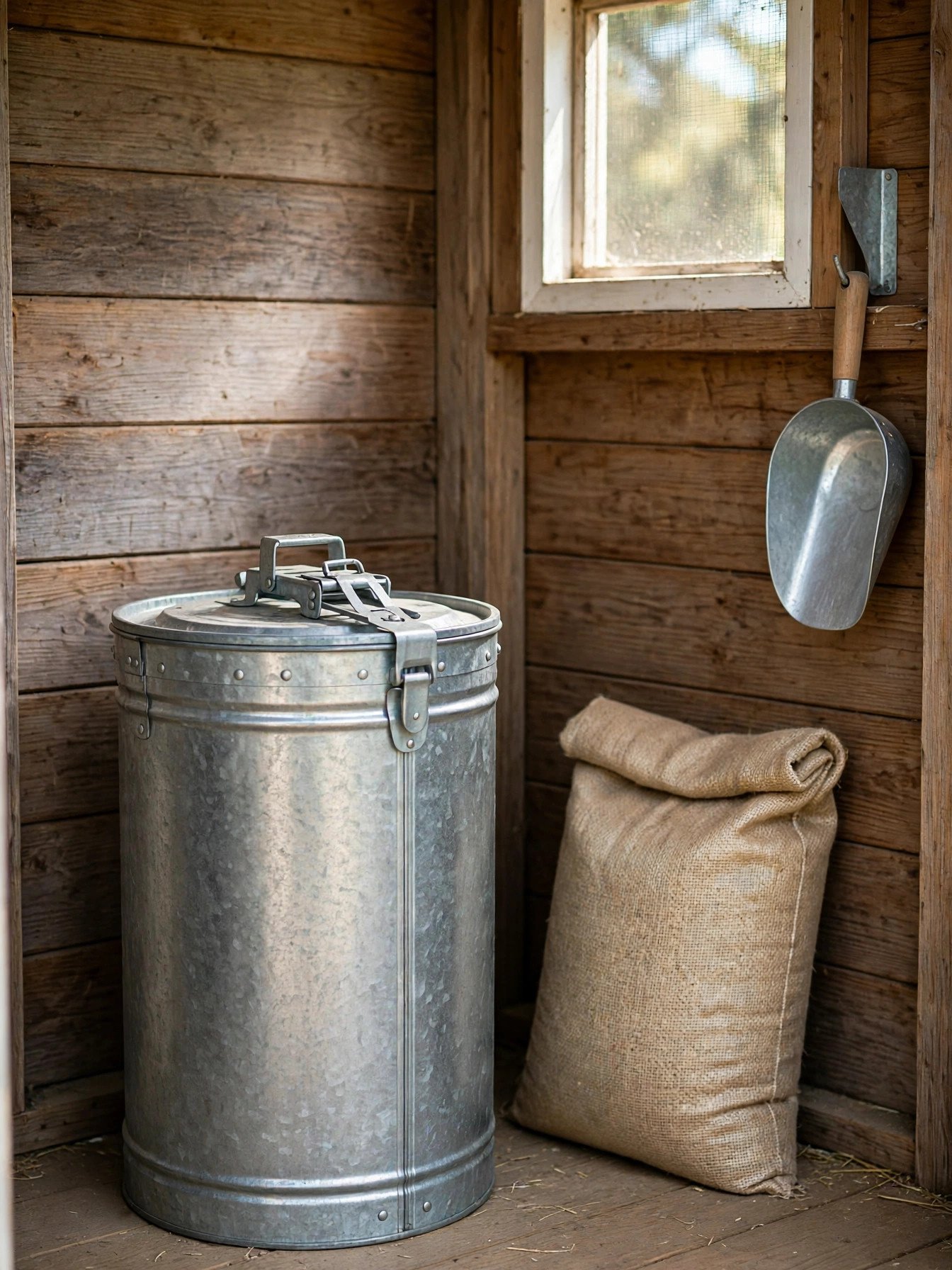
One more receipt: the bag itself. Open feed stales fast, soaks up coop smells, and sits in the corner sending dinner invitations to every mouse in the county. Pour it into a sealed bin the day you crack it open. A galvanized can with a locking lid — the Behrens 10 gallon storage can is the old-school version that still works — keeps rodents out the simple way: they can’t chew through steel. It holds roughly 32 pounds of feed, so size up a can if you want a whole 50 pound bag inside.
Skip the Math: Use the Chicken Feed Calculator
If your flock doesn’t match the neat rows in the table — mixed ages, a few bantams, one rooster eating like he pays rent — use our free Chicken Feed Calculator. Tell it how many birds you have and their age group, and it hands you the daily amount, the weekly and monthly totals, and how many bags to buy, so the feed store trip plans itself. It’s the same quarter pound math from this page, done in about ten seconds — and it’s the check I’d run before any big feed purchase.
Frequently Asked Questions
How much feed does one chicken need per day?
An adult laying hen needs about 1/4 pound (110 to 120 grams) of layer feed per day, available free choice so she can eat in small meals. Chicks and growers need less, and roosters and heavy breeds a shade more.
How much feed do 6 chickens eat in a month?
About 45 pounds — almost exactly one standard 50 pound bag. If your six hens are getting through two bags a month, look for waste, spillage or wild birds helping themselves before you assume the hens got hungrier.
Should chickens have feed available all day?
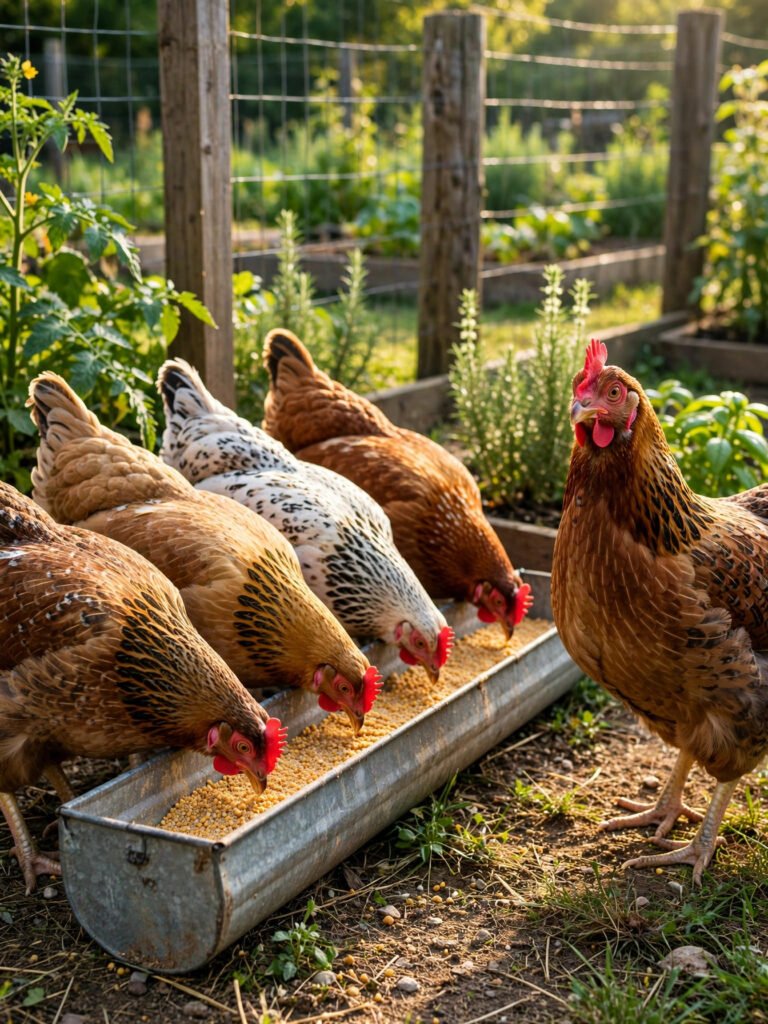
Yes. Hens are grazers by nature and do best eating little and often from dawn to dusk, and a healthy hen won’t overeat a balanced ration. What you should manage is the night shift: if rodents are raiding the feeder after dark, hang it up or bring it in overnight.
Do chickens eat more in winter?
Usually, yes. Cold hens burn extra feed making body heat, and a winter flock with no bugs or greens to forage leans harder on the feeder. Eating a third more during the coldest weeks is normal and nothing to worry about.
How long does a 50 pound bag of feed last for 10 chickens?
Ten laying hens eat about 2.5 pounds a day, so a 50 pound bag lasts around 20 days — call it three weeks. Buy the next bag when the bin gets low, not after it echoes.
The Bottom Line
One number runs the whole feed budget: a quarter pound per laying hen, per day. Weigh a scoop once so you know what your scoop actually holds, keep treats under a tenth of the ration, run a hand over a breastbone now and then, and let the calculator do the flock math when the flock gets complicated. Do those four things and feeding stops being a guessing game. And if you’re still at the very start of all this — picking breeds, setting up the coop, learning as you go — our complete guide to backyard chickens for beginners walks the whole road in order.