
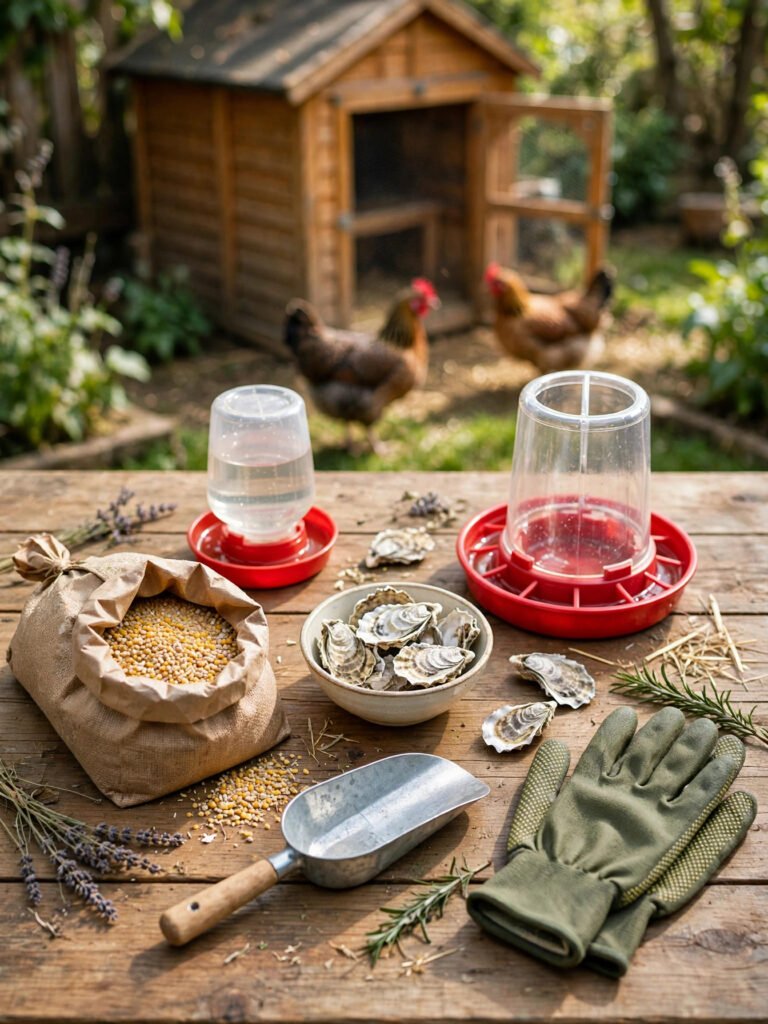

Short answer first: a complete starter flock needs about twenty core items, and they fall into six groups — shelter, feed and water, bedding and cleaning, safety, health basics, and the bucket you will carry it all in. Everything past those twenty is an upgrade, not a requirement. This chicken supplies list is grouped in the order to buy it: the coop group first, the feed group the week the birds come home, and the nice-to-haves dead last, where they belong.
It is also built to be printed. Tick boxes, plain groups, no fluff in the list itself — print it, take it to the feed store, and cross items off with a pen as they land in the truck. Under each group there is a short note on the one mistake people make with that group, because the supply shelves are very good at selling beginners the wrong twenty items. Starting with chicks instead of grown hens? Their first six weeks run on a different list — work through our baby chick supplies checklist first, then come back here for move-out day.
1. Before the Birds Arrive
Shelter comes first, and it has to be finished — not nearly finished — before any bird comes home. Run this group against our new chicken coop checklist as you set up, because the two lists check the same coop from opposite ends.
- ☐ A coop — sized by floor space, not by the number on the box: 4 square feet per standard hen inside, with a door you can lock and vents up high
- ☐ A run — about 10 square feet per hen of fenced outdoor space, or a secure yard they can be let into every day
- ☐ 1/2 inch hardware cloth — a roll for covering every vent, window and gap in the coop and run; this, not chicken wire, is what keeps predators out
- ☐ Roost bars and nesting boxes — a wide, flat roost bar at about 10 inches per hen, and one nesting box for every 4 hens, filled with straw or shavings
- ☐ An adult-size feeder — buy the size your grown flock will eat from, even if the birds arriving are young; hens reach near full size in a few months
- ☐ An adult-size waterer — a 1 to 3 gallon hanging fount or nipple waterer the flock cannot tip, scratch bedding into, or roost on top of
The classic mistake in this group is reversing the order: ordering the birds first and building the shelter against a deadline. Birds arrive on a fixed date and coops never get finished early, so the flock ends up in a garage, a dog crate, or a coop with the latches still in the bag. Finish the coop, fill the feeder, hang the waterer — then go and get the chickens.
2. First Week Home
Feed, bedding and the two small dishes that do more work than they get credit for. Everything in this group should be in the coop, open and ready, on day one.
- ☐ The right feed for their age — starter for chicks, grower for pullets, layer feed only for hens that are laying; the bag is the flock’s whole diet, not a base for extras
- ☐ A full bag of bedding — large-flake pine shavings, laid a few inches deep across the coop floor on day one
- ☐ Oyster shell — for laying hens only, served free-choice in its own small dish so each hen takes the calcium she needs for shells
- ☐ Poultry grit — a small bag of crushed stone that lasts for months; hens need it to grind anything tougher than feed, from scratch grains to garden greens
The mistake here is treating treats like feed. Scratch grains, kitchen scraps and mealworms are dessert — the moment they pass about a tenth of what the flock eats, the protein and calcium in the real feed get diluted and shells and laying suffer first. And keep the grit dish filled before the treats come out: a hen cannot digest what she cannot grind.
3. The Cleaning Kit
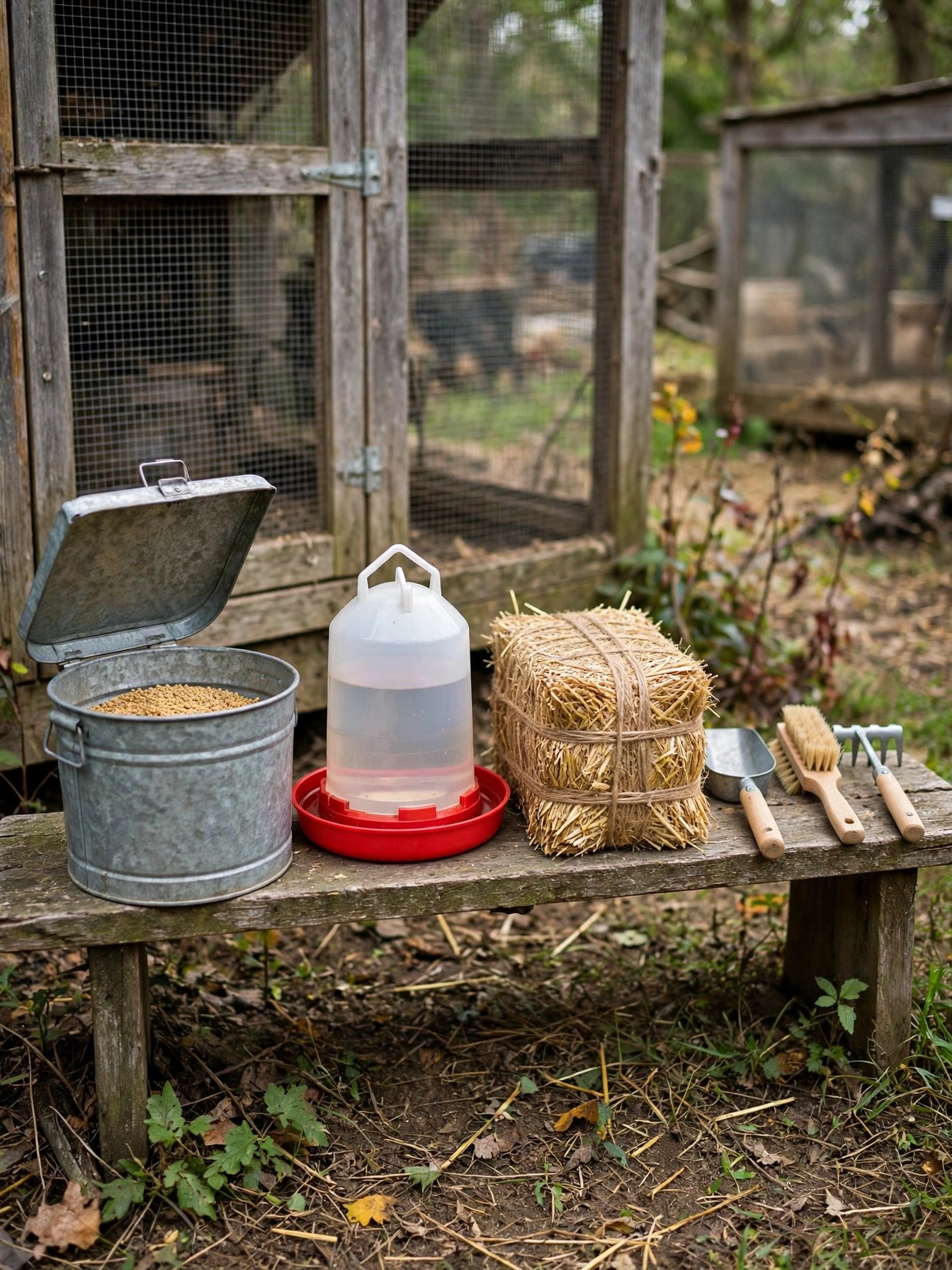
None of this is glamorous, and all of it gets used weekly for as long as you keep hens. Buy it once, keep it together by the coop door, and cleanouts stop being an event.
- ☐ A coop scoop — a long-handled sifting scoop for skimming droppings off boards and out of bedding without stripping the whole floor
- ☐ A droppings board or tray — a flat board or boot tray under the roost bars, where roughly half the flock’s manure lands overnight; scrape it in the morning and the bedding lasts far longer
- ☐ Sweet PDZ — a granular mineral (Sweet PDZ Coop Refresher) sprinkled on the droppings board and in damp corners; it absorbs moisture and eats the ammonia smell at the source
- ☐ A spare bag of bedding — stored somewhere dry, because the bag you need is always the bag you finished last week
- ☐ A bucket or tote — your daily carry: feed out, eggs back, cleanout waste to the compost; one sturdy bucket does all three jobs
The mistake in this group is skipping the droppings board because it sounds like an extra. Without one, every night’s droppings land in the bedding directly under the roost, and you end up shoveling out and replacing the whole floor on a short cycle. A board and a one-minute morning scrape turn a monthly chore into a small daily habit.
4. Safety and Security
Everything in this group exists for one night: the night something hungry tests your coop. Raccoons are the benchmark — clever hands, patient, and strong — so build for them and everything smaller is covered too.
- ☐ Predator-proof latches — two-step latches or barrel bolts a raccoon cannot flip, slide or lift, on every door and nesting box lid
- ☐ Carabiners or small padlocks — clipped through every latch as the second step, the cheapest serious security in the whole setup
- ☐ Spare hardware cloth, screws and washers — for patching gaps the day you spot them; hardware cloth gets screwed down with washers, never just stapled
- ☐ A headlamp or flashlight by the door — for the night check and the 6 a.m. winter rounds; you will use it daily, not just in emergencies
- ☐ A game camera (upgrade) — genuinely useful for learning what visits your run at night, but it records a problem rather than preventing one; it upgrades a secure coop, it does not secure one
The mistake here is buying the gadget before the basics — a camera on a coop whose pop door still closes with a simple hook latch a raccoon can lift with one paw. Latches, carabiners and screwed-down hardware cloth cost less than the camera and do the actual protecting. Spend in that order.
5. Health and First Aid Basics
Keep this group deliberately small. A backyard flock’s real health system is clean water, dry bedding, good feed and an owner who notices a bird that is off — the supplies below just support that.
- ☐ A crate or small pen — a dog crate or folding pen for separating a bird that is injured, bullied or simply not right, so she can eat, drink and rest away from the flock
- ☐ Electrolytes and vitamins for poultry — the packets sold for flock use, kept for heat waves and stressful days like moves and new arrivals
- ☐ Disposable gloves and paper towels — for handling a sick bird and cleaning the crate, because flock hygiene protects you as much as the hens
- ☐ A vet’s name and number — a practice that sees poultry, found and saved in your phone before you ever need it; and a simple notebook for dates, feed changes and anything unusual
The mistake in this group is stocking a pharmacy. Shelves of bottles bought “just in case” expire unused, and anything beyond separation, support and observation belongs to a vet anyway — diagnosing and dosing from an internet list does birds no favors. A crate, a packet of electrolytes and a vet’s number, found in advance, cover what an owner can genuinely do.
6. Nice to Have Later
Every item here earns its keep — eventually. None of them belongs in the first shopping trip, and all of them work better once you know your flock’s routines and your own.
- ☐ An automatic coop door (upgrade) — opens at dawn and closes at dusk whether you are home or not; wonderful once the flock’s routine is settled, and the first thing many keepers upgrade to
- ☐ A heated waterer for winter (upgrade) — ends the twice-daily ice breaking in cold climates; buy it in autumn, before the first hard freeze, not during it
- ☐ An egg skelter or a good egg basket (upgrade) — stores eggs oldest-first on the counter and makes the daily collection feel like the reward it is
The mistake with this group is buying it first — the automatic door mounted on a coop that is not predator-proof yet, the heated waterer bought in June. Upgrades solve problems you have actually met. Run a plain, secure setup for a season, and the upgrades you still want by then are the ones worth buying.
What People Buy Twice
If this list has a money trap, it is the feeder-and-waterer aisle. The small, cute versions are cheaper on the day, sized for the birds in front of you — and hens outgrow them in a single season. A feeder sized for pullets gets refilled daily by autumn and billed out across the floor by hens who have to crowd it; a small waterer runs dry on the first hot afternoon and gets knocked over for good measure. So the small pair gets replaced by the adult pair, and the keeper has paid for both.
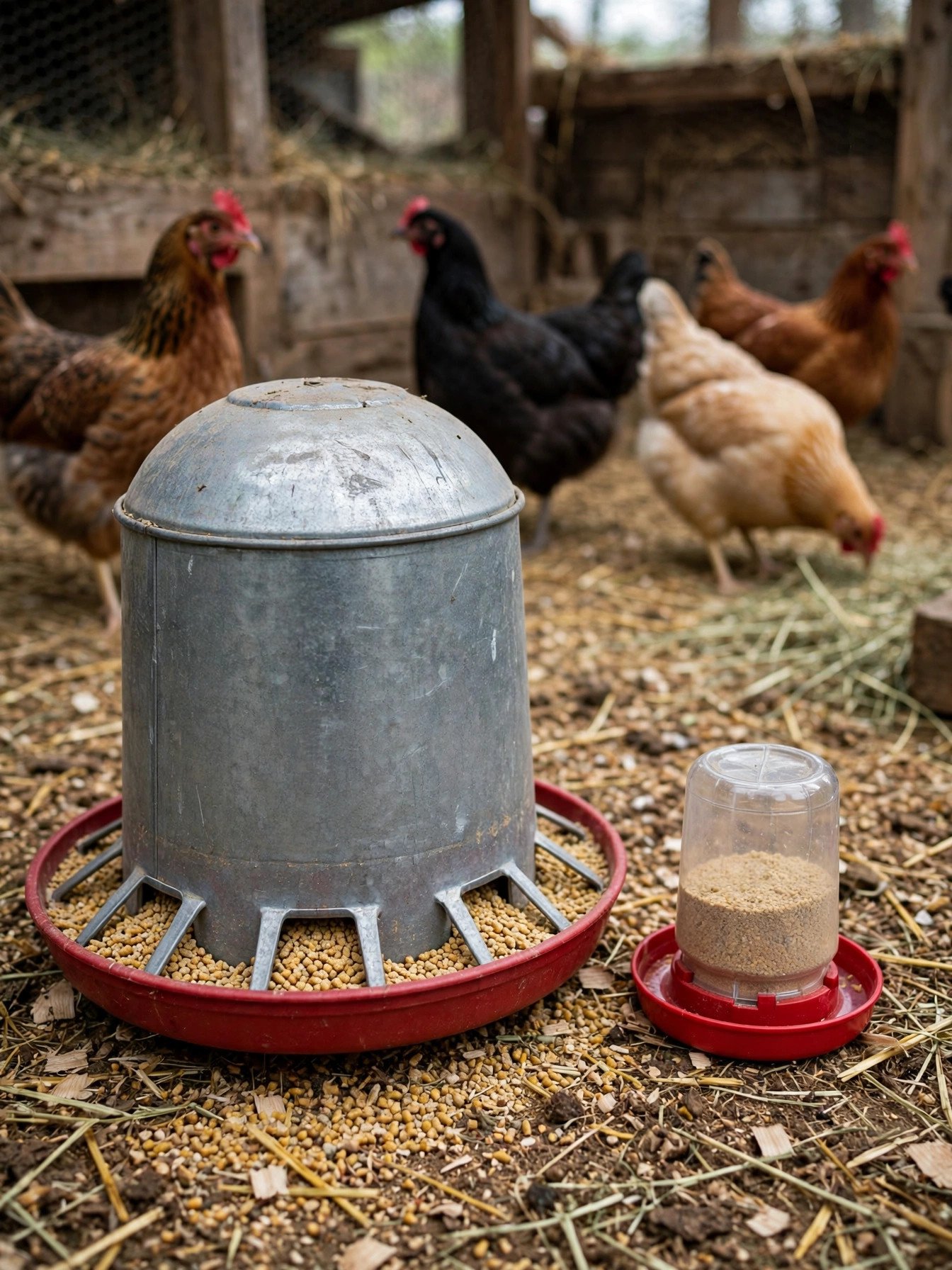
The fix is dull and it works: buy the adult size once. A full-size feeder holds days of feed instead of hours, feeds several hens without a scrum, and — if it is a port or treadle design — stops the billing and scratching that waste a quarter of a feed bag. Our guide to no waste chicken feeders compares the designs that end the refills for good. The same logic covers the waterer: size it for the hottest day of summer, not the mild week the birds come home.

- Holds a full 50 lb bag of feed — for a flock of 6 to 11 hens that means refilling every 2 to 3 weeks, not every few days
- Three hens feed at once through no-waste ports, so feed ends up in the birds instead of billed out onto the floor
- Rainproof design works inside the coop or out in the run, and it takes up one small corner instead of the middle of the floor
What Can Honestly Wait
Walk into any farm store in spring and you will meet the “complete chicken starter kit” — a bundled box of a little of everything, usually at a bundle price that stops looking clever once you price the pieces. The honest pattern: kits bundle the cheap consumables generously and quietly include the small sizes of the two things you most need in adult size, the feeder and the waterer. Most of what fills the rest of the box — novelty treats, tiny brushes, decorative extras — is stock you would never have chosen off a list like this one.
So buy the list, not the kit. Work down the six groups in order, buy adult sizes of the gear, skip anything that is not on the page, and let the upgrades wait until a season of keeping hens has told you which ones you actually want. Your second year will have a short, precise shopping list written by experience — and that is exactly how it should go.
Frequently Asked Questions
What do I need before my chickens come home?
The whole first group, finished and in place: a locked, vented coop, a fenced run, hardware cloth on every opening, roost bars and nesting boxes, and an adult-size feeder and waterer filled and hanging. Add the age-appropriate feed and a deep layer of bedding, and the flock can move straight in.
How much does it cost to set up a backyard flock?
The coop is most of it — everything on this list after the shelter group is modest, especially bought in adult sizes once. Our breakdown of how much it costs to raise backyard chickens works through the first-year setup and the running costs side by side, so you can see where the money genuinely goes.
Can I buy a complete starter kit instead of a list?
You can, but check what is actually in the box first. Kits usually include the small feeder and waterer sizes you will replace within the season, padded out with consumables and novelties. If a kit’s feeder and waterer are genuinely adult-sized, it can be fair value — otherwise the list above, bought piece by piece, costs less over the first year.
What can I skip and still keep hens well?
Everything in the Nice to Have Later group, for a start — automatic doors, heated waterers and egg skelters are comforts, not care. You can also skip most of the health aisle beyond a crate and electrolytes, and every novelty on the shelf. Hens kept on the twenty core items, kept clean and secure, are not missing anything.
The Bottom Line
Twenty core items, six groups, bought in order: shelter first, feed the week the birds land, cleaning and safety right behind, health basics kept small on purpose, and the upgrades last. Buy adult sizes once, skip the kits, and let a season of keeping hens write your second list. New to the whole idea? Our complete guide to backyard chickens for beginners walks the first year from this shopping trip to the first egg.
