
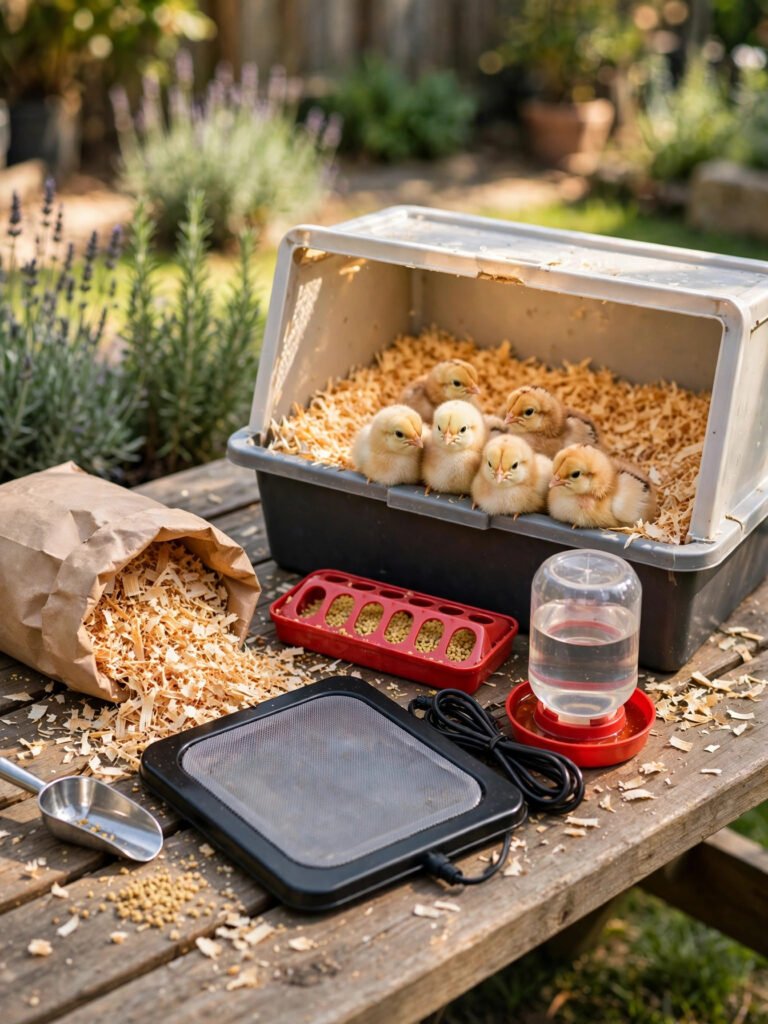

Here is the thing about baby chicks: they arrive on a date you chose weeks ago, they come out of the box hungry, thirsty and cold, and they grow at a speed that will genuinely surprise you. There is no popping out to the store while they wait. Everything on this baby chick supplies checklist should be in the house, set up and tested before the box starts peeping — because the first hour home is when weak chicks are won or lost.
That is also why this page is built to be printed. It is laid out in clean sections with tick boxes, so print it, stick it on the fridge, and cross things off with a pen as they land in the brooder room. Four short lists cover everything a chick actually needs. At the end there is an honest list of what you can skip, because the chick industry is very good at selling things chicks have never once asked for.
1. The Brooder Home
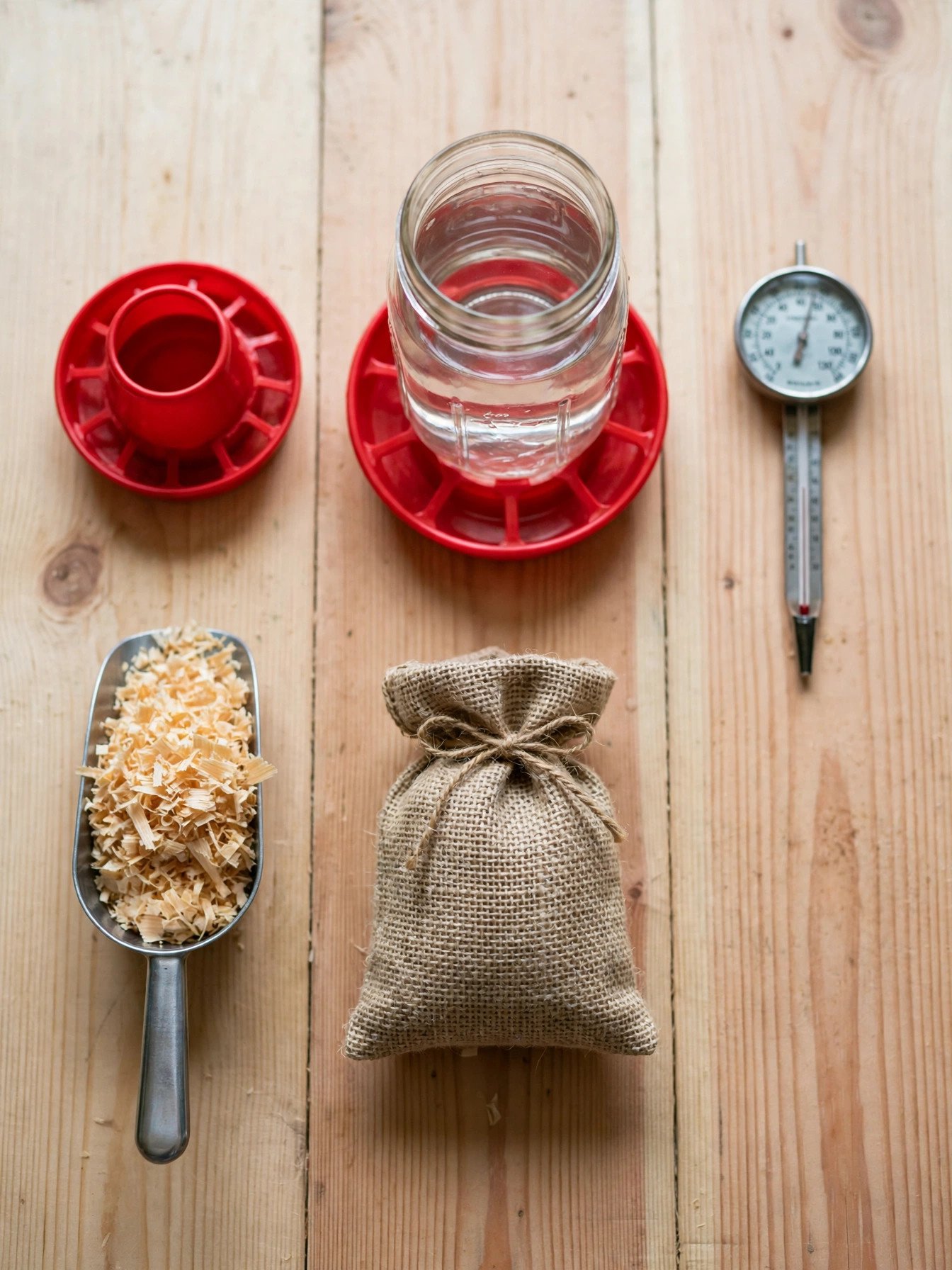
The brooder is just a safe, warm box — nothing fancier is required. If you want the three ready-made versions compared, our guide to brooder setups for baby chicks builds them out in full. Whichever route you take, it needs these parts:
- ☐ A container — a big plastic tote, stock tank or puppy playpen; smooth walls, no drafts, and nothing a chick can climb and fall behind
- ☐ Pine shavings — large-flake, a couple of inches deep; they insulate, absorb, and give chicks something to scratch from day one
- ☐ Paper towels — spread over the shavings for the first day or two, so chicks learn what feed looks like instead of filling up on bedding
- ☐ A cover or netting — by week three chicks can fly far better than you expect, and a mesh lid keeps them in and the family cat out
- ☐ Growing room — about half a square foot per chick to start, with a plan to expand, because a brooder that fits day one is cramped by week three
One decision the list cannot make for you: where the brooder lives. A garage, laundry room or spare bathroom all work, as long as the spot is out of drafts, out of direct sun, and somewhere you will walk past ten times a day. Chicks get checked constantly in a brooder you live next to. They get forgotten in one at the far end of the garden.
2. Heat
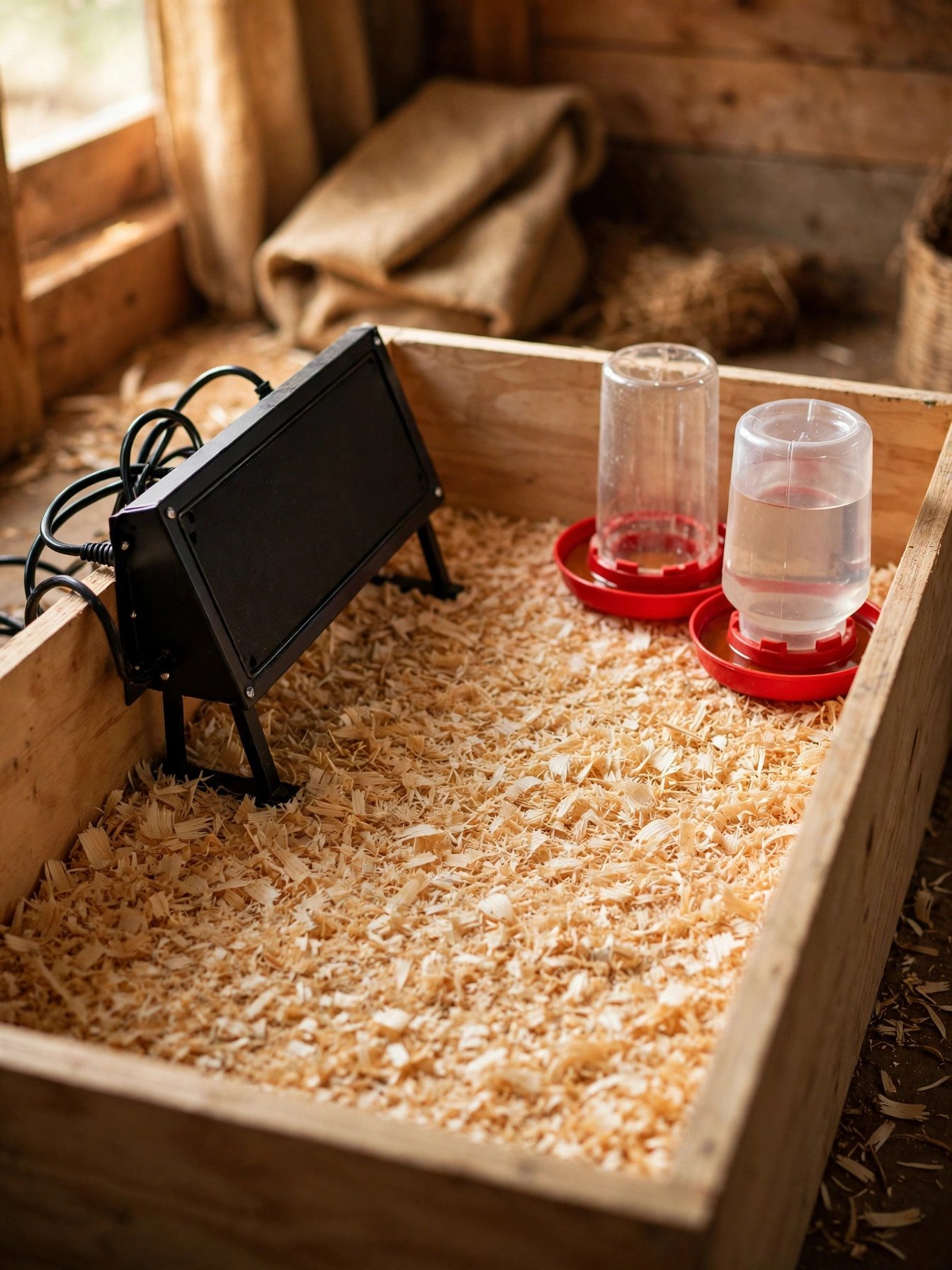
Chicks cannot regulate their own body temperature for the first weeks, so the heat source is the one item on this list to buy properly and set up early. Run it for a full day before the chicks arrive and confirm the warm zone actually hits the numbers in our brooder temperature chart — about 95°F for week one, dropping roughly 5 degrees a week after that.
- ☐ A heat plate or a heat lamp — one good heat source is enough; a plate like the Brinsea EcoGlow Safety 1200 lets chicks warm by contact the way they would under a hen, while a lamp heats the air and needs far more careful securing
- ☐ A thermometer — placed at chick height in the warm zone, because guessing brooder temperature from how the room feels is how chicks get chilled
- ☐ A spare bulb, if you use a lamp — bulbs fail at 2 a.m. on the coldest night, never at noon when the store is open
- ☐ A way to adjust the heat — links of chain, a hook, or the plate’s legs, so you can raise the source a little every few days as the chicks need less warmth
And learn the free thermometer you already own: the chicks themselves. Piled in a heap directly under the heat, peeping loudly, means cold. Scattered to the far corners, panting, means hot. Spread loosely around the warm zone, eating, drinking and falling asleep mid-sentence, means you got it right — trust that picture as much as the dial.
3. Feed and Water
Feeding chicks is simple on purpose. One feed, one feeder, one waterer, kept clean and full — that system has raised more healthy hens than every supplement on the shelf combined.
- ☐ Chick starter feed — a crumble at around 20% protein, and nothing else for the first weeks; medicated starter (with amprolium) protects unvaccinated chicks while their immunity builds, while unmedicated is the right pick if your chicks were vaccinated against coccidiosis at the hatchery, since the two cancel each other out
- ☐ A chick feeder — a low trough or round feeder sized so chicks can reach the feed but cannot climb in, scratch in it, or sleep in it
- ☐ A chick waterer — a small chick-sized base, not an open dish; chicks soak themselves and chill fast in anything deeper
- ☐ Marbles or clean pebbles — dropped into the water tray for the first week or so, so a sleepy day-old chick cannot nod off face-first and drown in half an inch of water
- ☐ An electrolyte and vitamin packet — mixed into the arrival-day water, because shipped chicks land dehydrated and stressed and it gives them a faster first day
- ☐ Chick grit — only once treats, greens or anything besides starter enters the menu; chicks eating starter alone do not need it yet

- A matched starter pair in one box: a 5 lb feeder with two ports and a 1 gallon waterer with auto-fill cups, sized for chicks from their first days
- The port design keeps feed in the feeder instead of billed out across the bedding, and the cups keep drinking water far cleaner than an open tray
- BPA-free plastic throughout, and both pieces keep working as the birds grow, so the set does not get outgrown in the first fortnight
4. Health and Daily Care
Most batches of chicks need almost no health care at all. What they need is an owner who notices problems in the first day, not the third — and these few cheap items are what make that possible.
- ☐ A small spare box — your “hospital box,” with a towel and a way to keep it warm, so a weak, chilled or picked-on chick can rest and eat away from the crowd
- ☐ Paper towels and warm water — for the unglamorous daily job of checking vents; a chick with a pasted-up vent needs it cleaned gently before it becomes a real problem
- ☐ Disposable gloves — for cleanouts and handling a sick chick, because brooder hygiene protects you as much as the birds
- ☐ A cheap notebook — arrival date, feed changes, any losses and what the weather did; memory lies, and notes are how you spot the pattern next batch
- ☐ Probiotics (optional) — a nice extra for shipped chicks after a hard journey, but healthy chicks on good starter and clean water do fine without them; buy them later if you buy them at all
What You Can Skip
The honest anti-list, because chick season marketing is relentless. None of the following has ever raised a healthier chick:
- Chick toys, swings and tiny furniture — chicks entertain themselves with feed, shavings and each other from the first hour
- Expensive purpose-built brooder furniture — a plain tote broods chicks exactly as well as a furniture-grade box; the chicks cannot tell the difference and neither can their growth rate
- Most supplements and tonics — beyond the arrival-day electrolytes above, a healthy chick needs feed, water and warmth, and a shelf of bottles changes none of that
- Buying both a lamp and a plate “to be safe” — one good heat source, set up properly and tested, beats two sources fighting each other
- Miniature everything — dainty chick-sized gear is outgrown in days; buy the sizes that last the whole brooder phase
Buy First vs Buy Later
Short on time or budget? This is the order that actually matters. Everything in the left column has to be home before the chicks are. Everything in the right column can wait weeks without a single chick noticing.
| Buy before the chicks arrive | Can wait a few weeks |
|---|---|
| Brooder container and pine shavings | Chick grit (only needed once treats start) |
| Heat source and thermometer | A larger feeder for the week four growth spurt |
| Starter feed, chick feeder and chick waterer | Probiotics and other optional extras |
| Marbles or pebbles for the water tray | A second waterer for the grow-out pen |
| Electrolyte packet for arrival day | The brooder cover upgrade — a towel buys you time until the week three flying starts |
Frequently Asked Questions
Should I buy chick supplies before or after the chicks arrive?
Before — ideally a week before. Chicks need heat, feed and water within the first hour home, and the brooder should be assembled and running for a full day beforehand so you can check the temperature is stable. Our chicken cost calculator will show you what the full first-year setup looks like while you are still in the planning stage.
Do I need medicated or unmedicated chick starter?
It depends on one question: were your chicks vaccinated against coccidiosis at the hatchery? If they were not vaccinated, medicated starter is the usual, sensible choice. If they were vaccinated, feed unmedicated — medicated feed works against the vaccine. If you do not know, ask the hatchery before the chicks ship, not after they land.
How much does a basic chick setup cost?
Far less than the chick catalogs suggest, if you follow the skip list above. A tote, shavings, one heat source, starter feed and a chick feeder and waterer cover the whole checklist, and most of it keeps serving batch after batch. The one place not to cheap out is the heat source — it runs unattended, around the clock, for six weeks.
How long do chicks need everything on this list?
About six weeks — until they are fully feathered and holding their own body heat. Then the brooder gear washes, dries and goes into storage, the birds move out to the coop, and this same checklist comes back out of the drawer for the next batch.
The Bottom Line
A warm box, one reliable heat source, starter feed, safe water and an owner who checks in morning and night — that is the entire secret to raising chicks, and everything on this page exists to support those five things. Print the checklist, buy the left-hand column first, skip the toys, and have it all running the day before the chicks land. New to the whole idea of keeping hens? Our complete guide to backyard chickens for beginners picks the story up from the day your chicks move outside.

