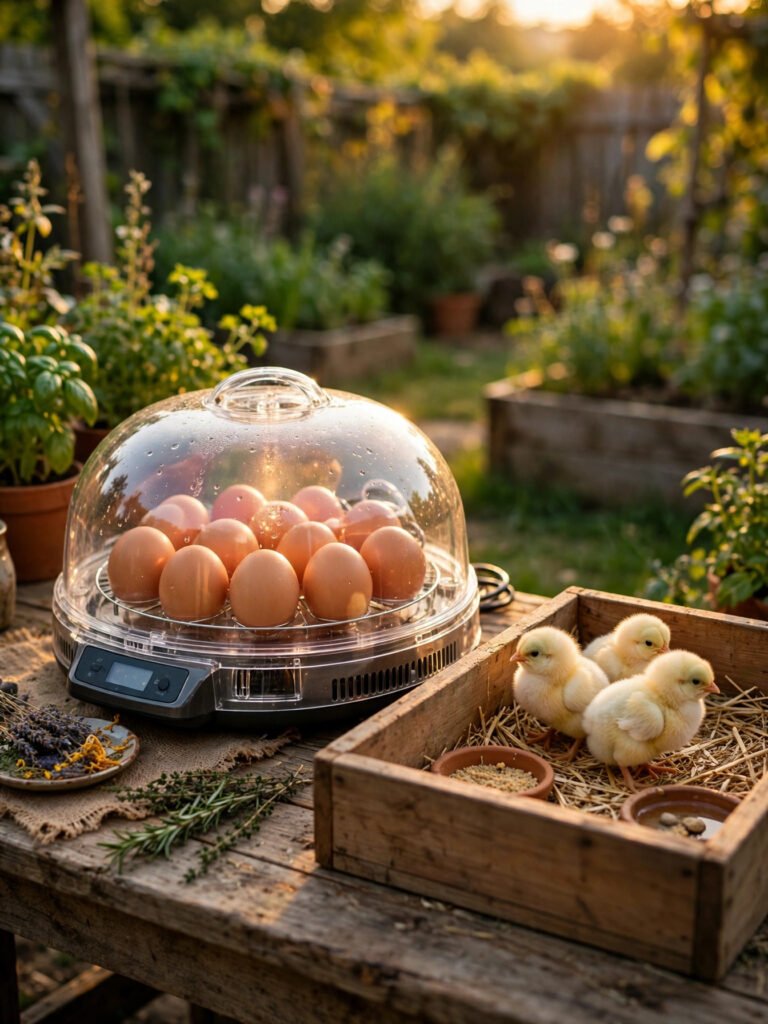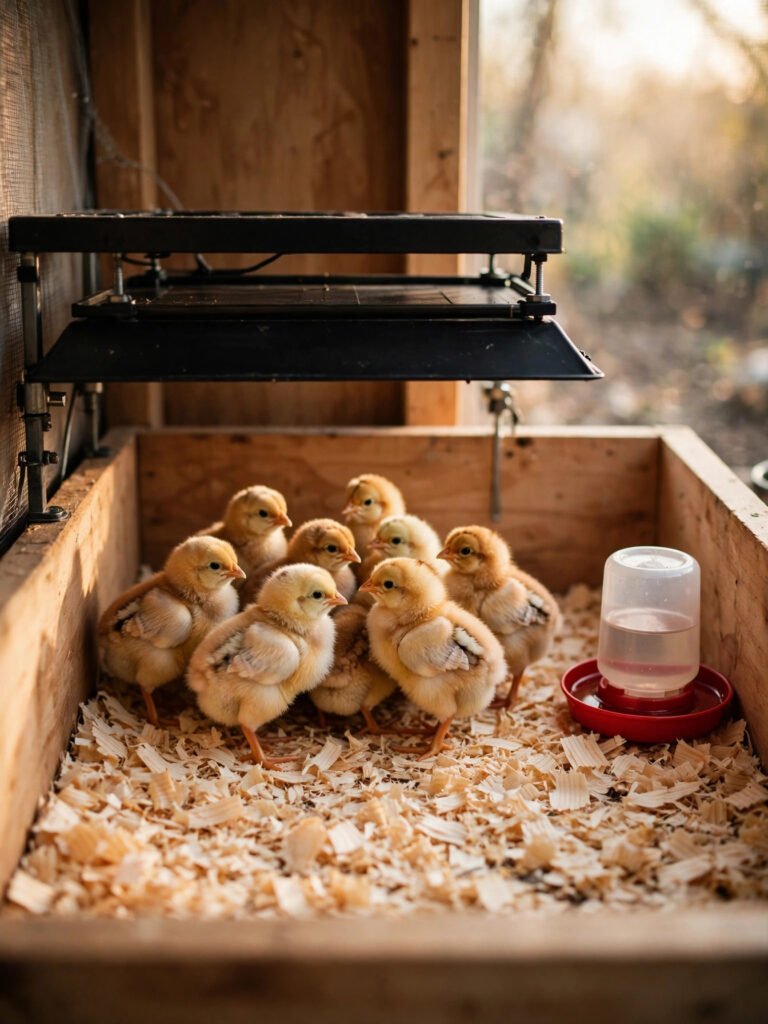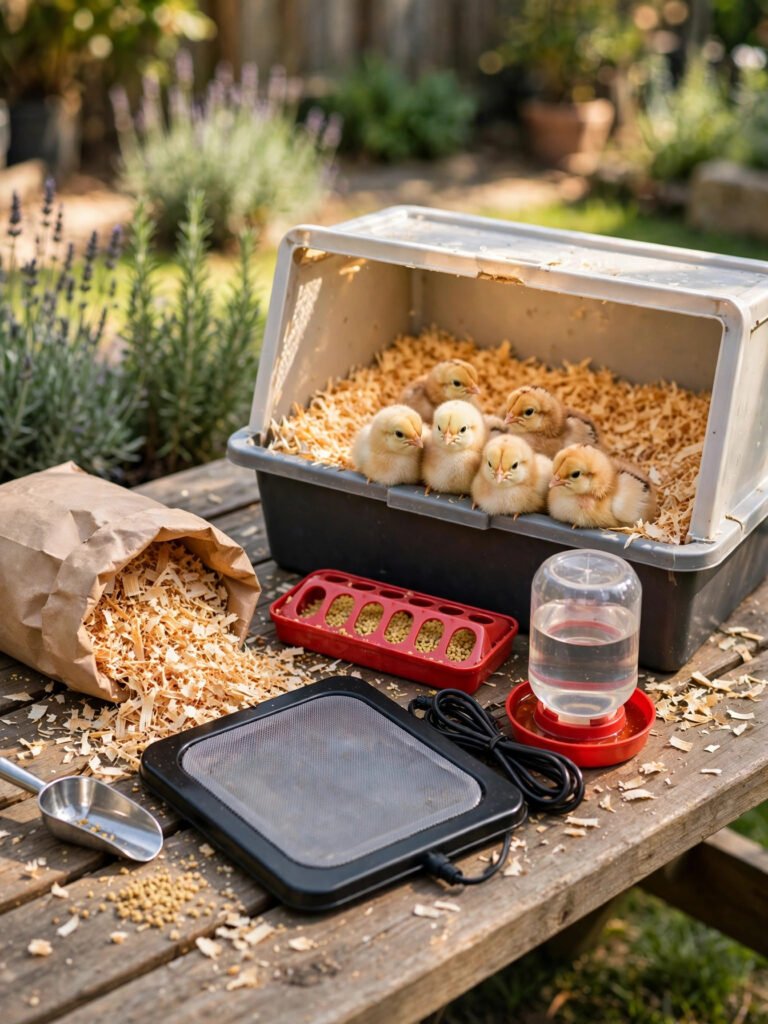


A brooder is not really a product. It is five ordinary things working together: a safe box the chicks cannot get out of, a heat source at one end, bedding underfoot, chick feed, and clean water. Everything sold as a brooder is those five things in different packaging. So instead of reviewing forty near-identical boxes, this guide lays out the three setups that between them cover almost every backyard batch: a handful of feed store chicks, a full incubator run, and the keeper who would rather buy the whole thing once and be done.
Every product below was chosen from manufacturer specs and the patterns that repeat in verified owner reviews — we do not claim to have brooded three batches three ways this spring to write this page. What we did instead is the arithmetic the listings skip: floor space by week four, running costs, and which parts you will still be using in the coop.
Setup 1: The Simple Tote Setup — For a First Batch of Six or Fewer
Most first flocks start in a big plastic storage tote, and there is no shame in it: smooth washable walls, a floor that hoses out in the yard. For six chicks it is all you need for the first two to three weeks — which, notice, is exactly how long it stays big enough. Chicks start at roughly half a square foot each and need closer to a full square foot as they feather out, so a tote is a first home, not a six-week home. Plan the upgrade before the chicks plan an escape.
The shopping list:
- The biggest storage tote you can find — tall sides, and skip the snap-on lid; replace it with a frame of hardware cloth so air moves and nothing gets cooked
- A heat plate sized to your batch, at one end so the other end stays cool
- Paper towels for the first two or three days (chicks learn what food is without eating their bedding), then coarse pine shavings — never cedar
- A chick feeder and a shallow chick waterer, with a few clean stones in the water tray at first so nobody falls asleep face-down in it
- Chick starter feed — and that is genuinely the whole list
The honest notes: solid walls mean no view in, so chick-watching becomes a top-down affair, and by week three a lively batch will be fluttering at the rim. The small floor also makes the layout unforgiving: plate at one end, feeder and waterer at the other, no exceptions.
Setup 2: The Playpen Setup — For Growing Batches
Brooding ten, fifteen, twenty chicks? Floor space is your problem, and a pet playpen solves it cheaper than any purpose-built brooder. Pop-up fabric pens sold for puppies give you eleven or twelve square feet in a circle chicks cannot corner each other in; panel pens do the same in whatever shape your spare room allows. A dozen chicks need roughly twelve square feet by week five — this is the only budget setup that hands it to them without a mid-brood rebuild. The same curve continues after move-out day: our breakdown of how much space chickens need picks it up at the coop door.
The shopping list:
- A pet playpen or panel exercise pen — the largest footprint you have room for; floor area matters more than height
- A cover: the pen’s mesh top, a fitted sheet, or hardware cloth. By week two, chicks can flutter over a low wall, and they practice at 6 a.m.
- A waterproof layer underneath — a tarp under fabric floors, puppy pads under the bedding for the first week
- Heat plate at one end, feeder and waterer at the other, raised on a brick once the chicks start excavating
- Pine shavings, topped up in handfuls rather than stripped daily
The honest notes: a playpen is an indoor setup, full stop. It is not predator-proof, and indoors the predators are your own dog and cat — the cover and a closed door are part of the system, not accessories. And no setup stops chick dust; six weeks of dander will coat the room, and the playpen’s open top spreads it furthest. Brood behind a door you can close. In exchange: the roomiest, calmest brooder of the three.
Setup 3: The Buy-Once Kit Setup — Everything in One Box
The third setup trades money for decisions: one kit with the enclosure, heat plate, feeder, waterer and floor liners, from a company that has already worked out what fits what. The RentACoop Little Red Barn set below is the version we would point to. It folds flat when the season ends and wipes clean instead of soaking up six weeks of chick life like cardboard, so next spring it comes off the shelf ready. Brood more than once — most people who brood once brood again — and the kit stops being the expensive option. Run it against the DIY route in our Chicken Cost Calculator if you want the first year in numbers.
The shopping list:
- The kit itself — enclosure, heat plate, chick feeder, chick waterer, liners
- Chick starter feed and pine shavings for when the included liners run out
- A spare set of liners or pads, because change-out day never lands on a convenient day
- One honest extra: a plan for week four. The kit is a first home — see the card below — so know where the batch graduates to
The honest notes: if this is the only batch you will ever raise, the tote does the same job for less, and the kit’s one advantage — reuse — never gets used. What it buys is every part sized to work together on day one, when the chicks are already peeping in a box in your car.
Quick Picks: The Gear in Each Setup
| Product | Role | Best for |
|---|---|---|
| Brinsea EcoGlow Safety 1200 | Heat | The heat plate you buy once, for batches up to 35 chicks |
| RentACoop Little Red Barn Set | Enclosure and full kit | First-timers who want the whole brooder in one box |
| RentACoop Chick2Chicken Set | Feed and water | A starter set that follows the same birds into the coop |
Brinsea EcoGlow Safety 1200 — The Heat Plate You Buy Once
If a brooder has a heart, it is the heat source, and this is the one the rest of the guide assumes. The EcoGlow Safety 1200 warms up to 35 newborn chicks the way a hen does — by contact, under a warm plate they press up against — on 18 watts, next to the 250 a heat lamp burns around the clock. It runs on a safe 12 volt supply, and the metal warming plate spreads heat evenly instead of pooling it in hot spots.
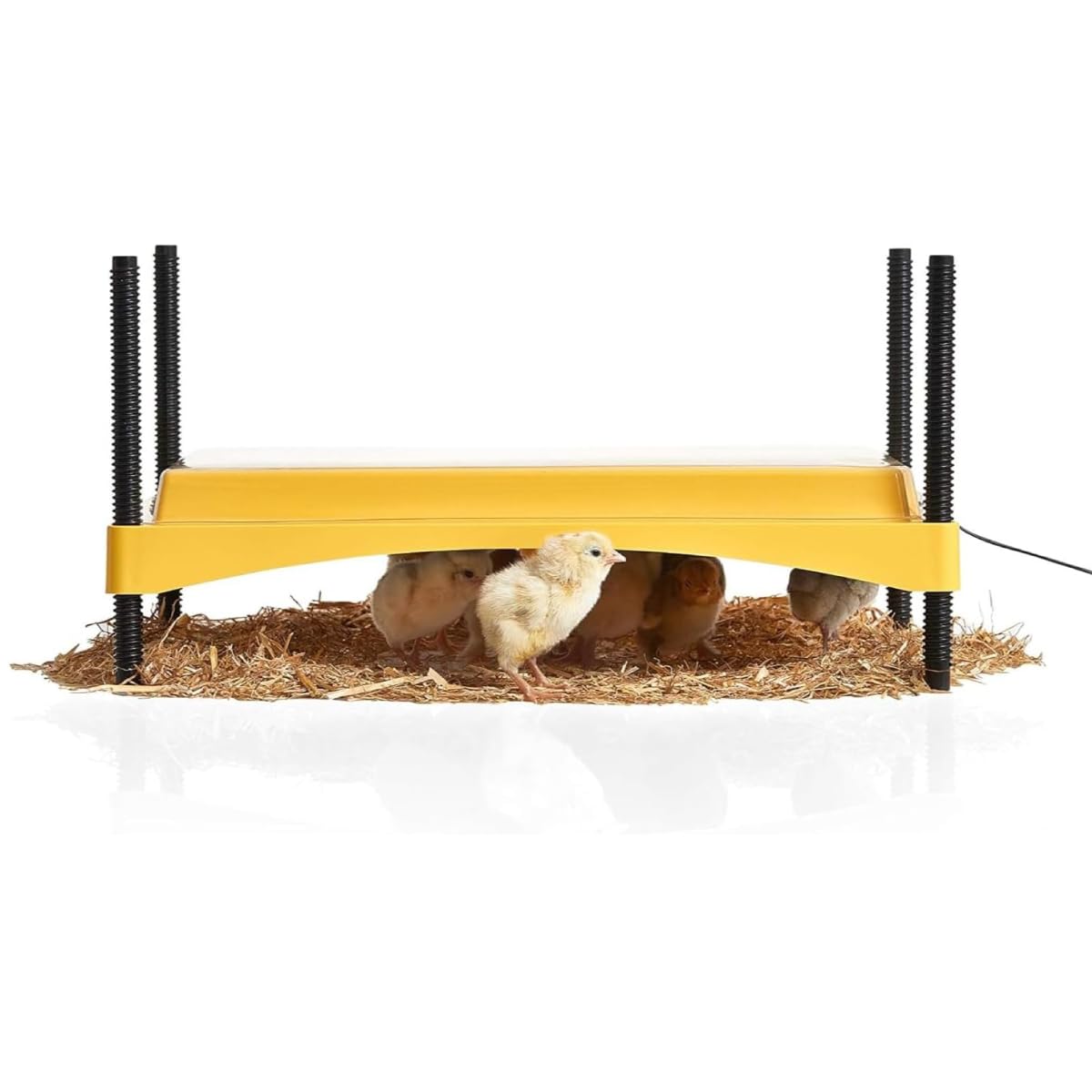
- Warms up to 35 newborn chicks (about 20 as they grow) on just 18 watts — a fraction of the electricity a 250 watt heat lamp uses
- Safe 12 volt supply, a metal warming plate that evens out hot and cold spots, and a flared skirt that holds the warmth where the chicks are
- Height and angle adjust as the chicks grow, a clear plastic cover is included, and Brinsea backs it with a 3-year warranty when registered
What we like:
- The safety design is the product. Low voltage, a plate that never gets bulb-hot, no glass to shatter over bedding — the category exists because of fire risk, and Brinsea engineered furthest from it
- Even heat, no hot spots. Owner reviews repeat it across years of production: chicks spread out underneath instead of piling in one warm corner, and they get real darkness at night
What holds it back:
- It costs more than basic plates using the same idea with thinner plastic — you are paying for build quality and the warranty
- Brinsea is plain about its limits: indoor use, in a room above about 50°F. It warms chicks, not air — no heater for an unheated barn in a cold snap
- And because the air stays cool, the wall thermometer will not read 95°F, which panics first-timers every spring. The chicks underneath are warm; you learn to read them, not the gauge
Not for: unheated outbuildings in cold climates, or anyone who wants a thermostat dial to trust. For: everyone brooding indoors — most backyard keepers — who wants heat handled, safely, for years of batches.
RentACoop Little Red Barn Set — The Whole Brooder in One Box
Here is Setup 3 as a single purchase. The Little Red Barn is a folding corrugated-plastic enclosure, 31 × 17 inches and 20.5 inches tall, and the set fills it with the rest of the five things: a 10×10 inch adjustable heating plate, a 2.5 lb port feeder, a 64 oz drinker, hatchling and jute liners, an LED light, and a security latch for the clear-view doors. It arrives as a system, folds flat, and the walls wipe clean — a sentence nobody has ever written about a cardboard box in week five.

- The whole brooder in one box: folding 31 × 17 × 20.5 inch enclosure, 10×10 inch adjustable heating plate, 2.5 lb port feeder and 64 oz drinker
- Corrugated plastic walls wipe clean in minutes, with sliding clear-view doors, an LED light and a security latch — and it folds flat for storage between seasons
- The honest catch: it is sold as a starter for up to 8 chicks, and at about 3.7 square feet of floor it is a first home for the early weeks, not a six-week home for a full batch
What we like:
- Zero guesswork on chick day. The plate fits the box, the feeder fits the chicks, the liners fit the floor — and first-timers lose more chicks to setup confusion than to any single product failure
- Easy to live with, and it folds flat. Owners praise the wipe-clean walls and clear doors at chick height; come May, the whole brooder slides behind a shelf until next spring
What holds it back:
- Floor space, again. Eight chicks at a square foot each by week five need eight square feet; this gives them under four. A full batch needs the playpen or the coop by week three or four
- The corrugated plastic divides owners: most call it sturdy enough and love the cleaning, a minority call it flimsy and find the inside dimmer than the photos suggest. Both camps agree it is a pet barrier, not predator proofing
- The included plate covers a small batch. Grow the flock and you are buying the bigger Brinsea above anyway
Not for: batches over eight, outdoor brooding, or one-time chick raisers watching every penny — the tote exists for you. For: first-timers with a small batch who want chick day to feel handled, and anyone who knows there will be a next spring.
RentACoop Chick2Chicken Set — Feed and Water That Grow Up With Them
Most chick gear has a six-week career: perfect in week one, landfill by move-out. This set was designed against that. The feeder is a 5 lb two-port unit, the waterer a 1 gallon tank with auto-fill cups, both BPA-free plastic, both sized so chicks can use them from their first days — and both still working when the same birds are half-grown in the coop. It is the feeder and waterer for the tote and playpen setups above.

- A 5 lb two-port feeder and a 1 gallon waterer with auto-fill cups, in BPA-free plastic, sized for chicks from their first week
- Port feeding keeps feed in the feeder instead of scratched across the bedding — the no-waste habit starts in the brooder, not the coop
- When the chicks move out, the set moves with them: it keeps serving the same birds in the coop, and a mounting bracket is included
What we like:
- One purchase, two life stages. Owners rate it a solid four stars, and the feeder earns most of the praise — chicks learn the ports fast, and the feed bill stops leaking into the bedding
- Auto-fill cups beat open dishes. Chicks cannot climb in, kick shavings in, or tip them, so the water is still water at the end of the day — in sturdy, washable plastic sized for small spaces
What holds it back:
- Assembly is the recurring grumble: the ports are a tight fit to seat, and some owners find the feeder lid pops off too easily. Seat everything firmly before the first fill, not after
- A minority of owners report the waterer weeping at the fittings. Test yours over the sink first — a leaker exchanged in week zero is a nuisance; one soaking the bedding in week two is a bad day
- Only one mounting bracket is in the box, so hanging both units takes an extra hook — and big-combed roosters eventually outgrow the standard ports, which RentACoop itself answers with a larger port line
Not for: anyone who wants a throwaway chick set for one batch and no coop after — buy the cheap dishes and accept the mess. For: keepers raising their starter flock, who would like the brooder budget to keep paying off in the coop.
Heat Plate vs Heat Lamp: The Honest Version
Somewhere in your research, someone will tell you a heat lamp is fine because their grandfather used one. So here it is plainly: a heat lamp is a 250 watt bulb, glowing hot, hanging over dry bedding and dust, usually held by a clamp that was never designed for the job. If it falls, gets knocked by a fluttering chick in week five, or the bulb shatters, it can set the bedding alight — and fires started by heat lamps take out coops, barns and occasionally houses every single year. It is the main thing that actually goes wrong in brooders.
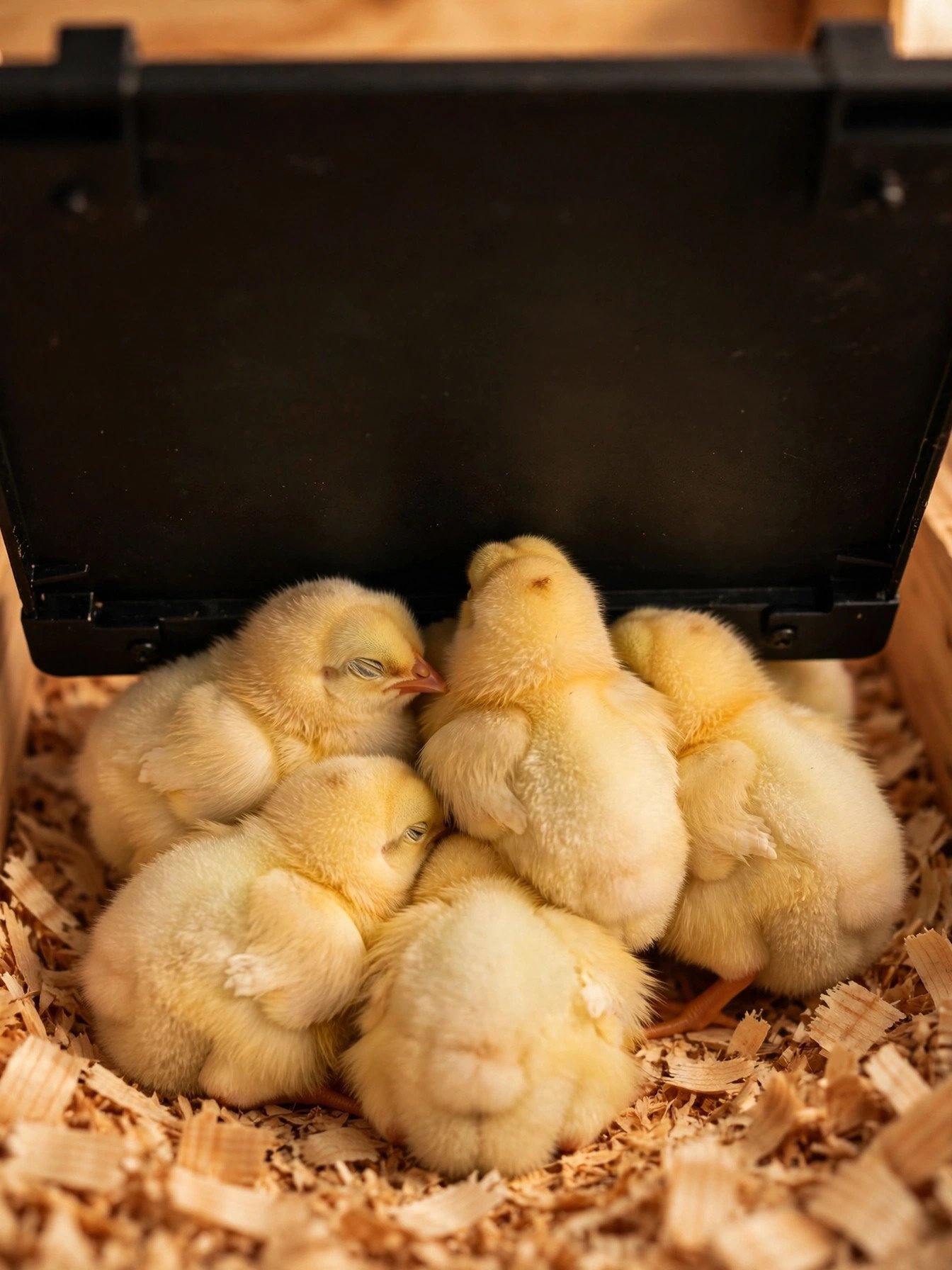
A heat plate removes most of that failure list in one move. It never gets bulb-hot, it cannot fall into the bedding because it stands in it, it sips electricity, and it switches off the lights — chicks under a plate get real nights and feather out calmer for it. They also raise themselves the way a hen raises them: warm up underneath, cool off outside, self-serve. You give up two things: a lamp warms the whole brooder’s air, which matters in a genuinely cold outbuilding, and a lamp is cheap on day one. That is the whole case for the lamp. Brood with a plate indoors; if your only space is a cold barn, fix the space or wait for spring rather than hanging a fire risk over the flock.
The Temperature Rule: 95 Degrees, Minus Five a Week
However you heat the brooder, the target follows the oldest rule in chick keeping: 95°F for the first week of life, dropping 5°F each week until the brooder matches room temperature or the chicks are fully feathered at around six weeks, whichever comes first.
| Week | Temperature at chick level | What you should see |
|---|---|---|
| 1 | 95°F | Chicks napping under the heat, then popping out to eat and drink |
| 2 | 90°F | Longer trips away from the heat, first wing feathers |
| 3 | 85°F | Exploring the whole brooder, heat used mostly for naps |
| 4 | 80°F | Feathers coming in fast, some sleeping at the edge of the heat |
| 5 | 75°F | Heat used at night more than in the day |
| 6 | 70°F / off | Fully feathered or nearly — ready for the coop if nights are mild |
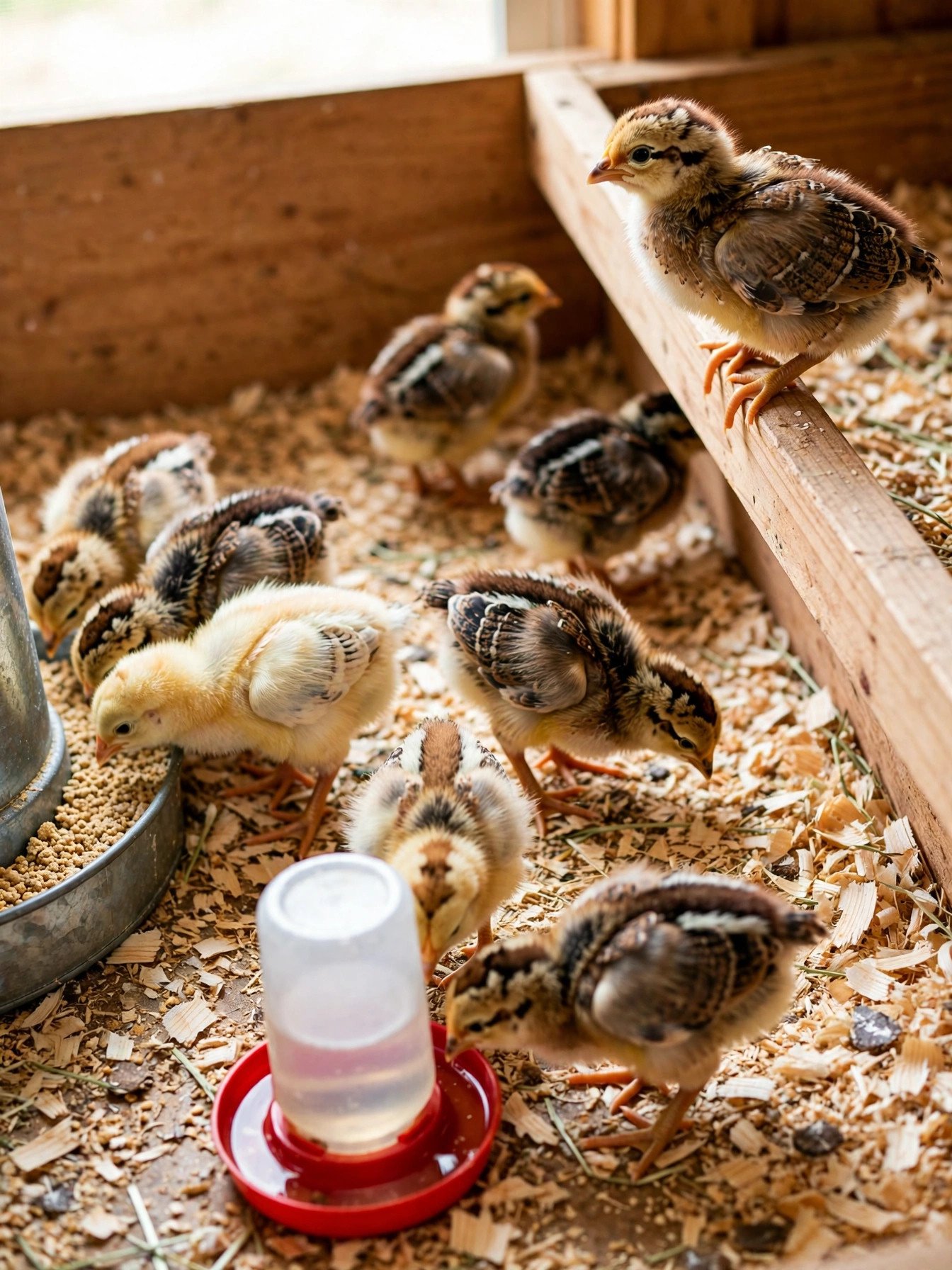
Two honest footnotes. The numbers describe the warm spot at chick level, not the whole brooder — the cool end is a feature, because chicks regulate themselves by moving, and a brooder that is 95°F everywhere is a slow oven. With a plate you follow the rule by raising it a notch each week, judging by behavior: quiet, scattered chicks are comfortable; loud, piled chicks are cold; chicks pressed to the far walls are hot. For the full week-by-week chart, keep our Brooder Temperature Chart open on your phone for the six weeks.
Frequently Asked Questions
How big does a brooder need to be?
About half a square foot per chick in the first week, growing to roughly a square foot each by weeks four to six. A batch of six wants about six square feet by move-out day; a batch of twelve wants twelve. Size for the six-week-old they will become, not the fluff ball they are today.
How long do chicks stay in the brooder?
Until they are fully feathered — around six weeks for most breeds — and the brooder temperature has stepped down to match the air they are moving into. A warm June batch can go out a little earlier; a March batch in a cold climate may need a seventh week. Feathers, not birthdays, make the call.
Can I use a cardboard box as a brooder?
For the first few days, a big, dry, draft-free cardboard box works — it has started more flocks than any product on this page. Just know its expiry date: cardboard soaks through, gets chewed apart, sags, and is the worst possible partner for a heat lamp. Treat it as a landing pad while your real setup arrives, not as the setup.
Do chicks need heat all day, or only at night?
All day and all night for the first weeks — a chick cannot hold its body temperature, and it warms up in short sessions around the clock, not on a schedule. The plate delivers that 24-hour warmth with natural darkness built in, on a few watts, without a glowing bulb keeping the whole batch awake.
The Bottom Line
Forced to build one brooder from this page, here is the order I would spend in. The heat plate first — the Brinsea EcoGlow Safety 1200 — because heat is the one job where cheap and safe rarely share a box. The enclosure second, and here cheap is genuinely fine: a tote for six, a playpen for twenty — they outgrow any box in six weeks anyway. If you would rather skip the piecing together, the Little Red Barn set is the one box to buy, floor math honored. And the Chick2Chicken set is the quiet best value of the three: the only chick gear here still earning its keep a year later, in the coop.
Five things: a safe box, heat, bedding, feed, water. Get those right at the temperature rule and chicks are honestly the easiest six weeks in chicken keeping. When the feathers come in and the brooder feels small, that is your cue — our guide to backyard chickens for beginners takes the flock from the brooder door to their first egg.