
Short answer first: feed starter from hatch to about 8 weeks, grower from 8 weeks to 18 weeks, and layer feed only once your hens are laying, or right at 18 weeks if the first egg is clearly days away. The bags all look like the same brown crumbles, but two numbers change as a chicken grows up: the protein steps down, and the calcium jumps way up. Getting those two numbers in the wrong order is one of the most common feeding mistakes in backyard flocks, and it is an easy one to avoid once you can see what each bag is actually for.
One thing that confuses people in the feed aisle: plenty of brands sell a combined starter and grower feed labeled for the whole stretch from day one to 18 weeks, and that is a perfectly good way to feed. The stages below still explain what is happening inside those bags, and they matter most at the two ends of the timeline. For the other half of the feeding question, how much goes in the feeder each day, see our guide to how much chickens eat a day.
What to Feed Chickens at Every Age
| Age | Feed | Protein | Calcium | Why |
|---|---|---|---|---|
| Hatch to 8 weeks | Starter | 20 to 22% | About 1% | The fastest growth of a chicken’s life. Protein builds muscle, feathers and frame, and there are no eggs to shell yet, so calcium stays low. |
| 8 to 18 weeks | Grower | 16 to 18% | About 1% | Growth slows to a steadier pace so the body and the reproductive system mature together instead of rushing. |
| 18 weeks, or first egg, onward | Layer | 16% | 3.5 to 4.5% | Every egg takes calcium out of the hen. Layer feed puts it back, and protein is now sized for laying rather than growing. |
| Mixed ages in one flock | Grower, plus oyster shell on the side | 16 to 18% | About 1% in the feed, free choice in the shell dish | Young birds stay safe from excess calcium while laying hens help themselves to the shell they need. |
Read the chart and one pattern jumps out: protein only ever moves by a few points, but calcium more than triples at the switch to layer. That single jump is the whole story of this post. Everything below is about why it happens, when it should happen, and what goes wrong when it happens too soon.
What Actually Changes Between the Bags
Protein goes down as growth slows. A chick in its first weeks is building an entire body from almost nothing, feathers, bones, muscle, organs, and it does that on protein. Twenty percent or more is not generous, it is necessary. By the grower stage the frame is mostly built, so the protein eases back to the high teens. A laying hen needs less again, around 16 percent, because she is maintaining a finished body and producing eggs, not constructing herself. Feed a growing bird a low protein ration and you do not get a smaller, cheaper chicken. You get a slower, weaker one.
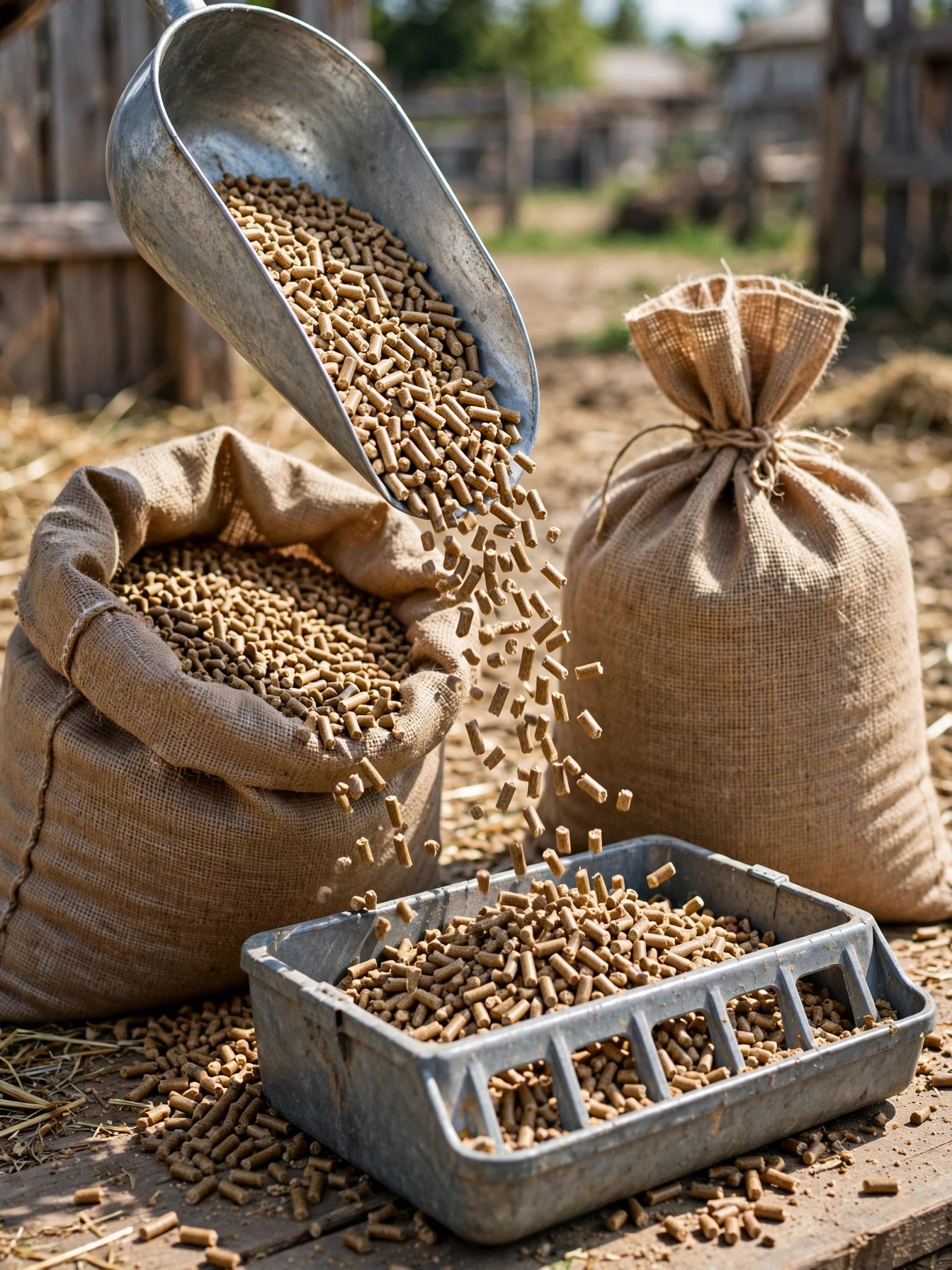
Calcium stays low until the eggs arrive, then quadruples. An eggshell is almost pure calcium carbonate, and a hen laying five or six eggs a week is exporting a serious amount of calcium out of her own body. Layer feed is built to replace it, at roughly 4 percent calcium. A chick or a pullet who is not laying has no such drain, so starter and grower sit near 1 percent, just enough for bone building. The combined feeds I mentioned, like Purina Start & Grow, run about 18 percent protein and low calcium, and are labeled to carry chicks from day one right through to laying age, which is exactly the safe pattern in the chart.
Two smaller differences worth knowing. Starter often comes medicated with amprolium, which helps chicks build protection against coccidiosis, a gut parasite that hits young birds hardest. And layer feed is often sold as pellets while starter is always a fine crumble, because a day old chick cannot manage a pellet. Neither changes the main rule. Protein and calcium are the numbers to read on the tag.
Layer Feed: The Bag for Hens That Are Laying
Once the flock is laying, the layer bag takes over for the rest of the hens’ productive lives. What you are looking for on the tag is simple: about 16 percent protein, calcium between 3.5 and 4.5 percent, and a complete ration, meaning the vitamins and minerals are already in it and nothing needs adding. This is the feed most adult backyard flocks live on.

- 16 percent protein, matched to what a laying hen needs to keep producing without the extra protein a growing bird requires
- High calcium built in for strong shells, so a flock of layers is covered by the bag alone
- Formulated for hens from 18 weeks onward, which is exactly the switch point this guide is built around
Why Layer Feed Too Early Is a Real Problem
This is the part of the post I most want you to take seriously, because the mistake is so easy to make. A bag of layer feed is on sale, or the grower runs out and the layer bag is right there, and the pullets are only a few weeks from laying anyway. What is the harm?
The harm is calcium with nowhere to go. A hen who is laying exports her extra calcium into eggshells every day. A pullet who is not laying yet has no such exit. The calcium still gets absorbed, and the kidneys have to process and get rid of the surplus, week after week. Poultry nutrition research and extension guidance are consistent on this point: feeding high calcium rations to young, non-laying birds is linked to kidney damage, calcium deposits in the organs, and gout in growing stock. It is not a scare story, it is simply plumbing. The system is not built to handle that load until laying starts.
There is a second, quieter problem in the same bag. Layer feed’s 16 percent protein is tuned for finished hens. A growing pullet on it is short on protein at exactly the stage when she is building the frame and reproductive system she will lay with for years. So the early switch manages to overload one system and underfeed another at the same time. None of this means a few accidental days on layer feed will ruin a bird, and there is no need to panic if it has happened once. It means weeks and months of it, during the growing stage, is a real and avoidable cost. Keep young birds on starter or grower, and save the layer bag for the day it is actually for.
The Mixed-Age Flock Problem
Sooner or later almost every keeper hits this one. You add young pullets to a flock of laying hens, everyone eats from the same feeder, and the chart above suddenly has two rows fighting over one bag. Feed layer and the youngsters get the calcium problem. Feed grower and the hens run short on calcium for their shells. What gives?

The standard fix, and the one experienced keepers land on, is to feed the whole flock grower and put calcium in a separate dish. Fill the feeder with grower, or a starter and grower feed, at 16 to 18 percent protein and low calcium, safe for every bird in the pen. Then hang a small container of crushed oyster shell where the hens can reach it. Manna Pro Crushed Oyster Shell is the one most feed stores and keepers use, and a small bag lasts a mixed flock a long time.
The reason this works is something hens are genuinely good at: a laying hen will seek the shell out and eat roughly the amount she requires, and a young bird with no such need mostly ignores the dish. Free choice shell is also absorbed well, because the coarse pieces dissolve slowly through the night, which is when the next day’s shell is being formed. Once the youngest birds are laying too, you can switch the feeder to layer feed and retire the shell dish, or leave it out permanently as insurance for the hen whose needs run higher than the bag’s average. Plenty of keepers do.
Can Roosters Eat Layer Feed?
Honest answer: in most backyard flocks, they do, and they live on it for years. A rooster eats what the feeder holds, and nobody runs a second feeding program for one bird. If the calcium question bothers you, and it is fair to wonder, since a rooster never lays an egg and carries the same kidneys as a pullet, keepers land in one of two places. Most simply feed layer and accept it, because the vast majority of roosters on layer feed show no problem anyone can point to. The rest use the mixed flock solution above for everyone: grower or all flock feed in the feeder, oyster shell on the side. That gives the rooster a ration built for a non-laying bird and the hens their calcium anyway. Either is defensible. What I would not do is feed a rooster separately at every meal. You will give that up by the second week, and so would I.
When Exactly Should You Switch to Layer Feed?
Two signals, and either one is enough: the flock reaches about 18 weeks, or the first egg appears, whichever comes first. Most common laying breeds start between 18 and 22 weeks, so the calendar and the nesting box usually agree. Slow maturing breeds, and pullets raised through the short days of winter, can run later, and that is normal too. If your hens are well past 22 weeks with nothing to show, that is a different puzzle, and our guide to why chickens stop, or never start, laying eggs walks through the usual reasons.
However you time it, do not swap the feed overnight. A sudden change puts birds off their feed, and a pullet just coming into lay is the last bird you want skipping meals. Blend it over about a week: roughly a quarter layer feed mixed into the grower for a couple of days, then half and half, then three quarters, then the full bag. By the time the feeder holds straight layer feed, the flock will not have noticed a thing. Finish the open grower bag this way rather than storing it, because it will not be the right feed for anyone until the next batch of youngsters arrives.
The 10 Percent Treat Rule
Whichever bag is in the feeder, it should make up at least 90 percent of what your chickens eat. Everything else, scratch grains, kitchen scraps, mealworms, the garden weeds they love, counts as treats, and treats are dessert, not dinner. The reason ties straight back to the chart: the feed is balanced, with the protein and calcium worked out to the percentage point. Every beakful of scratch a hen fills up on is a beakful of that balance she did not eat, and scratch is mostly carbohydrate, so the protein and calcium percentages of her actual day slide downward. A handful scattered for the fun of watching them chase it does no harm at all. A feeder full of it, or daily bucket loads of scraps, quietly unbalances the ration you paid to have balanced. If you want to see what your flock should be getting through in a month, and what it costs, our Chicken Feed Calculator runs the numbers by flock size.
Frequently Asked Questions
Can adult hens eat grower feed?
Yes, and in a mixed age flock that is exactly what they should do. Grower has enough protein for a laying hen. What it lacks is calcium, so keep a dish of oyster shell available free choice and the hens will cover the difference themselves.
What if my chicks got into layer feed for a few days?
Do not panic. The kidney concern with early layer feed is about weeks and months of it during the growing stage, not a weekend. Move the young birds back to starter or grower, make sure they have plain water, and carry on. It becomes a footnote, not a problem.
Is starter feed the same as grower feed?
Close, but not identical. Starter runs higher protein, usually 20 percent or more, for the explosive first weeks of growth, and it is ground finer for tiny beaks. Grower eases the protein back to the high teens. Many brands combine the two into a single starter and grower feed at about 18 percent protein, labeled from hatch to 18 weeks, which splits the difference and works well for backyard flocks.
Do my chicks need medicated starter?
It depends on their vaccination status. Medicated starter contains amprolium, which helps prevent coccidiosis while chicks build their own resistance. If your chicks were vaccinated against coccidiosis at the hatchery, feed the non-medicated version, because the medication works against the vaccine. If they were not vaccinated, or you do not know, medicated starter is the common, sensible default.
Can I just feed layer feed to the whole flock to keep it simple?
Only if every bird in the flock is laying age. If there is a single pullet under 18 weeks eating from that feeder, the simple answer is the wrong one for her. Feed everyone grower with oyster shell on the side instead. It is one extra small dish, and it keeps every age in the pen fed correctly.
The Bottom Line
Starter until about 8 weeks, grower until 18 weeks or the first egg, layer from then on, and never layer before laying, no matter how good the sale is. Mixed ages in one pen get grower for everyone and oyster shell on the side. Treats stay under a tenth of the diet. Tape those four lines inside the feed bin lid and you will never stand in the feed aisle second guessing yourself again. And if you are still at the very start of all this, chicks not even home yet, our complete guide to backyard chickens for beginners walks the whole first year in order.