
Short answer first: you do not clean a chicken coop all at once, on one schedule. You clean it in layers — two minutes of small jobs every day, a short tidy once a week, a full bedding change every month or so, and a proper deep clean twice a year. A coop is not a kitchen floor and it is not meant to be scrubbed spotless every weekend; hens live on bedding, not on bare boards, and a system of small, regular passes beats a heroic monthly muck-out every time. And there is one test that overrides every date on this page: duck your head inside, and if you can smell ammonia at your nose level, you are already late.
Most of the wildly different answers you will find to how often to clean a chicken coop come from keepers running different setups without saying so. A daily scooper, a deep litter keeper and someone with six hens in a tractor are all telling the truth about their own coop — they are just not describing yours. So below is the layered schedule for a standard fixed coop with ordinary bedding, and then a section on how the timing shifts when your system, coop size or season is different. Once the rhythm is set, a clean coop mostly maintains itself, and the flock stays ahead of the smell instead of behind it.
The Coop Cleaning Schedule at a Glance
| Task | How often | What it involves |
|---|---|---|
| Scrape the droppings board | Every morning | Thirty seconds with a flat scraper or dustpan under the roosts — this is where the biggest share of the flock’s manure lands, every single night |
| Check and rinse the waterer | Glance daily, rinse every few days | Tip out slime, straw and kicked-up bedding, refill with fresh water; a proper scrub goes on the weekly list |
| Top up the bedding | Weekly | A fresh layer over the worn, dirty spots — thickest under the roosts, around the pop door and anywhere the floor shows through |
| Full bedding change | Every 4 to 8 weeks, by the smell test | Strip the floor bedding right down to the boards and start again with a fresh, deep layer (deep litter flocks run a different calendar — see below) |
| Deep clean and scrub | Twice a year | Everything out, scrape the dried manure, wash down, dry the coop completely, then fresh bedding on a dry floor |
Read the table the way it is meant to be read: the daily jobs are tiny, the weekly job is small, and the big jobs are rare. If you are spending an hour every weekend cleaning your coop, something in the layers is missing — usually the droppings board, which we will get to now.
The Daily Two Minutes
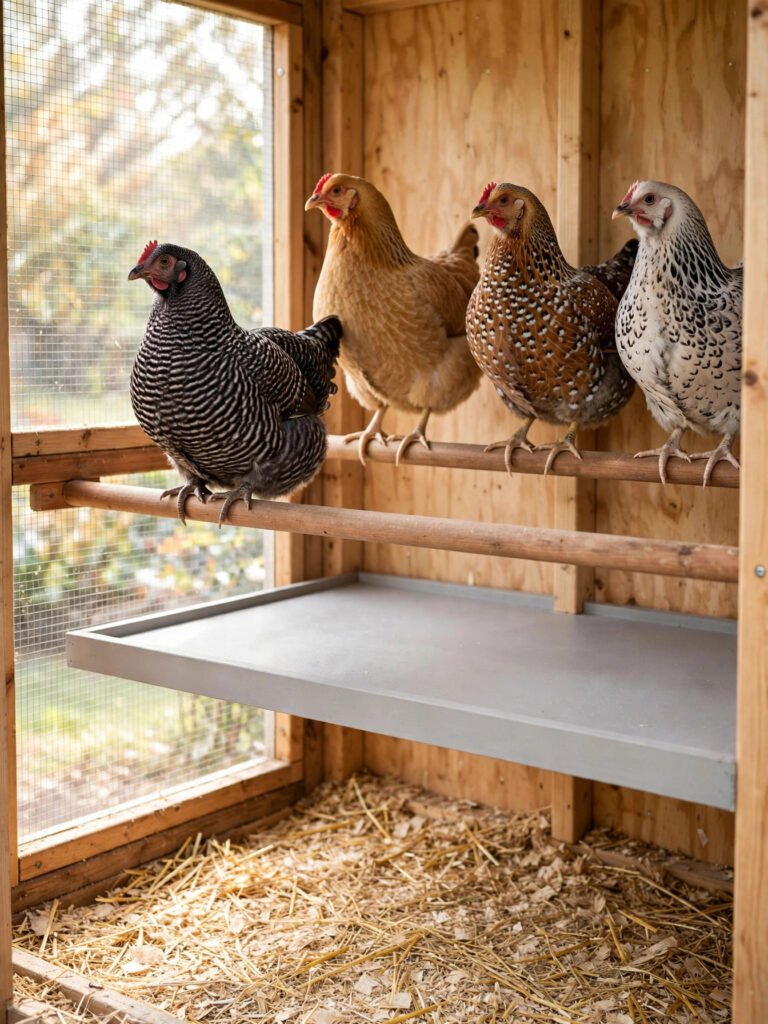
Here is the fact the whole schedule hangs on: hens do a huge share of their droppings at night, sitting still. A chicken spends eight or more hours on the roost, and what she would otherwise spread across the whole run lands in one neat row on the floor — or on a droppings board, if you have fitted one. Keepers who measure it put the overnight share at close to half of everything a flock produces. That means one small board under the roost bars catches roughly half your cleaning problem before it ever touches the bedding.
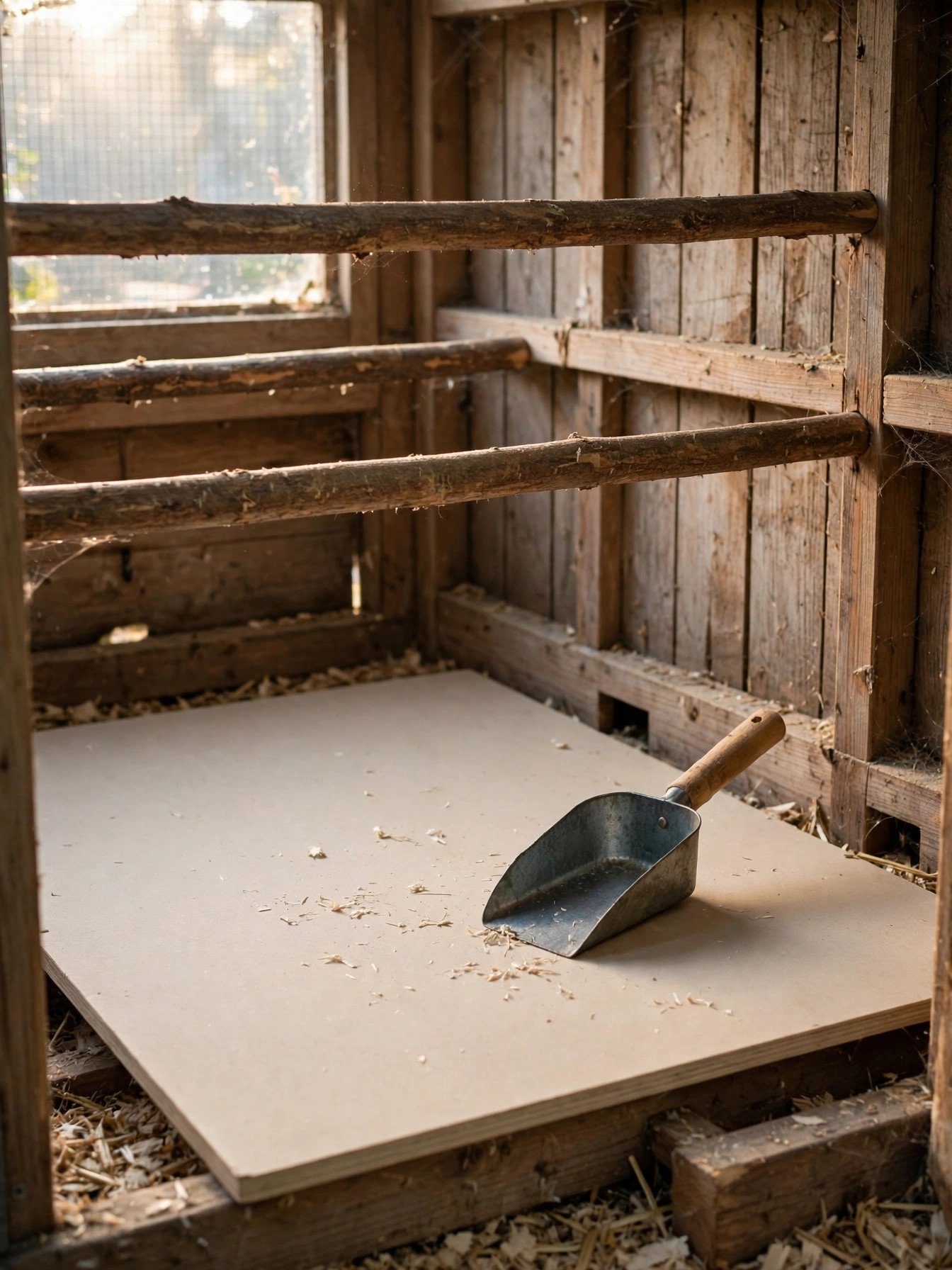
So the daily job is this, done while you collect eggs: scrape the board into a bucket (the scrapings are the richest thing in your compost pile, incidentally), glance at the waterer and tip it out if a hen has kicked bedding into it, and look at the flock for ten seconds while you are standing there. No droppings board? Then the same two minutes goes on the bedding under the roost instead — rake the night’s deposit out or bury it under a fresh handful of bedding, because that one strip of floor is where a coop starts to smell. Everything else can wait for the weekend. This cannot, because it compounds: one skipped morning is nothing, but a week of night deposits ground into the bedding is the beginning of the ammonia problem further down this page.
The Weekly Tidy
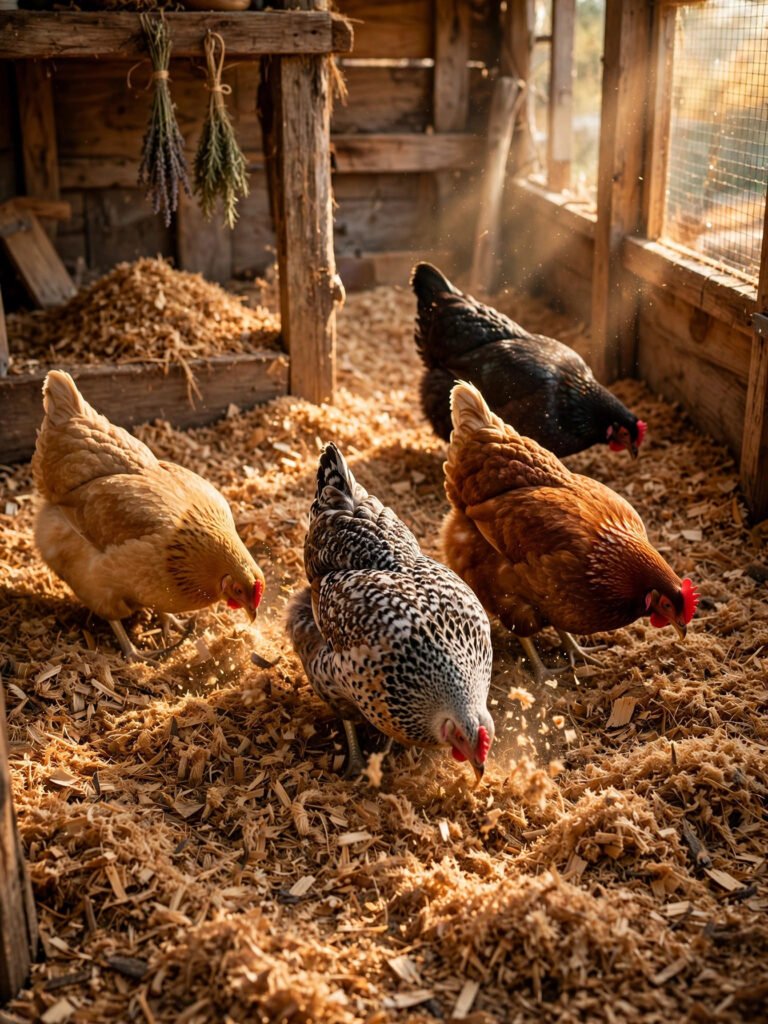
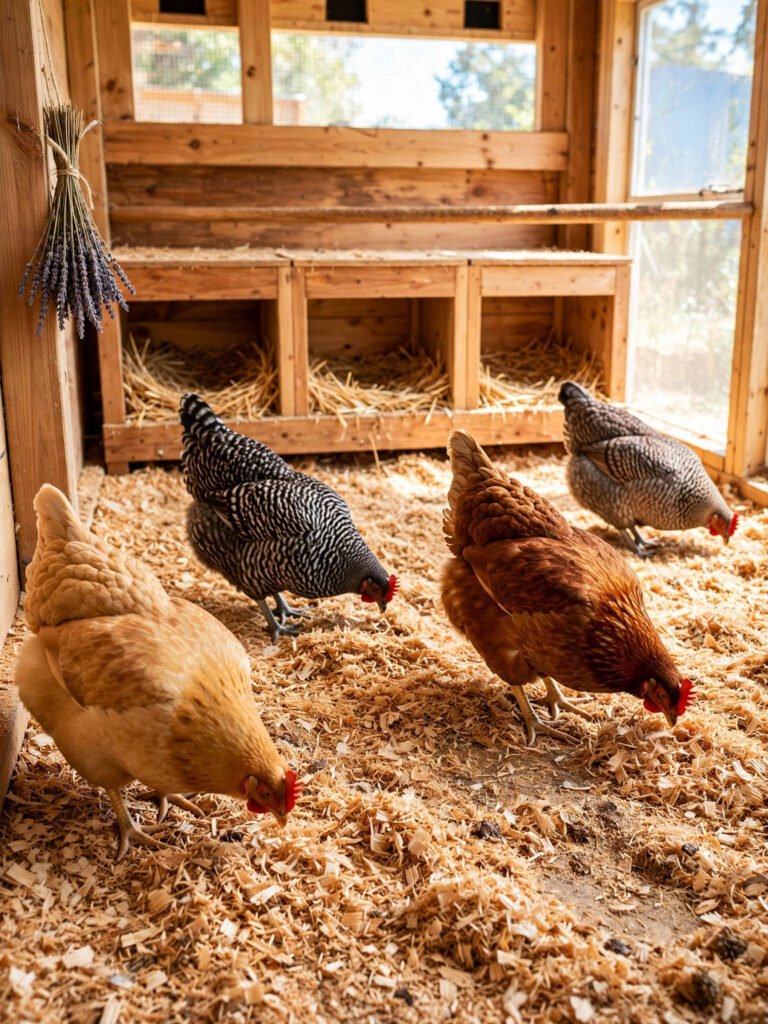
Once a week, give the coop fifteen unhurried minutes. Top the bedding up — a fresh layer over the whole floor, heaviest under the roosts and at the pop door where feet churn it fastest. Bedding is doing two jobs at once, absorbing moisture and covering droppings, and both jobs fail the moment it gets thin, so the rule is simple: if you can see floor, add bedding. While it is in your hands, hunt for wet spots. A patch that stays damp is never a bedding problem; it is a water problem — a waterer that sloshes, a roof drip, rain blowing under a door — and no amount of fresh shavings fixes it until the water source does. Scoop the wet patch right out, because damp bedding is where smell and mold both start.
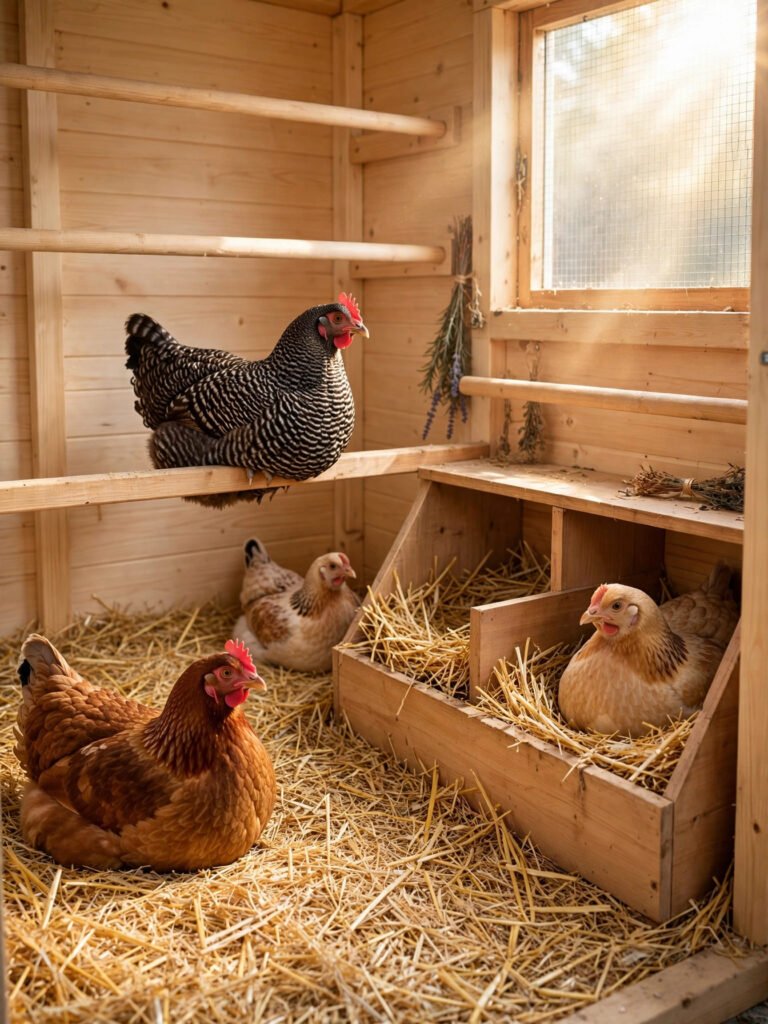
Then do the two thirty-second checks. Freshen the nesting boxes — shake out the soiled bedding, top up with clean, and any egg laid on dirty bedding is your reminder this got skipped. And run your eyes (and a fingertip) along the roost ends and the corners and cracks where the bars meet the wall. Those dark joints are where mites hide during the day, and a weekly glance while you are already standing there is how you spot the first grey, powdery clusters early instead of meeting them at infestation scale later. That is all — checking is the job. The weekly tidy is also the moment to scrub the waterer properly and top up the grit and oyster shell dishes if your flock has them.
The Seasonal Deep Clean
Twice a year — spring and autumn are the natural rhythm — the coop gets the full treatment. Pick a dry, breezy day, because the last step depends on the weather. Shovel everything out: all the bedding, the nesting box material, the dust and cobwebs in the corners that have been quietly collecting dander for six months. Scrape the dried manure off the floor, the roost bars and the board — a paint scraper or stiff brush does most of it. Then wash down with water and a scrub brush; a splash of plain white vinegar in the wash water is a perfectly good general-purpose cleaner for this job, and there is no need for anything harsher in a routine clean. Rinse, and then the step people rush: let the coop dry completely before a single handful of new bedding goes in. Doors open, vents open, sun and air doing their work for a few hours.
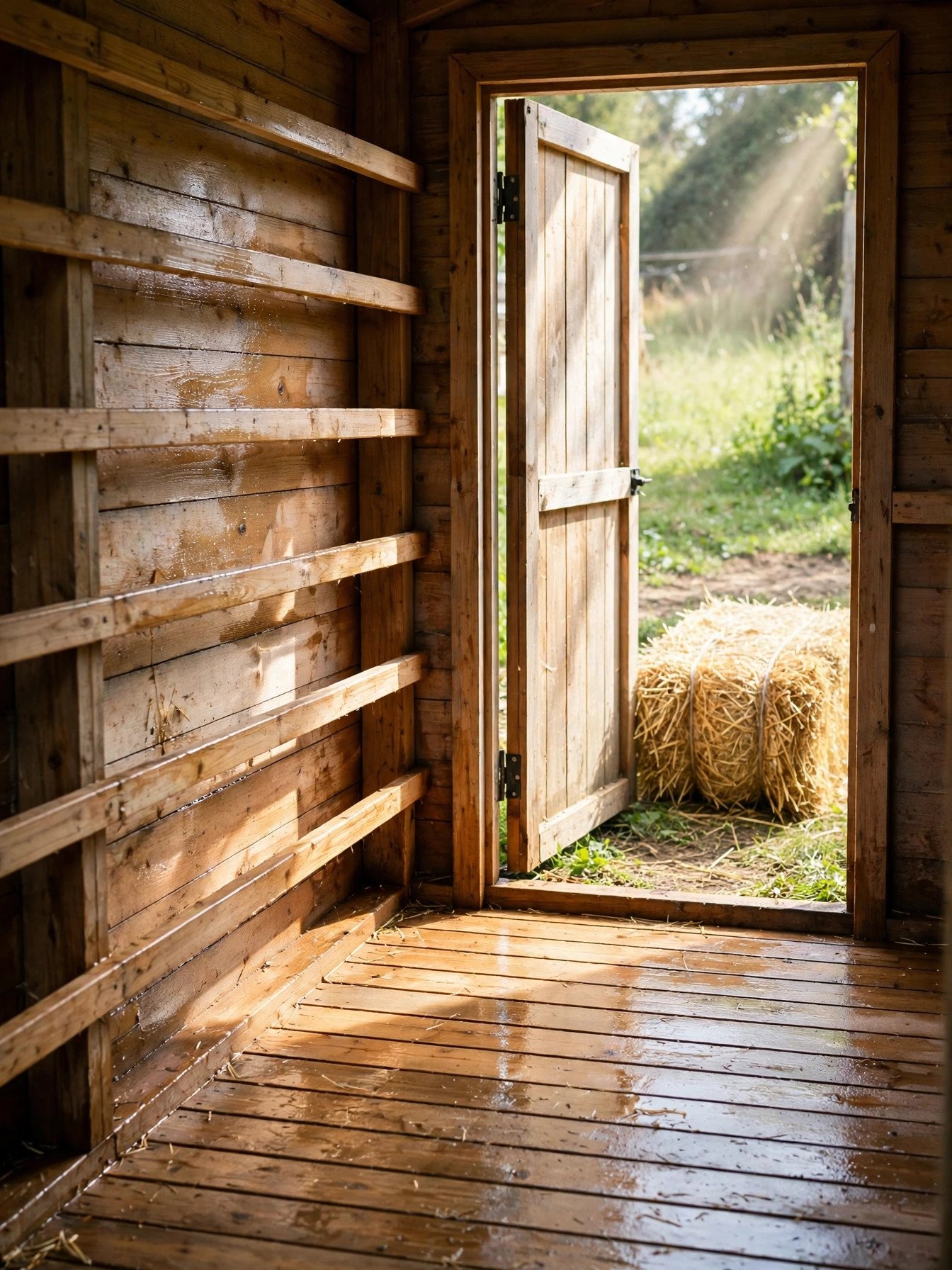
That drying step is not fussiness. Fresh bedding laid over a damp floor starts absorbing moisture from below on day one, and a coop refilled wet will smell sooner than the dirty coop you just emptied. A dry refill, on the other hand, resets the clock for months. While the coop stands empty, dust the dry floor and the droppings board with a zeolite coop refresher — it sits in the fresh bedding trapping ammonia from the first night deposit onward, and it is the cheapest way to stretch the calm between full bedding changes.

- Zeolite mineral granules that absorb moisture and trap ammonia as it forms, instead of perfuming over it — the smell is neutralized, not masked
- Sprinkle it over the droppings board, under the roosts and across fresh bedding after a clean; a light dusting a couple of times a week keeps the daily two minutes working
- An all-natural earth mineral, OMRI listed — and when the bedding eventually goes to the compost pile, the refresher goes safely with it
The Schedule Changes With Your System
The calendar above assumes a standard coop with ordinary bedding that gets changed out. Change the system and the calendar changes with it:
- Deep litter runs on its own calendar. If you keep a composting litter pack, there is no monthly bedding change at all — your weekly job becomes turning and topping up the pack, and the full cleanout comes once or twice a year. That system has its own rules and its own failure modes, and they are covered properly in our guide to the deep litter method.
- Small coops run faster. Less floor means the same droppings land on less bedding, so a compact coop or tractor can need its full bedding change every 2 to 4 weeks where a roomy coop goes 8. If your coop is at the tight end of the space minimums, expect every layer of the schedule to compress.
- Stocking density is the throttle. Six hens in a coop built for six follow this page. Nine hens in that same coop are producing half as much manure again on the same floor, and every interval above shrinks by about that much. Crowding shows up in the bedding before it shows up anywhere else.
- Season bends the schedule both ways. In winter the flock spends long hours indoors, so droppings concentrate in the coop and the weekly tidy matters more, not less — cold weather is not a cleaning holiday. In summer, heat drives ammonia out of droppings faster and flies arrive, so top-ups and the droppings board scrape earn their keep even when the birds are outside all day.
- The bedding itself sets the pace. Large-flake shavings stay absorbent and loose far longer than fine, dusty bedding or plain straw, which mats and saturates early. If your full changes keep coming sooner than the table says, the material may be the reason — our comparison of the best chicken coop bedding runs through what each one does to the cleaning calendar.
The Smell Test, Honestly
Every date in this guide is a guideline. Your nose is the referee. So here is the honest version of the smell test: if you can smell ammonia standing at the door, with your nose five or six feet off the ground, it has been strong down at hen height for days. Your hens do not breathe the air at your nose level. They breathe at roost height at night and at floor level all day, inches from the bedding, and the air down there turns well before the air up at your face does. By the time the smell reaches you, the flock has been living in it. Ammonia at that level irritates eyes and airways — theirs before yours — and it is the one cleaning signal you should never file under “this weekend.”
The good news is that a dry coop barely smells at all. Earthy, like straw and warm feathers — that is the normal scent of a healthy coop, and keepers who follow the layers above usually get visitors asking why it does not stink. When a coop smells sharp despite regular cleaning, the cause is almost never the cleaning. It is moisture (a wet patch nobody found, bedding laid over a damp floor after the deep clean) or still air — droppings gas has to leave the building, which is a ventilation question, and it is why cleaning and chicken coop ventilation are really one subject wearing two hats. Fix the damp and the airflow, and the schedule on this page will hold. Skip them, and no cleaning calendar on earth keeps up.
Frequently Asked Questions
How often should you completely change the bedding in a chicken coop?
For standard bedding in an average coop, every 4 to 8 weeks — sooner in a small or crowded coop, later in a roomy one, and always by the smell test rather than the calendar alone. If ammonia reaches your nose before the month is out, the bedding is done regardless of what the date says. Deep litter is the exception: that pack is topped up weekly and changed out only once or twice a year.
Can you clean a chicken coop too often?
You can, though it is the rarer mistake. Daily spot cleaning is never wasted, but stripping all the bedding out every week burns through bedding, money and your own enthusiasm, and a flock endlessly disturbed by full cleanouts gets nothing from it. Hens are comfortable on dry, topped-up bedding; they do not need a sterile floor. Keep the daily and weekly layers faithful and let the big cleans stay rare.
Why does my coop smell again so soon after cleaning?
Almost always one of three reasons: the fresh bedding went in over a floor that had not finished drying, there is a wet spot somewhere still feeding the smell (check under and around the waterer first), or the coop air is not moving enough to carry the ammonia out. Work through those three before blaming your cleaning routine — the routine is usually innocent.
Do I need disinfectant every time I clean the coop?
No. Routine cleaning is mechanical, not chemical: remove the manure, keep the bedding dry, and the job is done. The twice-a-year deep clean gets the wash-down, and a brush, water and a splash of vinegar handle a healthy flock’s coop perfectly well. Save the heavy products for a specific reason, not a standing habit.
The Bottom Line
Two minutes a day on the night deposit and the waterer, fifteen minutes a week topping up bedding and checking the corners, a full bedding change when the smell test says so — about monthly — and a scrape, wash and complete dry twice a year. That is the whole schedule, and it works because it never lets one big, dirty job form. Tape the smell test above the coop door if it helps: if you can smell ammonia at your nose, you are already late. Setting up a coop for the first time and wondering where cleaning fits into the bigger picture? Our complete guide to backyard chickens for beginners walks through the whole setup in the order you will actually do it.