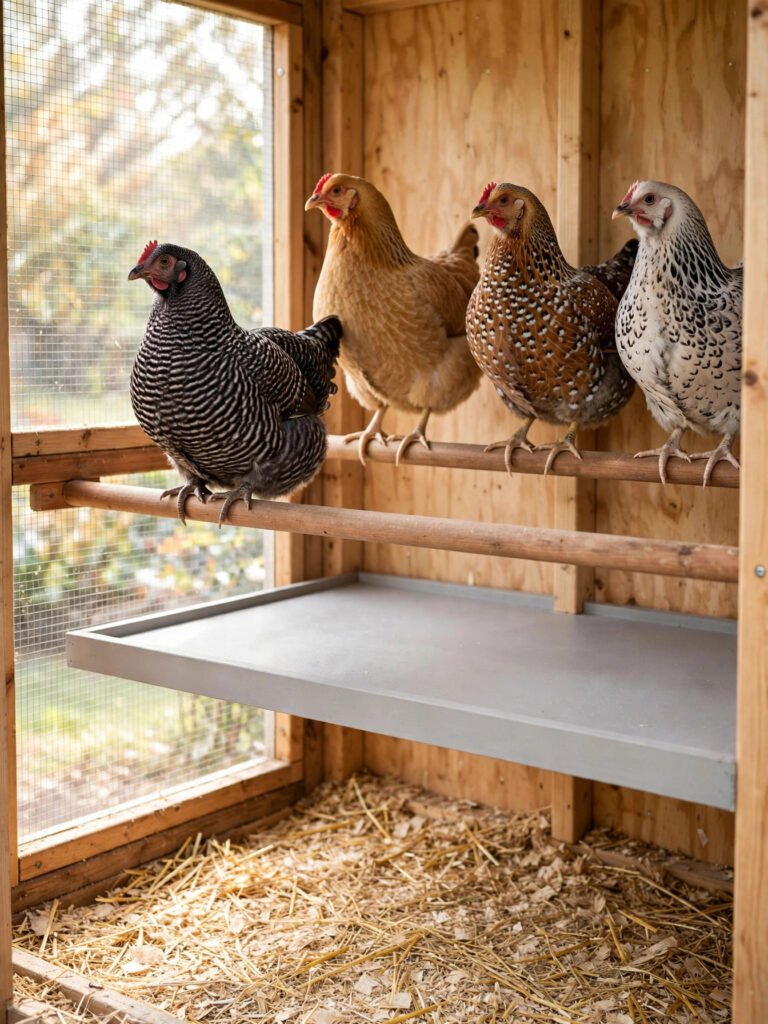

Short answer first: roughly half of everything your hens produce lands in one place — directly under the roost, overnight, while they sleep. Catch it there on a removable board or a slide-out tray and the worst job in the coop turns into a two-minute morning scrape. Let it fall into the bedding instead and you are digging soiled litter out from under the bars for the life of the coop. The best chicken coop poop board setup is not the fanciest one. It is the one sized to your roost, covered in something droppings cannot soak into, and easy enough to clean that you actually do it every day.
One honest thing before the picks: this is a thin category, and it matters that you know it. Almost nobody manufactures a tray specifically “for” chicken droppings boards, so keepers have improvised for decades — crate pans, boot trays, cafeteria trays, plywood offcuts skinned with leftover vinyl. The picks below were chosen from manufacturer specs and the patterns that repeat in verified owner reviews — we do not claim to have tested them under our own roosts. Where the best answer is a five-dollar piece of scrap instead of a product, that is what the guide says.
Quick Picks: The Short Version
| Board / Tray | Material | Size class | Best for |
|---|---|---|---|
| MidWest Replacement Pan (9PAN) | Molded polypropylene | Large slide-out tray, about 41 × 28 in | A ready-made tray under a single roost |
| Fixed DIY board | Plywood with a vinyl or laminate skin | Built to your roost, usually 24 in wide | Permanent roosts in walk-in coops |
| Trimate boot tray | Recycled polypropylene | About 40 × 20 in, shallow lip | Small coops and one short roost |
| Cafeteria tray or scrap sheet | Plastic, metal or countertop offcut | Whatever you already have | Testing the idea before you build anything |
1. MidWest Replacement Pan — Best Ready-Made Droppings Tray
Here is the chicken-keeping secret hiding in the dog aisle. The pan MidWest sells as a replacement tray for its 42 inch dog crates is, dimension for dimension, the droppings tray coop keepers kept asking someone to make: about 41 × 28 inches of smooth, leak-proof polypropylene with a low lip all round, light enough to slide out with one hand. Backyard keepers have run these under roosts for years — there are whole forum threads about it — because nothing sold for chickens ever matched the size. Slide it under the roost at night, slide it out in the morning, scrape, done.

- About 41.3 × 27.75 inches — wide enough to cover the full drop zone under a 4 foot roost in a single piece, no seams for droppings to hide in
- Molded polypropylene: leak-proof and odor-resistant per the manufacturer, and smooth enough to hose off or scrape clean in seconds
- The 1 inch lip keeps a Sweet PDZ layer where you spread it instead of drifting onto the coop floor
What we like:
- The size is the whole story. Most trays sold for pets or boots are too narrow to catch a roost’s full drop zone. At nearly 28 inches wide, this one covers it with margin to spare
- Slide-out cleaning is the habit that sticks. No bolts, no lifting a fixed board’s worth of mess — the pan comes to you
- It is a commodity part. MidWest has sold this pan for years, it is stocked everywhere, and if you crack one you replace the pan, not the system
What holds it back:
- It is a dog product doing a chicken job, so the fit is on you: measure your roost’s drop zone before ordering, because the pan comes in crate sizes, not coop sizes
- The lip is only about an inch. It contains a PDZ layer fine, but hens that get up on the pan will still scratch some of it out — mount it just under the roost where traffic is low
- Thin polypropylene flexes. Carried full and one-handed by a corner, a pan this size can twist; support it from underneath on the way to the compost
Not for: very long roosts — two pans side by side work, but past about 6 feet of roost a fixed board is tidier. For: the standard backyard coop with one main roost, and any keeper who wants the tray bought, not built.
2. The Fixed DIY Board — Best Permanent Setup
The other classic is not a product at all, and this guide would be lying by omission if it pretended otherwise. A sheet of plywood cut to run the full length of your roost, given two rails or cleats so it slides or lifts out, and skinned with something droppings cannot soak — leftover sheet vinyl, a laminate offcut, peel-and-stick tiles, even an old countertop — is the droppings board in most experienced keepers’ coops. Raw plywood alone is the one version that fails: it absorbs moisture and odor into the grain within weeks, and no amount of scraping gets it back. The skin is not decoration. The skin is the whole point.
What we like: it is built to the exact width your roost needs, it never flexes, and a walk-in coop with a fixed board under a long roost is the fastest daily clean of any setup here — one pass of a wide scraper, end to end, into a bucket. What holds it back: it is a small building project, it stays in the coop to be scraped rather than coming out to be hosed, and a board wider than about 2 feet gets heavy to lift out for the deep cleans. Not for: small prefab coops with no room to maneuver a scraper. For: anyone building a coop from scratch — design the board in from day one and it costs you almost nothing.
Board or Tray: Which Fits Your Coop?
The choice comes down to how your coop is built. A fixed board suits a walk-in coop with a long, permanent roost: it is always in position, sized exactly, and scraped in place. A slide-out tray suits a smaller coop or a raised one, where you clean from outside and want the mess to come to you — and it is the only sensible option if your roost sits over a floor you cannot reach across. Then there is the route half the chicken internet actually took: scrap material. Boot trays like the Trimate extra large boot tray — about 40 × 20 inches of recycled polypropylene with a raised lip — cover a short roost in a small coop for very little money, and cafeteria trays, old baking sheets and countertop offcuts have all served under roosts for years. Nothing about a droppings board is precious. Flat, smooth, washable and the right size beats purpose-built every time.
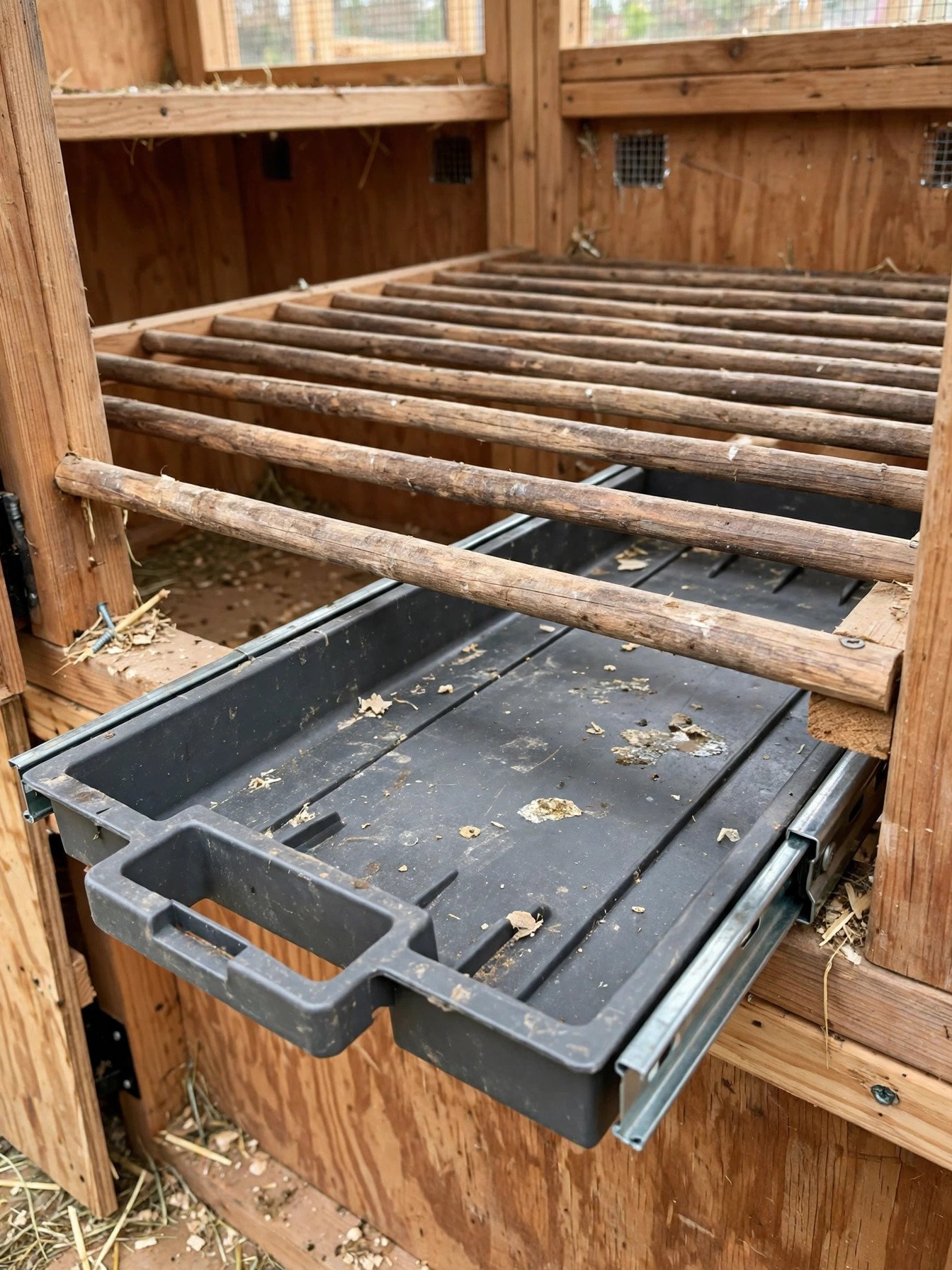
Whichever route you take, two placement rules do not change. The board or tray must sit where hens are not walking all day — under the roost is a nighttime zone, and a tray on open floor just becomes a very unpleasant doormat. And it has to come out, or at least clear, without a fight. The best droppings board in the world fails the first week its cleaning routine annoys you, because the routine is the product. Everything else is a flat surface.
Size It to the Roost, Not the Coop
Here is the sizing mistake that ruins more poop boards than any other: keepers size the board to the coop floor, or buy whatever tray is on the shelf, and then wonder why a strip of droppings still lands in the bedding every night. Droppings do not fall straight down from a neat line. A roosting hen shifts, turns and settles, and the drop zone spreads well past the bar on both sides. The working rule from keepers who have measured it: the board should extend at least 8 inches, and better 10 to 12 inches, past the roost bar on each side. For the standard single roost, that makes a board about 24 inches wide, with the bar centered over it, the reliable default. Two parallel bars need the board to span both, plus the same margin outside each.
Height matters just as much. Set the board roughly 8 inches below the roost bar. Much closer and tail feathers brush the layer every time a hen settles, and early risers scratch in it. Much lower and the drop zone widens as the droppings fall, which quietly defeats your careful width math. If you are still planning the roost itself — bar height, spacing, how much bar per bird — our guide to roost space per chicken covers the numbers, and the board should be planned in the same sitting, not retrofitted around them.
The Sweet PDZ Layer Trick
A bare board works. A board with a thin layer of granular Sweet PDZ on it works like a different invention. Sweet PDZ is a natural zeolite mineral, and spread a quarter inch deep over the board it does three jobs at once: droppings land in a dry, granular bed instead of smearing on a hard surface, the zeolite absorbs the moisture and neutralizes the ammonia odor at the source — the roost is where coop smell is born — and the whole night’s deposit sifts out in the morning with a litter scoop, leaving the layer behind to work again tomorrow. Instead of scraping a board clean every day, you spend a minute sifting, and top the layer up every week or two. Use the granular form, not the powder: the powder is dusty in an enclosed coop, and the granules are what make the litter-box effect work.

- Natural zeolite mineral that absorbs moisture and neutralizes ammonia odor right where the droppings land — under the roost, where coop smell starts
- Granular, not powder, so a thin layer turns any board or tray into a siftable litter surface: droppings lift out, the layer stays
- One bag covers a poop board for months of daily sifting, and the spent mix can go straight onto the compost pile
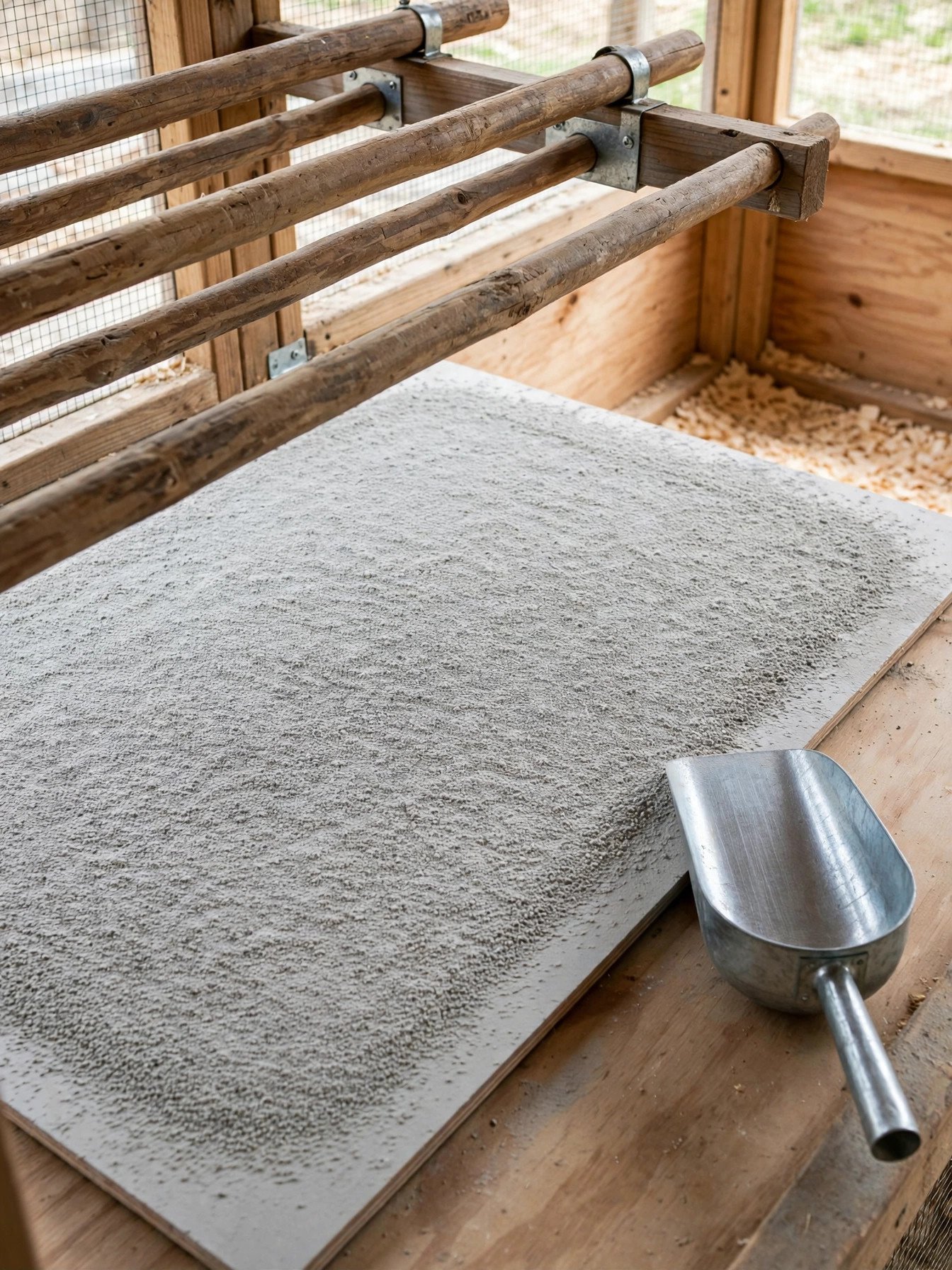
The tool that finishes the system is a long-handled sifting scoop — a long-handled sifting scooper lets you work the full width of the board without climbing into the coop or kneeling in the run doorway. Where does all of this sit in the bigger routine? The board handles the nightly half of the waste, which is why the rest of the coop — the floor bedding especially — lasts so much longer between changes. Our full schedule is in how often to clean a chicken coop, and the short version is: two minutes at the board each morning is what buys you weeks between bedding changes.
Frequently Asked Questions
How wide should a chicken coop poop board be?
For a single roost bar, about 24 inches wide, with the bar centered over it — that gives you 10 to 12 inches of board on each side to catch the full drop zone. For two parallel bars, span both bars and keep the same margin outside each one. A board sized to the roost catches the night droppings; a board sized to the shelf it came from usually misses a strip every night.
How far below the roost should a droppings board sit?
About 8 inches below the bar is the position keepers settle on. Closer than that and tail feathers brush the surface and hens scratch in the layer as they settle. Much lower and droppings spread wider as they fall, so the board has to be wider to catch the same mess.
Can I put sand on a poop board instead of Sweet PDZ?
Yes — coarse sand is the classic board covering and it sifts almost as well. What sand does not do is absorb ammonia, so a sand board controls the mess but not much of the smell. Many keepers start with sand because it is already on hand, then switch to granular PDZ the first hot week the roost area starts to smell like the inside of the coop in August. Either beats a bare board.
If I have a poop board, do I still need to change the coop bedding?
Yes, just far less often. The board catches the concentrated night deposit — roughly half the flock’s output — before it ever reaches the floor, so your bedding stays dry and workable for weeks instead of days. It still needs its regular top-ups and full changes on the usual rhythm; choosing the right material in the first place matters too, which is what our guide to the best chicken coop bedding works through.
The Bottom Line
A chicken coop poop board is the cheapest labor-saving device in the whole coop, because it concentrates half your cleaning problem into one flat, reachable, two-minute surface. Buy the MidWest crate pan if you want a ready-made tray that slides out, build the plywood-and-vinyl board if your roost is permanent, and press a boot tray into service if you are still testing the idea — then cover whichever you chose with a thin layer of granular Sweet PDZ and sift instead of scrape. Size it to the roost, set it 8 inches under the bar, and keep the routine so easy you never skip it. That is the entire secret, and it is a good one.