


Short answer first: yes, a cheap prefab coop can be worth it — but only if you buy it with your eyes wide open. Treat it as a starter home for fewer hens than the box claims, expect one to three seasons out of it rather than a decade, and set one weekend aside for upgrades before the hens move in. Bought that way, it is a fair deal. Bought as a fit-and-forget coop for the flock size printed on the carton, it is one of the fastest ways I know to lose hens, eggs and patience.
I want to be fair to these coops, because they get a lot of people started — plenty of good keepers began with a flat-pack kit in a small yard and a tight budget, and there is no shame in that. The coop itself is rarely a scam. The label is. So here is the whole truth about the cheap end of the market: what you are actually buying, the five things that fail first, how many hens one of these kits really holds, and how to make the math work if you buy one anyway.
What “Cheap” Actually Means Here
“Cheap” is not one shortcut. It is four specific ones, and once you know them you can spot them in any listing photo:
- Thin wood. Panels a fraction of the thickness of a solid built coop — on some kits you can flex a wall board with your thumb. Thin fir warps in the sun, splits around screw points, and drinks rain every time the weather turns
- Tiny real space. The dimensions in the listing run corner to corner across the house and the run combined, so the footprint sounds generous while the actual hen house is a small box at one end of it
- Weak latches. Simple slide bolts and twist catches, sized for keeping a door shut against the wind — not against a raccoon, which has hands, patience and all night
- Chicken wire instead of hardware cloth. The mesh on cheap kits is the wide hexagonal kind. It keeps chickens in. It was never designed to keep predators out, and raccoons reach through it or tear it
There is one more tell, and it is hiding in plain sight in every listing: the shipping weight. A coop is mostly wood, and wood is heavy. When a “6 hen coop” ships in one flat box that one person can carry up the driveway, the parcel itself is telling you exactly how much material went into it. Compare the shipping weights of two coops before you compare anything else. It is the one number on the page the marketing department cannot dress up.
None of that makes a cheap coop useless on day one. Set it up, and it looks like the photo — roof on, hens in, job done. What those four shortcuts decide is how it ages, and how much of your time it will ask for while it does.
The 5 Things That Fail First
Ask owners of budget kits what went wrong and the same five parts come up, in roughly this order. I have noted what each fix actually costs you — not in money, which moves around, but in effort, which does not:
- 1. The roof covering. The thin roofing felt on most kits lifts at the edges in its first winter and leaks by its second, usually right over the roost. The fix is an afternoon: staple down fresh felt properly, or overlay a rigid roofing panel cut to size. Annoying, very fixable
- 2. The latches. Slide bolts loosen, twist catches bend, and the door starts to rattle in its frame. The fix is the easiest on this list — swap them for two-step locking latches a raccoon cannot work, fifteen minutes with a screwdriver. Do this one before the hens ever move in
- 3. The mesh. Chicken wire rusts at the ground line, pulls away from its staples, and was never predator proof to begin with. The fix is the biggest job here: half a day with tin snips and a staple gun, overlaying or replacing the wire with proper half-inch hardware cloth
- 4. Ramp hinges and door hardware. The thin hinges on the pop door and ramp sag, rust stiff, or tear out of the soft wood entirely. The fix is twenty minutes swapping in galvanized hinges a size heavier than the originals
- 5. The floor. The most serious failure, because it works quietly. Thin floor boards sitting close to damp ground rot from underneath, and by the time a foot goes through, the rot has usually spread to the frame it was holding up. Preventing it costs ten minutes — raise the coop on blocks the day you build it. Repairing it is a full weekend with the hens moved out
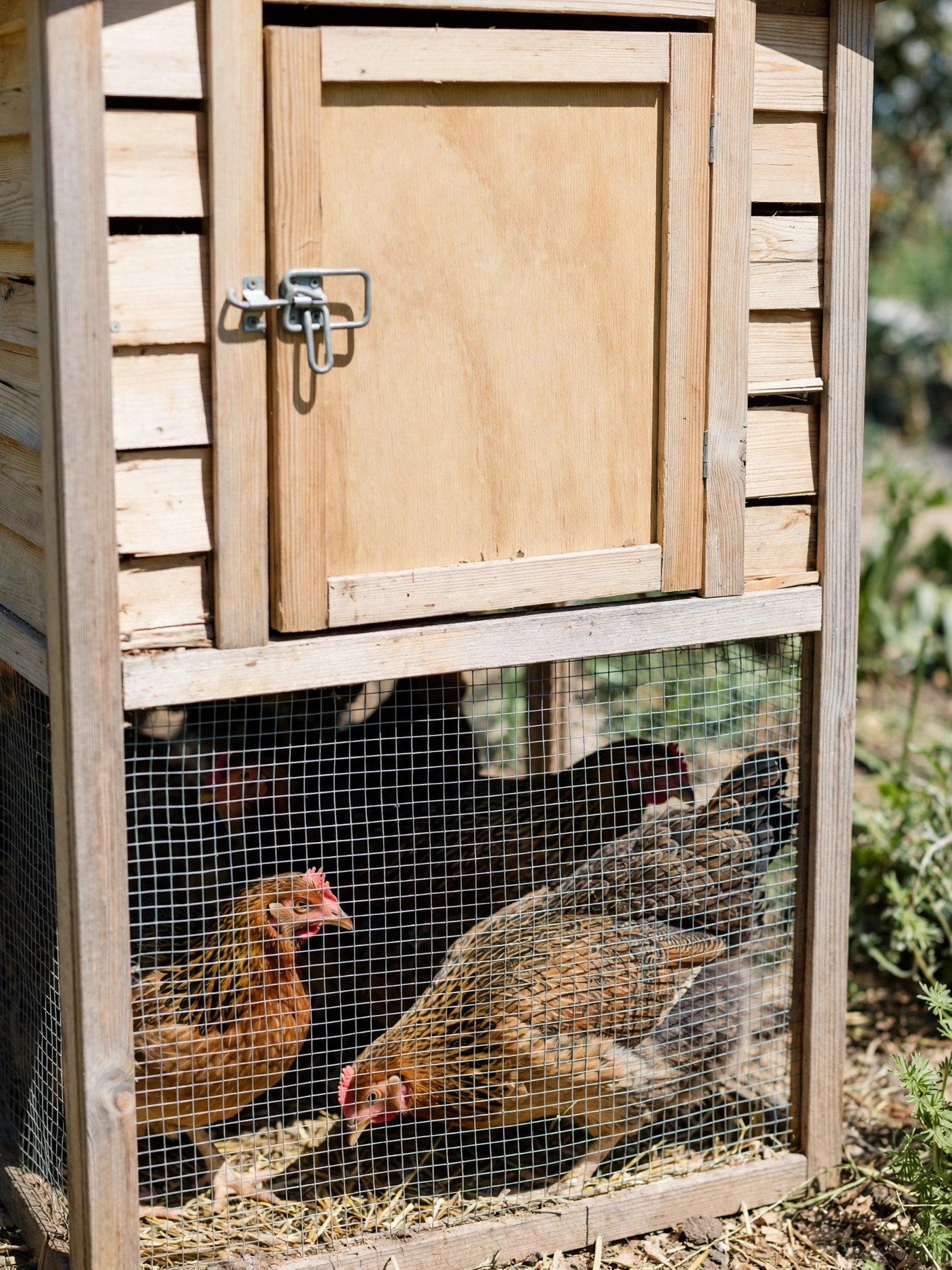
Notice the pattern in that list. The frame is rarely the first problem — the fittings are. A cheap coop usually dies by a dozen small failures rather than one collapse, which is exactly why a single upgrade weekend, done early, changes its whole story.
The Real Hen Count Problem
The deepest problem with cheap coops is not build quality. It is arithmetic. Seller capacities are worked out at a square foot or two per bird, or they count run floor as sleeping space, so a kit advertised for 6 to 8 hens is common at the cheap end. By the standard rule from our full breakdown of how much space chickens need — 4 square feet of coop floor per hen — that same kit honestly fits 2 to 3 standard hens. Some of the smallest “8 hen” boxes fit 2.
That is not a rounding difference. Crowded hens peck each other, eggs get laid in corners and broken, droppings build up faster than any bedding can handle, and the coop smells within days in summer. But run the same coop at the flock it truly fits and something almost unfair happens: the pecking stops, the run stays drier, and the little kit you were cursing starts behaving like a perfectly decent coop. The coop did not change. The stocking did.
One real example, because this pattern deserves a name. The RUNSHED below is a typical coop of the class — tidy, complete, and listed for 4 to 6 hens. Its whole footprint, house and run together, comes to about 15 square feet. Three hens, honestly:

- Compact 79 × 27.5 inch footprint — about 15 sq ft in total, house and run combined
- Enclosed run, slide-out cleaning tray, nesting boxes and a weather-resistant roof — the full kit-coop checklist, all present
- Sold for 4 to 6 hens; by the 4 sq ft rule it is a comfortable home for 3, and that is the honest way to buy it
Nothing about that makes the RUNSHED a bad coop. Housing three hens, it is a neat little setup. It only becomes a bad purchase the moment the label talks you into six.
How to Make a Cheap Coop Worth It
If you buy one — or one is already sitting in your yard — these five jobs, done in a single weekend, are the difference between a bargain and a regret:
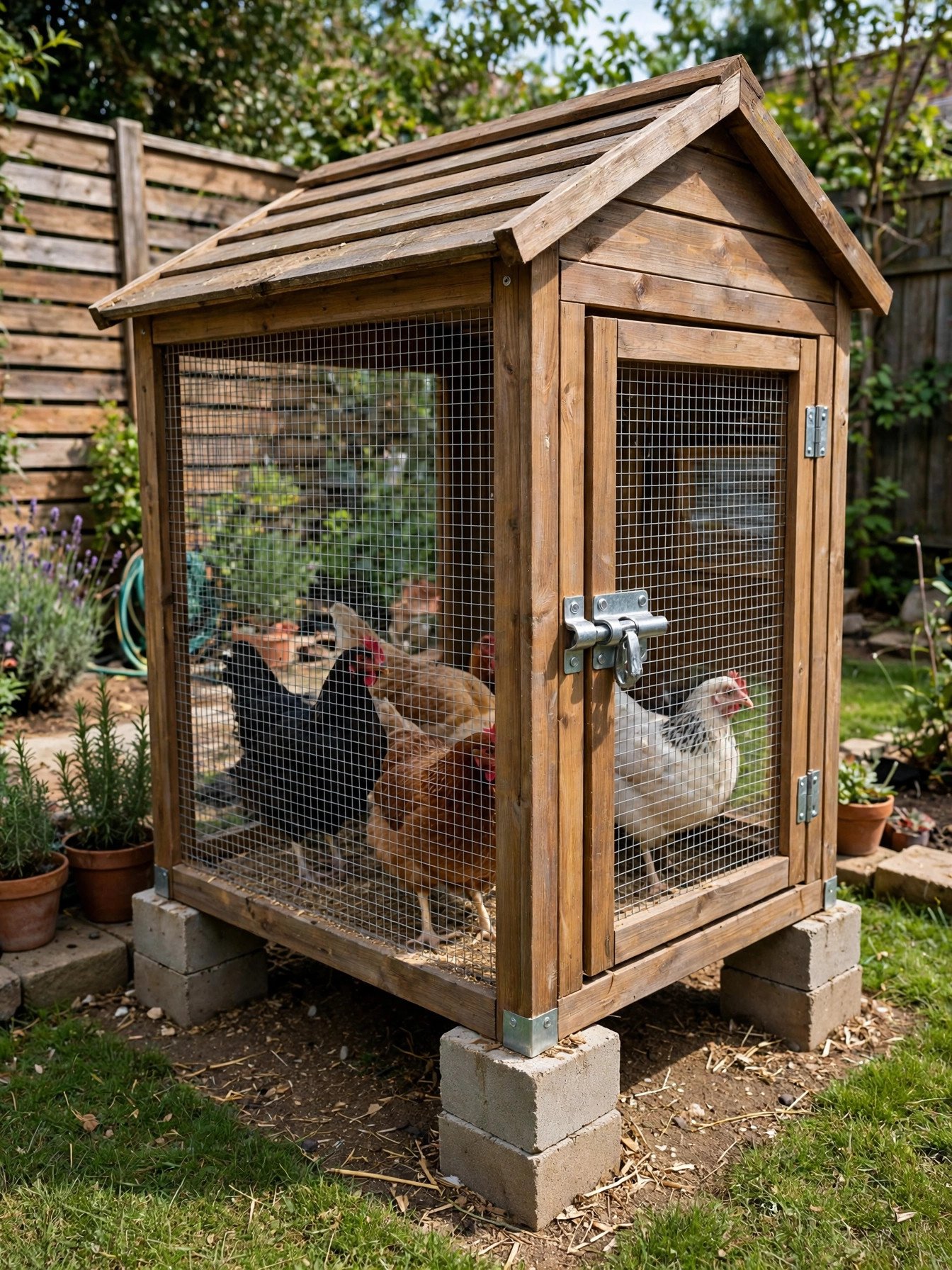
- Seal the wood before you assemble it. Every panel, edges and end grain included, while the pieces are lying flat on the ground and easy to reach. Unsealed fir is where the rot clock starts ticking, and panels sealed on day one outlast raw ones by seasons
- Swap the latches on day one. Two-step locking latches on every door, with a carabiner or lock through them at night. This is the cheapest safety upgrade in all of chicken keeping
- Fix the mesh. Hardware cloth over the vents and window openings, along the run wherever the wire is weakest, and a skirt of it laid flat around the base against digging. Our guide to how to predator proof a chicken coop walks through the full job — it is the same checklist, whether the coop was cheap or not
- Raise it off the ground. Blocks or bricks under the corners keep the floor and the lowest boards out of the damp. Ten minutes now, a floor saved later
- Park it in shade, out of the worst wind. A thin roof turns an unshaded coop into an oven by noon in summer, and constant sun-and-rain cycling is what warps thin panels fastest. Shade is a free upgrade that helps the hens and the woodwork at the same time
Do those five things and you have not turned a kit into a premium coop — you have turned it into an honest one. It will house its real flock size, keep them safe, and serve its few seasons without drama. That is all “worth it” ever had to mean at this end of the market.
When to Walk Away and Save Instead
Sometimes, though, the right answer is not to buy the cheap one at all. Walk away and keep saving if any of these sound like you:
- Your flock really is five or six hens. No upgrade fixes square footage, and an overcrowded cheap coop is worse than a late start with the right one
- You are in serious predator country and honestly will not do the upgrades. An un-upgraded kit where raccoons are bold is not a bargain with risks attached. It is a risk with a coop attached
- The kit plus its upgrade parts is creeping up on the cost of a better coop. Add the latches, the hardware cloth, the roofing panel and the sealant to the sticker before you decide it is the cheap option. Our picks for the best chicken coops under $300 show what the stronger end of the budget market looks like
- You need a decade. If this coop has to be the only coop, the honest routes are a solid built prefab or building your own — and our side-by-side of prefab vs DIY chicken coop cost runs that comparison properly, tools and weekends included
Saving longer feels slow while you are doing it. Rebuilding in year two, with hens to rehouse and a rotten coop to haul away, costs more money and far more weekends than waiting ever did.
Frequently Asked Questions
How long does a cheap prefab coop last?
As it comes out of the box, expect one to three seasons before the roof covering, latches and floor start giving up, roughly in that order. Sealed before assembly, raised off the ground and given the latch and mesh upgrades, owners regularly get more — but the thin frame sets a ceiling no upgrade removes. Plan on it being a starter coop, not a final one.
How many chickens can a cheap coop really hold?
Far fewer than the listing says. Most kits sold for 6 to 8 hens hold 2 to 3 standard hens at the recommended 4 square feet of coop floor each. The check takes ten seconds: find the footprint dimensions in the listing, work out the square feet, and divide by four. Whatever number you get, that is the flock the coop can honestly keep.
What should I upgrade first on a cheap coop?
Security, before comfort and before looks. Swap the latches for two-step locking ones and put hardware cloth over the vents and weak mesh. Those two jobs protect the flock from the only failure that cannot be undone. Sealing the wood comes third — it decides how long everything else lasts.
Is a cheap coop a good first coop?
It can be the right first coop, as long as the flock is small — two or three hens — and you go in knowing it is a starter. Many keepers find the money is not even lost when they upgrade later: the old kit retires into service as a brooder, a broody pen or a hospital coop for a bird who needs separating. What it cannot be is a first coop for six hens, whatever the box promised.
The Bottom Line
Are cheap prefab chicken coops worth it? As a small, honest starter — yes. For 2 to 3 hens, with the latches swapped, the mesh fixed and the wood sealed before assembly, a budget kit will do its job for a few seasons and then retire gracefully into life as a broody pen. But bought for the flock size on the box and then forgotten, it is not worth it at any price, because the real price gets paid by the hens. Decide which of those two purchases you are making before you click buy. New to chickens altogether? Our complete guide to backyard chickens for beginners puts the coop decision in its proper place in the setup order.