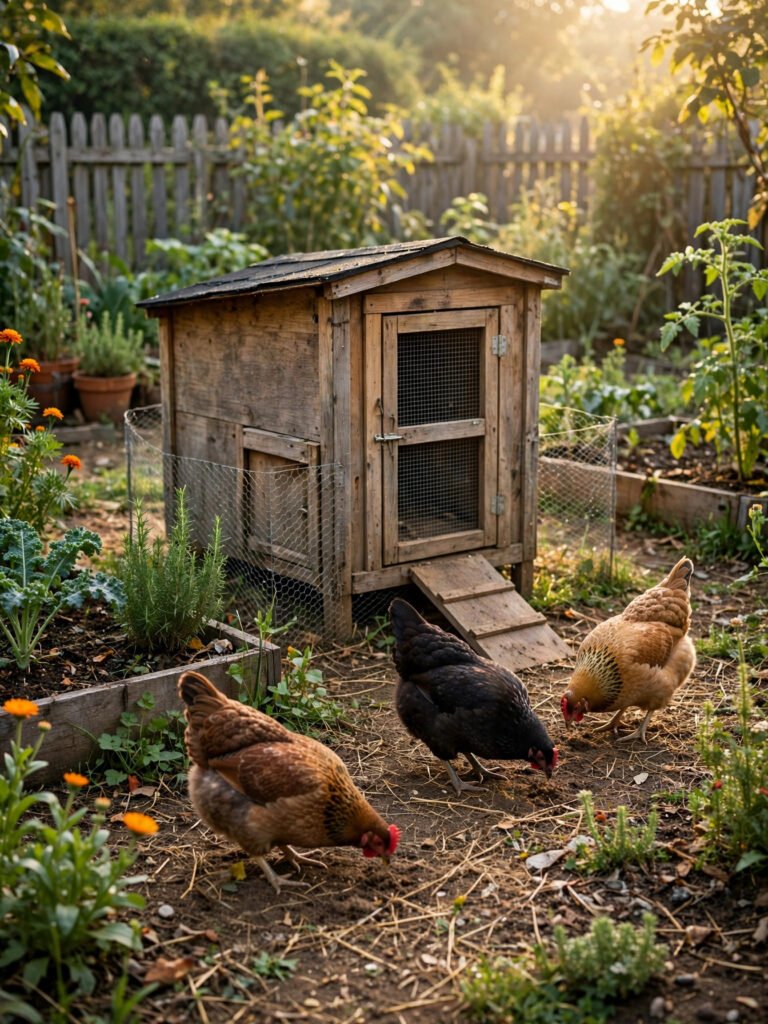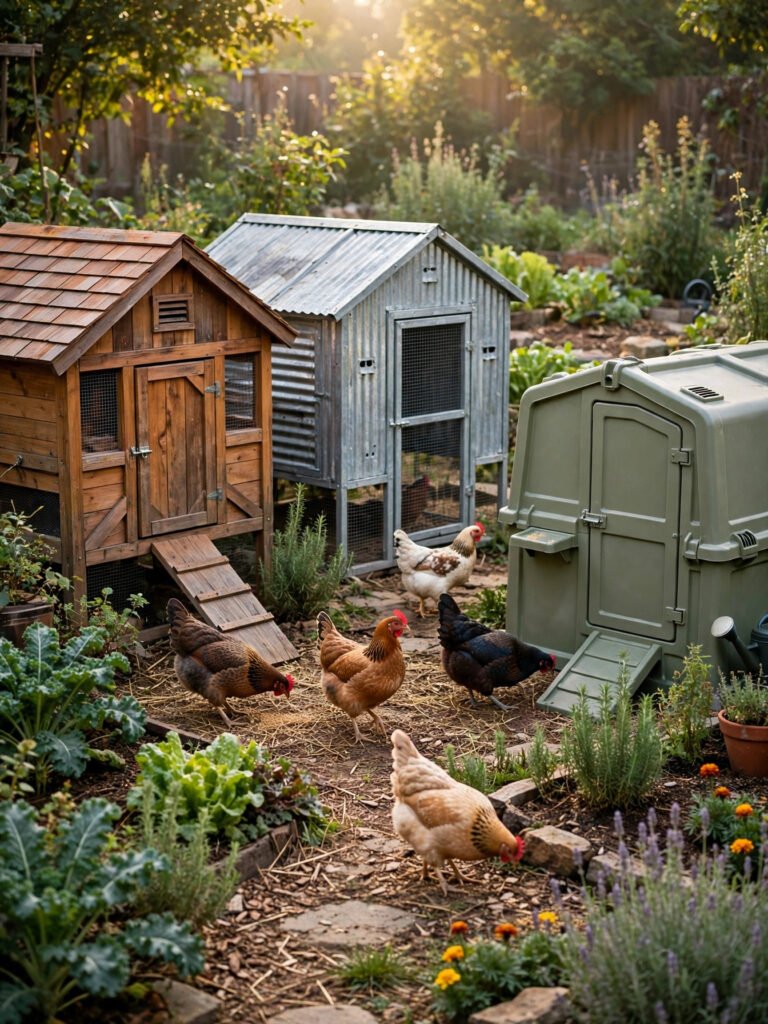
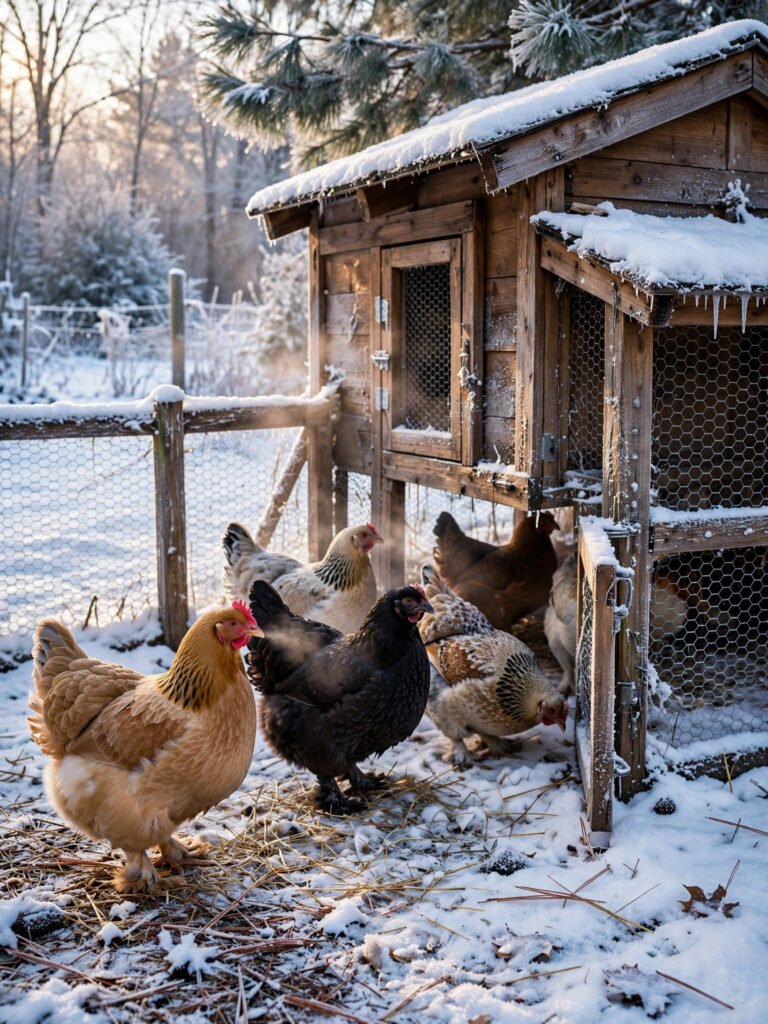

Here is the thing nobody selling winter coop gear wants to say out loud: cold is not what kills chickens. A healthy hen in good feather handles serious cold far better than a hot August night — she is wearing a down coat she never takes off. What actually hurts birds in winter is the damp and the drafts. Moisture from breath and droppings hangs in still air, settles on combs and toes, and that is where frostbite comes from. Wind whistling through a crack at roost height does the rest. So the best chicken coops for cold climates are not the warmest ones. They are the dry ones: draft-free where the hens sleep, ventilated up high where the damp escapes, roomy enough that the flock is not crowded into wet air, and built from material thick enough to take the edge off a hard night.
Every pick below was judged on exactly that, using manufacturer specs and the patterns that repeat in verified owner reviews — we do not claim to have tested these coops through a Minnesota January, and you should raise an eyebrow at any site that claims it tested dozens. Where a listing oversells its hen count or its winter readiness, I will tell you that too. Spend your money on dry and draft-free, not on warm. Our breakdown of chicken coop ventilation explains the airflow half in detail.
Quick Picks: The Short Version
| Coop | Floor space | Realistic hen count (4 sq ft rule) | Why it works in cold |
|---|---|---|---|
| OverEZ Classic Large | 74 × 60 in footprint (about 31 sq ft before walls and boxes) | 6 hens — genuinely | Thick 5/8 in siding and gable vents: dry air, no drafts at the roosts |
| OverEZ Classic Medium | 50.25 × 52.5 in footprint (about 18 sq ft) | 4 hens | The same heavy build in a smaller box — less cold air for a small flock to warm with body heat |
| Formex Snap Lock Large | 64 × 39 in footprint (about 17 sq ft) | 4 hens | Double-wall insulated panels — the only pick with real insulation built into the walls |
| Aivituvin Extra Large | 134.5 × 33.5 in footprint (about 31 sq ft, house plus run) | 4 to 5 | The budget route: house and run in one kit, workable in milder cold once you seal the drafts |
1. OverEZ Classic Large — Best Built
Start with the coop that keeps showing up in northern owners’ reviews winter after winter. The OverEZ Classic Large is built from LP SmartSide siding about 5/8 of an inch thick — more than double a typical flat-pack kit — over real framing, by Amish-trained craftsmen in the USA. Thick walls buffer the swing between a sunny afternoon and a bitter night, and pre-built panels that screw together tight leak less wind than thin boards nailed to a frame. The vents sit at the gable ends, exactly where winter vents belong: damp air rises off the roosting birds and leaves without a breeze crossing the hens. The floor is raised and resin-coated, so bedding stays dry from below too.

- Solid wood construction with 5/8 in siding, made in the USA by Amish-trained craftsmen
- Vents up at the gable ends — moisture escapes high, hens sleep out of the draft
- Sold for 15 hens; by the 4 sq ft rule it is a genuine 6 hen coop with room to spare
What we like:
- The walls are the winter feature. Thick siding and tight panels are the whole game in cold country, and this is the only coop here genuinely built like a small shed
- Owners in cold states keep it for years. The review pattern is consistent: together in about an hour, then it just stands there, winter after winter
What holds it back:
- The vents are modest for a full house. Resist closing them on the coldest night — that is exactly when moisture needs somewhere to go. Many northern owners add hardware cloth over the vent covers and leave them open
- It costs several times what the kit coops cost. There is no honest way to soften that
- It is a house only. The run, and its winter windbreak, are a separate project
Not for: starter budgets, or anyone who needs the run in the same box. For: cold-country keepers who want to buy one coop and stop thinking about it.
2. OverEZ Classic Medium — Best for Smaller Flocks
Everything said about the Large applies here, one size down — and the smaller size is itself a winter advantage. A coop warms, a little, from the birds’ body heat. Put four hens in a cavernous coop and that heat vanishes into cold air; put them in a right-sized box and the roosting corner stays noticeably kinder. The Medium is 50.25 × 52.5 inches, wears the same 5/8 inch siding and tight panel build, and comes with 3 nesting boxes, 2 roosts and vents up high. It is sold for up to 10 chickens. Run the floor through the 4 square foot rule and it is a four hen coop — a good one, but four.

- Same 5/8 in SmartSide siding and panel build as the Large, in a 50.25 × 52.5 inch box
- 3 nesting boxes, 2 roosts, high vents and a wooden ramp, made in the USA
- Sold for 10 hens; by the 4 sq ft rule it honestly houses 4
What we like:
- Right-sized warmth. For a flock of three or four, this is the thickest-walled coop you can buy without paying for empty air
- Owners in cold states back it. Birds coming through hard winters in good shape is a running theme in the reviews for this size
What holds it back:
- The vent covers are small and plastic. Reinforce them with hardware cloth before birds move in — a five minute job the reviews mention often enough to treat as part of assembly
- At just over 5 feet tall it is not a walk-in, and cleaning the back corners means reaching and crouching
- The price per hen is steep. You are paying for build quality, not space
Not for: flocks bigger than four standard hens, whatever the name suggests. For: the small-flock keeper who wants the heavy build without heating a half-empty barn.
3. Formex Snap Lock Large — Best Insulated
The one pick here that is not wood at all — it earns its place on a single fact: it is the only coop on this page with insulation actually built into the walls. The Snap Lock is molded in the USA from double-wall plastic panels with an air gap between the skins, the same principle as a good cooler. Wooden walls buffer temperature; these walls genuinely resist it. Snap-together panels, adjustable vents, nothing to rot, and an inside that hoses clean. At 64 × 39 inches it is rated for 4 to 6 large chickens. By our floor rule it is a four hen house, and owners of big breeds say even that is cozy.

- Double-wall insulated construction, made in the USA — stable temperatures in both directions
- Adjustable ventilation, 4 nesting spots and three 36 inch roosts
- Rated for 4 to 6 large hens; by the 4 sq ft rule, plan on 4
What we like:
- The double wall is the real thing. Owners consistently report a coop that shrugs off cold snaps better than thin wood, and never needs paint or sealant
- Dry by design. Plastic does not wick moisture, harbor mites in cracks or go soft at the corners. In the damp fight, that is half the battle won before winter starts
- Adjustable vents let you keep a crack of high airflow on bitter nights instead of sealing the coop tight — the mistake that causes frostbite
What holds it back:
- It is smaller inside than the photos suggest. Reviews split between “plenty for my hens” and “too small for seven” — trust the floor math, not the bantam count in the title
- It is light. In open, windy country it needs anchoring or a sheltered spot
- No run included, and no easy way to expand later. What you buy is what you have
Not for: flocks over four standard hens, or keepers who like to modify their setup every year. For: the keeper who wants insulation without a building project, and a coop that looks the same in ten winters as in this one.
4. Aivituvin Extra Large — Budget Pick, Winterize It Yourself
Every guide needs its honest budget pick, and this one comes with its warning label filled in. The Aivituvin is a two-level wooden house with an attached run, 6 nesting boxes, a pull-out cleaning tray and a waterproof asphalt roof, at a 134.5 × 33.5 inch footprint. Plenty of keepers winter birds in kits like this — with their own labor: sealing the fir, closing draft gaps at the panel joints, bedding deep. The panels are thin next to everything above it here, and thin walls neither buffer cold nor forgive sloppy assembly. In a mild winter, winterized, it does the job for four or five hens. In a northern winter it is the wrong tool, and we would rather say so here than read it in your one-star review in February.

- House and run in one kit: 134.5 × 33.5 inch footprint, 62.4 inches tall
- 6 nesting boxes, pull-out cleaning tray, waterproof asphalt roof
- Sold for 8 to 12 hens; by the floor math it suits 4 to 5
What we like:
- One delivery, complete setup — house, run, boxes, tray and a roof that genuinely sheds weather, at the lowest commitment in this guide
- The pull-out tray matters more in winter than summer: quick cleanouts mean bedding gets changed before it turns damp
What holds it back:
- Thin fir panels, as with every kit at this level. Seal every seam before the first winter and re-check each fall — drafts at roost level are this coop’s weak point
- The listing gives overall dimensions only, so the 4 to 5 hen figure comes from the total footprint, house plus run. It is the honest ceiling
- Plan on your own predator-proofing — better latches, and hardware cloth where it counts
Not for: severe winters, or anyone who wants to assemble a coop and never think about it again. For: milder cold country, a tight budget, and a keeper happy to spend an autumn afternoon making it winter-tight.
What Actually Matters in a Cold-Climate Coop
Strip away the marketing and a winter coop is judged on five things. First, dry air. Every hen exhales moisture all night, and droppings add more. If that damp has no exit, it condenses on the coldest surfaces in the coop — which include combs and toes. Second, ventilation in the right place: up high. Vents at the gables or under the eaves let moist air out above the birds’ heads. A crack at roost height is not ventilation, it is a draft. Third, no drafts where they sleep. Run your hand along the walls at roost level on a windy night — anywhere you feel moving air is a seam to seal before the real cold arrives.

Fourth, the roost itself. A wide, flat bar — a 2×4 with the wide side up — lets a hen settle over her feet and cover her toes with her belly feathers. Round perches leave toes curled around a cold bar, exposed all night, which is precisely how frostbite starts. Bar shapes, heights and spacing are covered in our guide to how much roost space per chicken. Fifth, room. Birds packed tight breathe each other’s damp air all night. The 4 square feet per hen above is not a luxury number — in winter it is a moisture control strategy, as our breakdown of how much space chickens need shows.
The Insulation Question
Sooner or later every cold-country keeper asks: should I insulate the coop? The honest answer, for most backyard flocks, is no — and the reasons are practical, not purist. Hens carry their insulation with them: a dry, draft-free coop lets a healthy bird hold her heat inside her feathers. Added wall insulation creates a warm, dark, damp sandwich mice and mites love, and gives moisture a hidden place to condense. The rare exception is the thin-walled kit in a brutal climate, where rigid foam on the outside of the walls — covered so birds cannot peck it — can take the worst edge off. Even then it comes after ventilation, not instead of it. A sealed, insulated coop with wet air inside is a frostbite machine with better marketing. Ventilation beats insulation, every winter, in every state. Spend the insulation money on a run windbreak and a heated waterer instead.
Winter Setup Checklist
The coop is only half the winter system. Walk through this list before the first hard freeze:
- Windbreak the run. Hens will come outside on bitter days if they can get out of the wind. A tarp, straw bales or clear panels on the windward side buys them that choice — and a flock that goes outside makes far less moisture inside
- Sort the water before it freezes. A hen that cannot drink cannot eat properly or hold body heat. Our guide to heated chicken waterers covers the options, from heated bases to all-in-one units
- Bed deeper. Extra bedding insulates from below and gives droppings somewhere dry to land. Keep it fluffy, not packed
- Seal drafts at roost level, keep vents up high open. Both halves of that sentence, every fall
- Check combs weekly. Pale, white-tipped combs are your early warning that moisture, not temperature, needs fixing
- Feed a little extra in cold snaps. Digesting feed is how a hen stokes her own furnace, and a small evening scratch ration before roosting still works

Frequently Asked Questions
How cold is too cold for chickens?
For a healthy, well-feathered hen in a dry, draft-free coop, there is rarely a night in the continental US that is too cold — hardy breeds handle temperatures well below zero. Birds get into trouble when cold combines with damp air, wind at roost level, or a bird that is molting, young or unwell. Fix the moisture and the drafts, and the thermometer stops being the point.
Should I put a heat lamp in my coop?
Almost never. Heat lamps are a leading cause of coop fires, and a bird warmed all night is in real trouble the one night the power fails. Hens acclimate as the season cools; a lamp stops that process and adds fire risk on top. If a specific bird needs help — very old, sick, or a tropical breed out of its depth — a low-wattage radiant panel is the safer tool, used sparingly.
Why did my hens get frostbite in a coop that was not that cold?
Because frostbite is a moisture problem wearing a temperature costume. Damp air settles on combs and toes, and wet tissue loses heat far faster than dry. The fix is nearly always more ventilation up high and drier bedding — not more heat, and definitely not sealing the vents, the one change guaranteed to make it worse.
Is a smaller coop warmer in winter?
Right-sized, yes — up to a point. A coop matched to its flock holds the birds’ body heat in a smaller volume of air, which takes the edge off the coldest nights. But “smaller” ends where crowding begins: pack birds below 4 square feet each and the extra moisture undoes the benefit. Size the coop to the flock you have, not the smallest box you can get away with.
The Bottom Line
If your winters are real and your flock is six or fewer, the OverEZ Classic Large is the coop I would put my own name next to — thick walls, tight panels, vents where vents belong. For a flock of four, its Medium brother gives you the same build with less empty air to warm. If insulation is what you actually want, the Snap Lock’s double walls do it without a single board to maintain. And if the budget is the budget, the Aivituvin plus one honest afternoon of sealing will get a small flock through a mild winter just fine. Whichever you choose, judge it the way winter will: not by how warm it promises to be, but by how dry it keeps the air and how still it keeps the roost. Get those two right, and the cold itself is mostly a rumor.