
Here is the thing nobody warns new keepers about: cold almost never kills a healthy chicken, but heat does — quickly, and usually on the first truly hot afternoon of the year. A hen wears a feather coat she cannot take off, she cannot sweat, and once the air inside her coop climbs past what she can pant away, she is in real trouble. So the best chicken coops for hot climates are not really “coops” in the pretty wooden-box sense at all. They are shade, moving air and water, arranged around a flock.
That flips most buying advice upside down. The solid, sealed, insulated-looking wooden house that photographs so well is often the worst summer home you can buy — a still, dark box baking in the sun. What works instead: big screened openings on more than one side, airflow low and high, a light-colored or reflective roof, and shade that lasts all day. Every pick below was judged on exactly that, using manufacturer specs and the patterns in verified owner reviews — we do not claim to have tested these in our own yard. Two of the four are not houses at all, and that is deliberate. Start with our breakdown of chicken coop ventilation if your summers are serious, because airflow matters more in July than any feature on a listing.
Quick Picks: The Short Version
| Coop | Floor / run space | Realistic hen count (4 sq ft rule) | Why it works in heat |
|---|---|---|---|
| VEVOR Walk-In Pen, 9.8 × 26.5 ft | About 252 sq ft of fully screened run — no house included | Run room for 20+ hens; the house you add decides the flock | Barely a wall to trap heat — all airflow, with a tarp roof for shade |
| GUTINNEEN 85 in Coop with Ventilation Windows | 85.6 × 40.6 in footprint (about 24 sq ft, house plus run) | 3 hens, 4 if they range daily | The rare kit house with real ventilation windows, plus a UV-resistant roof over the run |
| NGTEEN Walk-In Pen, 10 × 5 ft | About 50 sq ft of screened run, anti-UV cover on top | Run room for about 5 hens; add your own shelter box | Open mesh on every side and a shade cover, sized for small yards |
| Aivituvin Extra Large | 134.5 × 33.5 in footprint (about 31 sq ft, house plus run) | 4 to 5 hens | Tall, vented house and a long run — but only in shade, for reasons below |
1. VEVOR Walk-In Pen — Best Airflow, and It Is Not Close
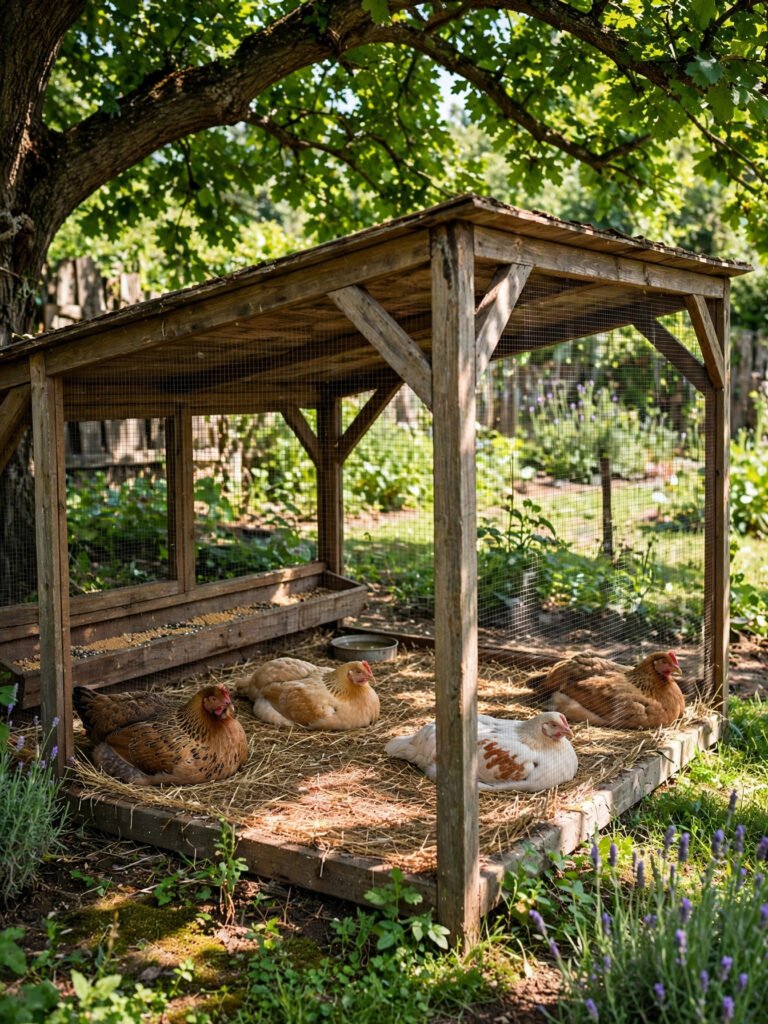
Start with the honest truth the rest of this guide is built on: in a hot climate, the best “coop” for daytime life is a big screened pen with shade over it, and a small sleeping house tucked inside. This VEVOR is that pen. At 9.8 × 26.5 feet it gives you roughly 252 square feet of enclosed, walk-in space wrapped in mesh on all four sides — VEVOR calls it four-sided ventilation, and for once the marketing undersells it. There is no still air in a structure like this. Whatever breeze your yard gets, your hens get.

- About 252 sq ft of walk-in run (308 × 118 inches), 6.5 ft tall, mesh on all four sides
- Galvanized steel tube frame with a PE shade tarp over the roof section
- It is a run, not a house — your hens still need a small shaded coop or shelter box inside it for sleeping and laying
What we like:
- The space changes the heat math entirely. Hens spread out, find their own shade, and stop competing for the one cool corner — crowding is a heat problem as much as a space problem
- Walk-in height. You will spend summer afternoons in here refilling waterers and hanging shade cloth; doing it standing up matters
- The frame is real — galvanized 1 inch steel tube that owner reviews say stays put in wind once it is staked down
What holds it back:
- The mesh is hexagonal chicken-wire style, not hardware cloth. Snakes and small predators can be an issue, and raccoons reach through wider mesh — in serious predator country, line the lower walls with 1/2 inch hardware cloth
- The included tarp shades only part of the roof. In a Texas or Arizona summer you will add shade cloth over more of it — budget for that from day one
- There is no house, no nesting boxes, no roost. This is half a setup, and it only works because in heat, it is the more important half
Not for: keepers who want one box that does everything, or anyone whose flock must sleep in it with nothing added. For: hot-climate keepers with the yard for it — pair it with any small shaded house and you have the setup the rest of this page is trying to approximate.
2. GUTINNEEN 85 Inch Coop — Best Vented Wooden Coop
If you do want a wooden house with a run attached, this is the kit design that understands summer. Most kit coops offer a couple of token vent holes. The GUTINNEEN puts actual ventilation windows on the house, pairs them with an open mesh run under a UV-resistant roof panel, and sits the whole thing on caster wheels — which sounds like a gimmick until you realize it means you can roll the coop a few feet to follow the shade or reach fresh ground.

- Wooden house with ventilation windows, iron-frame run, UV-resistant roof panel over the run
- 85.6 × 40.6 inch footprint, pull-out tray, non-slip ramp, caster wheels for moving it
- Sold for 4 to 6 hens; by the floor math it is an honest 3 hen home, 4 if they range
What we like:
- Windows that open the house up. Cross-breeze through the sleeping area is the single feature hot-climate hens need most from a wooden coop, and this one actually has it
- The wheels earn their place in summer. A coop you can shift six feet into the shade line, or onto fresh ground when the run gets baked and bare, solves problems fixed coops cannot
- The run roof is UV-resistant panel, not a bare mesh top — the hens get shade without you improvising a tarp in the first heatwave
What holds it back:
- It is still fir kit wood. Seal it before its first summer, and know the mesh gap (about 1 inch) is wider than the 1/2 inch hardware cloth predators respect — add a hardware cloth skirt if raccoons visit your yard
- The house itself is small. Three hens sleep comfortably; the listing’s higher numbers assume the run does the living, which in heat it does — but winter tells a different story, so cold-climate readers should look elsewhere
Not for: flocks of five or six, or cold climates. For: a small flock in a hot yard whose keeper wants a real house and run in one kit — and likes the idea of rolling it to follow the shade.
3. NGTEEN Walk-In Pen — Best for Smaller Yards
Not every hot yard can take a 26 foot pen. This NGTEEN is the same idea at half the footprint: 10 × 5 feet of walk-in mesh run, a spire roof with a waterproof, anti-ultraviolet cover, and — a thoughtful touch most pens skip — a roosting perch built in. Fifty square feet of run is daytime room for about five hens by the run rule, and because every wall is mesh, none of it ever turns into a heat trap.

- About 50 sq ft of walk-in screened run (119 × 60 inches), 6.4 ft at the peak
- Waterproof, anti-UV cover over the roof section and a built-in roosting perch
- A run and shade structure, not a house — add a small coop or nesting shelter inside it
What we like:
- The anti-UV cover is the right idea, included. Shade over the top span keeps the ground under it cooler, and hens will spend the hot hours exactly there
- A perch inside the run gives hens an off-the-ground option in the breeze rather than on hot dirt — a small feature that shows someone thought about daytime life, not just containment
What holds it back:
- Five feet wide is narrow for a “walk-in.” You can stand in it, but turning around with a waterer in hand is a shuffle
- Like every pen here, the mesh is not hardware cloth, and there is no nesting box or weatherproof sleeping quarters — a hen still needs a dry, shaded box to lay and roost in at night
- The cover shades the roof span only. On a still, brutal afternoon you will want shade cloth down the sunny side wall as well
Not for: anyone expecting a complete coop in this box, or flocks bigger than five. For: the small-yard keeper in a hot state who pairs it with a little house and gets honest shade and airflow for a small flock.
4. Aivituvin Extra Large — Best Enclosed Coop, With a Shade Warning
Plenty of keepers simply want a house and run in one delivery, hens sleeping behind a door they can lock. Of the big kit coops, this Aivituvin makes the best heat case: over 5 feet tall, so hot air can rise away from the hens, a long open-meshed run, and a house listed as ventilated rather than sealed. But read the warning in the heading, because it comes with the single worst roof choice for a hot yard.

- House and run in one kit: 134.5 × 33.5 inch footprint, 62.4 inches tall
- 6 nesting boxes, pull-out cleaning tray, ventilated house design
- Sold for 8 to 12 hens; by the floor math it suits 4 to 5 — and in heat, keep it at 4
What we like:
- Height and a long, open run do real work in summer — the hens live out in the moving air and mostly use the house to sleep
- One delivery, complete setup, with the pull-out tray owners praise every week
- Grey finish on the walls reflects more sun than the dark-stained kits do
What holds it back:
- The roof is dark asphalt, and it sits over the sleeping house. Asphalt drinks in the sun all afternoon and radiates it down at roosting hens in the evening. In a hot climate this coop must live in full or near-full shade — under trees, on the north side of a building, anywhere but open midday sun. No shade spot, no sale
- Aivituvin publishes overall dimensions only, not the house-only floor, so the 4 to 5 hen figure comes from the total footprint
- Light fir panels, like every kit here — seal it, and upgrade latches and mesh where predators test it
Not for: a sunny, shadeless yard — genuinely, choose a pen instead. For: the keeper with a shady corner who wants a lockable house and run in one kit for four hens.
What Actually Matters in a Hot-Climate Coop
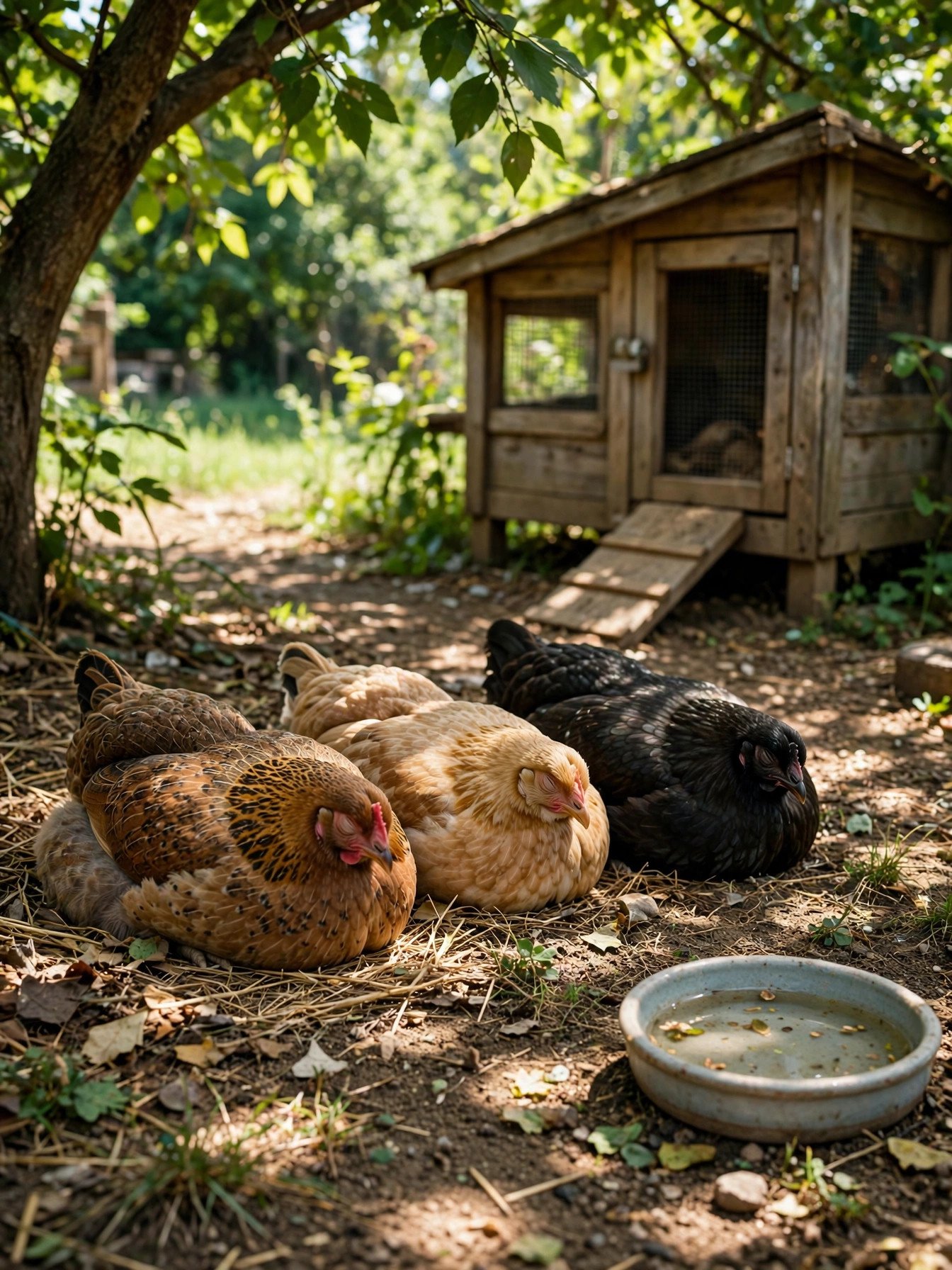
Airflow at two heights. A hot coop needs openings low, where the hens live, and high, where the heat collects, so air is always trading places. One vent near the roof — the standard kit-coop offering — lets heat out but gives the birds nothing at their level. Windows on two sides, or mesh walls, beat any single vent.
Shade that lasts all day. Morning shade is worthless if the coop sits in full sun from noon to six, the dangerous hours. Walk your yard at 2 p.m. before you build anything. And remember the space your chickens need does not shrink in the heat — a spread-out flock is a cooler flock.
Roof color and material. A light or reflective roof throws heat back at the sky; a dark asphalt roof absorbs it and hands it to the hens below, all evening. If a coop you love has a dark roof, shade cloth stretched a few inches above it — with an air gap — fixes most of the problem.
Water, everywhere. A hen in heat drinks roughly twice her normal amount, and she will not cross a hot yard to do it. Put water in the shade, in the run, and near where the flock camps at midday — and check it twice a day, because a tipped or sun-boiled waterer at 3 p.m. is an emergency, not an inconvenience.
Heat Mistakes That Kill Hens
- The sealed coop. Closing every opening at night “to keep them safe” turns the house into an oven during the hours hens generate the most body heat. Night is when ventilation matters most, not least
- Screened openings that are not predator-proof. Big summer openings are only safe behind proper mesh. A window screen stops bugs, not raccoons. Every opening a hen sleeps behind should be 1/2 inch hardware cloth, screwed in — the full method is in our guide to how to predator proof a chicken coop, and summer is exactly when it matters
- Water only inside the coop. Hens barely go inside during the day, so the water might as well be in another county. Outdoor shade water is not optional in a heatwave
- A run with no shade until evening. Bare dirt in full sun gets too hot for hens to stand on comfortably. If the flock is pressed into one thin strip of shade at noon, the setup has already failed them — and hens die on the day that runs five degrees hotter than expected, in a coop that was “fine yesterday.” Build for the worst week of your summer, not the average one
Summer Setup Checklist
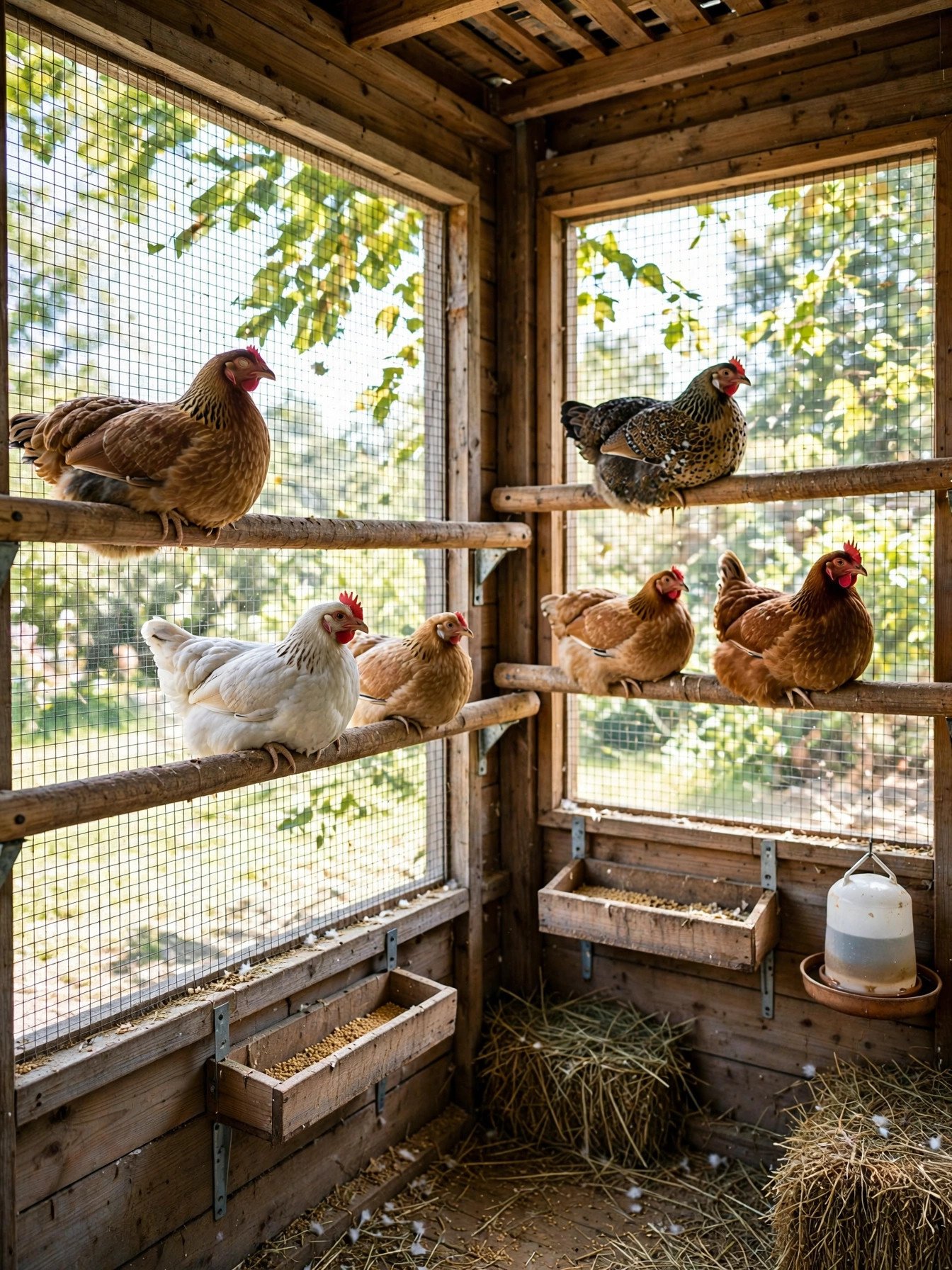
- Shade over the run for the full afternoon — shade cloth, a tarp with an air gap, or a tree that actually delivers
- Openings on at least two sides of the house, all backed with 1/2 inch hardware cloth
- Two waterers minimum, both in shade, checked morning and late afternoon; a frozen bottle floated in each on the worst days
- A shallow pan of water in the shade — hens cool through their feet, and most will stand in it by choice
- Dust bath spots in the shade, not the sun; a hen dust bathing at noon is trying to cool off
- Roost space with room to spread out — on hot nights hens sleep with wings held away from their bodies, and a crowded bar is a hot bar
- A thermometer check inside the coop on the first 95-degree day, so you know your setup’s real number instead of guessing
Frequently Asked Questions
How hot is too hot for chickens?
Hens start working to cool themselves — panting, wings held out — once temperatures pass the mid-80s Fahrenheit, and the real danger zone begins around 95 to 100 degrees, especially with humidity and no breeze. Heavy breeds and older hens struggle first. Shade, airflow and water matter more than any exact number: a breezy, shaded 95 can be safer than a still, sealed 88.
Should I put a fan or mister in the coop?
A fan helps only if the coop already has openings for air to move through — stirring hot, sealed air does little. Aim it across the roost area on the worst nights, and keep cords somewhere safe; coop dust is hard on motors. Misters work in dry heat and mostly disappoint in humid heat, where they just add moisture. Shade and water first, gadgets second.
What if my climate is hot in summer and cold in winter?
Then you need openings that close without sealing — windows and vent panels you can shut to windward in January and throw open in July — and you should weight winter build quality more heavily, because a sturdy coop can be opened up for summer far more easily than a flimsy one can be made warm. Our guide to the best chicken coops for cold climates covers the winter side; the overlap between the two lists is where mixed-climate keepers should shop.
The Bottom Line
In a hot climate, buy airflow first and a house second. If you have the yard, the VEVOR 26 foot pen with a small shaded house inside it is the setup I would build for my own flock, and the NGTEEN does the same job for a smaller yard. If you want a wooden kit, the GUTINNEEN’s real ventilation windows put it ahead of every sealed box at its size, and the Aivituvin earns its place only in a genuinely shady spot. Whatever you choose, walk the yard at 2 p.m., hang the shade before the heat arrives, and put water where the hens actually spend the day.